Showing posts with label Women Writers. Show all posts

Wednesday, October 28, 2020

‘The Invitation,’ An Allegory For Society?


Tokenism is never an enjoyable sight. 


In a horror/thriller film like The Invitation, incumbent fear heightens for Kira. She is surrounded in a modest grouping, the sole Black woman— dark skinned too. The tender vulnerability of such tremulous situations mirrors fragile workplace environments, walking along eggshells, playing an almost superficial kind of nice. Kira must have been deeply embedded within herself, forcing any residual doubt to surpass just to undergo an awkward evening. All she wanted was to have a nice, normal dinner at her boyfriend’s ex-wife’s house. She kindly greeted everyone, let in no airs or grievances of discomfort. And yet the hosts could not revise their murderous plans. 


Poor Kira. 


Before Kira and Will even arrive to the candlelit party, Will accidentally hits a deer and kills it out of misery. Once they reach Eden’s grand house, where windows are prevalent and doors are mysteriously locked, all seems well— scarily well. Will was once married to Eden and they lost their young son, grieving the loss in different ways. Tragedy drove their relationship apart with Will coping through psychology and Eden finding a new husband in weird behaving David. 


Moreover, Eden and David’s extra notch politeness carries a sinister vibe, but only Will notices the facade. Kira, however, is trying to be everyone’s friend, much like any Black woman wanting to break the ice. By dismantling conditioned stereotypes that requires Black characters to provide cheap laughs, act sassy, or speak Ebonics, Kira is instead a caring, considerate listener, attentive to Will’s outbursts. After all, this quiet, calm house and the company of strangers is Will’s world. Kira is the willing participant, entering into another dimension of her boyfriend’s past and uncertain future. 


The illustrious Emayatzy Corinealdi is the poised Black woman survivor in a film directed by Karen Kusama, written by two men— Phil Hay (Kusama’s husband) and Matt Manfredi. Corinealdi has appeared in a limited horror/supernatural features such as the direct-to-video Vampz and a TV movie called Demons. The fact remains that this solid, multifaceted, utterly gorgeous actress deserves to have more starring roles. She is definitely an admired presence to look up to, considering that Middle of Nowhere (her first starring vehicle) remains a favorite romance. 


Once Kira and Will realize that murder is indeed on the menu, it is high time to flee. For Kira, the getting to know an ex phase has hit an unsuspected curveball. As the guests die one by one, Eden remains beholden to that scary layer beneath the niceness, reminiscent of the squeaky clean white people in Get Out. She is evil without truly comprehending it. With the morbid intensity like that of a religious cult leader, she believes her intentions are genuine, that murdering these innocents provides a service.


Hopefully, after witnessing and surviving that terribly violent ordeal, Kira decided to break up with David and chill out with her normal Black friends offscreen. 


Saturday, August 24, 2019

‘Middle of Nowhere’ is an Underrated Powerhouse

Middle of Nowhere film poster. 
On January 16, 2014, I watched Ava DuVernay’s romantic indie drama, Middle of Nowhere (released two years prior) for the first time on an iPhone. My laptop was broken and that iPhone was the sole way to finally see the film, a special AFFRM Rebel member exclusive. On January 13, 2015, the official DVD release day, it took several stores to find a copy and that would jumpstart the second, third, fourth or so viewings on a new laptop. Then, months later, the Lightbox Film Center showed it on a big screen during a celebration of cinematographer, Bradford Young. Each watch is a present unwrapped, especially to an avid film lover desiring to see more humanist depictions of Black lives by Black filmmakers.

Thus, Middle of Nowhere, an obvious personal favorite, is of significant importance often left off Best Black Film lists.

Ruby (Emayatzy Corinealdi) puts her medical studies on hold in order to help her imprisoned husband Derek.
It opens with Ruby, a tough, resilient medical student who travels far by bus to see her imprisoned husband Derek— in for fraud. On the bus, women bond over their missing men, knowing that these short, strict visitations are all they can hold onto until the next one— year after year after year. When Ruby and Derek see each other, the sparks are flying, the love is spoken through their eyes and ready smiles. Afterwards, Ruby speaks on his behalf, constantly overworking and exerting herself to make ends meet and keep an expensive lawyer on Derek’s case. This authentically paints the true depressing reality for marginalized bodies— always over exerting themselves for a bit of freedom. Before the arrest, Ruby and Derek were dreamily living like a queen and king, well above middle class in a huge furnished house with a nicely manicured yard.

Ruby (Emayatzy Corinealdi) and Brian (David Oyelowo) share a dance. 
Aside from prison visits, Ruby is staying devoted to Derek by putting medical school on hiatus and taking extra hospital shifts much to the dismay of her mother, Ruth. Now Ruth is a stern parent prone to yelling and belittling even over the smallest matters. This constant verbal abuse makes for jarring scenes, especially between Ruth and Rosie— Ruby’s sister, a single mother of a precocious little boy. Meanwhile, Derek’s outside life threatens Ruby’s happiness. In comes Brian— a flirtatious bus driver— that has it bad for the married woman, Ruby.

Ruby (Emayatzy Corinealdi) may be flawed in some instances, but she is far from stupid. 
Ruby, painted in pivotal degrees of vulnerable softness and graceful femininity, is one to be desired, fought for. Whether it is by two handsome men, a fretful mother, or a sister with a small son, Ruby is the light hovering around the shadowy places no one wants to remain stuck in. Derek kept a heartbreaking betrayal under wraps, Brian is staying civil to an old relationship, Ruth wants her daughters to still need her, and Rosie searches for love in all the wrong places. From Ruby, Derek wants her forgiveness, Brian wants to be her “next,” Ruth wants her to get her life in order without Derek, and Rosie wants guidance.

Yet Ruby refuses to be a mule to anyone.

One of the most jaw dropping scenes is what transpired between Ruby (Emayatzy Corinealdi) and Derek (Omari Hardwick) on her final visit. 
Although the story plays a bit into the “struggle love” narrative, DuVernay’s poignant writing and abstracted direction segways the overused Black love stereotype into another route altogether. Ruby eventually realizes that she cannot put her life on hold for Derek, wait in the wings for the course of an unseen future that has presently changed the both of them. Everything passed her by whilst working twice as hard to free him. She needs to be in a new, refreshing moment, deserves to find her path without him clouding her purpose. And that moment happens to be her career, her family, and Brian.

Middle of Nowhere is an intriguing trifecta of threes— Ruby’s need to keep an old life together whilst being seductively pulled by another is more than the typical interloper love triangle, Ruby and Rosie’s adulthood with complicated Ruth, and the unhealthy, unresolved generational turmoil from Ruth causes so much conflict that Rosie doesn’t grant her much grandmother time. 

Middle of Nowhere family: Sharon Lawrence, David Oyelowo, Ava DuVernay, Emayatzy Corinealdi, Edwina Findlay, Troy Curvey III, and Omari Hardwick. 
Middle of Nowhere is seamlessly tied together. There is a reason why this poignant picture won African American Film Critics Association Awards, Black Circle Film Awards, Black Reel Awards, Independent Film Awards, dramatic at Sundance Film Festival (DuVernay being the first African American woman to be honored), and the Josephine Baker Award from Women Film Critics Circle Awards. It is also why many still cannot comprehend its exclusion from the main awards circuit of Oscars, Golden Globes, BAFTAs, etc. The memorable music selection includes some Goapele. Bradford Young’s excellent cinematography reveals a tremendous, tender care in lighting Black bodies. Aisha Coley’s casting of Emayatzy Corinealdi, David Oyelowo, Lorraine Touissant, Omari Hardwick, and Edwina Findlay remains top notch. This arrangement of brown and dark brown skin hues with Corinealdi playing a rootable lead makes women like her feel seen and loved, makes their stories valid.

DuVernay’s gorgeous effort is worth watching again and again because it is one of the finest, most masterful examples of Black people falling in love and making sacrifices in order to make love function. It is so very important to champion Black artistry when it is of this quality. Creators like DuVernay fight hard to write, direct, and produce films for us about us and distribution can be their biggest challenge. With this word of mouth in mind, please watch Middle of Nowhere and spread the gospel to family and friends. Tell them that DuVernay has a romantic poet side in addition to award heavyweights Selma, 13th, and When They See Us.


Monday, April 30, 2018

‘Spoor‘ Is a Powerful Mystery Weaved With Animal Rights Vigilantism

Spoor (Pokot in Poland) film poster.

Janina Duszejko is a heroine unlike any other. An older, joyful spirited woman with bright eyes and long silvery white hair in frequent schoolgirl braids, she has a deep compassion for animals, creates the most enticing bowls of colorful dishes, and teaches English to younglings whilst also taking them into the dangerous, icy cold wild of Klodzko Valley. She is knowledgeable about plants and quite resourceful to all of mother nature’s secrets. When the hunters in town start gruesomely dying off, Duszejko holds the key to the daunting mysteries.

Janina Duszejko (Agnieszka Mandat) with her beloved students.


A distraught Janina putting up signs in hopes of finding her missing dogs.

Now if Okja was the magnificent, under appreciated champion of mass consumptive meat industry, Spoor is the picture that showcases horrific injustice of glorified animal hunting. Like Okja, Spoor also shares graphic senseless violence which humans are conditioned to accept and celebrate. These rush time paced scenes are bloodier, intense, and heartbreaking. Most of the film takes place in infinitely stretched forest, overwhelming the modest population. The story illustrates a man's desire to conquer by killing heart of mother nature, destructive and remorseless beings using guns to shoot anything that moves. Thus, when the body count rises, when hunters turn into victims, the question is not who is performing the vengeance or why this is happening, but the how. And the how is a striking, pivotal element that audiences have to pay immense attention to.

Agnieszka Holland (left) and Kasia Adamik (right) holding onto the Alfred Bauer Prize also known as the Silver Bear Award at the Berlin Film Festival.
Winners of Berlin Film Festival’s prestigious Silver Bear Award and Poland’s choice for Best Foreign Film representation at this year’s Oscars, Agnieszka Holland and her daughter, Kasia Adamik have created an astounding work of art together. Holland, having been previously Oscar nominated for her screenplay of Europa, Europa, has penned and directed episodes of House of Cards, The Affair, Treme, The Killing, Cold Case, and films such as In Darkness, Julie Walking Home, and The Secret Garden. Up next for her is Charlatan and Gareth Jones and TV series’ 1983 and The First. Adamik is not only a storyboard artist, she wears other miscellaneous production hats in forms of writing, directing, editing, etc, working in various Polish film and TV series.

Janina (Agnieszka Mandat) always finds beauty in nature. 

Besides gripping murders, Spoor has two charming love stories of young and old. The cinematography is absolutely stunning— picturesque mountain caps, captivating foliage coated in snow and ice, and again Duszejko’s scrumptious food. The writing by Holland and Olga Tokarczuk is solid-- with humor, suspense, charm, and a pleasant ending.

Spoor is worth the watch for the powerful message alone.

Friday, April 27, 2018

'Alaska Is a Drag' Dishes Flawlessness And Packs a Mean Punch

Alaska is a Drag film poster.
There is something magical about a glittery gold dress fluttering in between fluid shots of Shaz Bennett's lens, a wondrous garment that brings a close family closer, a haunting memory of a mother's spirit captured on a poignant whim. This is an heirloom, a timeless thing that one holds onto for dear life, especially an object that leads a startling roadmap to finding a missing parent.

Alaska Is a Drag is an emotionally gripping brother/sister survivor tale that offers resilient anchors for various plights through life-- a sweet, unquestionable reliance on finding selves whilst leaning on each other for supportive foundation. Leo works at a slimy fish factory with fanciful drag queen dreams and also happens to be a solid boxer. His little sister Tristen is fighting aggressive cancer. Each treatment Leo is Tristen's rock as she grows weaker from the pain. Lucy, their mother has run off to California and George, their father is present in body but sparsely around for them, having troubles of his own. Living in a mobile home, a place filled with sentimental belongings including that mesmerizing gold dress, Leo and Tristen have aspirations of leaving the cold state behind, hoping to high tail it to California and find their mother, believing that perhaps runaway mother has fulfilled her own ambitions. 

Leo (Martin L. Washington Jr.) and Tristen (Maya Washington)
From their hand holds at the hospital to having underage drinks at Jan's nosedive bar to transforming wondrous fielded meadows their makeshift catwalking playground, Leo and Tristen's relationship is a fascinating, tight-knit bond thanks in part to portrayers, Maya Washington and Martin L. Washington Jr.'s believable chemistry. Leo and Tristen take up for each other, Tristen standing up for Leo when Kyle, Leo's bullying co-worker, continues physically and verbally assaulting Leo. 

Leo (Martin L. Washington Jr.) and Declan (Matt Dallas) have a moment.
However, the sweet, infectious sibling love duo is tested once the mysterious Declan starts hanging about, a fellow employee of the fish factory and growing friend to Leo. Declan, seemingly quiet and observant, also defends Leo from Kyle's wrath, letting out a monster's rage. As it then turns out Kyle has a colossal secret that brings the story to its knees. 

One of the most remarkable aspects of Alaska Is a Drag is the dismantling of masculine and feminine traits associated with maleness. The metaphorical crux of it all is Leo competing in a boxing match and a drag queen contest on the same night-- the aggressive athlete versus the flawless beauty. Leo, complex and genuine, is an affectionate, tender brown figure who has always dabbled in his mother's clothes and makeup. Lucy and Tristen have accepted this side of him. At the fish factory, where lies routine of violent cutting and gutting of fish is this roaring, fast paced, smelly, all-testosterone environment, Leo is surrounded by men who don't necessarily regard him. There, a seething Kyle uses hatred of homosexuality as a means to gaining instant alpha male dominance, amped up by a legion of followers that like nothing more than pummeling Leo at any vulnerable opportunity. Leo, though, can defend himself. Armed with champion fighting skills and profound intelligence, he is no punching bag. Abuse is not a pretty aspect in any relationship. Thus, Kyle's cruelty is purely an inherited societal notion that he lashes upon Leo. Before the drag queen contest, fresh after boxing, as Leo puts makeup over his battle scars, it is a glaring reminder of those who can fight back and those who can't. 

Leo (Martin L. Washington Jr.) voguing and belting out his best in his mother's gold show dress-- a dress that she said to him, "you look better than me in it."

Stars Maya Washington (Tristen) and Martin L. Washington Jr. (Leo) serve face and extremely awesome Wonder Twins plus Jem and the Holograms vibes.

Shaz Bennett (far right) directing Matt Dallas (Declan, left) and Martin L. Washington Jr. (Leo, center) in the ring.
Director/writer Shaz Bennett is constantly keeping busy. For Alaska is a Drag, her nominations include AFI Fest's Grand Jury Prize and Gotham Awards Spotlight on Women Filmmakers "Live the Dream" Grant. A former script coordinator for UnReal and writing assistant on The Glades, Bennett is a script coordinator for Bosch and upcoming director of The Problem With Pulling Hair. She is also part of the all women directors team set for Queen Sugar's third season. Her episode, the fifth written by Chloe Hung, will be aired mid-June. 

Alaska is a Drag, still touring around lighting hearts and minds on fire, is a phenomenal first feature resonating deep. This smile inducing, soul warming story with subtle twists and gritty turns, gut wrenching performances (Margaret Cho and Jason Scott Lee have memorable cameos), and pleasing cinematography showcases that the actors underneath Bennett's talented eye and story contain "it factors" hovering beneath spotlight radar.

Like sparkling flecks of a gold sequin dress, Alaska Is a Drag shines bright.

Wednesday, September 6, 2017

Coming to America: Hermione Granger Through A Black Woman Lens

Hermione Granger's Quarter Life Crisis.

In J. K. Rowling's epic magical world of men and mayhem, Hermione Granger was the smart, resourceful witch who outsmarted the most horrific baddies. She survived giant trolls, venomous snakes, and the menacing Bellatrix Lestrange (whom I'll never forgive for killing my beloved Sirius). Behind the infamous Boy Who Lived aka Harry Potter, it was Hermione who while embodying feminist principles, a champion with sharp wit, supreme intellect, and phenomenal courage.

So of course black fans, especially women loved imagining frizzy haired brilliance as a black queenly afro goddess. Often a huge look at comic cons and book fares, Hermione Granger fans chose to cosplay one of the finest Gryffindor students the house ever received.

It wasn't just those nerds bringing the idea to life. The Cursed Child, a play that debuted last summer in London set 19 years after Harry Potter and the Deathly Hallows, received a lot of flack for hiring a black woman Hermione, award winning actress Noma Dumezweni. I couldn't escape across the pond to see this. Despite the hoopla (racially based hate from the "I don't see color, but..." crowd), it sounded amazing.

Recently, a friend suggested Hermione Granger and the Quarter Life Crisis, this humorous YouTube web series that also introduces a similar concept, but set much earlier. In it, our curly coifed brainiac is a twenty-five-year old basket case, crashing her friend's pad in Los Angeles, bringing British sorcery into the states. Thus, the pond came to us in refreshing effervescence.

Plus, Hermione kicking back a few drinks? Never imagined that I could enjoy such a sight. She should be allowed to evolve beyond butter beer.

Hermione (Ashley Romans) is about to put a spell on the wrong one.
Now Hermione seems to have everything going for her-- a steady boyfriend, an extended family of red haired misfits and hand-me-downs, and a cushy new promotion at the Ministry of Magic. Her life is what a few twenty-five-year-olds would consider the idyllic dream.

She doesn't think so.

Instead of crashing with the famous Harry Potter, Hermione seeks solace with her out of country girlfriends, former roommate, Parvati Patil and cousin, Laquita Granger (who doesn't know about Hogwarts, magic, muggles, etc). I'm a huge fan of Rowling's work, but the girlfriends aspect was vastly missing. I never wanted to vouch for Hermione being "just one but of the guys" or truly appreciated that all eight film adaptations were directed by men.

In Hermione Granger and the Quarter Life Crisis, women form a circle around Hermione. Juniper Dias, Parvati's roommate, is a bit hesitant, but the sarcastic firecracker comes around. Heck, not everyone has it all together. While Hermione is suffering, Parvati is trying to be taken seriously in the wizardy newspaper business and Juniper is looking for a gig. Laquita appears to have her life together, but she is still a mystery. Maybe in that respect, she is a lot similar to Hermione. She too could be hiding something.

However, after the episode five cliffhanger, who knows what to expect....

Glammed up Hermione.
The terrific highlight about Hermione Granger and the Quarter Life Crisis is that this takes off the shimmering invisibility cloak off a wonderful character. She is very much present in the Harry Potter spectrum, but the books are mostly about him, his growth, and the people he surrounded himself with. This compelling web series explores Hermione, giving her mobile space, a real speaking voice in an overwhelmingly welcomed female environment produced by women. These episodes are painting intriguing relationships with her fellow female wizards and muggle cousin. Hermione gets to be herself—smart and cautious, still a bit awkward—no lightning bolt scars to keep her awake at night. There is no nonsensical tug of war triangle between friends, the complications that suddenly emerged in her later teen years with her, Harry, and Ron. The latter was in Ron’s mind, but it still sucked the air from the trio, that the threat of jealousy would have torn them apart.

At last, Hermione is just Hermione.

Eliyannah Amarah Yisrael leads a female production team of writers, producers, and manager.

Eliyannah Amirah Yisrael, series creator/director has put an innovative spin by telling Hermione’s story at a relatable stage. The late twenties seem to be this faulty, implausible time where people feel life should be near put together, nicely constructed, white picket fence and all. It is a myth. In truth, things take longer. Immediately, offscreen Ron wants to get married, have children, and everything. He is beyond ready. But Hermione, who rarely had opportunity to breathe away from London air and her male best friends, needs the time and space to think, to figure her tangled web outside of them. She’ll always love Harry and Ron, but it has been wonderful seeing her around other individuals. Olive Hernandez and Jessica Jenks are taking turns writing thought provoking scripts, letting viewers know that it takes longer than a few nights on a friend’s sofa to find the answers.

The cast is well put together, especially fist bumping the choice of Ashley Romans as Hermione. She has been a pleasure to watch grow and interpret Hermione. Romans chemistry with Tamara French (Laquita), Sinead Pursuad (Pavarti) and Stephanie Ezeklel (Juniper) is sweet and comforting, a real genuineness. There are enough scenes with trios and quartets of these women that begging for more would be unnecessary.

Hopefully, next season promises stronger story direction, a new path for Hermione, her friends, and that five dollars she spent. Still, unclear on where Draco Malfoy would fit into this equation, in L.A., in Hermione's life, but biting my nails.

Thus, in other words, happily looking forward to round two of mischief, fun, tough love, and afro envy.

Do the Hermione dance.
Finally, it is great to see a black woman in Harry Potter land, having more than a few lines, not going the bloody Dean Thomas route.

Thursday, August 10, 2017

'Inamorata' Brilliantly Defines "The Other Woman"

Inamorata film poster.

           in·am·o·ra·ta
/iˌnaməˈrädə/

          noun

        a person's female lover

Inamorata made an impressive Philadelphia premiere at Blackstar Film Festival with degreeing touches of surrealistic voodoo bringing haunted vitality to A-lan Holt's supernatural filmmaking debut. The drama stars a rather ubitiquitous triangle, the three individuals irrevocably tangled in a web ignited by one man's treacherous deceit. Betrayal goes beyond cheating when a women's friendship is involved, but sordid messiness is handled with unique twists and turns.

Sabrina Karlsson filters through as a powerful woman who isn't necessarily scorned.

This lush, sensually crafted film opens with a full figured woman with long curly tendrils, endless freckles, and pillowy lips. She unveils cards from her tarot deck, possibly seeing the threads of her future misfortune. She is a devoted girlfriend, mother, yogi, and painter, shifting between these roles, diligent and strong. She articulates fierce words with alluring intelligence and humbleness, employs the screen with poignant camera panning every inch of her rarely depicted flesh.

Her man, however, has a whole other second life, going on dates, stealing bittersweet sentiments, having Kodak glory with another woman. His world is rocked when she says, "I love you." It is obvious, in that moment the confession escapes, that deep emotional connection wasn't rendered fully in him. He cannot reciprocate response. In a way, maybe he is still in love with main character. Yet in this new, seemingly uncomplicated side life, this non heart involving hustle, he finds a missing piece that should have been found in his existing relationship.

The tarot woman discovers the affair. She is crushed. He is guilty, more so frightened. After all, she has alarming power and strength that could potentially be detrimental to his path. Perhaps those reasons rendered him incapable of being faithful, showing his putrid weakness.

Furthermore, the other woman isn't a simpering damsel. She is fiery, dignified, smart. She isn't abstract. She is fully rendered, a near mirror of her yogi friend. This reveals that the man is attracted to a certain type of feminine personality, but it doesn't redeem his error. The other woman finds out (in a horribly contemporary way) that he has a situation and is rightfully peeved.

However, despite great wrongs inflicted upon them by the cake eating cad, both women love him and want to stay committed in a relationship.

The plot thickens like sticky sap goodness straight out of a viciously pumped maple tree. As the other woman instructs yoga, letting out a fired spark, moving and gyrating lithe form to suspenseful music sweeping out from background to foreground, the passionately swift action suddenly pains her back. The allegiance of her exercising sisters comfort her, but there is only one who can heal, the one she didn't mean to hurt.

Writer/director A-lan Holt photographed by Luscombe.

This leads to an amazingly visceral moment of intimacy, an unexpected reaction from one woman to the other.

Inamorata is a remarkable must see short film. Seductive without being overtly erotic, all elements meld beautifully. The cast trio of Sabrina Karlsson, Joel L. Daniels, and Natasha Mmonatau have a refreshing chemistry together-- raw, subdued, authentic. As the narrative is sophisticatedly complex in its layered counterparts, these three actors maneuver through uncharted storms, evoking multifaceted depth using voice and body language. The visuals are immensely beautiful shot artworks, cinematography astounding and breathtaking. Magic dances around rendered script, each scene sparkling with triumph and bravery. The music shifts between serene pleasure and haunting renaissance, playing sharp cords to the surprise tale unfolding.  

This eighteen-minute piece delivers significant, metaphorical messages with its sharp eyed camera direction a Hitchcock meets Butler in a dimly lit alley fashion. One hopes that writer/director A-lan Holt creates more dynamic works to add in her repertoire. Her vision is definitely needed. 

Sunday, June 18, 2017

Snout-y Fairy Tale and Privilege: The Goods and Bads of 'Penelope'

Penelope film poster.
Whimsical, quirky Penelope is one of my favorite guilty pleasures. It has a wonderful, strong lead character, a handsome anti-prince charming, a simple ugly duckling narrative with a twist, and pensive indie music. Scenes often look like fairy book illustrations come to life. Plus, there is laughable cursing. Penned by Emmy award winning Leslie Caveny (producer of Everybody Loves Raymond), the film follows the antics of Penelope Wilhern (Christina Ricci), a rich, pampered young lady living among people with American or British accents. For example, Penelope and her mother, Jessica (Catherine O'Hara) are American while her father, Franklin (Richard E. Grant) is clearly not.

Penelope's snout got so much unnecessary hate from rich men and even her own mother.
The film opens with backstory of how the Wilhern family received their awful curse. A selfish, aristocratic jerk knocked up a poor servant and refused to marry her, instead marrying another. The girl commits suicide. The vengeful mother, instead of rightfully inflicting pain on the guilty responsible man, curses the Wilburn clan.
"And only when one of your own claims this daughter as their own til death do them part will the curse be broken!"

Pretty unfair criteria, right?

Thus, the newest Wilherns take that to mean that once their daughter, the chosen one born with the unfortunate affliction-- pig like features-- must marry someone who would accept her and break the curse.

Penelope (Christina Ricci) is quite beautiful, but a certain demographic of men don't see it as such.
For years, since turning eighteen, future horticulturist Penelope has been introduced to rich men behind invisibility glass, hoping that her impressive dowry will entice a man to marry her. The moment she comes out to politely greeting these suitors, however, disrespectful ruckus often ensues. They tend to stare at her in horror, scream, run off, and jump through the Wilhern mansion's second floor glass windows. Of course, this must have done a number on Penelope's mental capability, dwindling what was left of her little self-esteem. Jessica also rejects her daughter. She rarely looks at Penelope's face, doesn't consider Penelope's feelings, and prefers that as the husband search continues, Penelope must stay in. There is even a swing in Penelope's room. Bird cages have swings.

Now at age twenty-three, Penelope is right in the middle of finding another. A boring, conceited, spineless Edward Vanderman calls her "Dear Sweet Penelope" as though he's some Lord Byron reincarnate. She comes out, uttering her signature polite "hello." Edward immediately rushes out and screams, beating out sneaker clad Jake, who has for the first time, not caught up to have him sign the gag order.

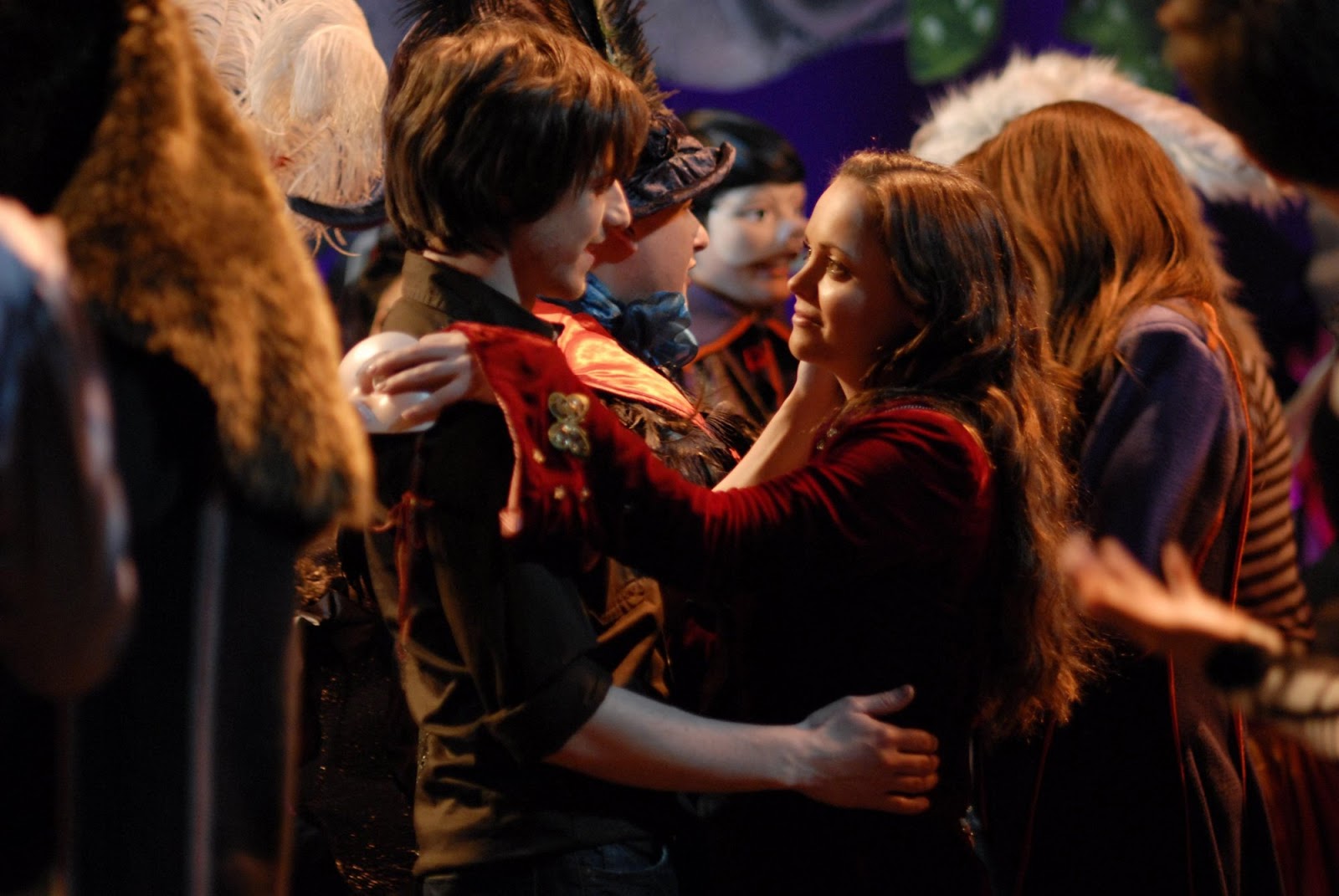
Max (James McAvoy) and Penelope (Christina Ricci) have a solid connection.
Peter Dinklage has a meaty role as Lemon. He is a nosy reporter who first discovered Penelope's "condition" and would have exposed the piglet baby if it hadn't been for Jessica clocking him in the eye. At that time, Jessica had faked Penelope's death. Lemon never bought it. He joins forces with Edward and finds a down-on-luck Max, offering the poor lad money to flush out the truth about Penelope. In exchange for newly acquired gambling money, Max has to wear a suit with cameras sewn in, in hopes of snatching pictures of the presumed dead Wilhern daughter.

Kind, compassionate Max has other ideas in mind for the sheltered heroine.

He befriends the real Penelope, through the invisibility glass of course. He comes by often. In the same camera-strapped suit, he discovers her favorite author, gets his butt killed in chess, and sings "You Are My Sunshine" whilst terribly playing several instruments. It is on his piano playing visit that they physically meet, by hands. He stares at her, observes her with mild affection and quiet yearning. As he lifts a hand to touch her face, the camera snaps and he lets out a curse.

Their romance becomes both infectious and problematic. Max does want Penelope, but cannot due to specific conditions of the curse. His deceit is discovered. He tries to tell her the truth about his origins. Penelope begs him to marry her anyway (which is quite pathetic, they haven't known each other long enough). He says, "no." Yet his "no" doesn't come with screams, fingers pointing at her nose, the urgent need to run, and jump out of the window. He goes only because Penelope tells him to.

Much later, Penelope decides to steal Jessica's purse and runs away, finding freedom, adventure, and friendship with Annie (nice Reese Witherspoon cameo), wrapped in a sleek purple coat and multi-colored scarf. The confident, spirited lady is turning in photographs of herself to Lemon for money, having beers at the Cloverdilly Pub (Max's favorite spot), riding the back of mopeds, visiting museums, and sending her parents post cards.

When her parents find her, independent times are over.

Penelope enjoying her first taste of on tap beer, slurping it through a straw underneath her trademark scarf of course. Don't know many fairy tales featuring their leading princesses drinking ale, but it was quite a humorous turn of events to have Penelope involved in an adult social realm that always seems taboo. After all, her bedroom still had a swing and lots of fluffy toys.
The public discovery and acceptance of Penelope is very sweet. Much like the tepidness of current society, in which anyone who has an unusual tidbit or connection become instantaneously cherished (or hated), they treat her like a celebrity talent, celebrating the hated nose, in collective awe of her. Jessica, forever the Negative Nelly, believes it is hype.

"You're just a talking pig to them," she says tartly.

She encourages (more like forces) Penelope to marry Edward (who still cannot look her in the face) and Penelope reluctantly agrees. On the wedding day, Penelope runs away (for good reason). It is then, Penelope discovers the power to break the curse.

Max and Penelope are together in the end. Thankfully, they don't get hitched (which would have been cheesy). They still need to learn about each other, find out their individual sleeves, especially Penelope.

Max doesn't know that Penelope has changed......
and kisses her anyway.
It is great that the film is written by a woman and has that vibe, especially memorable scenes-- when Penelope befriends Annie, turns the tables on Lemon, and accepts herself.

Still, there should have been some inclusiveness.

Penelope is a guilty pleasure (for me) because residual feelings of exclusivity kick in. At times, it is extremely discomforting to enjoy glaringly white privilege with the exception of the black British officer serving minor comic relief. Despite Penelope's lonely existence, she is spoiled relentlessly in her prosperous, upper class lifestyle. When she caught Max trying to steal a book from her antiquated library, she informs him that three hundred and twenty five books are worth big money. She also has the Disney body shape, gloriously long brown hair, beautiful tailored clothing, and wide eyed naivety that can sometimes be irritating or downright corny (i.e. she encounters joggers and runs from them, petrified). She isn't even asked for ID when she checks into a hotel with Jessica's card or when she has beer. In this fictional place, contemporary imperialism stays present, leaving all else as invisible as Penelope's unique mirror.

In the end, Penelope is a flawed fantasy bubble. We are just looking in it.