Showing posts with label Nikyatu Jusu. Show all posts

Sunday, February 1, 2026

Akasha Rules Her Limited Presence In Lackluster ‘Queen Of The Damned’


Queen of the Damned film poster.

Vampires are the most alluring creatures depicted in both the literary and filmmaking capacity— thirsty for human blood and lustful for warm or cold bodies. We’re often drawn to reading Bram Stoker’s classic Dracula or Sheridan Le Fanu’s earlier novel Carmella. Wes Craven’s Vampire in Brooklyn delivers specific 1990’s laughter and Buffy the Vampire Slayer reruns offer campy nostalgia. Bill Gunn’s Ganja & Hess and Nikyatu Jusu’s Suicide By Sunlight features villainous Final Black Women, a beauty bound to live forever, her blood coated fangs. 

With a criminal sixteen minute screen time, Aaliyah’s final role as Anne Rice’s titular ruler Akasha in Australian director Michael Rohmer’s Queen of the Damned, had such great potential. 

Akasha the stone. DP: Ian Baker.

The film begins very boringly. 
Lestat, an egotistical vampire walking down the streets in typical vamp attire, narrates and isn’t particularly interesting. Marius, Lestat’s sire, had seen something in him. Yet, what? There is no charm, no charisma, a vacancy in his eyes. Of course, he’s meant to be voided, he’s the walking dead. 

The craftsmanship on Akasha’s stone is quite exquisite. DP: Ian Baker. 

When Lestat reflects on his experience being made and his sudden desire for music, he’s led into murdering a young woman (not drinking out of hunger) and it torments him. Still, Marius takes Lestat to some faraway lair in the center of water. Lestat starts playing a fiddle— a fiddle that awakens Akasha, a stone statue.

Why has Marius departed? Jealous that Akasha is more drawn to Lestat even though Marius kept her hidden and otherwise took care of her and her king’s statues? 

Akasha’s awakening involves abstract flashes, past mingling with the present. She will break free almost two hundred years later. DP: Ian Baker.

Meanwhile, a young woman named Jesse obsesses over Lestat, reading his journals and listening to his music. She’s a human attracted to getting into any kind of danger as long as she obtains closeness to Lestat— typical groupie behavior. 

Unfortunately, Akasha exhibits Jesse’s same mindset, Akasha using her superior powers on a grander scale in hopes of snatching up Lestat’s devotion. She’s manipulated minds and situations to ensure Lestat’s success. Now newly awakened and out on the prowl, slim, agile Akasha enters a modern vampire bar dressed in an elaborate silver and gold headpiece, metallic bralette, free flowing skirt and arm bands that sway along her movements. She walks in a purposefully sensuous manner, slow and seductive, her kohl-lined blue eyes holding a mesmerizing magnetism that her fellow creatures cannot break away from. She is their mother, the siren above all sirens. 

And she kills them. 

Everyone. 

The scene is a riot— a sheer exhibition of a vampire who doesn’t always have to physical touch her victims— biting into their flesh or ripping out their hearts and feeding on it. Akasha can burn them alive with the wave of her hand. She’s a grade A narcissist too, caring solely for her own pleasures, her passion for violence and death outweighing the normal vampire levels. They usually want someone to devour tomorrow. Whereas Akasha needs as much as possible, patience be damned. Her appetite is insatiable. Can Lestat truly handle a queen operating without a moral compass? 

Akasha murders a bar of vampires in a slow, methodical power demonstration. DP: Ian Baker.

Akasha walking away in slow motion from the burning bar holds reminders of Carrie leaving behind her burning high school. Akasha did not give a fudge. DP: Ian Baker.


Jesse was not the only one looking forward to Lestat’s concert. DP: Ian Baker.

On the concert day, Jesse decides to continue stalking Lestat (despite watching him kill a poor woman in front of her) and Maurice returns to warn Lestat that Akasha has woken up and killed her longtime king. Lestat only cares about the show, his delight in seeing how many vampires will try to murder him on stage. Later, as he serenades the audience, cloaked assassins in wait, Maurice joins in the sudden fray. They’re seemingly outnumbered until Akasha lets the bodies fray peacefully into the air before she makes her appearance visible. Her hypnotic gaze exists only for the vampire Lestat yet it doesn’t necessarily seem to be shared. He looks grateful, relieved, and surprised. Not the same as the intense need he reveals with Jesse, the innocent naïveté. 

Still, Akasha takes Lestat up on a magical ride through the air that requires no carpet or singing genie. 

At the end of the day, even Akasha becomes fooled by devotion. DP: Ian Baker.

Akasha exemplifies an evil malice that puts other villains to shame. She intended to destroy humanity and rule the vampire underworld. Could Buffy be a match for someone as powerful? It is easy to imagine Black Panther’s foe Kilmonger parading around Akasha’s sadistic ideas and asking her “is this your king?” regarding Lestat. The rockstar vampire showed no authoritative values, especially to be aligned alongside such an inherently wicked goddess. 

It really sucked that the end came down to broadcasting uncomfortable optics: the pure white woman versus a woman of color— the only woman of color person in the film, in the whole vampire coven. It was giving Black women are good for a fun time, not a long time (aka eternity for them). Lestat conveys “your strength was a delicious temporary addiction, I will be taking that, and sticking with my human lover.” Akasha, a cruel chilling force, still manages to convey a human reaction—betrayal— as her family implores her to a barbaric fate akin to a salacious orgy.  

Akasha shows Lestat a kingdom— dead bodies surrounding waters and dirt covered land. She doesn’t understand his obvious discontent. DP: Ian Baker.

Although much promise had been shown in her first part as Romeo Must Die’s sweet-soft heroine Trish O’ Day, Aaliyah's incredible transformation is the primary highlight in Queen of the Damned. She utterly evolved from mysterious, beautiful singer/dancer into a full-fledged femme fatale vampire— her every gesture, her every look spoke terrifying volumes. Her irresistible performance transcends bland material that angered Anne Rice— who deserved a better adaptation of her work. Angus Strathie and Bao Tranchi’s costume designs must be commended for their conjoined talents— the metallic breast plates, the elaborate headpiece and jewelry, and the flowing skirts. This trio were responsible for making Akasha an outstanding villain. 

Famous women who paid homage to Akasha— Anok Yai, Teyana Taylor, Meagan Good, and Normani.

Co-produced by Channing Dungey (former ABC television head), just imagine women filmmakers tackling this gritty material, intending for Akasha to lead her own story, to be the cold, callous villain not relying on a man to wake her up. If Julie Dash or Kasi Lemmons helmed the reins, Akasha’s narrative would probably dive deep into rich Egyptian history, voices told by real figures that actually look of that time period, not white people giving accounts that sound like secondhand make believe. There are too many “Akasha is this” and “Akasha is that” from the vampires, leaving Akasha to barely address her motives. Certain Black women filmmakers love the bonus incentive of exploring diverse cultures (the bonafide research sleuths) and lending that into the scripts to add layered nuances, to even educate the actors and the behind-the-scenes peoples. Akasha, supposedly the most powerful vampire, couldn’t see that her chosen one— after “sleeping for two hundred plus years”— was hung up on Jesse? Lust can blind most folks. A creature of Akasha’s supernatural caliber would have been given Lestat the smoke with the flick of her wrist. Whether due to the poor script or the acting performance, it wasn’t believable that Lestat tricked Akasha and led to her demise. What else was planned before Aaliyah passed away? Although her scenes were completed, the film has an unfinished quality and doesn’t account for why she’s barely in it. Plus, Aaliyah and Korn were to collaborate on music. Perhaps she would have contributed to an edgy soundtrack that included Tricky (a favorite). What If and I Can Be from her last album definitely showcased that her vocals could rival the thrum of an electric guitar riff. 

Akasha exudes a commendable presence. DP: Ian Baker.

Every few years, the itch to rewatch Queen of the Damned comes into effect. Aaliyah only had two differing film roles. Akasha is the hardest as her fiery fictional end is a painful metaphor to the cause of death its portrayer, a phenomenal artist that the world lost way too soon.  


Saturday, October 28, 2023

‘Our Father, The Devil,’ Teaches Of Untold Hells On Earth

Our Father, The Devil film poster.

Our Father, The Devil simmers a slow burning masquerade that loosens its secrets seam by seam, ultimately revealing two people attempting separate paths of redemption. Yet, questions arise between the parallel twists and shocking turns. Can a person truly be redeemed after committing heinously evil acts many years ago? How much are they willing to risk in order to achieve a clean slate? And is an apology ever enough to begin the process of forgiveness? 

Marie (Babetida Sadjo) is a lovely dark-skinned chef donning a septum piercing, epic lip stick shades, and banged box braids. She’s rootable from the start. DP: Tinx Chan.

The film opens on beautiful, elusive Marie Cissé having a solitary drink. She represents the idyllic dream— a quiet existence in the French mountainside, respect from Sabine, her boss as a talented head chef for a nursing facility, and the keys to a befitting kingdom via Jeanne, a dear, supportive mentor. Marie has a whiny friend in fellow co-worker Nadia. In the sweet secluded cabin in the woods, high above a cliff and majestic scenery (an important heirloom in Jeanne’s family), Marie enjoys the solitude and tells no one about it. However, Marie’s resplendent bliss becomes threatened by the sudden appearance of Father Patrick, a charming priest who has swept the entire staff and residents under his religious thumb. Every move he makes—from his walk to the way he carries a spoon— triggers Marie. 

Furthermore, Marie, the African immigrant, has grown accustomed to French colonialism. Her body already seems to belong to the surrounding whiteness. A co-worker undermines Marie’s cooking, Sabine refuses to give much needed vacation, and a persistent bartender aims to seduce. Whereas Nadia believes Marie just needs a man, Jeanne respects Marie’s potential and rich, delicious cooking. At the same time, Jeanne encourages Father Patrick’s influence unknowing that the enigmatic man stirs discomfort. Marie’s desperation for temporary escape grows and grows until she decides to do something unexpected about it. 

All the prayer and time in the world cannot change a victim’s inherent trauma, Father Patrick (Souleymane Sy Savane). DP: Tinx Chan.

The narrative shifts towards the former mouse, the former soldier snatching back her power from the once horrendous cat. The metaphor weighs heavy here. Father Patrick believes his past can be buried beneath sacred black and white cloth. In glaring reality, Marie, sees the monster that forever scarred her. Trauma— the reason for Marie’s closed off personality, her steel guardedness— impacts her newfound motivation. After what has been done to her as an innocent child, how could she trust a single soul? How could she give this man an ounce of remorse? And can she heal with the blood stains permanently imprinted on her mind? 

The gifted cabin symbolizes another form of pleasure, albeit sadistic—  a place to enact revenge where no one can discover them, let alone suspect foul play. Father Patrick’s pleading tries to convince and tug on Marie’s vulnerable nature, for a moment seeming quite believable. The terrible fact about surviving trauma is that certain elements remain burned in the brain. They may be far from whence they hailed. Time may have passed. Marie may have carved herself a healthier situation.

But she was not going to forget what was done to her or her family. 

Our Father, The Devil is brilliant from its effective title to the fiery direction and story, a feature length debut by Ellie Foumbi, also an actress starring in early Nikyatu Jusu shorts, Suicide By Sunlight and Say Grace Before Drowning and Abbesi Akhemie’s The Couple Next Door. Nominated for Best First Feature at this year’s Independent Spirit Awards and Best Film at the Africa Academy Awards, Foumbi’s strong, vital voice deserves a seat at the Directors To Watch table. Someone needs to put out a bulletin, alert the media radar. Her fresh, bold narrative delivers far better material than most films wallowing in the same rehashed storylines with the same overpaid actors. 

To feel or not to feel remorse for your prisoner— and rightfully so, Marie does not give a chuck for a while. DP: Tinx Chan.

The cast is also excellent, especially the dynamic Babetida Sadjo as Marie, a woman confronted by an ugly past that could potentially mar her brightening future. Souleymane Sy Savane as Father Patrick rendered a character reinventing himself as a close ally to sainthood. In one moving scene, a tear glides down his eye and for a split second, a hardened Marie could have almost succumbed as easily as the community she partly distances herself from. Sadjo and Sy Savane play off each other beautifully— raw, harsh, and severe. Brilliant acting masterclass work with Tinx Chan’s intense cinematography pushing Foumbi’s emotional story forward.

Overall, Our Father, The Devil sends guttural shivers through the heart and mind. It’s thrilling, mysterious, sensuous, and difficult, but leaves an unforgettable impression.


Thursday, March 23, 2023

The Short Films of Nikyatu Jusu


The short films of Nikyatu Jusu.

As another Women’s History Month comes to a close, a tremendous blessing has been revisiting Nikyatu Jusu’s phenomenal work. She has four short films available to stream on the Criterion Channel: Flowers, Say Grace Before Drowning, African Booty Scratcher, and Suicide By Sunlight. Meanwhile, Black Swan Theory is available on Vimeo. 

Mya (Amee Apedo) and Erin (Belle Legrand) survive a very dangerous situation in Flowers. DP: Jamal Solomon. 

In Flowers (2015)— co-directed and co-written with Yvonne Michelle Shirley— Mya and Erin set out to avenge Mya’s honor nearly tarnished by her white male tutor, Mr. Ryan. After all, Black girls are not often believed when assaulted. It would be her word against his and hers would bear less weight. Even the ease Mya enters his secure home raises questions. He trusts her like that? Clues reveal Mr. Ryan before he even arrives— mainly the brown baby on his refrigerator. So, he has a taste for Black women, eh? 

When the tension surmounts near the end, an unhinged Mr. Ryan becomes a greater villain, having no problem inflicting sexual or physical assault on Black girls. Has he done this before? Put his hands on the defenseless? His own unseen partner, pregnant with his second child? Through a red haze, he’s only thinking that Erin may destroy his reputation. Heart-pounding fear intensifies for Erin as the adult and teen fall on the floor battling over her phone. How far will both go for control? Mya returns, standing in complete shock at this escalated violence. Gratefully, Mya does not film this— her own tutor taking away her best friend’s agency; stripping away Erin’s earlier candor. The girls have played a hot gamble and they must leave before the flames burn any brighter. 

Mya and Erin both experienced abuse by the hands of Mr. Ryan—  traumatic in different ways and would impact their friendship forever. 

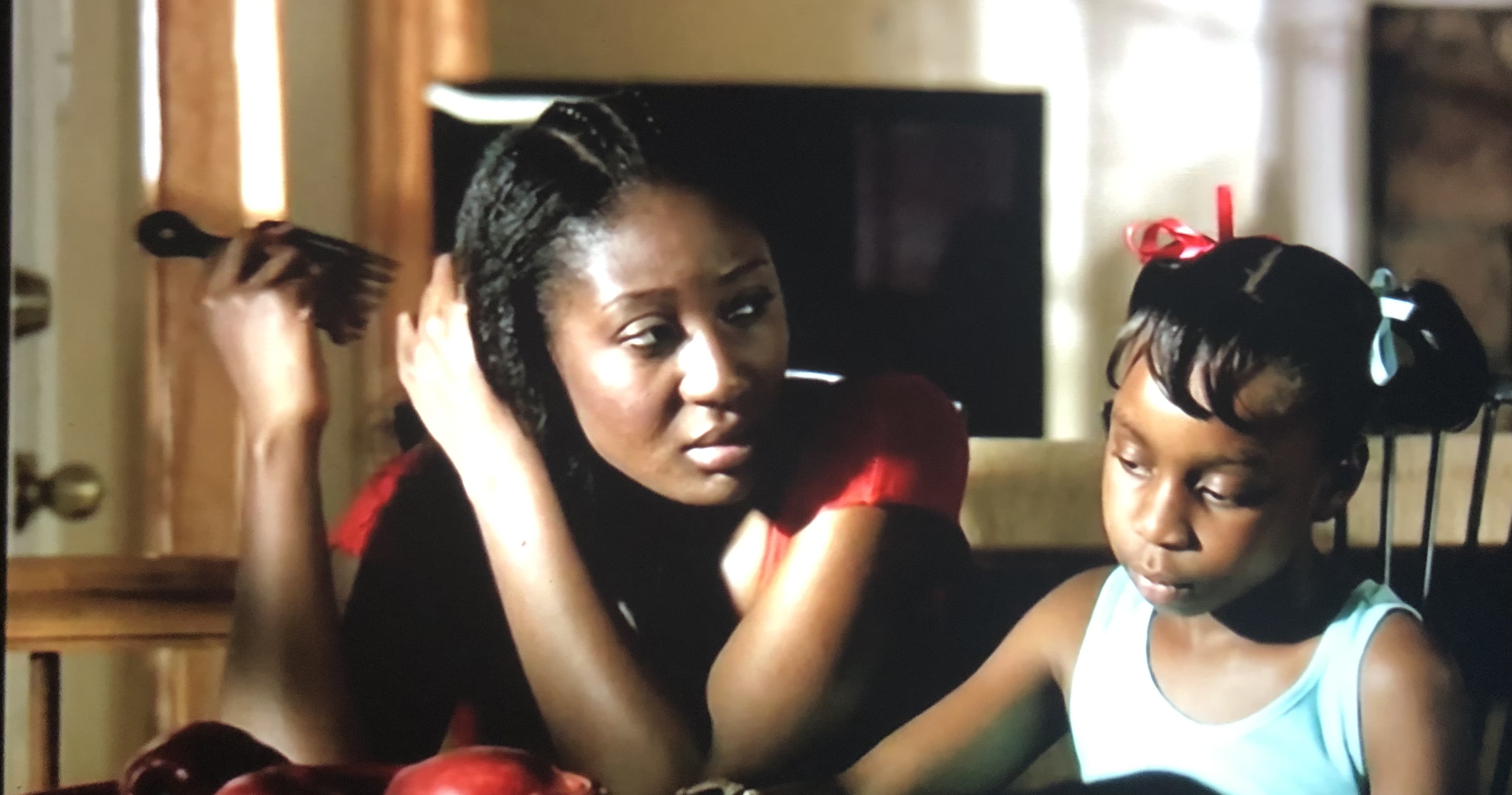
Grace (Ellie Foumbi, director/writer of the buzzy Our Father, the Devil) is impressed that her daughter Hawa (Dennise Gregory) can read well in Say Grace Before Drowning. DP: Daniel Patterson.

Say Grace Before Drowning (2010) sheds light on Grace, a sexual assault survivor— narrated from the point of view of Hawi, her daughter. Hawi was the first to leave their country, sheltered by Grace’s sister Aisha and her husband Chris. Upon Grace’s arrival, everyone treats her with special care, including Chris who’s touchy-feely actions trigger Grace’s assault. Her reactionary behavior stems from untreated memory dissociation, a mental disorder that stems from heavy, undisclosed trauma. Often, a withdrawn Grace disappears within herself and brightly returns to being Hawi’s mother, braiding her daughter’s hair, complimenting her reading, and sleeping beside her at night. 

By mistaking Chris’s kindness, Grace may be reminded of the soldiers’ mistreatment. After the family pool trip in which Chris teaches Grace to swim, she sets out to seduce her brother-in-law. During a spaghetti meal that Chris is preparing, Grace grinds on him during a song— right in front of Hawi. Grace transforms into her aggressive attackers launching herself at Chris, refusing to take “no” for an answer. In an assault as detrimental as sexual harm, power and domination over the body is essentially the key. Grace wants to repeat that history, but with herself as the wielder of power and domination over Chris, blind to consequences, to Aisha and Hawa’s feelings. Did the soldiers consider Grace’s family or their own wives, girlfriends, daughters as they violated Grace? 

Hawi hears the screaming match between Grace and Chris and abandons the spaghetti to see what the fuss is about. Spaghetti, when not watched and stirred frequently, gets clumped together, uneasy to eat. 

Toby (Angela Burnett) longs for her ancestral foundation. DP: Charles Burnett.

Hawa almost shadows Toby in Alile Sharon Larkin’s Your Children Come Back To You (1979)— story about a child wishing for a Black world whose mother too frequently dissolves into deep depression, neglecting Toby in the process. Whereas Hawi has her aunt Aisha, Toby has a compassionate grandmother. 

Abbie (Ebbe Bassey) and her teenage daughter Isatu (DeWanda Wise) reach an important solution to the prom in African Booty Scratcher. DP: Daniel Patterson.

African Booty Scratcher (2007), an earlier Jusu work, gets its title from an offensive, known and well-traveled taunt. The short stars DeWanda Wise as Isatu, a teenager looking forward to prom. Her hard-working immigrant mother Abbie wants Isatu to wear a traditionalist gown broadcasting her heritage. Isatu’s peers negatively blast anything associated with Africa. Thus, a tradition as American as apple pie, the prom is the biggest event in a young girl’s life— the fashion statement made here can either elevate your status or bring you down. Of course, Isatu believes that wearing  a typical name brand designer would have all eyes on her.

Terence Nance cameos as the mean teen who dumps Isatu via note. What a class act. DP: Daniel Patterson.

At Abbie’s restaurant (serving jollof rice and stews), Isatu works cleaning tables and waitressing in order to obtain money for her dream dress. Isatu sees firsthand that the teasing from schoolmates is nothing compared to how some Black adults look down on African immigrants, a seething hatred that manifests into verbal malice. A potential customer disrespects Abbie and their food in the process— further claiming that the Asians know what Black Americans desire more than the Africans. This avenue plays into Isatu’s own Americanized thought process— her laughing at the girl with the “African Booty Scratcher” card on her back, her preference for pasta over jollof rice, her reaction to the gown Abbie made for her. Perhaps Isatu too will become as bitter as the stranger, turning her back on her ancestral background for the comfort of fried food. Unfortunately, her mental institution has already begun.

Isatu realizes that she too has participated in Abbie’s humiliation. 

Mind-enhancing cocaine allows Sonya (DeWanda Wise) to blur her world in order to cope with her past life as a sniper. DP: Hans Charles.

The dark, disturbing Black Swan Theory (2011)— also starring Wise— focuses on as Sonya, a murder for hire dressed in black sporting a killer braided faux hawk hairstyle. This avant-grade experimental piece has an Afro futuristic meets parental advisory video game aesthetic. Sonya high on drugs and strapped for cash, takes on a murder-for-hire job. Already, she’s imagining killing someone— in a crueler affliction that implies personal vendetta versus a flying bullet. 

The men (played by Erik Clancy, Jeevan D’Souza, Stephen Hill) receive code names straight out of college textbooks—Italian renaissance artist/theorist/engineer Leonardo Da Vinci, French playwright/political activist/critic/existentialist philosopher Jean-Paul Sartre, and German poet/philosopher/composer Friedrich Nietzsche. DP: Hans Charles.

Meanwhile, Sonya’s code name Black Swan lacks that same consideration. DP: Hans Charles.

If there are therapeutic outlets for abuse survivors, do those who killed in the name of their country also have support? What therapist could possibly empathize with cold-blooded murder— even under the semblance of justice? How does a society expect veterans to navigate with normal mental/psychological capacity? Furthermore, Sonya has photographic memory. Even if she shot one person, that image rests in her mind forever. 

Seemingly without support beyond Jordan— her ex and former military comrade coping with the past in his own way— Sonya takes an assignment reminding her of the only skill she acquired whilst overseas. 

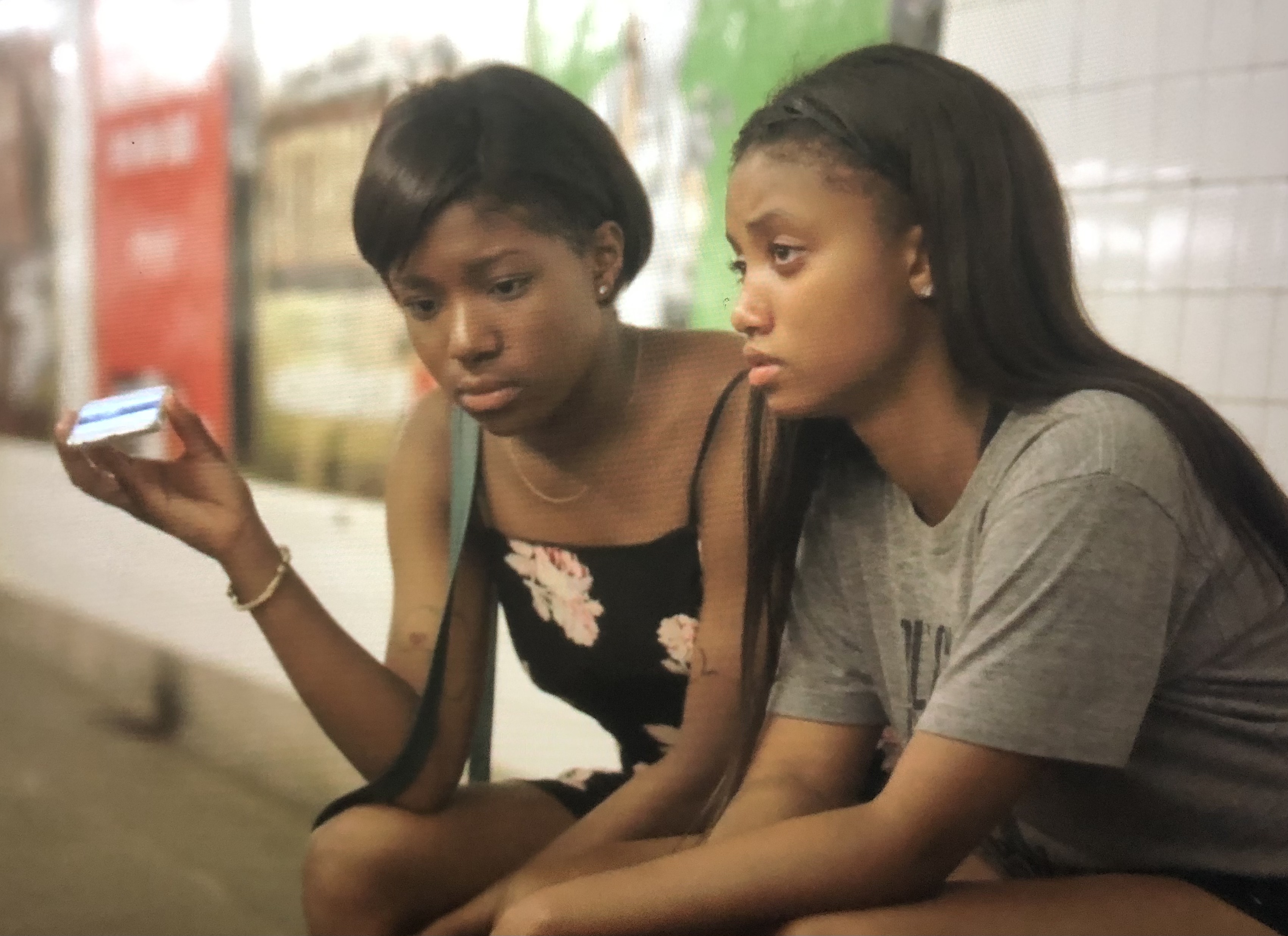
Valentina (Natalie Paul) in the subway in Suicide by Sunlight. DP: Daisy Zhou.

Suicide by Sunlight (2019) currently sits at number one on a list of short films that could be excellent full-length features. Seriously. An amazing film about Black vampires— without the Marvel comic book associations or Eddie Murphy antics. In this incredible world, vampires with melanin have the unique gift of walking through sunlight unscathed and those lacking die by the sun rays if they choose to be brave (or stupid). The shots on Black vampires glowing in the day are stunning; as though the still images bring the style of Gordon Parks to a vivid, creature-feature technicolor. 

Valentina tries to see her daughters, but their father  refuses to relent. DP: Chloe Zhou.

Gorgeous, stylish nurse Valentina juggles her career, bloodlust, and motherhood. She cares deeply for cancer patient Micah, a little boy on the cusp of death. Micah is around the same age as Valentina’s two daughters Hope and Faith and ex Langston makes it impossible for Valentina to see them. He’s part of those in town deadset against the vampires, not realizing that their precious daughters are not excluded— a whole new perspective on the one drop rule. 

Valentina balances her nursing duties; withholding a ferocious hunger that her co-workers and patients know nothing about. At night, however, her lust is insatiable— deadly seductions turn into passionate clenches of her razor sharp fangs piercing flesh. Shockingly, though, Valentina pukes it all up, looking as guilty as Buffy’s ex-boyfriend Angel— the redemptive vampire with a soul. 

When Valentina discovers that Langston has introduced a new woman to Hope and Faith— perhaps as some misguided attempt to replace Valentina and give the girls a makeshift nurturing he himself cannot provide— Valentina decides to give him a lesson. In the process, Valentina shares who they truly are to both Hope and Faith. 

Don’t ever cross Valentina. A beloved mother would do anything to see her children. DP: Daisy Zhou.

The girls Hope (Juniah Williams-West) and Faith (Madison Spicer) trust in their mother. DP: Chloe Zhou.

Jusu’s five short films are well-crafted, sophisticatedly put together and beautiful as a whole oeuvre. All four cinematographers—Jamal Solomon, Daniel Patterson, Hans Charles, Chloe Zhou— captured the rich, multifaceted variations of Black skin in exceptional styles that would make Bradford Young proud. In addition to the experience, it is lovely to see that the same names continue popping up in the credits— Yvonne Shirley (sound mixer on African Booty Scratcher and Say Grace Before Drowning), Terrance Nance (guest actor, producer/title card maker, renaissance Da Vinci, etc), and quadruple threat Jusu editing and production designing. 

Hawa playing in her mother’s makeup as young girls love to do. DP: Jamal Solomon.

“The Oscars are not my center,” Nikyatu Jusu recently said on the Independent Spirit Awards carpet—a valid statement to speak against an industry placing the Academy Awards above all others— the symbolism of “making it” in the filmmaking art. 

Yet, that problematic space relies heavily on its white cinematic history repeating over and over; an institution excluding Black women for years, continuing to nominate the same folks filling the Guinness Book with their record victories. So, even if they fail every year to recognize Black women’s talents onscreen and behind-the-scenes, the audience desires to see themselves reflected, most importantly by women who mirror them, who know their pains and joys, not stories from the anthropologist lens dominating our cinematic experience for far too long. 

“I’ve done a lot of spiritual, intellectual, physical labor, being in predominantly white spaces for my entire life. So now allow me to just focus on the work. But everything comes with a price. Money’s never free; success is never free.... the more breaks I have for myself, the more I’m like, Do I want to be part of that machine and do everything that comes with that? Or do I want to make something I truly believe in every few years and still teach and have my little quiet house and live below my means? The more you see of the figurative monster that is the industry, the more you assess what you’re willing to do to get what other people have gotten.”— Nikyatu Jusu to film critic Angelica Jade Bastién in Vulture

Jusu’s works matter. Every last one. Her brilliant feature-length debut Nanny included. Brown and dark-skinned women star across genres that usually exclude them. Horror rarely ensures their survival. Jusu sets the wrongs to rights, presenting Black women and girls in either unaddressed community topics or imaginative scenarios that broaden the modular spectrum. She utilizes key elements to a solid cinematic experience: breathtaking stories, compelling cinematography, and fresh talented actors/actresses, ensures that the audience will be wholly invested. Plus, the casting stays excellent— friends having believable chemistry, mothers/daughters looking alike. 

Whether Nikyatu Jusu makes another short film between her booked schedule of two feature-length films, whatever comes next will be well worth the wait. The representation of Black girls and women are safe in her capable hands. 


Wednesday, December 28, 2022

The Generational Plight of the American ‘Black Girl’


Black Girl film poster.

In the late 1960’s, Drama Desk winning playwright Jennie Elizabeth Franklin found success in her fourth play, Black Girl. Not to be confused with Senegalese filmmaker Ousmane Sembène’s 1966 film Black Girl set in France, the African American version directed in 1972 by Ossie Davis is adapted by Franklin, based on her work. While Sembène explores the traumatic plight of the imported immigrant, Franklin and Davis convey the consequential impact that mental conditioning has placed in the Black family structuring; mainly the weighed burdens unfairly set on matriarchs.

Betty Everett— the singer behind the popular track— “The Shoop, Shoop Song (It’s In His Kiss),” sings the title “Black Girl,” playing repeatedly throughout the film. 

Rose (Louise Stubbs) is angry that Billie Jean (Peggy Pettit) has quit school. DP: Glenwood J. Swanson.

A distressed Billie Jean taking Rose’s unleashed ire. DP: Glenwood J. Swanson.

In the American Black Girl, Billie Jean embodies the unnatural fear and hostility nestled in the minds of those who feel threatened by education’s close relationship to success and “betterment.” In order to sabotage Billie Jean, Norma and Ruth Ann, Billie Jean’s manipulative older half-sisters, jeopardize a young girl’s vulnerable mentality with verbal poison. Perhaps in addition to those who tease and taunt her in school, Norma and Ruth Ann are also other reasons that Billie Jean has dropped out. Norma and Ruth Ann represent the pains of being stuck in unhappy situations, of misery loving company. Thus, Norma and Ruth Ann taint Billie Jean’s dancer ambitions, turn it into a patriarchal testament (dancing for the lustful male gaze) instead of a young Black girl embracing the art of her graceful human body. Billie Jean moves in an elegant rhythm similar to ballet style— “ballet” is a word Norma frequently mispronounces. 

Old habits come back to bite as Rose (Louise Stubbs) passionately kisses her philandering ex Earl (Brock Peters) in front of the family. DP: Glenwood J. Swanson.

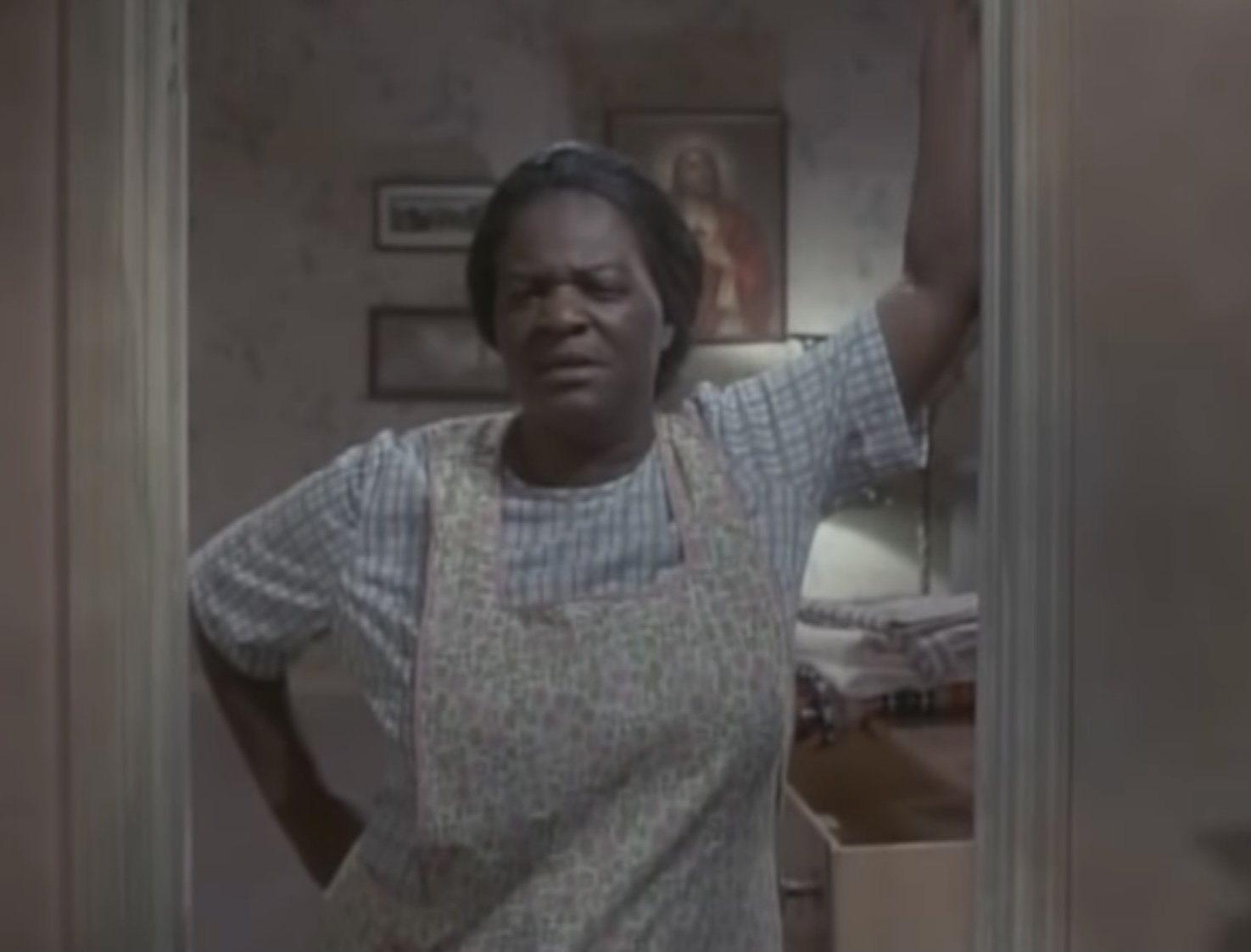
Mu’ Dear (Claudia McNeil)—Rose’s mother— believes that the “Bible belongs on the shelf not in self” whilst posing in front of white Jesus’s portrait. DP: Glenwood J. Swanson. 

The stern, sacrilegious Rose, mother of the three, is blind to Norma and Ruth Ann’s resentment, believing that Billie Jean is on her way to becoming much like her— a tired existence in a humble, multigenerational house where contempt and strife collide. Often, the disappointed Rose compares Norma, Ruth Ann, and Billie Jean to Netta, her foster daughter up in college aiming to become a teacher and upcoming law student. Rose only saw potential in Netta and gave up hope on her biological daughters altogether. That hurt Billie Jean’s already fragile self-esteem. Norma and Ruth Ann were tearing her down constantly. 

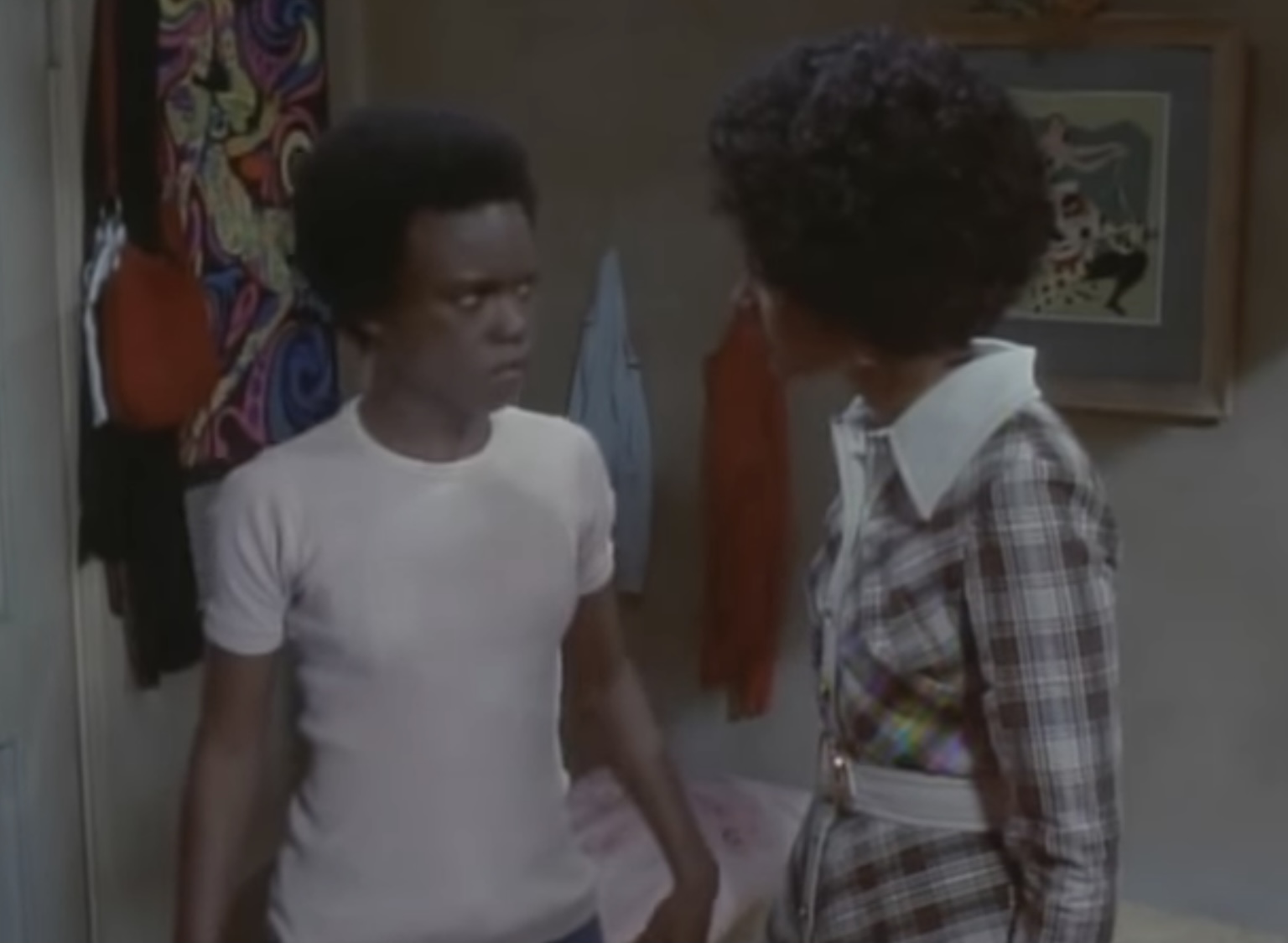
Norma (Gloria Edwards) calling Netta’s photo the callous B word to Ruth Ann (Rhetta Greene)— who then mispronounces the word “deaf.” DP: Glenwood J. Swanson.

Netta (Leslie Uggams) in her dorm talking to Rose about her Mother’s Day plans. Fifty years later, Uggams would star in Nikyatu Jusu’s feature-length debut, Nanny. DP: Glenwood J. Swanson.

Black Girl struck a personal chord with me. I was repeatedly bullied by my teachers and peers over my physical appearance— hair and clothes sadly— and dropped out my senior year of high school. My mother also experienced the same, dropping out at sixteen-years-old (she once told me that she only had two outfits) and later completing her GED after having children. I too received my GED and completed undergraduate and graduate studies; the only member in my family to achieve the feat. Although she never said “I’m proud of you,” I believe that my mother was. My brightest memory is of her clapping at my undergraduate graduation. As proud and strict a parent as Rose, my mother also wasn’t keen on apologizing (which is a strange communal trait). She demonstrated “sorry” in her actions. I believe sometimes parents never want to see their children correct them or showcase knowing what they did not learn or understand. They want to be stay in the dominant roles as parent forever, the person retaining greater knowledge. Still, I admired my mother correcting my English papers or us learning algebra together. 

Billie Jean succumbing to Ruth Ann and Norma’s deceit. DP: Glenwood J. Swanson.

During the big showdown, however, Billie Jean discovers that Norma and Ruth Ann have been destroying Netta’s encouraging letters to Billie Jean. DP: Glenwood J. Swanson.

Norma and Ruth Ann ostracizing Netta for keeping to her studies and not pursuing sexual conquests also hit home. Some people truly are uncomfortable with individuals who seek higher goals, whose ambitions focuses on career pathways and not hookups heavily prevalent in pop culture. I do not talk to my Bible wielding family about my celibacy because it causes distress, harmful jokes, and invasive questions. Last year at my brother’s grandmother’s funeral, my cousin asked me, alone in his car, “why does it seem like you don’t like sex?” In moments that Norma and Ruth Ann circle Netta, accusing her of all kinds of foul, wicked cruelty, Netta’s expression grows more intense, frightened, familiar. These are women around her own age. Why is it so important to know the sex life of someone else, to criticize those uninterested in the act? Netta is educated and virtuous too? Oh, the girls hate that. Or maybe it is not hate at all. Their misplaced envy— their dislike over Netta behaving unlike them—has transformed into a toxic rage, especially Norma, who then pulls out a knife.

Netta also privately assures Billie Jean that Rose has never said “I love you,” much less hugged her foster daughter. Rose withholding motherly affection and praise from Billie Jean has affected the young girl so much. Billie Jean almost turned into Norma and Ruth Ann. DP: Glenwood J. Swanson.

A hypocritical Rose worries that Billie Jean’s dancing will be the makings of future promiscuity, that the generational cycle will repeat. Yet, in the next instant, Rose does little to protect Billie Jean from Herbert, the other house occupant despite Billie Jean protesting her dreams go beyond empty pleasures. Billie Jean’s room connects to the kitchen and back door. Anyone can come through unsupervised. It doesn’t help that Herbert doesn’t knock. Rose nonchalantly says that Billie Jean has nothing Her set hasn’t seen before— setting Billie Jean up for potential sexual harm. Rose comes across as believing such access is natural, not unseemly. Billie Jean is a minor. Who knows what is occupying that man’s mind for him to continue shocking behavior towards a mere child? How can Rose obsess over Billie Jean’s future when she’s not even understanding the present danger under her own roof? This demonstrates the long historical pattern of women purposely turning a blind eye. 

Family at church on Mother’s Day. DP: Glenwood J. Swanson.

Netta giving Billie Jean the hope she needs to move forward. DP: Glenwood J. Swanson.

Thankfully, Netta believes in Billie Jean— a healthy relationship that Norma and Ruth Ann try to destroy. It is already bad enough that Billie Jean is named after Norma and Ruth Ann’s charismatic father, how dare she try to better herself too!

Mu Dear embracing her granddaughter Billie Jean before our heroine finishes school alongside the trustworthy Netta and trains for dancing. DP: Glenwood J. Swanson.

And Rose, finally realizing that the spiritualist was wrong in dismissing the treasure right in front of her very face, her very blood: Billie Jean. DP: Glenwood J. Swanson.

My next goal is to read Jennie Elizabeth Franklin’s Black Girl play and write a compare/contrast essay of source material versus film, seeing as Franklin wasn’t happy with this production. At least, Franklin had a win in ensuring that Peggy Pettit—star of the touring the off-Broadway version— received the starring film role; the studio wanted a lighter skinned actress (Hollywood history still repeats on this unfortunate standpoint). This film, however, does render a heavy story of generational trauma. You think about the tremendous sorrow Sembène’s girl experienced and that of Nikyatu Jusu’s modern Aisha in the horror Nanny; how these three individual vehicles connect together to form a resonating narrative. While Sembène’s girl and Aisha are visibly drowning from the subjective gravity of “slavery by another name” aka underpaid/undervalued servitude, Billie Jean’s self-esteem is constantly threatened to submerge in overwhelming doubt— doubt of which caused not just by her family, but the cyclic damage brought by white supremacy. Although no white characters are present in this piece, the consequences of colonialism is a haunting, terrifying ghost that lingers in the smallest of ways.


Therefore, Jennie Elizabeth Franklin and Ossie Davis’s Black Girl validates a simple desire to be loved and respected, to be treated as though her purpose on earth matters, and that in light of stacked generational odds, her mother will stand right beside her, embracing all that she is and all that she will become. 


Thursday, January 27, 2022

‘Nanny’ Addresses The Terrifying Price of the American Dream


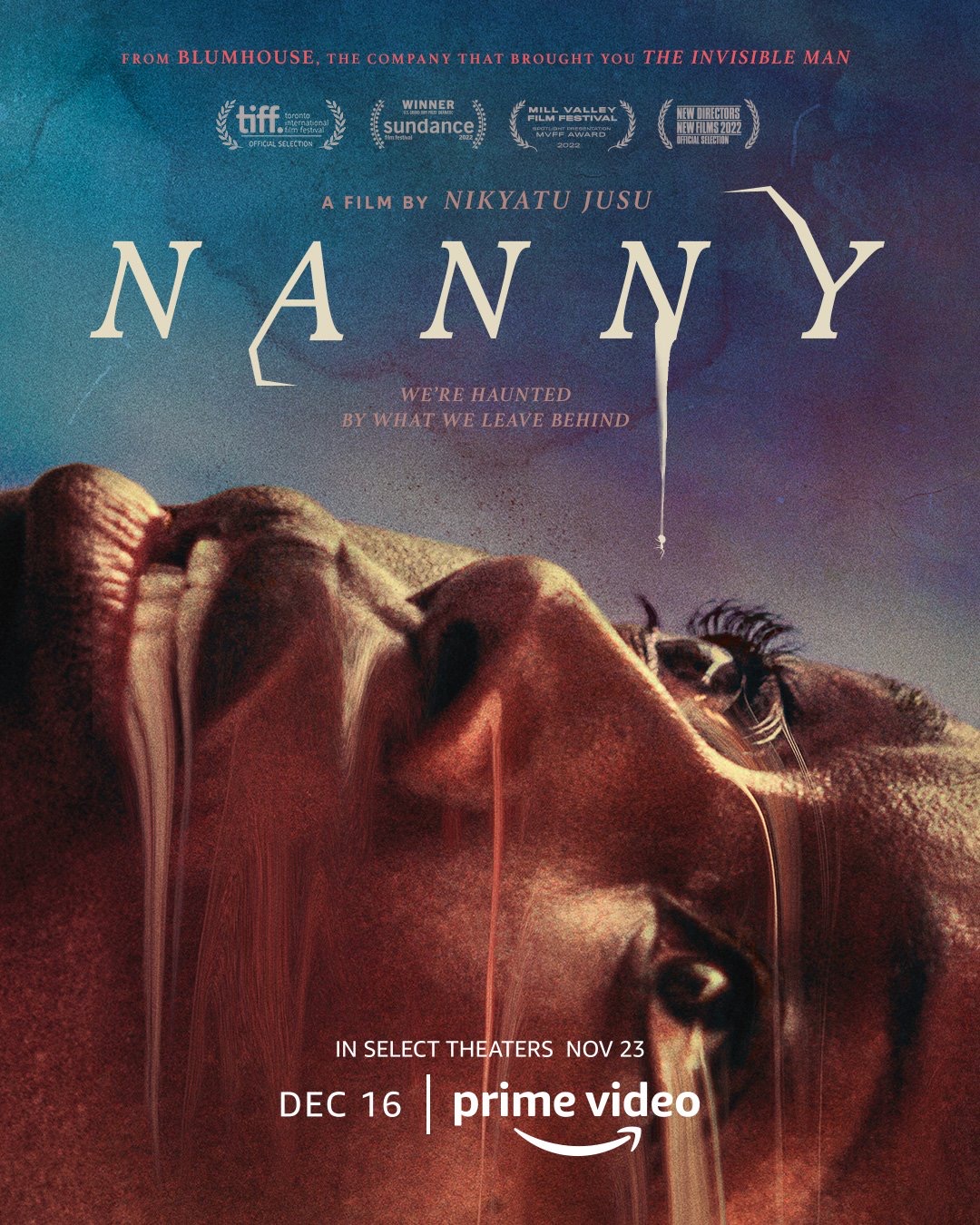
Nanny film poster.

Deceptive appearances crack beneath the calm surface in a slow simmering horror Nanny

The affluent white savior Amy hires freshly arrived Senegalese immigrant Aisha to take care of her daughter Rose in a clean, immaculate Tribeca penthouse. An eager Aisha plans to have her own son Lamine join her in New York. Their talks on the time-limited phone bring Aisha the most joy. Immediately, Aisha and Rose form an intense connection. Rose is adept to French and even eats much to Amy’s surprise. However, it is Aisha’s food that Rose is enjoying— not the latest food crazes that Amy has been introducing. 

When Amy’s husband Adam returns, he is absolutely cold to Amy, almost causing a humiliating spectacle. He is softer towards Rose, bringing a book on Anansi the Spider from his latest trip. His office reads more museum than personal workspace. His photographs of global activists, the books in various languages— they’re a collection of travel souvenirs and displayed wealth. While Aisha hides her struggle to provide substantial monetary support for Lamine’s journey, Adam is able to travel freely without restraint. The differing lives that Aisha and this couple lead showcase the spaces money allows them to inhabit. Amy’s continued ignorance to pay Aisha her worth and pay that worth on time begins to interfere with the couple’s manufactured politeness. Perhaps Amy believes Aisha doesn’t understand the American dollar system and pays her purely on the Senegalese exchange rate.

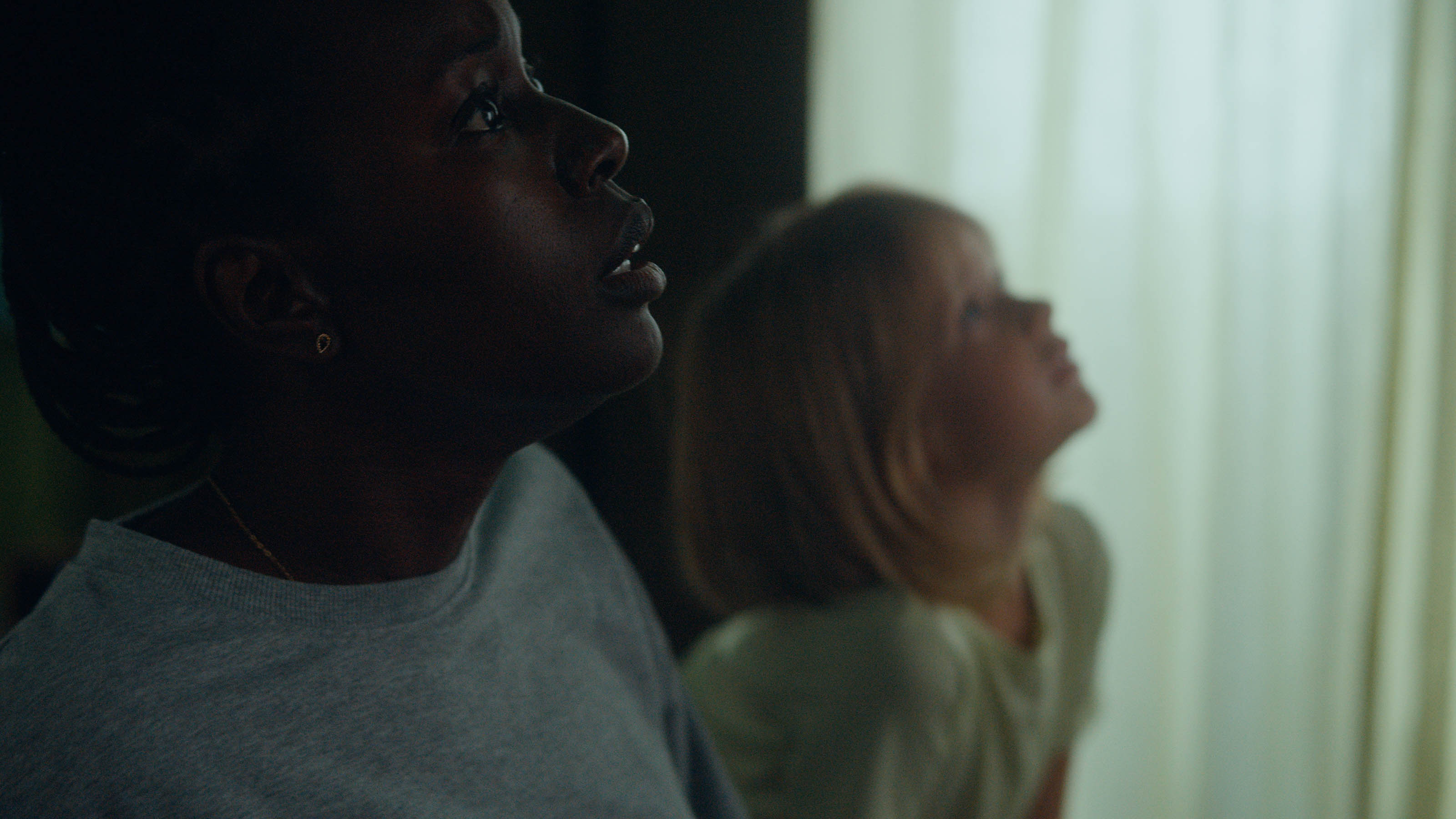
Aisha (Anna Diop) and Rose (Rose Decker). Image from Sundance Film Festival. DP: Rina Yang.

An overworked Aisha represents the modern Mammy, a nursemaid to a spoiled child. The longer Aisha is forced to stay in the increasingly estranged couple’s home— often overnight— the more weight the hold has on Aisha’s conscience. This well-executed tension builds to an insurmountable stress and pain beyond physical. Rose is placed high above on a hierarchy that Aisha must obey. The heartbreaking consequences of this terrible truth threatens to wholly consume Aisha. So the rule-breaking spiders crawl with defiant purpose and the surreal waters flood Aisha’s vulnerable thoughts with complicated messages. 

In the midst of the rising supernatural elements, a tenderly constructed romance blossoms between Aisha and the Tribeca penthouse bellhop Malik. The attractive pair have much in common— both raising young sons and working indentured roles. In one particularly striking scene— an appetizing predecessor to beautiful dark brown skinned bodies joining together— is that blissful car ride. The camera turns sharply on Malik driving Aisha along, Sampa The Great’s Grass Is Greener trembles in the background of a perfectly lit night. Aisha deserves a natural, unconditional love. Kind, gentle Malik— in Aisha’s age range— asks for consent, woes her, and offers support including through his grandmother Kathleen. 

Nanny writer/director Nikyatu Jusu integrates her cinematic influences with a sophisticatedly charged personal narrative that strikes the viewer’s emotional core. Firstly, Ousmane Sembène’s La Noire De and his muse Mbissine Thérèse Diop swim across the Atlantic to contemporary America; hoping to test out her waters and fulfill her dreams only to find the abject labor again. The mermaid (which is not a Eurocentric beauty form at all, more creature than seductive siren) comes from many symbolic stories and the noted emphasis on the collage painting by Wangechi Mutu (a Kenyan-American artist) stresses an underlying connection between Aisha’s unconscious demons and the never ending plight of water, this historical Black fear that reaches farther back to the days of drowning bodies. Even cinematographer Rina Yang’s breathtaking scenes of gorgeously lit Black skin were so stunning that blinking became an impossible exercise. 

The cast is led by the utterly remarkable Senegalese actress Anna Diop as Aisha— a role she was destined to become and not just because she shares a certain surname. Diop conveys the personal agonies that continue seeping into Aisha— her fear, her sorrow, her pleasure, her frustration, and her grief. She fiercely portrays a character’s internal struggle, withholds so much from everyone until the shockingly familiar breaking point. Sinqua Falls is given more than the average Black male love interest. Malik is still reeling with regret over the memories of his mentally unstable mother. At the same time, he is falling for a distressed young woman. No one is truly considering her happiness or her well-being. There is so much care in the handling of him, so much gentleness that Falls expresses. Plus, Leslie Uggams— from the Ossie Davis directed classic Black Girl— plays Malik’s wise, insightful Grandmother Kathleen, a wonderful treat seeing legacy Black actresses and actors onscreen. 

While white critics cannot properly comprehend a racial lens horror scope outside Jordan Peele’s ever present shadow, others understand Jusu’s resourceful parallels in Nanny strengthen a cyclic story specifically known to Black women immigrants caring for their charges— at times knowing these children better than their own. The scariest takeaway is that the price people like Aisha pay to reside in a country promising freedom is usually with their lives.