Showing posts with label Jason’s Lyric. Show all posts

Monday, February 14, 2022

Favorite Black Loves In Cinema


Cane River’s Peter (Richard Romain) and Maria (Tommye Myrick).  

Happy Valentine’s (or Single Awareness Day) to those who celebrate all kinds of love, romance, and self-care joy. 

In the Black cinematic world, there is still movement to be made in ways of a well-crafted story, compelling cinematography, and fine acting. Some films have one or two of the ingredients; barely all three to make the recipe complete. When it comes to heteronormative Black love, putting on the classic Love Jones or Jason’s Lyric (which both feature the incredible Lisa Nicole Carson) sparks up the mood whereas the out of the vault Cane River is a marvel to behold. Even the startlingly passionate Ganja & Hess must be recommended for its daring portrayal of Black vampiric lust despite the unhappy ending for the pair. 

Black LGBTQIA+ films such as Moonlight, Pariah, and Rafiki contain the queer violence that comes from sanctimonious communities that cannot accept such a love. Yet that is only for a moment that that ugly bandaid comes off and the healing slowly begins. Moonlight is exceptionally beautiful for showcasing the bonds between skinfolk and kinfolk, subtleties between love and longing, and the desire for men to be themselves alone and with each other. Pariah and Rafiki have these awestruck profoundly engaging periods of Black women love; joining hands in friendship and embarking on bliss no matter the consequences. Bessie, dee rees other film, highlights the musician’s bisexuality starring Queen Latifah who doesn’t need to don a fat suit. This Bessie role suits her and doesn’t end like her tragic Cleo in Set it Off. Overwhelmingly romantic short films tender and pure are charming gems that share a sweet intimacy with thought-provoking conversations and dancing between women. 

As for the asexual spectrum in film, we have a crucial journey ahead. Characters rarely seek happiness outside finding relationships. Although Alike ends on her burgeoning writing path, throughout Pariah, she has a great desire to explore her sexuality, hidden like a flaming shame from her parents. Selah in Selah and the Spades, however, is high on the adrenaline of power, allowing nothing not even the idea of idyllic teenage sex lure her away from her intense drive— a drive that has Paloma looking at Selah in moments of perpetual longing. On the darker side of asexuality, the rooted misogynoir historically depicted through the white lens. Writer Kira Sterrert brushes up on the mammy beginnings in filmdaze; addressing how Black women behind-the-scenes are finally creating their own corrected promotion:

“The more Black women that are writers, directors, and producers in Hollywood, the more they’ll bring narratives that depict positive and real depictions of Black life as a woman or femme. Black women are more than their bodies or their relation to white people, they are multi-hyphenate and multidimensional — pure magic.”

Here’s hoping for a cinematic future filled with all representations of love created that Black filmmakers create for Black cinephiles (and all other cinephiles) to appreciate in the years to come. 

Recommended Films About Black Love By Black Filmmakers 

Love Joneswritten and directed by Theodore Witcher, 1997. 

Pariahwritten and directed by dee rees, 2011.

Moonlight, written by Tarrell Alvin McCraney and Barry Jenkins and directed by Barry Jenkins, 2016.

Ganja & Hess, written by Bill Gunn and directed by Bill Gunn and Lawrence Jordan, 1973. 

Really Love, written by Felicia Pride and Angel Kristi Williams and directed by Angel Kristi Williams, 2020. 

Rafiki, written and directed by Wanuri Kahiu, 2019. 

The Weekend, written and directed by Stella Meghie, 2018.  

Heaven Reaches Down to Earth, written by Tebogo Malebogo and Petrus van Staden and directed by Tebogo Malebogo.

pure, written and directed by Natalie Jasmine Harris, 2021. 

tender, written and directed by Felicia Pride, 2020. 

Cane River, written and directed by Horace Jenkins, 1982, remastered and released 2018. 

Selah and the Spades, written and directed by Tayarisha Poe, 2019.

Jason’s Lyric, written by Bobby Smith Jr. and directed by Doug McHenry, 1994.  

Middle of Nowhere, written and directed by Ava DuVernay, 2012.  

Bessie, written and directed by dee rees, 2015. 
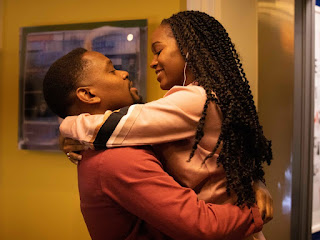
Boxing Day, written and directed by Aml Ameen, 2021.  

How Stella Got Her Groove Back, written by Terry McMillan and Ronald Bass and directed by Kevin Rodney Sullivan, 1998. 


Saturday, January 8, 2022

Marti, Coretta, Josie, & Matty— Honoring Lisa Nicole Carson’s Four Unforgettable Film Characters


The four memorable 1990’s film roles of Lisa Nicole Carson.

“I was a tomboy growing up. Then puberty hit, and seemingly overnight I had a 38DD bra size. I constantly wore sweatshirts and was mad at my body. Then I fell in love as I neared my twenties. I was often the curvy one on set, and I felt beautiful no matter my size.”

Pam Grier and Tamara Dobson— the creme of the 1970’s Blaxploitation era— would certainly pass their torches down to Lisa Nicole Carson, a voluptuous, softly spoken Southern belle whose radiant, dimpled smile lit up the film screen in the 1990’s. Often playing roles so minor, so minuscule, one must not blink in order to truly appreciate her presence, this four time NAACP Image Award nominee and SAG recipient (for being a part of the Ally McBeal TV show ensemble) was memorable in four different roles— dreamy Marti, sensuous Coretta, vicarious Josie, and provocative Matty. 

Marti (Lisa Nicole Carson) takes a moment to reflect and freshen up in Jason’s Lyric, 1994.

No one deserved better than Jason’s Lyric’s Marti— the best friend and fast food co-worker to Lyric. Marti loved memorizing thoughtful quotes and reciting them to Lyric at every opportunity. Her sweet voice articulated findings in ways that made one fancy true romance. Yet resolute on sticking to Lyric’s violent brother, Alonzo, Marti also believed herself unworthy of receiving a love that Lyric had found. 

Director Doug McHenry must have had a purpose in situating the main couples in two particularly different love scenes set outdoors: brightly lit Lyric and Jason are passionately shrouded in a beautiful, floral wilderness while Marti is subjected to a dark back alley romp with Alonzo. 

“I know you think Alonzo isn't perfect, but I'm going to hold on to him... cause he's all I got. The wards ain't full of Jasons. What you found was quiet... in a world full of thunder. I ain't got no choice but to listen to it. You do.”
Marti said those words in a poetic sensibility— regret, sadness, and pain— regret for the limited choices, sadness for the heavy burden that comes with settling for less, and pain for the harm that men like Alonzo cause. In Lyric’s eyes, Marti represents a woman that will never leave a bad situation no matter how rough. These characters were living in endless danger, an endless generational cycle. Marti chooses to stand still with a reactionary Alonzo (who lost his closest friends), armed with sentimental quotes as mere fiction instead of leaving Third Ward, Houston, Texas behind with her now gone friend. 

It often hurts how badly underrated Carson’s promising performance in Jason’s Lyric is. The erotic picture has some flaws, but she is a scene stealing gem right down to the post-Poetic Justice topknot braids, baby hair, heavy jewelry, and long acrylic nails. She is extraordinary, irresistible, authentic, and raw, showing a range of emotional degrees— light hearted humor, seriousness, joy, and vulnerability. When Marti expressed awe in realizing that Lyric was experiencing real love, Carson made the audience believe and yearn for Marti to have that too. 

Coretta (Lisa Nicole Carson) treats World War II veteran Earl Rawlins (played by Denzel Washington) to misleading information and a hot dalliance.  

Carl Franklin’s Devil in a Blue Dress, adapted from Walter Mosley’s detective noir, features short lived  Coretta— a married woman who knows how to blackmail. Unfortunately, the skill does not save her. 

In 1948 Los Angeles, Earl Rawlins just got fired and receives the opportunity of a lifetime— uncover information on the elusive Daphne and send it over. It is super shady, but Earl needs the money for keeping up his fine house. So he goes to a bar and runs into Coretta and her husband Dupree. The familiarity between Earl and Coretta is palpable. She plays the demure Christian wife until they’re home alone (well, technically Dupree’s drunkenly passed out on the bed, but still.....). The cat and mouse game intensifies— Coretta knows who Earl is looking for and smartly uses her feminine wild cards on the poor, sexually starved man. 

In Devil in a Blue Dress, it is imperative to analyze how both Daphne and Coretta treat Earl and each other (offscreen). Daphne puts Earl at arm’s length and leaves him open to all kinds of potential harm. Coretta also withholds vital significance that could help Earl’s case. While Coretta does sleep with Earl in a rather charged, steamy scene, Earl and Daphne have an underlying chemistry too, a “will they, won’t they” friction. Coretta and Daphne are not friends. This intense turmoil between these two women sours awfully. Daphne shows little regret, little empathy about the turn of events. 

In the end, Coretta’s memory at least gives Earl the ammunition needed to clean up the mess. 

Up against Denzel Washington who already obtained his first Oscar prior to filming, Carson is great in her period film glam— straightened, sleek hair, red lipstick, and church lady dress. She understands that her character is calculating, retaining a certain evil about her. After all, instead of going to the police (who all seem corrupt in the film), Coretta wields foul, disgusting criminal activity as potential payout, hiding it in the most unlikely and improper place. Yes, Coretta is a very sexy vixen, but she is also resourceful, curious, enigmatic, and sharp— exactly how Carson portrays her to be. 


After helping pack up and ready for the big move, Josie (Lisa Nicole Carson) has a laugh with her BFF Nina (Nia Long) in Love Jones, 1997.

In Love Jones, Josie has no world of her own making. She vicariously lives through her best friend, Nina’s relationships. While Nina juggles three men— an on/off fiancĂ©, true love, and true love’s frenemy, “the jones” does not strike Josie once. Even though Nina blasts Josie for always thinking about sex, the remark lands oddly. The audience never sees Josie with anyone. From the moment Josie is introduced to Darius Lovehall and his jazzy poet posse, she is submerged into the background, almost like a shy girl hesitant to escape the shadows. This frames her as unimportant, undesirable. Everyone wants Nina. Josie is the sidekick, the therapist, the love guru. Yet she is warm, generous. Her laughter is melodious. 

The story is not even a little bit about Josie’s character, but Carson shines bright alongside Nia Long. Their camaraderie has a real, kindred sisterhood vibe. The car scene alone is hilarious— Nina describing her night of passion with Darius and Josie quietly hanging onto every word. 

In this film about art and poetry, Carson has that syrupy tone meant to be reciting prose. Writer/director Theodore Witcher lost the opportunity to truly put Carson’s brilliance on display. Her last scene is just a vocal (offscreen Josie calls onscreen Darius to let him know about Nina’s job at Vibe Magazine). It would have been awesome having Josie help Nina move again (full circle) or have Josie also take the stage as a virgin to the mic, reciting the Sonia Sanchez prose like everyone else as an inspirational vehicle for her friend. Still, Carson conjured magic with what was given to her. 

At a club, Matty (Lisa Nicole Carson) is caught by her husband Lenny (Roger Guenveur Smith) with the good doc (offscreen Samuel L. Jackson) in Eve’s Bayou, 1997.

The married Matty in Eve’s Bayou happens to be one of several ladies attending to the equally married Dr. Louis Baptiste’s lustful desires. Matty is also the key catalyst to destroying young Eve’s illusions of her father. Believing that they’re alone in the garage while a massive glittering party goes down in the main Baptiste house, Matty and Louis hook up and a confused Eve witnesses them. Older sister Cisely blurs Eve’s memory further by insinuating that she just saw them hug— nothing more. 

Now Matty’s husband Lenny is always gone. So of course, she turns to attentive Dr. Louis— everyone does. The man knows how to cure a women’s ailments— except his wife. Still, Matty and Dr. Louis’s flirtatious evening at the bar turns into horror once Lenny steps in. Whether it is due to voodoo concocted by Eve with Elzora’s aide, Eve is once again left to witness life altering circumstances. 

Although limited in her screen time, Carson holds her own in the debut feature film of actress turned filmmaker Kasi Lemmons. In this supernatural period piece, instead of Los Angeles, the setting is in the mystical gothic Louisiana of 1962. Carson adds an overwhelming sweetness and charm mixed with the sumptuous passions of her previous characters into Matty— a woman who does not need to use magic to get what she wants. 

Lisa Nicole Carson, Essence, July 2015, photographed by Erik Umphery. 

As of now, Carson’s last role was Mae Bell in The New Edition Story— five years ago. The phenomenal actress has been through so much in her career and personal life mainly due to her bipolar diagnosis. It should not be a crime to have an illness as delicate as hers, but Hollywood still likes to shame celebrities for even the tiniest imperfection, the slightest flaw. In this 2015 article in Essence, Carson discusses being back in Los Angeles and starting over fresh

“I’ve returned to L.A. to give my career another try. I’m going on auditions and handling rejection better than I did in the past. I’m tackling the myth that African-American women have to be pillars of strength. We have the right to fall. We have the right not to always have our sh– together. We just have to take our mental health as seriously as we do the physical. Do not be afraid to go to a therapist or a doctor to make sure everything is fine. I am excited for my new chapter. I now am stronger and ready for what’s next, while taking care of my emotional health.”

In the meantime, devoted Lisa Nicole Carson fans should continue to support and pray for her continued success— that she goes bigger and beyond the roles of Marti, Coretta, Josie, and Matty. We have been ready for her to be the leading lady in the story for long enough.