Showing posts with label 1970's. Show all posts

Thursday, September 11, 2025

‘Claudine’ Reenforces My Decision To Remain Childfree


Claudine film poster which puts James Earl Jones’s name first as opposed to Diahann Carroll.

I watched John Berry’s Claudine for the first time. Despite starring beloved, Tony and Emmy award-winning actress Diahann Carroll as the title character—I was never keen on viewing the film prior. Claudine Price—a single (secretly working) mother raising six children: Charles, Charlene, Paul, Patrice, Lurlene, and Francis on welfare— falls for Rupert “Roop” Marshall, an ignorant garbage man who isn’t exactly reciting poetic sweet nothings. Although unclear on what dissolved Claudine’s past romances— whether due to divorce or death—the glaring reality is that Claudine’s other men left behind their seeds, left their legacies for her, lending no financial, physical, or emotional support. 

Claudine resonates deeply. 

Claudine’s six children from left to right: Francis, Patrice, Charles, Paul, Charlene, and Lurlene. DP: Gayne Rescher.

My late mommy and her five children, my siblings and me.

My own childhood memories revolve around living in a cramped environment (the projects), the lack of positive male figures, and surviving solely on government handouts. The 1990’s welfare system was not that different from the 1974 film's accurate portrayal of the constant surveillance. We too had monthly inspections, kept up a neat appearance (a façade), and answered the social worker’s questions, our mother treated like a criminal on parole. Poverty's psychological and mental weight took a vital toll, rupturing forth my inspiration to not become a part of the ongoing statistic. I pursued art and writing, graduated from two colleges, and also had my own personal struggles—continuous struggles that I could not imagine bringing a child into. I do, however, recall my ignorance regarding sex and having a relationship with an older person who didn’t believe in condoms, a risky situation still pressed onto impressionable young girls and women today. Former classmates and strangers would ask, “do you have kids?” or say “the right one will come along to change your mind.” Or worse, “I thought like you too until I had them.” 

I have a high priority preference for being alone, traveling the world, watching good cinema and television, and seeing my sweet family and friends whenever possible, providing all the valid intimacy my life needs. No other dramas needed. My body is mine. 

The women on Claudine’s bus laugh and joke, implying that Claudine needs to get laid. Sex is not the only pleasurable outlet. Yet, it’s implied as the surefire way to have fun— a stress reliever. DP: Gayne Rescher. 

Patriarchal societies often employ religion—omnipresent entities— as guiding instructions or scare tactics, pushing outdated notions that women are supposed to happily have children, that they’re “blessings from above.” Motherhood’s the intended end goal for her life regardless if she has any nurturing instincts, let alone any extra money or room in her household. After all, the current United States political regime ran on this 1950’s campaign promise that women would be at homes raising the children, not entering the workforce— cat ladies be damned. In my experience, some men deliberately lie and scheme, seeking their own pleasures. There are no dates. No outings. No romance. Just an expectation for sex— the cheapest activity known to humankind. So be it if a child comes along (or any STDs)— a disruption to a woman’s accessibility. My decision has had people calling me unnatural, weird, odd, even selfish for prioritizing peace, art, reading, writing, and seclusion over maternity. 

Claudine speaks the facts of life to Charlene way too late. DP: Gayne Rescher.

Now Claudine’s two eldest children embark on different paths, choosing to either repeat the problematic cycle or end any contributions that could be made in continuing it. The story within a story exposes Claudine’s hypocrisy, her outrageous reactions to both decisions. Unfortunately, Charlene’s destined to mirror her mother’s habits. Her mother has no goals, no real ambitions next to working and acquiring boyfriends and making children. What other options does Charlene believe to exist? First, Charlene tries to sneak out in a scandalous outfit, talking about a boy who has found Islam and renames himself. Next, she returns home drunk, having been out with the same boy and calls herself “nothing.” When Charlene’s pregnancy is revealed, Claudine goes into a wild rage, ripping the top of her daughter’s nightgown, baring her breasts— an uncomfortable moment that borders on sexual assault. A teary Charlene vows to marry the boy— a girl with low self-esteem, no job, no ambitions, limited education, and an underdeveloped brain, her plight almost reminiscent of Just Another Girl on the I.R.T.’s Chantal and Love My Mama’s Leola. Robbed Black girlhood thrusts them into adult roles before they can acquire a first apartment to fully understand themselves as individuals, having no real preparation for mental and emotional health. Chantal and Leola work harder to accomplish their goals. Charlene— a product of a worse time— doesn’t have resources to do the same. 

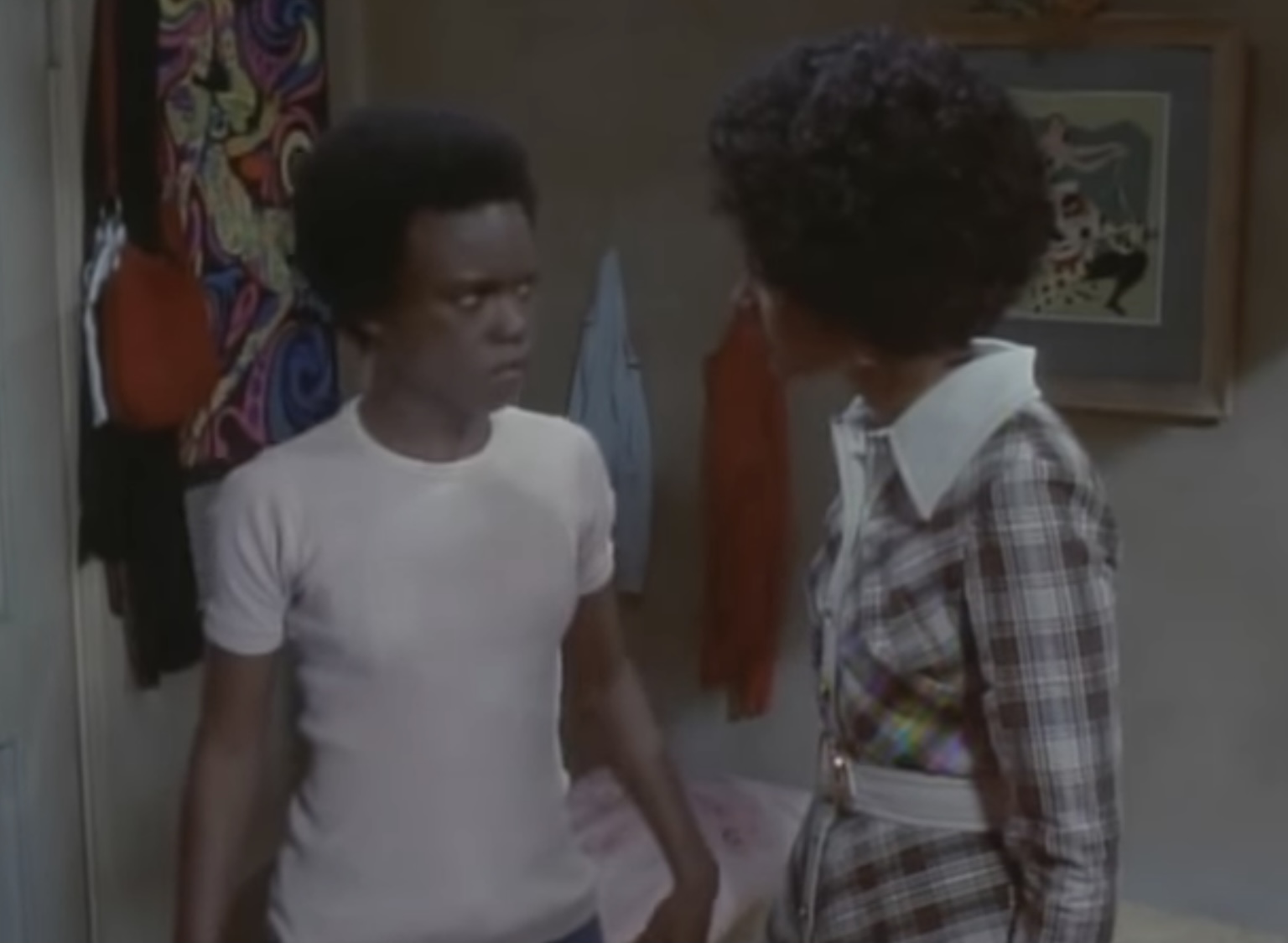
Charles often snaps at Claudine. DP: Gayne Rescher.

Charles post operation. DP: Gayne Rescher.

On the other hand, a passionate, resilient Charles harbors a great hatred for his mother’s lifestyle, finding an outlet in the Black Panther Party cause and Black politics. He eventually undergoes a vasectomy. Perhaps he can’t understand society’s easygoing acceptance of a mother’s suffering. Or maybe he sees an ingrained possibility that he will someday abandon a woman when she most needs him. As the oldest, he has obviously taken on his mother’s responsibilities by parenting his siblings, roleplaying as a makeshift father instead of a brother, a burden that tends to happen in huge, poor family dynamics. Charles must have felt resentment at being an unpaid babysitter, delaying his own dreams in the process, rarely even getting mothered. Still, an upset Claudine considers Charles’s sterilization a government interference, an experiment hellbent on erasing the race. She believes Black people must honor the sacred privilege of having children, speaking to him rather tenderly as opposed to demonstrating violence as she did with Charlene. Charles’s power to alter his body also shows the autonomy men are allowed to have while women had to ask husbands for permission as though they didn’t know their own minds and bodies. Although close in age, Charlene would have not be given the chance to succeed in preventing reproduction the way that Charles does. 

Roop with Claudine’s children. DP: Gayne Rescher.  

Furthermore, judgmental Roop has three children of his own, three children that he doesn’t see at all, much less look after. Roop too exhibits hypocritical tendencies, blasting Claudine for the amount she has. The reaction bears similarity to how men hate a high sexual body count— a reminder that there’s been others before him. In light of their rudeness, Roop acts kind towards Claudine’s six children and begins to earn their trust by displaying a firm, solid influence. However, the combined weight of the critical welfare system and child support docking his pay causes Roop depression. Fatherhood has become too tough to handle, inclining him to repeat past mistakes—leaving behind children who were counting on him to be different. 

Roop also reminds me of Mr. Postell, a kind-hearted older man that my mother found in the singles newspaper ad. Whenever he came over, Mr. Postell often asked my siblings and I advice regarding her likes and dislikes, even what she valued in a man. One Christmas he gave us individual bags stuffed to the max with our names attached on them. I remembered wishing that she married that generous man. Yet, an overwhelmed Roop leaving Claudine for a while showcases that sometimes instant responsibility can be difficult to handle. Fatherhood is not a one-time, side hustle where a man shows all his polite attentions, hiding away the rest of himself. Parenting is a challenging, everyday effort. Mothers and fathers are raising human beings— not just babies and toddlers. 

Claudine and her youngest daughter Lurlene. DP: Gayne Rescher.

Claudine also paints a vilifying picture on the problems that arises in close knit quarters and stair ladder age children. They’re using vulgar language, inhabiting incestuous curiosities i.e. Charlie saying, “look at Charlene’s breasts,” which a brother shouldn’t be doing or Paul sneaking into the room to uncover the blanket hiding Charlie’s post-operation results. Perhaps their flagrant introduction to sexuality is being housed together day after day, growing up alongside whirlwind hormones, no outlet to explore if not regularly attending school— a situation akin to a disturbing V. C. Andrews storyline. Claudine isn’t necessarily granting them talks and several don’t have a keen interest in education. 

Overall, the blaxploitation Claudine hits home, affirming the rightness in choosing a peaceful seclusion, a decision that my own mother was proud of. It highlights systemic oppression quite well, the dangers of cyclic behavioral patterns, the inaccessibility to healthier foundations. I contribute to the world in other avenues, sharing my legacies through painting, drawing, printmaking, and writing— penning thoughtful essays that connects with certain readers, spreading love via language and compassion. I may not ever become wealthy, but romanticizing poverty or generational trauma or promoting the “children make the life rich” philosophy will never be my cup of tea. 


Sunday, February 5, 2023

‘Emma Mae,’ A Cautionary Warning To Stop Caping For the Wrong Ones


Emma Mae film poster.

Jamaa Fanaka (1942-2012)—a filmmaker part of the celebrated L. A. Rebellion pioneers at UCLA and one of the few Black members of the Directors Guild of America— made an interesting piece theatrically released as Emma Mae, retitled Black Sister’s Revenge; starring Jerri Hayes, a theater student at UCLA around the same time as film student Fanaka. 

A smiling Emma Mae (dressed in Sunday church fashion) beside her aunt straight off the bus. DP: Stephen J. Posey.

The sisters are not too pleased by the looks of their country cousin. DP: Stephen J. Posey. 

The revolutionary, commendable Emma Mae has all the makings of a great leader and civil rights activist. She knows how to organize a group and garner attention via her passionate speeches and combative fighting skills (a great foreshadowing). Unfortunately, she performs her mightiest acts in the name of a lover who just does not feel her same ardor. This telltale narrative also sheds light on the real life ways that Black women (especially dark skinned Black women) protest for the men who do not love us, who degrade our skin, hair, and features that mirror their own, and will foolishly embarrass us for the sake of knowing our weaknesses, our gullibility. 

Emma Mae struggles to walk in heels with her overstuffed suitcase as her mother’s family moves ahead of her. DP: Stephen J. Posey.

We meet Jesse in the credits kissing up on his true preference in the beginning. DP: Stephen J. Posey.

When Mississippi hailed Emma Mae gets off the bus in California with her light skinned, reddish-brown Afro haired aunt, her waiting family is initially shocked— perhaps more by Emma Mae’s complexion and mannerisms than anything else. Her cousins reluctantly take Emma Mae out with them and their respective boyfriends. At a party, most of the young crowd (the problematic men who are obviously blind) believe Emma Mae is ugly despite her smooth, flawless skin and straightened hair. Colorism is so high here, giving indication that Wallace Thurman’s Blacker the Berry may have played a significant role in these people’s psyches. After all, Emma Lou Morgan was too a dark skinned girl born from a light skinned mother and a fairer toned family much like Emma Mae’s— except Emma Mae’s kin grow to love her in a way that Emma Lou’s refused to.

Her cousins laugh at Emma Mae every chance they get. DP: Stephen J. Posey. 

Initially, Emma Mae comes across as a dumb country bumpkin, not knowing anything from tacos to dancing. She cannot tell that Jesse holds no genuine affection for her because he plays the cards most men utilize in order to retrieve the things needed most from their victims— sex and money. Emma Mae has fallen prey to the conditions of heartfelt vulnerability. She is expected to fall hard for the first man who pays her a shallow compliment. She beats up other women and cops, runs away with Jesse (a relative stranger), raises money for his bail, and takes his public chastising. This behavior is similar to Thurman’s Emma Lou who’s taken by her handsome lover who recklessly cheats and uses her as a cash cow; a mindset placing Black women at the very bottom of the “true love” barrel. In modern society, Black women are upholding Black men, protesting in their name and honor, caping for those who wouldn’t consider them a beautiful, incredible prize, much less protect them in the face of generational disdain. 

Sarah Nugdalla’s article on Burning the Cape addresses this “Black” first, other labels second struggle:

“Highlighting the issues facing marginalised Black lives is often seen as “divisive” to Black solidarity and cause for the delegitimisation of the movement. However, in order to progress in a movement that represents an all-embracing Black liberation, the gender struggles existing at the heart of Black solidarity are in need of interrogation and call for intra-movement critique.”

Under the manipulative spell of a toxic love and naive to an extreme fault, Emma Mae leaves her family in order to fight against injustice— injustice for Jesse who has repeatedly demonstrated unlawful disrespect. Emma Mae sacrifices her time, energy, and money to the cause (sadly Jesse), speaking the right words with intense conviction. She mirrors that protestor urging for her Black man’s life to matter whilst ignoring the other shady wrongdoings in her community, encouraging the group to join her in raising money for Jesse’s bail— from washing cars to breaking the law— actions that Jesse himself would never reciprocate for her. Even those following Emma Mae know that Jesse is no good, but allow Emma Mae her deluded fantasies, egging on her every effort despite actions becoming increasingly desperate and flagrant, including risking her very freedom. 

Sometimes Black women like Emma Mae are shoved too far in the wrong direction. Also renaming the film Black Sister’s Revenge makes little sense considering that Emma Mae discovers Jesse’s treachery in the last few minutes. She was played a fool a majority of the runtime— doing the most with no real benefit to herself— only a cruel, selfish man. She did not craft a sinister plan to get even, let alone conceive a juicier scheme to have Jesse suffer. Yes, some immense satisfaction happens at her rightful humiliation of Jesse, beating him in the public eye. It’s not enough to warrant that title change. A naive country girl can rob a bank, but she cannot avenge her reputation.  

Emma Mae falls asleep waiting in vain for a released Jesse— who is not thinking about his hero at all. DP: Stephen J. Posey.

Moreover, Emma Mae’s breasts definitely prescribes to Pam Grier’s countless nudity in Jack Hill’s blaxploitation films— this male gaze-y fascination with the Black woman’s fuller shape, almost showcasing exhibitionistic Sarah Baartman vibes. In a particularly strange Emma Mae scene, the three men see Emma Mae’s anatomy as she runs downstairs, pulling down her blouse over her bra-less form— as opposed to fully dressing upstairs without eyes upon her. While those men are not ogling Emma Mae, it seems unnecessary to show her in this way, drawing mind to Black Girl playwright J. E. Elizabeth Franklin’s rightful critique of the male producers desiring to see Billie Jean’s “young girl” breasts and getting their wish in the form of her changing into a bra. Thus, an earlier scene has Emma Mae sharing a bedroom with her youngest cousin and stripping her clothes in front of her. The girl, of course, comments, “you got some big ones.” Insert eye roll. The conversation eventually becomes an imperative woman to girl recourse on the female body, suggesting that society still prefers smaller bust women— duly noted in too many films. Yet is Emma Mae’s exploitation necessary to get that specific point across? 

Very symbolic to place Emma Mae by an etching of Angela Davis— the comfortable representation of Black woman’s beauty prevalent at this time. DP: Stephen J. Posey.

Emma Mae is Jerri Hayes’s only feature film credit. Coincidentally, she played Black Girl’s Billie Jean at the Neighborhood Theatre in San Francisco, California. Hayes makes everyone root for Emma Mae’s deserved respect and admiration. Essentially, it is not difficult to imagine her portraying the more commendable womanist journey of Billie Jean either— a girl committed to her dancing abilities than jumping ridiculous (almost caricaturist) hoops for a man. Both parts require certain facets of a Black women’s strengths and weaknesses— her compassion, dedication, and voice to address the wrongs in society and her dangerous inclination to fight first, ask questions later. If only other filmmakers saw the promising Hayes and put her in works that demonstrated her tremendous skill set like Fanaka who wrote the script specifically with Hayes in mind. 

During a Q&A at BAM Cinema in 2017, Hayes spilled insightful behind-the-scenes tea: 

“I was born in Alabama... Jamaa allowed us to use our creativity. I really directed myself most of the time— that’s the way he wanted it. There was improv. I even wrote dialogue— the monologue when Emma Mae was leaving home... that was my real mother on the wall. Since I lost her at a very early age and she was always a big part of my life, I asked Jamaa if I could put it in the film and he said ‘yes.’ Jamaa took a chance on me. I’m not a film actress. I’m stage... it was a student film. Very low budget. He could not always go back and shoot again. He took the best of what he had and went with it.”

Emma Mae leaves the mess behind. DP: Stephen J. Posey.

While red flags aplenty abundantly wave throughout a film funded by the American Film Institute and the National Endowment of the Arts and featured hundreds of extras appearing for no pay, Emma Mae serves as a message to women everywhere not to fall for the BS, kick butt if need be, and put your good, loving family first. No man is ever worth your dignity. 


Thursday, January 26, 2023

‘Rain (Nyesha)’ And Other Nods to Melvonna Ballenger

Still of Evlynne Braithwaithe as the woman from Melvonna Ballenger’s Rain (Nyesha), 1978. 

Melvonna Ballenger, a Communications graduate of Howard University, was another exceptional Black woman studying at the UCLA to become a filmmaker, befriending the likes of Alile Sharon Larkin, Stormé Bright Sweet, Zeinabu irene Davis, Jacqueline Shearer, and Julie Dash during the incredible occurrence otherwise known as the L. A. Rebellion.

Rain (Nyesha)—made as her “Project One” MFA assignment and accessible on the UCLA Film & Television Archive YouTube channel— showcases Ballenger’s commendable filmmaking promise as a twenty-four-year-old film student. She voices over the black and white short which combines the grainy moving image with experimental poetry and sound; centering on a hard working Black secretary who dreads the weary weather that invades her otherwise mundane daily routine. After some heartfelt complaining and reluctantly getting out of bed, the single Black woman draws a white robe over her white chemise and wanders about her sparse, immaculate apartment. She turns on the radio knobs, switching on station after station. In a perfect, utterly charming coincidence, they each play songs about rain including Lena Horne’s Stormy Weather, Nancy Wilson’s rendition of Don’t Rain on My Parade, and The Dramatics classic In the Rain

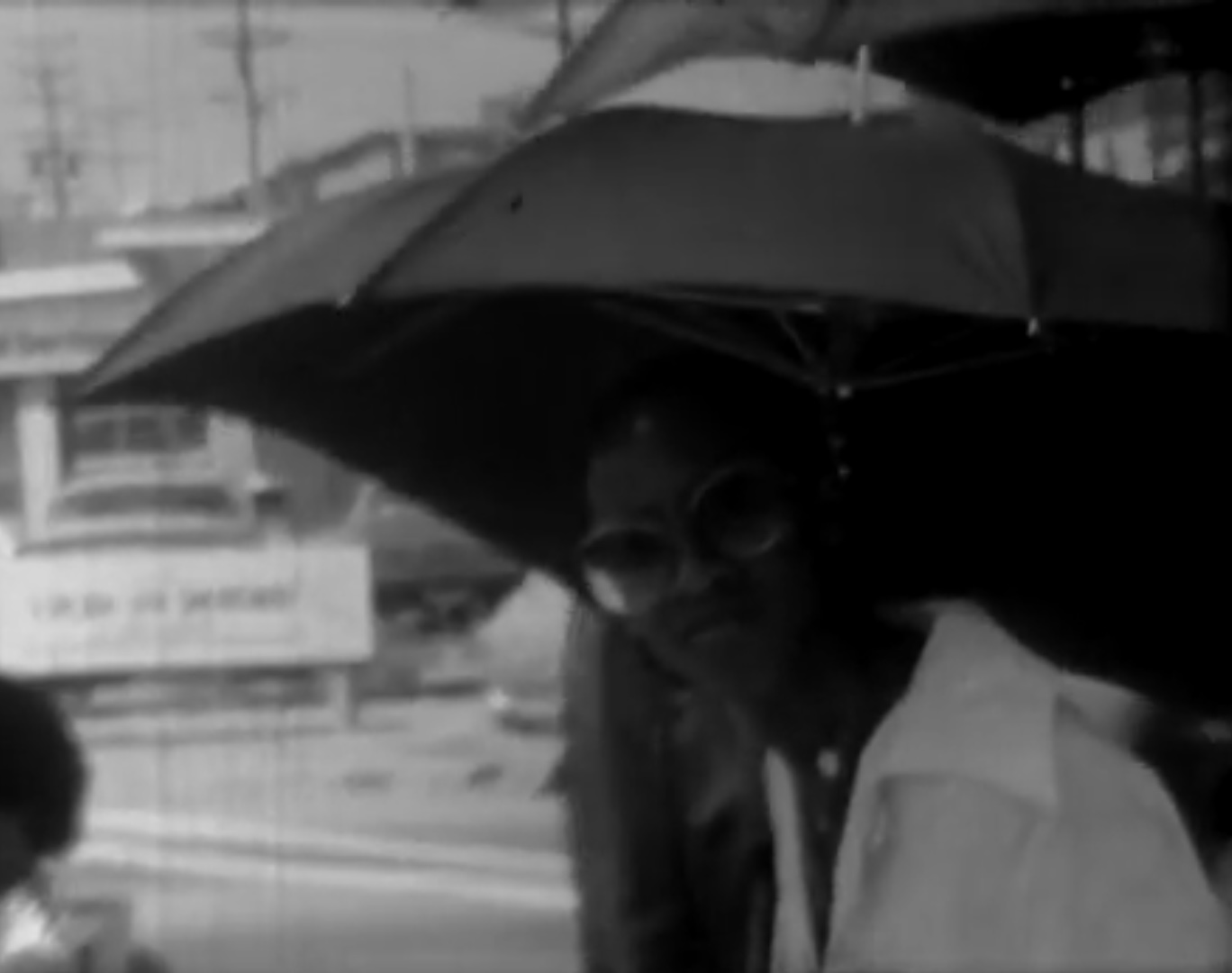
Our umbrella wielding girl misses her bus. However, in missing the bus, fate intervenes.  

In her wait, the bespectacled woman meets the bespectacled man; their almost matching sunglasses a form of sameness. 

Haitian filmmaker/actor Bernard Nicholas portrays the man whose poetry soon meshes with the woman’s, an exchanging of mental prose eloquently blending together, a voice over another voice. The urgent need for human connection becomes an apparent matter, a tie to the threads absent in their individual lives. 

Once leaving the place she desperately longs to stay, en route to work on the smooth backdrop of John Coltrane’s After The Rain, the office typist encounters an Afro haired street activist (who slightly reminisces the great poet Gil Scott Heron in his actions) demanding liberation for all. His cause becomes her cause, a precious serendipitous moment echoes the Black person’s right to exist at the edge of the Black Is Beautiful movement. She lives, travels, and works alone, finds supreme pleasure in her own company (a woman should value herself enough to celebrate her bliss, especially a Black woman existing in a society lying to her on a daily basis). Yet, the man initiates their contact in a respectful manner, tenderly, a real chivalrous sort who respects her and requests her part in the revolution, expressing that it is theirs to share. 

Her typing job of their joint manifesto…

…also becomes his duty as well. 

At sixteen minutes long, Rain (Nyesha) is a much more provocative Black romance/activism piece than many seen over the years. The film paints a beguiling, straightforward portrait, honest and authentic, a genuine caring spirit in its two central characters. Unfortunately, this remains to be Ballenger’s solely available work. While she later did the cinematography on former school mate Alile Sharon Larkin’s Dreadlocks and the Three Bears (1983), performed script continuity on Rain (Nyesha)’s Bernard Nicholas’s short film Gidget Meets Hondo (1980), and sound mixed on Gay Abel-Bey’s Fragrance (1991), Ballenger unexpectedly passed away at the young age of forty-eight on June 25, 2003. At that time, for twenty years, she had been preparing for a compelling project described in full detail from the Los Angeles Archive Collective

Nappy-Headed Lady began production in 1980 and according to notes found with the donated materials, ‘will portray a young black woman growing up in the 1960s who rebels against her parents’ desire to have her hair straightened.’ Intent on mixing documentary footage from the period to ‘connect the protagonist’s struggle with the nationwide Black movement,’ the scripted scenes were shot on 16mm black and white film over several shoots in the Springs of 1980 and ‘81.

The Archive retains 43 items related to this project, among them the following unconformed audio elements: ‘Hair Washing takes 1, 2, 3, 4,’ ‘Health Spots (Immunization),’ ‘Swimming pool scene,’ ‘Inside kitchen,’ ‘Shower scene,’ ‘Telephone conversation,’ ‘TV noise, commercials,’ ‘wild sound,’ and a ¼ inch audio cassette tape of sound effects. The only clue to how the film may have eventually looked exists as a work-in-progress edit on a DVD transfer of a ¾ inch tape, and is available to scholars via an appointment with our Archive Research and Study Center on the UCLA campus.

This incomplete version of the film, which was assembled in 1985 likely as a work sample created in the hopes of securing completion funds, hints at what the narrative portions of the story would have depicted: a teenager’s struggle to keep her ‘natural’ against her parent’s wishes, her father’s heat-soaked beat as a mail delivery man in Los Angeles, a nurse’s argument with her supervisor about her ‘unprofessional’ Afro.”
We film cinephiles missed out on what would probably have been a remarkable, deserved-to-be-made film, especially for that time when most starred straight haired Black women protagonists (if they existed)— a noticeable presentation shift from the main character of Rain (Nyesha)

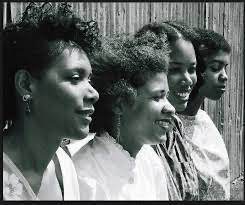
Julie Dash, Alile Sharon Larkin, Stormé Bright Sweet, and Melvonna Ballenger. L. A. Archivist Collective. 

Alile Sharon Larkin, Stormé Bright Sweet, Melvonna Ballenger, and Julie Dash. L. A. Archivist Collective. 

Nappy-Headed Lady’s intriguing scene titles “swimming pool” and “shower” would likely divulge on the intimate knowledge of Black women’s psychological displeasure of water when not surrounded by the ideals of hair washing. This Wizard of Oz Wicked-Witch-of-the-West effect (Dorothy throws water on the villain and the villain melts) mirrors our overzealous reactions to what water physically does to our strands: destroys hairstyles, promotes shrinkage and potential dryness, and temporarily alters curl patterns. Oh yes, the hair dilemma is the real struggle. Imagine a Black woman character sitting poolside, refusing to swim without a protective cap or never having learned to swim due to the generational instruction to avoid water situations that do not involve shampoo and conditioner. In the shower, on a non-wash day, she would twist her body in all kinds of ways so that the spray does not touch her head. 

This film is apparently thirty-minutes in length and maybe worth making an appointment to UCLA. 

Still from Ballenger’s unfinished film, Nappy-Headed Lady. L. A. Archivist Collective

Another still from Nappy-Headed Lady. L. A. Archivist Collective.

With the jazzy renaissance that Rain (Nyesha) brings, Melvonna Ballenger delivered a quiet, satisfying narrative that has all the makings of a Black romantic classic. It simmers deeply in a poet’s soul— the repeated refrains about the woman author’s misery for the weather’s precipitation and the man’s desire for equality and peace slowly meld into a resolution that suits both parties. 


Wednesday, December 28, 2022

The Generational Plight of the American ‘Black Girl’


Black Girl film poster.

In the late 1960’s, Drama Desk winning playwright Jennie Elizabeth Franklin found success in her fourth play, Black Girl. Not to be confused with Senegalese filmmaker Ousmane Sembène’s 1966 film Black Girl set in France, the African American version directed in 1972 by Ossie Davis is adapted by Franklin, based on her work. While Sembène explores the traumatic plight of the imported immigrant, Franklin and Davis convey the consequential impact that mental conditioning has placed in the Black family structuring; mainly the weighed burdens unfairly set on matriarchs.

Betty Everett— the singer behind the popular track— “The Shoop, Shoop Song (It’s In His Kiss),” sings the title “Black Girl,” playing repeatedly throughout the film. 

Rose (Louise Stubbs) is angry that Billie Jean (Peggy Pettit) has quit school. DP: Glenwood J. Swanson.

A distressed Billie Jean taking Rose’s unleashed ire. DP: Glenwood J. Swanson.

In the American Black Girl, Billie Jean embodies the unnatural fear and hostility nestled in the minds of those who feel threatened by education’s close relationship to success and “betterment.” In order to sabotage Billie Jean, Norma and Ruth Ann, Billie Jean’s manipulative older half-sisters, jeopardize a young girl’s vulnerable mentality with verbal poison. Perhaps in addition to those who tease and taunt her in school, Norma and Ruth Ann are also other reasons that Billie Jean has dropped out. Norma and Ruth Ann represent the pains of being stuck in unhappy situations, of misery loving company. Thus, Norma and Ruth Ann taint Billie Jean’s dancer ambitions, turn it into a patriarchal testament (dancing for the lustful male gaze) instead of a young Black girl embracing the art of her graceful human body. Billie Jean moves in an elegant rhythm similar to ballet style— “ballet” is a word Norma frequently mispronounces. 

Old habits come back to bite as Rose (Louise Stubbs) passionately kisses her philandering ex Earl (Brock Peters) in front of the family. DP: Glenwood J. Swanson.

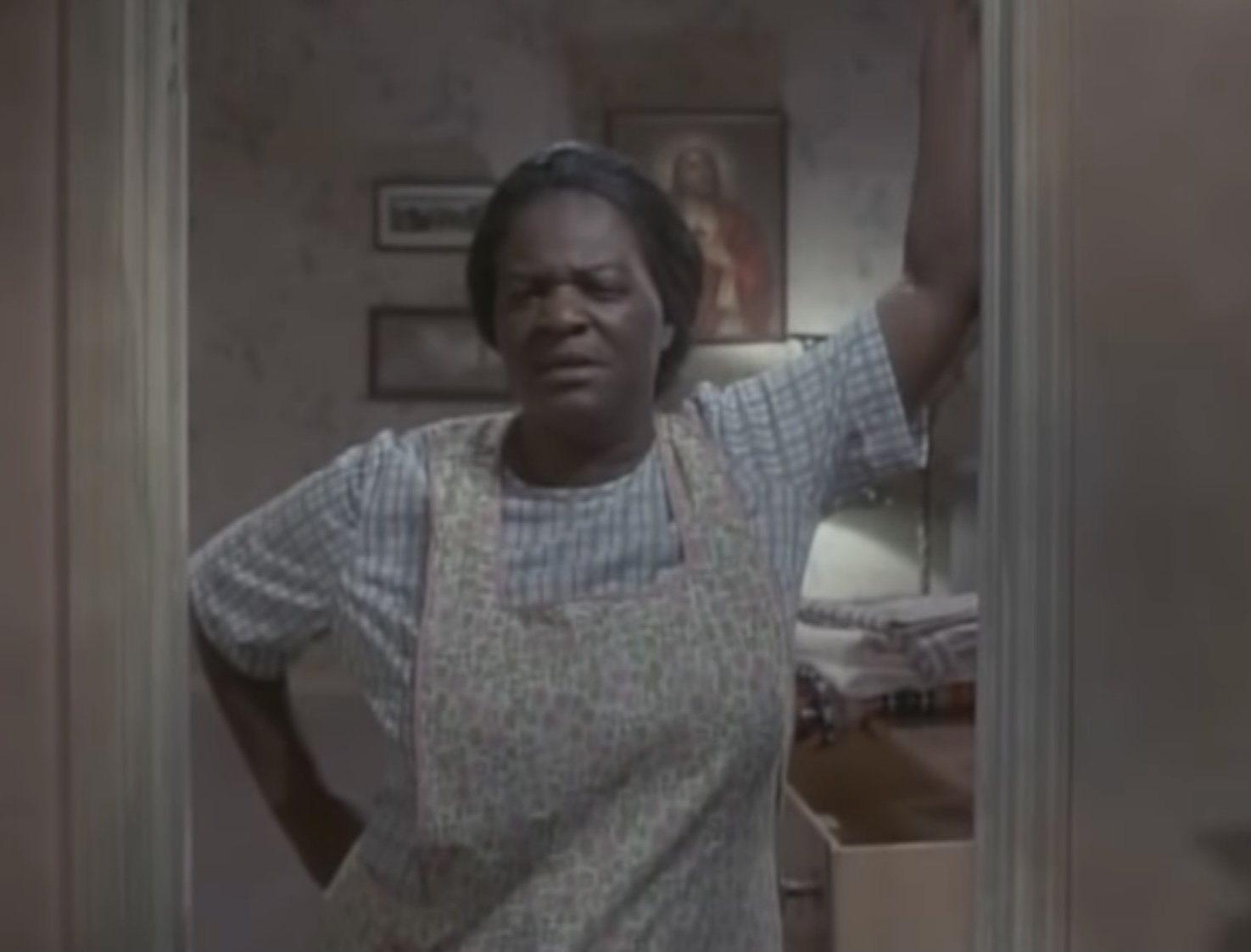
Mu’ Dear (Claudia McNeil)—Rose’s mother— believes that the “Bible belongs on the shelf not in self” whilst posing in front of white Jesus’s portrait. DP: Glenwood J. Swanson. 

The stern, sacrilegious Rose, mother of the three, is blind to Norma and Ruth Ann’s resentment, believing that Billie Jean is on her way to becoming much like her— a tired existence in a humble, multigenerational house where contempt and strife collide. Often, the disappointed Rose compares Norma, Ruth Ann, and Billie Jean to Netta, her foster daughter up in college aiming to become a teacher and upcoming law student. Rose only saw potential in Netta and gave up hope on her biological daughters altogether. That hurt Billie Jean’s already fragile self-esteem. Norma and Ruth Ann were tearing her down constantly. 

Norma (Gloria Edwards) calling Netta’s photo the callous B word to Ruth Ann (Rhetta Greene)— who then mispronounces the word “deaf.” DP: Glenwood J. Swanson.

Netta (Leslie Uggams) in her dorm talking to Rose about her Mother’s Day plans. Fifty years later, Uggams would star in Nikyatu Jusu’s feature-length debut, Nanny. DP: Glenwood J. Swanson.

Black Girl struck a personal chord with me. I was repeatedly bullied by my teachers and peers over my physical appearance— hair and clothes sadly— and dropped out my senior year of high school. My mother also experienced the same, dropping out at sixteen-years-old (she once told me that she only had two outfits) and later completing her GED after having children. I too received my GED and completed undergraduate and graduate studies; the only member in my family to achieve the feat. Although she never said “I’m proud of you,” I believe that my mother was. My brightest memory is of her clapping at my undergraduate graduation. As proud and strict a parent as Rose, my mother also wasn’t keen on apologizing (which is a strange communal trait). She demonstrated “sorry” in her actions. I believe sometimes parents never want to see their children correct them or showcase knowing what they did not learn or understand. They want to be stay in the dominant roles as parent forever, the person retaining greater knowledge. Still, I admired my mother correcting my English papers or us learning algebra together. 

Billie Jean succumbing to Ruth Ann and Norma’s deceit. DP: Glenwood J. Swanson.

During the big showdown, however, Billie Jean discovers that Norma and Ruth Ann have been destroying Netta’s encouraging letters to Billie Jean. DP: Glenwood J. Swanson.

Norma and Ruth Ann ostracizing Netta for keeping to her studies and not pursuing sexual conquests also hit home. Some people truly are uncomfortable with individuals who seek higher goals, whose ambitions focuses on career pathways and not hookups heavily prevalent in pop culture. I do not talk to my Bible wielding family about my celibacy because it causes distress, harmful jokes, and invasive questions. Last year at my brother’s grandmother’s funeral, my cousin asked me, alone in his car, “why does it seem like you don’t like sex?” In moments that Norma and Ruth Ann circle Netta, accusing her of all kinds of foul, wicked cruelty, Netta’s expression grows more intense, frightened, familiar. These are women around her own age. Why is it so important to know the sex life of someone else, to criticize those uninterested in the act? Netta is educated and virtuous too? Oh, the girls hate that. Or maybe it is not hate at all. Their misplaced envy— their dislike over Netta behaving unlike them—has transformed into a toxic rage, especially Norma, who then pulls out a knife.

Netta also privately assures Billie Jean that Rose has never said “I love you,” much less hugged her foster daughter. Rose withholding motherly affection and praise from Billie Jean has affected the young girl so much. Billie Jean almost turned into Norma and Ruth Ann. DP: Glenwood J. Swanson.

A hypocritical Rose worries that Billie Jean’s dancing will be the makings of future promiscuity, that the generational cycle will repeat. Yet, in the next instant, Rose does little to protect Billie Jean from Herbert, the other house occupant despite Billie Jean protesting her dreams go beyond empty pleasures. Billie Jean’s room connects to the kitchen and back door. Anyone can come through unsupervised. It doesn’t help that Herbert doesn’t knock. Rose nonchalantly says that Billie Jean has nothing Her set hasn’t seen before— setting Billie Jean up for potential sexual harm. Rose comes across as believing such access is natural, not unseemly. Billie Jean is a minor. Who knows what is occupying that man’s mind for him to continue shocking behavior towards a mere child? How can Rose obsess over Billie Jean’s future when she’s not even understanding the present danger under her own roof? This demonstrates the long historical pattern of women purposely turning a blind eye. 

Family at church on Mother’s Day. DP: Glenwood J. Swanson.

Netta giving Billie Jean the hope she needs to move forward. DP: Glenwood J. Swanson.

Thankfully, Netta believes in Billie Jean— a healthy relationship that Norma and Ruth Ann try to destroy. It is already bad enough that Billie Jean is named after Norma and Ruth Ann’s charismatic father, how dare she try to better herself too!

Mu Dear embracing her granddaughter Billie Jean before our heroine finishes school alongside the trustworthy Netta and trains for dancing. DP: Glenwood J. Swanson.

And Rose, finally realizing that the spiritualist was wrong in dismissing the treasure right in front of her very face, her very blood: Billie Jean. DP: Glenwood J. Swanson.

My next goal is to read Jennie Elizabeth Franklin’s Black Girl play and write a compare/contrast essay of source material versus film, seeing as Franklin wasn’t happy with this production. At least, Franklin had a win in ensuring that Peggy Pettit—star of the touring the off-Broadway version— received the starring film role; the studio wanted a lighter skinned actress (Hollywood history still repeats on this unfortunate standpoint). This film, however, does render a heavy story of generational trauma. You think about the tremendous sorrow Sembène’s girl experienced and that of Nikyatu Jusu’s modern Aisha in the horror Nanny; how these three individual vehicles connect together to form a resonating narrative. While Sembène’s girl and Aisha are visibly drowning from the subjective gravity of “slavery by another name” aka underpaid/undervalued servitude, Billie Jean’s self-esteem is constantly threatened to submerge in overwhelming doubt— doubt of which caused not just by her family, but the cyclic damage brought by white supremacy. Although no white characters are present in this piece, the consequences of colonialism is a haunting, terrifying ghost that lingers in the smallest of ways.


Therefore, Jennie Elizabeth Franklin and Ossie Davis’s Black Girl validates a simple desire to be loved and respected, to be treated as though her purpose on earth matters, and that in light of stacked generational odds, her mother will stand right beside her, embracing all that she is and all that she will become. 


Sunday, August 28, 2022

Remembering Mary Alice’s TV Film Debut In ‘Sty of the Blind Pig’


The recently departed Mary Alice starred in Sty of the Blind Pig directed by the late Ivan Dixon. 

Last month, we tragically lost the brilliant Mary Alice Smith— professionally known as Mary Alice. 

Ever since the UCLA Film & Television Archive allowed a special virtual presentation of Ivan Dixon’s Sty of The Blind Pig back in February, Mary Alice’s mesmerizing performance has stayed on my mind. Maybe perhaps she has primarily been seen as a supporting character— the worrisome mother figure in Maya Angelou’s Down in the Delta and Charles Burnett’s To Sleep With Anger, the kindhearted Lettie in A Different World, and the oracle in the two Matrix films (taken over after Gloria Foster’s passing). Although Mary Alice retired in 2005 with 59 film/TV credits, her last being a guest appearance on an episode of the short lived Kojak, Sty of the Blind Pig deserves a much needed reflection and revisit. 

Alberta relays an eulogy for Emmanuel Fisher.

Based on Phillip Hayes Dean’s play centering a South Side Chicago family in the 1950’s, Sty of the Blind Pig centers Alberta Warren. She happens to be an excellent obituary writer. Her ability as eulogist appears unmatched. The emotion Alberta expresses into her grieving compositions impresses the townspeople and her mother, the conventional Weedy— a proud church lady living in gender roles of the past. Together, Alberta and Weedy clash heads at 3847 State Street. 

Once Weedy brings up Alberta’s eulogy for Emmanuel Fisher, Alberta becomes cold and distant, claiming that she threw it away and barely remembers. 

Alberta (Mary Alice) and Weedy (Maidie Norman) often clash— the modern single woman versus the god-fearing church woman of the past.

Except, Alberta does indeed remember it, explicitly conveyed through a powerfully urgent testimony. In her candid words and intense expression, she states her tender woes for this deceased stranger, a stranger who fills her with utmost yearning, a yearning that must forever be unfulfilled. This mesmerizing performance carried through by the sheer weight of Mary Alice’s passionate and delicate nuances delivered so bravely in this soliloquy. You almost forget that an audience is present, Blind Jordan, who cannot see Alberta, but can certainly feel Alberta’s burning despair. He is a mere stranger passing through looking for another woman. yet Alberta continues luring him into the apartment, luring him into her otherwise dull, unexciting life. Thus, he cannot deny her request for an improper clench right on the detestable couch. This is how Weedy finds Alberta, having come early from her church travel. 

Most similar to Lorraine Hansberry’s humble Chicago family moving to a new horizon in Raisin in the Sun (which ironically stars Ivan Dixon), Dean’s Sty of the Bling Pig relays a powerful message about generational mindsets. Both plays turned films share themes of housing crises, economic frustration, and the working poor. Whereas the Younger family are migrating from their perilous situation to a better (white) neighborhood, the Warrens have the option to leave their situation due to rising rent costs, but eventually decide to stay— with Alberta essentially becoming a reflection of her mother. Lena Younger has character developments similar to Weedy too— proud, devout, religious. Yet Younger’s children lean on her, Alberta tries very hard to separate herself from Weedy mainly due to societal influence. The morally engaging Weedy— who often preaches to Alberta near a framed portrait of white Jesus and not a framed portrait of a family member— symbolizes the old patriarchal systems that institute a woman’s place in society— a pious, rule-following body with nothing more than religion on her mind. Meanwhile, Alberta represents the freethinking, unconventional modernism (with her secret stash of prescribed pills that may be birth control) that confuses Weedy. Alberta serves for a white family and the white male head has tried taking liberties with her— and she retaliates by stealing their alcohol. 

Despite her best intentions, Alberta turns into her mother by the end— even down to sitting in the rocking chair and screaming nonsense to her neighbors.

After the great Maidie Norman (1912-1998), Scatman Crothers (1910-1986), and Richard Ward (1915-1979), Indianola, Mississippi native Mary Alice was the last survivor of Sty of the Blind Pig cast. Among Mary Alice’s honors include Tony Award and Drama Desk Award winner for playing Rose in Fences (much like the later Viola Davis), an Emmy for Outstanding Supporting Actress in I’ll Fly Away as well as a Black Reel nomination for The Matrix Revolutions and an Independent Spirit Award nomination for To Sleep With Anger. She was rightfully inducted into the American Theater Hall of Fame in 2000. 

In 2002, Mary Alice answers a question on blackfilm.com on the typical motherly roles she’s been given:

As you get older you’re going to play [a] mother, grandmother, great-grandmother and so forth and so on or some character who is wise and nurturing. It just comes with the territory. It’s a little different in Sunshine State because he gives her a little edge. He gives her a little attitude where she’s not just completely supporting her daughter. But most of the time that happens. It happened to me and it happened to most of my friends as we get older. Even people as glamorous as Diahann Carroll gets typed into the role of someone who is [not] completely one-dimensional but close to being the best friend, the nurturing mother, the supportive grandmother or even if it’s not a relative, she is someone who is strong and wise. And it happens to a lesser degree on stage because there are more interesting roles for older Black actresses in the theater. Sometimes you might get a role on TV that is in a series that might be interesting. Have you seen any older Black actress in a movie?

Mary Alice shall forever be missed.  

Watch Sty of the Blind Pig on YouTube


Wednesday, March 23, 2022

The Imperative Themes In The ‘I Know Why The Caged Bird Sings’ TV Adaptation


I Know Why the Caged Bird Sings tv film poster 1979.

The classic TV movie adaptation of Maya Angelou’s autobiography I Know Why the Caged Bird Sings may not have been directed by a woman, but this Fielder Cook helmed film delivers a poignant womanist message that would touch any Black girl’s spirit. From beginning to end, Angelou’s touches on the co-written screenplay (with Leonora Thuna) feels every inch steeped in her narrative that touches on her adolescence in the Deep South. 

Several key themes stand out— strong sibling bonding during an absolutely necessary time, the special branded Black girl’s desire to be a white girl, and blaming self for the consequences of rape and consequent murder. 

The film begins with Marguerite “Maya” and her older brother Bailey Jr. meeting their paternal grandmother at the train station in Stamps, Arkansas— with baggage tags pinned to their clothes. This unsettling scene showcases Black children as objects, not little vulnerabilities worthy of true guardianship. 

As Bailey Jr. (John Driver) recites William Ernest Henley’s Invictus poem from memory, Maya watches on with immense admiration.  

Bailey Jr. often has Maya (Constance Good) in constant awe and maybe some slight jealousy. 

Maya and Bailey Jr.’s relationship is the rigid backbone of I Know Why The Caged Bird Sings. The two close siblings willingly give one another support through the dark, heavy undercurrents of racism and living with god-fearing guardians. In Bailey Jr., Maya entrusts her deepest secrets including this strange, twisted belief that she is a punished white girl sentenced to a detestable blackness. Furthermore, Maya and Bailey Jr. tease each other and play as siblings do. Unfortunately, situations arise that call pause to their childhood— whites looking to defend a white woman’s honor (by harming any adult Black man) so that means hiding their Uncle Willy, witnessing demeaning humiliation of their grandmother by the white locals, and seeing a dead Black body for the first time. Thus, Maya and Bailey Jr. have to band together, be endearingly tight in order to be able to emotionally, psychologically, and physically handle the hard cruelties of the world. 

As a pack of vicious teenage white girls approach, Momma (Esther Rolle) tells Maya (Constance Good) to head inside the store.

With Maya’s admiration of whiteness and wishing to be a blond-haired, blue-eyed girl, also enters her disdain of the white girl’s vicious behavior. Maya believes that European beauty standards defeat hers, mentally contributing to her own erasure. Maya doesn’t value what she sees in the mirror, condemning that her reflection is an error that can only be corrected through her wild imagination. Back in her time, this blatant psychological problem was partly caused by popular toys and television marketed to an audience that did not value blackness. Of course, Maya would admire what she was seeing as beautiful, as prevalent. Interestingly enough, Maya can understand the beauty in her brother Bailey Jr.— idolize every inch of his face and manner. Beneath Maya’s perceptions, colorism may have played a contributing factor. To her— Black boys and Black men are attractive in every tone, but the whitest and brightest are the most feminine, the most worthy of idolization. 

Yet once the white girls come to insult Maya’s grandmother in front of their store, Maya is faced with the darker side of those with the most prized “beauty.” 

The girls watch Maya’s flirtatious father Bailey Sr. with a female admirer. Bailey Sr. has arrived to take his children to California (with a stop in St. Louis). This makes Maya unhappy. 

In addition to leaving their grandmother, Uncle Willy, and the store, another important person to give up was Miss Flowers (Madge Sinclair)— one of the first people who saw Maya’s gifted potential as a writer. 

Bailey Jr. is more excited to see Mother and Father more than Maya. Perhaps Maya is a clairvoyant girl who knows the outcome of leaving the safety (somewhat safety) of their grandmother’s store and sweet canned pineapple in Stamps. Through the car ride to St. Louis, Bailey Jr. rides up front with their philandering father Bailey Sr. Maya stews in the back, disheartened and disinterested. This behavior intensifies once meeting their mother. Maya is naturally distrustful. After all, Bailey Sr. and Vivian had abandoned their children. In love with both parents, Bailey Jr. eventually abandons Maya, leaving her prone to the dangerous attentions of her mother’s boyfriend, Mr. Freeman.   

Grandmother Baxter (Ruby Dee) catches the children overhearing adult business.

The violent assault by the pedophile transforms Maya. She becomes further withdrawn, further internalized. It is as though she has placed a metal fork in a socket and has been shocked into oblivion. Her joy has been depleted, evaporated. How can a child truly define the violence inflicted on their body, understand the implications of such a heinous act— especially a Black girl child with little self-esteem? It is only to Bailey Jr, her sweet, beloved brother and bestest friend, that Maya releases the unbearable weight of her attacker’s name. Instead of feeling some relief at Freeman’s death, a guilt-ridden Maya refrains from speaking. She believes that her vocalized words were an accomplice to what in her young, impressionable mind is humanity’s worst crime— murder. 

Sadly, this historical silence exists today— the notion that Black women must quietly keep Black man’s crimes to heed in order to protect him from prison/death and this starts early— earlier than Maya’s young age. The “ride or die” philosophy subtly brushes into Maya’s formative beliefs. Although the all-white jury acquitted Mr. Freeman of assaulting Maya, Maya still believed that he didn’t deserve any punishment. 

Vivian (Diahann Carroll) tries to cheer Maya up, even throwing a surprise party. Maya remains quiet and a frustrated Vivian can no longer parent her.

A still silent Maya is relieved to be back in Stamps. Once more, their grandmother meets them at the train station.

The cast brings a significant time in Angelou’s story to life led by brilliant newcomers Constance Good and John Driver as Marguerite and Bailey Jr. Warm voiced, utterly beautiful Esther Rolle plays the stern, gentle grandmother (lovingly nicknamed Momma) and revolutionary shop owner bringing community to Stamps. Diahann Carroll is a gem as the gorgeous singing mother Vivian Baxter who heartbreakingly doesn’t understand how deeply traumatized Maya is by the terrible events that transpire in St. Louis. Madge Sinclair delivers valid advice as Maya’s teacher Miss Tulip Flowers. Even Ruby Dee makes a memorable appearance as the Baxter matriarch of Vivian and three overprotective sons. 

Along with the layered story and its eloquent portrayers, Peter Marx’s moving soundtrack brings sweet, sorrowful, and joyous elements to the onscreen drama captured by Ralph Woolsey’s cinematography. 

Interesting that the ending is one of key changes to Angelou’s autobiography. Angelou has her younger self reciting the valedictorian speech complete with leading into the National Negro Anthem instead of another student. Perhaps this was a dream to only be made true through film. 

I Know Why the Caged Bird Sings remains one of the most harrowing literary masterpieces ever written. Although a very heavy yet achingly familiar story, this homage film wholly celebrates Angelou’s impactful bravery in a defiant, meaningful way. It can be found on various YouTube channels that commemorate vintage Black films.