Showing posts with label 2022 Film. Show all posts

Friday, March 17, 2023

‘Saint Omer’ Is a Certified Masterpiece


Saint Omer film poster.

Alice Diop’s exceedingly honest feature-length debut Saint Omer explores a modern day tale of mothers killing daughters— physically, spiritually, and emotionally— and colonialism’s role in its manifestation. 

Successful author and professor Rama’s alive and passionate in the classroom; her active energy differing from the restrained behavior she displays around her family. After abandoning her usual couple travel with her husband Adrian for a solo mission, Rama becomes wholly invested in the court case proceedings of the eccentric Laurence Coly. Rama plans to use the Medea myth to tie into her next novel— Medea being Jason’s scorned ex who kills their children in revenge. 

At this modern-day witch-hunt trial, only three Black women are present— a mysterious woman seated in the front, Rama, and Laurence. 

The defendant Laurence’s brown attire purposefully disappears against the mahogany wall. This color choice seems a clever move on her part, to don a natural and neutral earth tone despite being in a setting where many biased eyes would see a villain. Brown is beyond the skin complexion, it is embedded deep in history as not someone in which to align. Thus, the prejudiced remarks from the prosecutor to Laurence’s former professor further stain her character. 

Laurence Coly (Guslagie Malanda) blends into the walls. DP: Claire Mathon. 

Since childhood, Laurence has been trained to sink into the background, to almost dissolve until completely invisible. Her ancestral foundation, her hopes and dreams, and even her own body— are tucked away to appease others. This fault lies in her parents. Her father— though also a lover of literature and philosophy like her— still envisioned greatness. He may have paid her way, but his capitalistic mindset expected a return on his investment. Odile, Laurence’s mother and primary guardian, also expects her to advance as a French Black girl, not as a Senegalese Black girl. Odile ensured that Laurence never learn Wolof and perfect French— the official language of Senegal and consequential proof of colonialist rule over other dialects still in use. Instead of embracing her heritage, Laurence is sternly advised to articulate well and become a lawyer. 

However, Laurence shares similarities to Rama— a love for literature and philosophy. Yet, Laurence remarks on the ease in which she places her baby daughter near the sea, unsure and enigmatically hoping that the court will tell her. However, the daughter’s secret birth and dreary circumstances makes the pity for Laurence begin. All alone in an unfamiliar European city, Laurence falls victim to Luc Dumontet, an old married man— fifty-seven to her twenty-something age— grooming perhaps. With a daughter near Laurence’s age, that doesn’t stop him from keeping Laurence in his artist studio and having an affair with her. Therefore, Laurence once again is sentenced to hiding, an instinct that she has forcibly been accustomed to. Her physical imprisonment ensures that no one ever sees her except the one in control. So many tragic situations befall women like Laurence, financial, sexual, and emotional abuse, the weight of depression, feeling lost, ashamed, having no therapeutic outlet. She was a silent, internalized bomb ready to explode. 

Luc, the author of Laurence’s greatest misery, always refused to understand her humanness because he (an artist) was not seeing her the way she deserved to be seen. From the time he met and dominated her vulnerability, he was selfishly attending to his own desires while ignoring hers. He plays the heartbroken, mourning father on the stand, his false narrative ringing no bit of truth. 

Rama (Kayije Kagame) blends in the crowd. DP: Claire Mathon. 

In between jury placements and scathing testimonies, Rama’s own life comes to light, her upbringing with a passive mother whose perpetual silence cuts an open wound to young Rama. The mother’s internalized emotion naturally begins killing the spirit of the girl, slowly like a poison— the medieval woman’s method for death. Their moments sequester in a dark eeriness— a fragile mother/daughter relationship retaining shadowed interactions in the present. This trial is the reason Rama cannot participate in the shared care of her mother, but she also does not disclose to her family except Adrian. Yet, this secret journey certainly takes an unexpected ride towards her past as Laurence’s testimony unleash memories trapped within Rama, memories of being uncared for, feeling unloved and un-nurtured. 

Rama’s impending pregnancy casts constant doubt, fears that her mother’s behavioral patterns may become a generational inheritance, an ingrained possibility. It is definitely a valid concern, considering that studies indicate mental health issues can be passed down. Rama already few outlets to address her internalized pain and struggle. Work comforts and eases her inherent stress, the words of popularized whiteness, cultures that exclude hers. In Laurence— a softer, resilient version of the Medea type destined to harm— Rama sees elements of herself and possibly her mother. The sabotage includes drinking beer— and history shows that alcohol can be harmful to a fetus. An educated and astute Rama must know that. As a stoic Laurence keeps composure each passing trial day, Rama continues breaking and breaking until she realizes that her pain cannot remain quiet any longer. Rama represents what Laurence could have had if her desires were appreciated and supported whereas Laurence is where Rama’s future could be if not given proper postpartum treatment. 

Saint Omer showcases the psychological war on Black women that often starts at home, a war of which so many would rather turn a blind eye to than try to rescue them from a certain annihilation. Whether Rama decides to write the metaphorical Medea novel or not, she appears to be another person capitalizing on the lonely, friendless Laurence. Laurence’s parents hoped to. She failed her father. Meanwhile Odile proudly buys newspapers covering the trial, disillusioned to Laurence facing real consequences including the death penalty for a capital offense. Luc used Laurence terribly, even failing to properly acknowledge her depression and denying their poor daughter. Perhaps Rama intends to break the cycle, depict Laurence in a light far removed from martyrdom. 

Kayije Kagame, Alice Diop, and Guslagie Malanda at the 79th Annual Venice Film Festival. The triumphant Saint Omer won the Golden Musa, the Edipo Re Award, the Luigi de Laurentiis Award for a Debut Feature, and the Grand Jury Prize.  

Saint Omer hits the right keys of cinematic masterpiece beginning with Alice Diop’s incredible direction and a remarkable screenplay co-written by Diop, Amrita David (who also does the film’s editing), French novelist Marie N’Diaye (author of the exceptional novel Self Portrait in Green), and script coordinator Zoé Galeron. Clare Mathon (cinematographer of Marti Diop’s incredible Atlantics and Céline Sciamma’s exceptional Petite Maman and Portrait of a Lady on Fire) sets a rich, evocative tone with her sharp, pointed lens that challenges viewers to pay attention to every last visceral detail. Guslagie Malanda and Kayije Kagame’s dynamic performances as Laurence and Rama believably portray the complex nuances of Black women’s specific experiences in contemporary France. You simply cannot survive on the brain food of intelligence alone, not as a Black woman existing in any part of the world. Both display a deep understanding and knowledge in their characters’ dispositions, their differences and similarities despite never physically interacting. There’s a promising kinship that is almost forbidden, a mental/emotional pull, as though if these two were to touch or speak to the other, a certain trespass would form— and these actresses brilliantly evoke that tension. At the end of awards season, Malanda and Kagame were just as invisible— extremely deserving of awards nominations— as onscreen Laurence and Rama. 

A highly crafted and authentically made feature, Saint Omer’s compelling commentary on Black women’s carrying the burdensome weight of motherhood, grief, and colonialism will be remembered for years to come. 


Tuesday, February 21, 2023

‘Cette Maison,’ A Poignant Testament to Grief


Cette Maison film poster.

It was a pleasure to view Miryam Charles’s thought-provoking short films before Cette Maison (2022), her feature-length debut. The shorts: Towards the Colonies (2016), A Fortress (2018), Drei Atlas (2018), Second Generation (2019), and Song for the New World (2021) prepare the viewer for no physical human presence beyond haunting voices superimposed atop breathtaking, statically grained cinematography, images shedding a rare spotlight on Haiti. A vulnerable yet historically rich country where more films deserve to be made as previously told by native women filmmakers Guetty Felin and Gessica Généus. Charles brings a distinctive elegance to the table, a pensive sophistication coming to further bloom in Cette Maison (This House).

Tessa (Schelby Jean-Baptiste) rises from her mother’s flowers more like a full-bodied figure than a visiting apparition. DP: Miryam Charles and Isabelle Stachtchenko. 

Tragedy softly echoes in the life of a Haitian mother Valeska mourning the untimely loss of her fourteen-year-old daughter Tessa, channeling through quiet, jarring moments that strike the heart’s most fragile chords. Scenes shift between floral filled rooms to eerie exterior shots of a mysterious two-story house and makeshift stages that have seemingly escaped an abandoned theater. It is an otherwise intriguing take on the overall design appearance of where Valeska and Tessa find themselves situated, often alone together, almost speaking to each other in poetry. 

In this magical, startling colored realm of what-if, an inventive framing of a lost life returned, Tessa has survived, scar-free, bringing Valeska the peace she seeks.  

Valeska (Florence Blain Mbaye) sniffing flowers. DP: Miryam Charles and Isabelle Stachtchenko.

However, the horrendous unsolved crime happened in Bridgeport, Connecticut— number five on the safest U. S. states list— a crime so shockingly violent that the only context given are the words. First disclosed as suicide—a rapidly shut case demonstrating cold hard dismissal— new evidence exposes this medical negligence phenomenon of often wrongfully diagnosing Black bodies. Years later, during a pivotal scene at the morgue, the family including grandmother, Valeska, the ghost of Tessa, and the examiner speak around the body shroud beneath a sheet. As the full injuries are listed resulting in the reality that Tessa’s death is not self-inflicted, the sheet embodies a stark, brilliantly lit symbolism— the covering of a bruised, unadulterated violation. A sorrowful Tessa whispers to Valeska not to reveal it, to perhaps keep in mind a vision of joy, not the final cruelty placed upon her. Valeska has a choice to make, reminding that of Mamie Till-Mobley’s defiant decision in Till— to see or not to see the harm conducted on an innocent Black child the same age as Tessa. The sound then cuts out on Valeska’s sob— mid scream. Yet in the stilled silence, you can imagine her mouth in that piercing holler, your ears filling in the void that this tender direction evokes. 

The family learns the true extent of Tessa’s injuries. Tessa has her back facing them. DP: Miryam Charles and Isabelle Stachtchenko.

Valeska is overcome with emotion. DP: Miryam Charles and Isabelle Stachtchenko.

By prioritizing the mother/daughter relationship over the circumstances regarding Black death grants the audience a reprieve from witnessing abuse secondhand, shielding us from Tessa’s last moments in that house, in that unspoken room. This thoughtful, caring approach focuses on Valeska’s despair, her intimacy with Tessa— who is not a ghost, but an older, wiser entity comforting her bereaved mother in ways the family cannot. These tender exchanges move away from societal belief that harmful acts build stronger character arcs, especially for girls and women depicted in cinema and television. Instead of a manifested physical villain, Bridgeport operates as that particular vehicle— the phantom that spooks a family regretting the coming to America from Canada. Towards the end, a drive through the rainy city becomes a blurry haze and the house cannot be located. 

Propped against childhood photos that tell a piece of her upbringing and staring out to the viewers with her face partly shadowed, Tessa wears the same black and white dress in the morgue scene. DP: Miryam Charles and Isabelle Stachtchenko. 

Flowers and plants also metaphorically adds immense weight to this harrowing narrative that discusses the impact of migration. Valeska and Tessa are either surrounded by their glorious colors and forms or holding bouquets, framing beautifully in nature’s abundance. They are lush and watered, forever blossomed, never withering, never near death. It is the expression “giving one their flowers,” honoring their contributions with the gift of earth. Mystical of dilapidated structures near collapse in the middle of great, overwhelming trees and green grass also reveal that after fiery storms and harsh winters, nature can revive itself in ways that unfortunately almost human life cannot. 

Homes can be remade/repurposed and nature regrows after winter. Once a treasured human life is gone, the mourners must find healthy ways of coping and keeping their loved ones’ memory alive. DP: Miryam Charles and Isabelle Stachtchenko. 

By the end, you feel a nurtured peace between Valeska and Tessa despite the ugliness of their real-life circumstances. Tessa urgently conveys to Valeska that she can still find grace and dignity, not to allow grief to manifest into dangerous territory, that they will be together again someday. 

Hope remains present in the living as long as we keep the memories of our perished loved ones alive. DP: Miryam Charles and Isabelle Stachtchenko.

With its stunning cinematography, unique attention to sound, and a gorgeous cast styled exquisitely well, Cette Maison— easily one of the most powerful modern films ever rendered— reads as both a love letter to Charles’s cousin and that of a Caribbean country riddling in countless tragic aftermaths; bravely stripping grief bare and leaving behind raw hope. It received numerous accolades and honors including a place on the prestigious Sight & Sound’s Top 50 Films of 2022 alongside other brilliant works whilst traveling across the globe, premiering at various film festivals with Charles hoping to show this touching tribute in her native Haiti. And may that dream come true. 

Cette Maison is a feast for the eyes and balm to the soul. 


Friday, January 20, 2023

Best Feature Length & Short Films of 2022


List of Best Films Seen In 2022.

Last year alone was a personal record in my film viewership. From being a screener for the second year at the 17th Annual Dayton LGBT Film Festival to virtually attending Sundance and Blackstar Film Festival, to working at an independent movie theater (where our greatest perk is watching films for free), and to supporting various streaming platforms, I can honestly say that my number is around two-hundred, maybe two-hundred fifty films— features and shorts.

Unfortunately, my Letterboxd does not reflect that. 

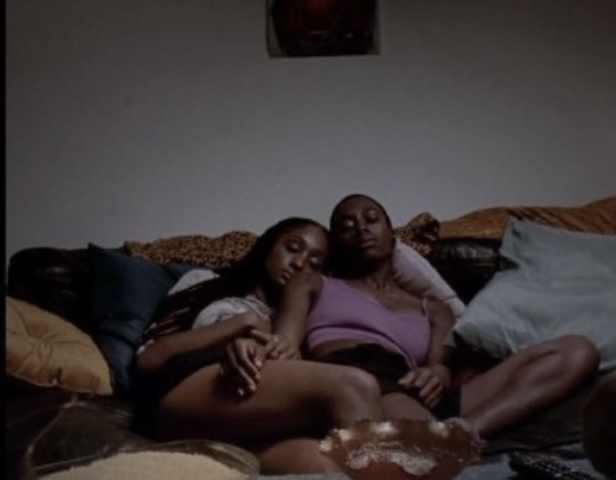
Nedjma (Lina El Arabi), the tough leader of a girl gang falls for Zina (Esther Bernet-Rollande), a newcomer/ cousin of Nedjma’s rival in Marion Desseigne-Ravel’s modern Shakespearean tale Besties set in gritty part of France. DP: Lucile Mercier.

Some films on top lists I had not personally seen such as Alice Diop’s Saint Omer, Hirokazu Koreeda’s Broker and Saul Williams and Anisia Uzeyman’s Neptune Frost (currently streaming on both Criterion Channel and kanopy). Others I outright refuse— Baz Luhrman’s gaudy biopic on known pedophile Elvis Presley, a Top Gun sequel (surely not meant for my taste), Damien Chazelle’s lengthy Babylon co-starring a problematic Brad Pitt, or James Cameron’s return to colonized Avatar which had white people infiltrate blue people society (primarily played by Black actors). Things can be depicted so beautifully due to high budgets, but these stories certain white filmmakers continue telling reveal such a great lack of respect and sincerity to every person existing in society. 

Cate Blanchett put on a phenomenal performance as the cold, menacing composer Tár, but the film is a challenging bridge to cross. DP: Florian Hoffmeister.

For example, in Todd Field’s Tár, celebrated fictional EGOT winning composer Lydia rants on a biracial pangender college student who refuses to listen to Bach (much like how many of us cancel Woody Allen, Roman Polanski, etc.). This scene has been posted online; the public mostly agreeing with Lydia’s crushing humiliation; saying that just because someone behaves vilely in their personal life does not lessen their talents. Yet, however, the reality is that most problematic white people have the luxury of abusing power; with colonialism setting up the impossible, near unreachable standards, especially in every field of art, film included. After her own public meltdown, Lydia retreats to South Asia, which many wrongfully perceived as punishment, not realizing she still has monetary access, a passport, and a job— signifying that this privileged, resourceful woman has already bounced back. 

Thus, I remember the 2022 films that stood out in a more compelling light, painting the most eclectic pictures staying vividly in mind. Some (primarily Everything, Everywhere All At Once and Danielle Deadwyler’s Till performance) are on the awards radar. Most are not up for big awards, filtering quietly from notice. I think about visual artist Diamond Stingily’s towering presence as Palace in Martine Syms’s stark feature debut taking place in twenty-four hours. The African Desperate conveys the Black person in the typical sea of white in art school. The strong, emotional affair that happens in Busan between murder suspect Seo-rae and police detective Han-joon as Hae-joon’s wife Ahn has these unseen moments with her mysterious co-worker June quietly intensifies the screen in Park Chan-wook’s addictive Decision to Leave. The mourning Black women strongly led Ryan Coogler’s Black Panther: Wakanda Forever sequel, a benefitting tribute to honor the late Chadwick Bozeman felt throughout the entire film. 

My following list highlights films exceptionally captured by an excellent cinematographer and scored by a brilliant composer. They contain impeccable direction, powerful, inclusive stories of resonating human experiences, and starring actors/actresses so good (and grossly ignored), you look up their whole filmography just to see them light up the screen in a different context.

Murder suspect Seo-rae (Tang Wei) puts a dignified, married police officer Hae-joon (Park Hae-il) in Park Chan-wook’s Decision to Leave. DP: KIM Ji-yong/MUBI.

Best Feature-Length Films

Decision To Leave directed by Park Chan-wook and written by Park Chan-wook and Seo-kyeong Jeong

Nanny directed and written by Nikyatu Jusu

Till directed by Chinonye Chukwu and written by Keith Beauchamp, Michael Reilly, and Chinonye Chukwu

The African Desperate directed and written by Martine Syms 

Everything, Everywhere All At Once directed and written by Daniel Kwan and Daniel Scheinert (The Daniels) 

Mars One directed and written by Gabriel Martins

Besties directed and written by Marion Desseigne-Ravel

Petite Maman directed and written by Céline Sciamma

Wheel of Fortune and Fantasy directed and written by Ryusuke Hamaguchi

Black Panther:Wakanda Forever directed by Ryan Coogler and written by Ryan Coogler and Joe Robert Cole

Hazel Gurland-Pooler’s Storming Caesar’s Palace tells the story of activist Ruby Duncan who led the fight against the corruptive welfare system in Las Vegas. 

Best Documentaries 


Black As U R directed and written by Micheal Rice

Storming Caesar’s Palace directed by Hazel Gurland-Pooler

Nelly & Nadine directed by Magnus Gertten and written by Magnus Gertten and Jesper Osmund

Sirens directed and written by Rita Baghdadi

Olivia (Shanay Neusum-James) helps her ex-lover Joy (Deji Tiwo) grieve the one-year anniversary of her sister’s death in Juliana Kusamu’s Losing Joy. DP: Morgan K. Spencer.  

Best Short Films


Code Switch directed and written by Mx. Roti and Davis Alexander Jones

Clones directed and written by Letia Solomon

Losing Joy directed by Juliana Kasumu and written by Nana Duncan 

Glitter Ain’t Gold directed and written by Christian Nolan Jones

Work directed and written by April Maxey

F*** Em’ Right Back directed by Harris Doran and written by Harris Doran and Ddm Ddm 


Thursday, December 15, 2022

The Other Aligning Love Story in ‘Decision to Leave’

Ga-in (Jeong Ha-dam) and Seo-rae (Tang Wei) share commonalities. DP: KIM Ji-yong/MUBI.  

This second Decision to Leave essay reflects on San-O and Ga-in, the devastating story within a story that metaphorically sets up the imperative dynamics between the main protagonists Hae-joon and Seo-rae.

We are introduced to San-O via Hae-joon’s unsolved cases wall, a wall of disturbing crime scene photos hidden behind a blue-green curtain. Before Seo-rae’s involvement with him, the Jilgok District murder in Busan has been Hae-joon’s top priority. The pictures of this particular crime focuses on a victim’s skull found on the side of a mountain— cause of death being barbarically bludgeoned by a hatchet. Ki Di-soo’s discovered body is another death caused by severe head injuries and located beneath a mountain. Beom and Di-soo’s deaths employ opposing revenge tactics— one coldly displaying intent and the other cleverly suggesting suicide. Yet, the reasons for both of these demises are on the accounts of them being extremely cruel to women. Ga-in’s mistreatment is San-O’s excuse for killing Beom. Di-soo’s physical and emotional abuse is Seo-rae’s.

Seo-rae poses a question on if an outside love can penetrate the concrete foundation of an existing marriage— connecting the poetic coincidence between her and San-O. They’re both in love with married people. However, San-O knew Ga-in prior. Seo-rae is experiencing love for the first time with Hae-joon. DP: KIM Ji-yong/MUBI.

Like Seo-rae, San-O (Jeong Min Park) fits the anti-hero archetype— making rash decisions that have horrendous consequences all for the good of another person. DP: KIM Ji-yong/MUBI.

Ga-in, an abuse survivor and accessory-after-the-fact of San-O’s crime, follows the men behind, not realizing what San-O’s outcome will be. DP: KIM Ji-yong/MUBI. 

Hae-joon— who often sees criminals as criminals— learns that he and San-O share common ground despite acting on opposite sides of the law. DP: KIM Ji-yong/MUBI.

Furthermore, San-O and Seo-rae are individuals who take matters into their own hands. They could not report to the police mainly due to immoral pasts—San-O, a former prisoner having no desire to return behind bars and Seo-rae, wanted in her native China for the pacifying murder of her mother. How could San-O ask Hae-joon about Beom’s assaulting Ga-in without being judged for his previous crimes? Hae-joon never doubts that San-O is guilty, keen on him as the murderer from the start. It is the reason for Beom’s murder that Hae-joon is trying to decipher. If Hae-joon were as attentive to detail as San-woo— Hae-joon’s Busan partner blatantly criticizing Hae-joon for being sexist—there are doubts that he would be so quick as to providing Seo-rae true emotional support. In the second half of the film, a hardened Hae-joon treats Seo-rae as he likely would have in the first part if his tender feelings hadn’t distracted him from his task, going as far as arresting her, placing her in jail, and administering a polygraph test. 
“Why do women sleep with such trash?”
During his emblematic rooftop confrontation with Hae-joon, San-O brings up an age old thought that predates time— blaming women for staying in terrible relationships. The patriarchal system has stretched across the world, across history. For centuries, women have been treated as men’s property, often left incredibly helpless. Women must be kept in line with abuses ranging from emotional, psychological, sexual, physical, and financial. In many scenarios, breaking free from trapped unions are imprisonment sentences is simply not an option. Thus, it is easy to fault the vulnerable, to pin the man’s inflicting cruelty onto the victims themselves, but rarely inquiries into why men are inflicting the cruelty. Ga-in, a mere beauty shop owner living faraway, needs support and care. Like Seo-rae, Ga-in found herself in an inescapable predicament with Beom. Seo-rae could not leave Di-soo because of the power he wielded over her. While San-O eventually rescues Ga-in and hides away with her, Seo-rae— a friendless immigrant— has no choice but to place her survival above all else. 

After they brilliantly solve the Jilgok case together using hints of their own love story, Seo-rae drops by the utterly depressed Hae-joon’s home. Together, they burn the Jilgok and Huso Mountain crime scene photos. DP: KIM Yi-jong/MUBI.

Seo-rae aides in Hae-joon’s sleeplessness, a subtle calm before the approaching storm of her own crimes coming to light. DP: KIM Ji-yong/MUBI.
“Actually I like a woman too. But her husband beats her. I want to kill that bastard so much it hurts!”
Candidly pretending Di-soo remains alive, Hae-joon speaks to San-O about Seo-rae in present tense; his words depicting both a purposeful distraction and a heartfelt confession. Hae-joon is falling for Seo-rae and hates not having had the power to protect her from possessive Di-soo. This romantic declaration revealed to a murderer’s ears showcases the chink in Hae-joon’s armor— the new Achilles heel he could not have anticipated. Hae-joon too is capable of the very evil acts that a guiltless San-O has done in the name of love. If Hae-joon prevented Seo-rae’s silent suffering prior— meaning breaking the oath of the badge and perhaps later further sabotaging his mediocre marriage— his honor would still be destined to shatter. From their first meeting, an undeniable connection between them started to form.  

The two intertwined stories of San-O and Ga-in and Hae-joon and Sri-rae dissect the nooks and crannies of moralistic plot, exploring beyond good and evil counterparts of the human psyche. The viewer is left imagining fairy tale scenarios for these unfortunate characters. What would have happened if San-O had not ever been a prisoner? Would he and Ga-in have stayed together living in perfect bliss? Or is it in his inherent nature to conduct on the wrong side? Is it possible that Hae-joon could believe Seo-rae’s battered wife account and put the shady immigration officer Di-soo away for his many misdeeds? Would Hae-joon be able to leave his wife and child behind for happiness with Seo-rae— a woman who mercy killed her own mother merely because it was asked? 

Seo-rae knows that her time with Hae-joon filters through an invisible hourglass. She continuously initiates physical contact during the second murder investigation— embracing him, giving up evidence, kissing his lips, and stroking his face and hands. Deep down, Hae-joon must know it too. DP: KIM Ji-yong/MUBI. 

The glaring difference between Ga-in and Hae-joon’s similar situations is that Ga-in willingly stays with San-O. She accepts his aggressive overprotective nature. She is okay with him killing her husband. San-O probably told Ga-in that he did it for her. Yet, San-O also admits to feeling that Ga-in is responsible for his destructive behavior. However, prideful policeman Hae-joon is not the kind of person who could live with Seo-rae’s crimes, especially not after their stolen moments together. Hae-joon’s gentle benevolence and Seo-rae’s nurturing spirit would have been a blissful pairing. Instead of looking within, Hae-joon holds Seo-rae liable in his own failures to do his job properly. Yes, Seo-rae not only lied, she had Hae-joon destroying evidence. At the same time, as a married officer of the law, he should have listened to San-woo. Now with their forbidden love story marred by Seo-rae’s betrayal, Hae-joon— not as forgiving as Ga-in— would always be doubting whether Seo-rae truly cared about him, if she played a seductive ploy to get out of facing capital punishment. Thus, Hae-joon no longer trusts Seo-rae, but she trusts him, seemingly implicating herself as both an apology and cryptic profession of love. 

San-O’s death includes scissors and a nasty plunge right in front of Ga-in and Hae-joon. DP: KIM Ji-yong/DP. 

Meanwhile, Seo-rae's choice expresses a woman patiently waiting to die alone. Her note lies in the last phone call with Hae-joon, echoing his words in her native Mandarin, words she knew he would not understand yet. DP: KIM Ji-yong/MUBI.

Decision to Leave’s parallels of Ga-in and San-O and Hae-joon and Seo-rae tells such a sorrowful trajectory. San-O makes the choice to die rather than face incarceration/death penalty. His suicide is as bloodily violent as his crime. Also, his jumping off the rooftop mirrors Seo-rae’s attempted framing of Di-soo’s mountain fall. Seo-rae—whose fate was sealed the moment she fled China—takes Hae-joon’s words to literal creation. She crafts a quieter, moving end within the earth itself. While Ga-in is able to cling to San-O’s broken body and see that he is lost to her, Hae-joon will be forever tormented by the memories of the mysterious Seo-rae, crying piteously as he unknowingly steps over her sand/sea grave. 

A distraught Ga-in cradling her dead lover San-O whilst looking up at the only other witness to his suicide. DP: KIM Ji-yong/MUBI. 

Hae-joon in complete despair searching for Seo-rae whose disappearance bears no witnesses, no clues. She secretly ends her life in Korea just as she entered it— by sea. DP: KIM Ji-yong/MUBI. 

There lies a gut wrenching depression in bearing witness to the end of a life. Yet, an even greater horror exists in never again seeing the someone you could not resist holding briefly in your heart.


Thursday, December 8, 2022

‘Decision to Leave,’ A Dark Romantic Mystery Is Best Film of 2022


Decision to Leave film poster. 


Decision to Leave will probably burn your whole entire soul alive.

The titillating, cat and mouse story filled with many dangerous twists and turns keeps you on the edge of your seat, nerves shivering, breaths coming out in charged pants. You must pay attention to every last detail that transpires between Jang Hae-joon— the smart, married cop and Song Seo-rae—the widowed murder suspect. As their surveilling roles push and pull against the other in some strangely riveting magnetism, the provocative game between them intensifies into an emotional fire threatening to forever haunt them both.

And my goodness, you want it to. The chemistry is that smoldering. 

Inspector Hae-joon (Park Hae-il) is trying to decide if Seo-rae (Tang Wei) purposefully pushed her husband off a mountain. DP: KIM Ji-yong/MUBI.

The first murder mystery in Busan, South Korea leads Hae-joon, a former smoker and insomniac with a poetic sensibility and knuckle cracking proficiency, into solving the case of a dead man fallen down from a mountain. The hungry bugs have already started devouring the deceased’s flesh, fluttering in his wide, opened eyes. Naturally, the wife Seo-rae, a Chinese caretaker of elder women who see her as a long lost granddaughter, is the best possible suspect for the crime. Very demure and subdued, not the grieving picture of a widow, Seo-rae is already not wearing her wedding ring and going right back to work. She pointedly reveals that she is not a benevolent person, that she is a wise being of the sea. The sea will eventually become the most devastating element of their acquaintance. Although Hae-joon proclaims to be a sea person too, his actions speak mountainous volumes. 


From the seat of his parked car, an attentive Hae-joon watches Seo-rae’s tender movements during stakeouts. He grows more and more intrigued by the striking young woman who feeds an outdoor cat, studies Korean soap operas, and consumes ice cream for dinner. As he calls her or she calls him, he imagines being at her side, seeing her close up, observing her responses to him. The obsession is a most believable slow building turmoil that begins bleeding into his sixteen-year relationship to Ahn, a genius power plant worker he visits once a week in the town of Ipo. Around Seo-rae, Hae-joon experiences pleasant sleeps in his car, waking up blissful and behaving kinder than usual to his coworkers. 

However, whilst having sex with Ahn— who believes Hae-joon is occupied in another case— Hae-joon’s mind concentrates on the mysterious Seo-rae, primarily her x-ray. Post coital, he lies to Ahn about the situation, switching the roles of Seo-rae and her dead husband. This casual fib will only twist on him later. Coincidentally enough, Ahn talks about her co-worker June quite often (even June’s crush/jealousy). Hae-joon is too preoccupied with Seo-rae to understand, let alone focus on these subtle red flags from his wife. Thus, Ahn is openly comfortable discussing June’s obvious desires and a closed off Hae-joon pretends that his simmering passion for Seo-rae does not exist. Not speaking on it means not acknowledging, not acting on it. 

Many light flirtatious interactions between Seo-rae and Hae-joon come into play in both police stations— Buran and Ipo. DP: KIM Ji-yong/MUBI. 

The cop is sinking further down the rabbit hole and only Soo-wan, his male partner notices. Hae-joon slips up in his task, leaving Seo-rae free to do her sleuthing on him. Soo-wan believes Seo-rae guilty and Ahn remains in the dark. Seo-rae is an isolated woman with no outlet in which to reveal her innermost thoughts and feelings except using her phone as a recording diary/translator. Her motives are purely secretive, adding layers to the intrigue of her character, a character who is adept, calculating, quick yet not immune to falling into the complications of desire, of love. She is seemingly playing this poor, sopping detective. At the same time, she is learning from him, becoming educated beyond learning Korean. He excites her, shows a tenderness rarely bestowed on her by a man. The key to everything is in shared technology— the phones that come and go as evidence, the cyber translations from Chinese to Korean, the earbuds, the tracking/surveillance. Also, Hae-joon sneakily catching Seo-rae’s whispers to her cat and reading transcripts of her Apple Watch voiceovers are simply too endearing— he gets a euphoric rush from realizing she thinks of him as he thinks of her. 

Old women are sadly used in this particular narrative as scapegoats. Seo-rae’s thirst for killing began with her dying mother who tells Seo-rae about her Korean heritage in the Homi Mountain. Unfortunately, it is a capital offense to aide in death despite Seo-rae’s mother requesting the fentanyl. A desperate Seo-rae marries in order not to be deported and endures brutality including her maniacal abuser’s initials tattooed on her flesh alongside his many bruises. It seems other than her late mother, no one else has since cared for Seo-rae, loved her unconditionally. Until, she becomes a successful caretaker. The key to Hae-joon figuring out the first mystery was Seo-Rae’s Monday patient, a dementia woman who adored and trusted Seo-rae mainly because Seo-rae brilliantly executed the part of youthful, gentle caretaker. Who would ever suspect her of containing malicious or evil intentions? The spell Seo-rae had placed on Hae-joon seemed to be broken. A beautiful, naive, tragic figure could be capable of harm— of deceiving and killing elder women and putting his job in jeopardy— a smart, dignified cop.

Seo-rae enjoys the meal Hae-joon prepares her in a scene that earlier mirrors him cooking for his wife who too cherishes his culinary talents. DP: KIM Ji-yong/MUBI.

Decision to Leave is not as sexually explicit as other Park Chan-wook films. It almost appears rather tame. Instead, he finds other devices to create his signature eroticism. The uncharted lust practically spills from the seams moment upon moment that these two characters interact. When Hae-joon sniffs Seo-rae’s perfume, purchases expensive sushi for her to eat at the police station (which pisses off his erratic partner), prepares her a Chinese meal late at night, fights a man with sweaty hair and heavy panting as she witnesses him from her car, or rubs lotion onto her calloused hands during a rainy walk, he is showing an unprofessional interest. Things heat up further as Hae-joon unexpectedly undoes his belt— only to put on his holster as Seo-rae observes him. Once Seo-rae calmly breathes and recites sweet words to help him sleep in bed, that alone is a deeper intimacy than what holistic Ahn grants him. On top of everything— Hae-joon and Seo-rae keep staring at each other in that manner of no one else existing but the two of them. Eye connection is frequently a strong indication of attraction, of longing. A serious thing too, when considering how often Hae-joon drips solution in his tired eyes. 

Once Hae-joon— a man who constantly needs to be in the shoes of the dead— figures out Seo-rae is not the perfect victim, the crushing tide is brilliantly conducted. As a hurt, disillusioned Hae-joon decides that he can no longer associate with Seo-rae due to his damaged pride from her betrayal, Seo-rae’s genuine feelings grow deeper at this point. Yes, she has committed crimes to save herself from further misery and harm. How could he possibly understand what she— a foreigner in a new country still struggling to speak the language— was going through? Hae-joon foolishly believes it would be so simple for Seo-rae to just walk into his police station and tattle on a former immigration officer? Women are not always believed. 

After thirteen months apart, Hae-joon and Seo-rae meet again at the fish market in Ipo, their respective spouses by their sides. Despite the awkwardness, clipped dialogue, and silent communication, Hae-joon and Seo-rae’s desire for each other remains an undeniable cord drawing them in. The way their eyes connect or try not to, the way he suddenly smiles— it is all so wonderfully orchestrated, the perfect forbidden fate. In this pivotal, electric scene, Seo-rae— now a tour guide and no longer a caretaker/nurse— is already subtly giving Hae-joon clues to her next crime. 

The temptation is too great: Hae-joon remains stoic in Seo-rae’s presence. DP: KIM Ji-yong/MUBI.

At the second murder mystery, this time Hae-joon— who has been nursing depression from his incurable broken heart— will not let Seo-rae get away so easily. He tries a sterner approach with Seo-rae, determined to not let his feelings entangle. His inquisitive female partner, however, does not believe Seo-rae guilty of killing her second husband— a man threatening to tell Ahn of Hae-joon’s emotional affair. Seo-rae recorded Hae-joon’s “shattered” confession, words that signified his love for her, something that he does not argue or deny. Yet, Hae-joon’s determination in seeing justice done employs him to turn the tables on the inner workings of his great attachment to Seo-rae. When he cuffs their hands together and she strokes his fingers, he cannot reject her. It is eerily poignant that Seo-rae tells Hae-joon that she purposely cleaned the crime scene, thinking of his sensitivity to blood. 

Clever symbolism runs rampant throughout the film. The blue-green colors of water/sea continuously appears: the wallpaper in Seo-Rae’s home, fetanyl pills, evidential dress, bucket to bury the dead bird (which both Hae-joon and Seo-rae have taken feathers from), and the filtered light in Hae-joon’s bedroom as Seo-rae breathes alongside him. Then, there’s the sushi. In his first scene with Ahn, Hae-joon admits to loving cooking and not eating any old sushi. With Seo-rae, however, he orders sumptuously enticing sushi at their impromptu interrogation— Shima— which Seo-rae eats alone prior to her heartbreaking plan. In his fierce determination to treating her like a regular suspect, he orders generic food and she is notedly disappointed. Shoes are the next big beacon— Hae-joon wears the comfortable hiking variety for the more energetic paced cases in Busan— especially necessary for climbing steep mountains and chasing bad guys. In low-crime Ipo, he wears loafers. When Seo-rae is at his Busan home, she is donning house slippers, a signifier of the intimacy between them. In Ipo, she is wears heels and has her hair down as opposed to her earlier ponytails. Finally, chapstick and mints— typical precursors to kissing and kept in Hae-joon’s endless pockets— are found twice by Seo-rae. She knows his content pockets just as he remembers her phone password. She applies the balm on her lips and then his in the manner that echoes him applying lotion to her calloused hands. Their final face to face meeting has Seo-rae replacing his chapstick with her own lips, a purely poetic exchange that reads more like a bittersweet goodbye to possibility. So well done! 

At home in Ipo, Ahn— who believes Hae-joon not only is having an affair with Seo-rae, but also may have conspired to kill the second husband—leaves with June. Perhaps, in some fashion, June is the man Ahn has always wanted. In that instance, we have these four people who behave similarly to each other. Hae-joon and Seo-rae sometimes act as mirrors or polar opposites. Ahn and June are two peas-in-a-pod science nerds. However, only a few are courageous enough to confront the issue of moving towards the right destiny. Unfortunately, Seo-rae realizes that she must make the sacrificial choice not just freeing him, but herself as well. She is a criminal. He is a cop. So, the two most imperative women in Hae-joon’s life leave him. Ahn knows that he has been lying to her about Seo-rae and Seo-rae believes that she is a reminder of his lost pride in being a dignified policeman. 

Seo-rae and Hae-joon finally have it out in Ipo. While he is pragmatic in his choices, she is cryptic, confusing him completely. Is that because of the language barrier or another secret battle altogether? DP: KIM Ji-yong/MUBI.

Among the metaphorical repetitions and jarring parallels, the award-winning Decision to Leave (South Korea’s fitting choice for the Foreign Language Oscar for next year’s ceremony) is a wild, intimate ride from start to finish. Park Hae-il and Tang Wei’s charismatic performances are certainly the brilliant highlights of a mesmerizing, moralistic screenplay Chan-wook co-wrote with Jeong Seo-kyeong. KIM Ji-yong’s gorgeous cinematography— their first IMDb credit— just stays on your distraught mind long after the credits roll. The poignant music and sharp, gritty sounds too truly set the tone, lure your every sensory into this fascinating escapism.

Although the tragic conclusion breaks the heart to smithereens, the beautiful, dark Decision to Leave defines fierce yearning in its more sinful form, giving off a cautionary alarm to the predicaments a corrupted person can coax the innocent into if they’re not careful. Seo-rae bravely calls out the hypocrisy of the cop’s violent profession and the cop’s need for a stable home life with a docile partner instead of someone like her— a survivor only drawn to conducting violence for either those who wronged her or those suffering souls needing a way out. Seo-rae’s affect on Hae-joon alters him as much as he changes her, deepening a harrowing connection that cannot ever be given the necessary space needed to thrive. Hae-joon and Seo-rae are a pairing so vital, that it still hurts how they ended— as a guttural, unresolved case as cruel as the crushing deep sea. Ultimately, this ironic masterpiece of a film depicts two lonely people who found each other too late, whom under different circumstances may have been quite happy together. 


Friday, October 14, 2022

The Trigger Warning Dangers of Gaslighting Bleeding Into Reality


Kiki Layne has three pivotal scenes as the troubled Margaret in Don’t Worry Darling.

Well, the critics were certainly right to dismiss Olivia Wilde’s second feature Don’t Worry Darling. Now that behind-the-scenes antics are finally dying down, let us unpack this catastrophic mess of a storyline failing both feminism and womanism perspectives. For starters, the small part that Margaret provides in this cookie cutter Stepford wives fantasy parallels real-life situations vulnerable Black women have placed themselves in. The all-smiling cult set in the always suspectedly sunny Victory, California promises to be nonthreatening, but they only represent great harm.  

We hear about Margaret before even seeing her onscreen because the vintage styled housewives are complaining that she didn’t show up to mandatory yoga. If that doesn’t sound like modern day gentrification conversational BS.... 

Interestingly, Wilde plays Bunny, a harsh, shallow character (who also may be racist) painting Margaret as a borderline psychotic. Alice is the simpering “do not speak ill” on the former friend, but does little service in defending, let alone understanding poor Margaret’s disposition. The most important thing to Alice is Jack and only Jack, the first key punch to feminism. Alice is obsessed with making Jack’s meals and making sure his horniness is fulfilled by any means necessary. So, who cares if her neighbor is a little on the fritz when Jack centers Alice’s life? 

Alice then spies Margaret standing robotically still on her lawn, gazing at nothing. Yet, the woman does not even speak, let alone acknowledge her neighbor’s silent presence. If this isn’t an example of “white silence is white consent,” other events bring that statement to light. Alice continues carrying on, living her idyllic dream with her dull, secretive husband, including feeding his endless sexual appetite. 

At a posh party that includes the whole small population of Victory, Margaret interrupts Frank, the eccentric, seemingly omnipresent leader, with her first spoken lines being, “why are we here? We shouldn’t be here.” 

Margaret is immediately escorted away. Frank laughs it off. 

Margaret is forced to remain silent. 

Alice immediately goes to a dazed Margaret who repeats her earlier refrain that none of them belong there. And where is the “there” exactly? What is Victory? Does anyone care? Before anything else could be stated or even explained, the curtain closes on Margaret (obviously drugged) and Alice wanders away, finding her husband who draws her in with public sex to shut up any curious thoughts. Things get creepier as Frank catches them. 

According to Bunny, Margaret is unliked because she took her son to the desert— a big no no. Later, we learn that despite all the couples trying for children and Bunny herself having two of her own, that children are not real in this strange concept. Perhaps Bunny’s great disdain for Margaret has more to do with her going to the desert with her son and that son mysteriously disappearing rather than Margaret’s perceived mental state. Bunny seems content with the housewife role even though her children much prefer Alice over her. Margaret presents a threat to that— a certain rule breaking independence. Bunny makes it her business to castrate Margaret, influencing the other women to ostracize Margaret as well. Although it is saddening that Bunny has lost her children in the real world, her treatment of Margaret is an appalling reaction that maybe involves self-hatred. 

Still, Alice doesn’t entirely write Margaret off— though she doesn’t talk to the woman. After staying on the bus as opposed to shopping with the other ladies, Alice sees a plane crash, but the driver cannot go up the desert mountains to feed Alice’s temperament. Alice knows that the desert is against the rules. Look how they treat Margaret— no one even wants to associate with her. The mystery begins to crack a little until Alice awakes to find herself back at home. Soon, all Alice thinks about is the desert and she asks questions much to everyone including Jack’s dismay. Yet, when Margaret calls, cryptically saying that she knows what’s happening, Alice practically calls her nuts and hangs up. It is pretty cruel that Alice decides to treat Margaret how everyone else does. Alice sees what Margaret has been going through and is starting to receive the brunt of that particular experience. Instead of standing by Margaret’s side, Alice casually dismisses the horrifying situation— eerily similar to telling folks the realities of racism, sexism, ableism, etc., only to be criminally told “it’s all in your head.”  

Suddenly, during yoga, Alice turns into Margaret’s mind reader, staring helplessly as Margaret repeatedly bangs her head against the mirror. No one else in the studio sees Margaret. Only Alice sees Margaret’s distorted faces among the shattered fragments. Alice quickly leaves to witness Margaret slit her own throat from the roof of her perfect house. The scene itself is trauma inducing, but it is Alice’s later flashbacks that pierces the soul. Margaret deserved better— better than this terrible Victory concept, better than white women neighbors like Alice and Bunny. 

This disturbing scene foreshadows Margaret’s suicide that Alice (Florence Pugh) will witness. 

A devastated Alice is haunted over and over by Margaret’s death— a death of someone she claimed an old friend but did not treat as such. Despite Victory’s people claiming that Margaret is indeed “okay” and “feeling better,” we never see her onscreen alive again. Then, Alice keeps seeing Margaret’s fallen bloodied body— a disturbing, unsettling picture that does something to a psyche so accustomed to televised Black demise. It seems almost as though a sadistic pleasure comes out of this phenomenon, both in real life and fiction. Dead Margaret drives Alice to further action. Earlier, Alice allowed herself to be stilted, mainly by Bunny and Jack. Now with Margaret gone, detective Alice seeks to uncover the mysteries of Victory and Frank. Unfortunately, Jack knows more than he pretends to. When Alice expresses her findings to Bunny during Jack’s pseudo weird job promotion dinner, a freaked out Bunny tells the woman to be proud of her husband’s accomplishments. Talk about setting feminism back a few decades. 

At last, Alice realizes she is really an overworked doctor and that Jack is a depressed loser who signed them both up for Victory’s virtual reality without Alice’s consent. He felt neglected— always hungry and sex deprived. Wow. The vicious twist that Bunny has known the truth is also very detrimental. Instead of helping Margaret in any shape or form, Bunny chose to bash this Black woman every time her name is spoken. Bunny instilled major verbal abuse on Margaret (out of earshot of course because Margaret is severely lacking screen time) and encouraged others to do the same. Yet, the moment Bunny realizes Alice is in danger, she rushes forth to rescue her fellow white woman, her mirror self from the horror dystopian society. This speaks volumes about the brand of feminism this film reveals— that women of color are not to believed, gaslit into isolation, told that their fears are purely a result of psychological illness. Thus, Margaret still retained hope that her former friend could see the breaks in the false perfection structure. Alice, however, becomes a disappointing extension of Bunny, ignoring the warning signs that Margaret insists upon until it is far too late. Furthermore, a person who dies in Victory, dies in the real world too. So sadly, Margaret has died twice. Did she know that? Did she discover that Victory was a simulation, a false world? Was that what she found out in the desert? Did she even volunteer to be there or was that her barely seen husband Ted’s doing? Who is Margaret and where is her body? So many inquiries and not enough smart choices. 

Whether it be the alleged abuser Shia LaBeoff originally being cast to the noticeable tension between Academy Award nominated Florence Pugh against director Olivia Wilde or the false feminist values that the storyline is supposed to accomplish, future Razzie Awards winner Don’t Worry Darling was a mess during production to the end. Katie Silberman’s screenplay written alongside Carey and Shane Van Dyke is altogether messy and complex, introducing more riddles than answering questions. Yet, another crucial behind-the-scenes backfire is Affonso Gonçalves’s preposterous film editing. Although this is Wilde’s directional effort, Gonçalves must be partly blamed for Kiki Layne and Ari’el Statchel’s scenes being cut. Layne, with already lesser film credits and awards nominations than the rest of her cast mates, deserved this opportunity to broadcast her talents, especially among the nearly all-white crew. However, with the red flags planted on the Pugh and Wilde controversy and even her name included in top billing, it should be noted that Layne wasn’t at all an active participant in the press junkets. Despite whatever personal feelings Wilde has in regards to Pugh, the clear message is that Pugh’s Alice is who matters more, who is ultimately saved from this gawd awful wreckage. Thus, where is the true solidarity onscreen and off? The inclusivity of all women? None to be found. 

Letterboxd’s demi adejuyigbe summed it best on Don’t Worry Darling with, “standing outside the theater telling every white woman that leaves ‘so messed up. I would never do that to you.’


Tuesday, October 11, 2022

‘Code Switch,’ A Poignant Short Film Gazing on the Black Femme


Code Switch film poster. 

Code Switch, likely the shortest short film ever reviewed at a length of five minutes, does not make it any less significant than a full-length feature running past three hours. From beginning to end, the experimental portrait presents a singular Black body situated in safe, nonthreatening spaces— spaces that hold historical significant symbolisms/ties to Black culture. 

Code switch by definition linguistically means “altering two or more languages.” In workplace environments or locations lacking a true inclusivity, Blackness (mainly Ebonics, attitude, style, etc.) must often be smoothed over, toned down to appease the masses. Yet, in this particular short film, this term is used to illustrate an aspect of a person’s appearance and identity, finding the balance in the authenticity of their gender. 

Pick out at the barbershop. DP: Hany Osman, Yojin Yohe, and Joe Cozza. 

Inside of a busy barbershop, a non-binary figure receives a fresh trim to their illustrious low cut Afro aka a tapered TWA (teenie weenie afro). Others come and go with their evenly toned and hydrated flesh, widened smiles— a beautiful, engaging people. The camera pans on these individuals who pay the protagonist no mind. Each engaged in conversation after conversation against the cool background R&B track that plays as crisp as a vinyl record. This particular experience in the barber’s chair is a familiarity expanding towards he, she, and they. These grooming tools have no gender roles, no gender expectations despite what society claims to be true, to be normal. The protagonist belongs there among the strangers receiving their own washes and haircuts, a place that doesn’t ask who you are or where you’ve been, just usually “how would you like to be styled today?”  

The split duality of finding allegiance to both dominantly male barbershop culture and the beauty that Black women possess. DP: Hany Osman, Yojin Yohe, and Joe Cozza. 

Later, the protagonist— in a powder blue durag and matching shirt— gazes upon pictures in their white walled bedroom. Scattered magazine images of iconic women celebrities celebrate unambiguous Black beauty from Aretha Franklin to Maya Angelou, Missy Elliott, Kerry Washington, and Lauryn Hill, a period of the 1960’s-2000’s, something alarmingly outdated as the culture of now shifts towards lighter complexions and looser hair textures. Yet among these voguish faces are outspoken queer individuals such as Da Brat and Janelle Monae— probably the most current. This scene certainly presents another dynamic altogether, that of dualism: two separate entities existing in one body. The natural, organic being who appreciates the media representation of the glamorous makeover while simultaneously embracing their true identity, bravely stating that “yes, these are beautiful historical figures holding high standards, but this honestly will never be where I stand.” 

The ending grants the first spoken words that are not song lyrics— kind, gentle vocals from the unseen mother on the phone entailing a much needed acceptance into the ears of the silent figure whose warm, pleasing face and shorn hair has captivated us throughout this timeless piece.  

Nothing more idyllic than the capturing of smoke escaping nostrils and lips. DP: Hany Osman, Yojin Yohe, and Joe Cozza.

Although we still live in troubling, violent times where people refuse to understand and acknowledge that there are more than two genders, Code Switch opens up a fresh dialogue. A film told through a caring, thoughtful lens offers a gratifying story in three hundred, twenty-two seconds. It shows the beauty of a deserving existence. 

Writer/directors Mx. Roti and Davis Alexander James’s must see Code Switch, a winner of the Frameline Completion Grant, has shown at various film festivals across the country including the 46th Annual Frameline in San Francisco, the 40th Annual Outfest in Los Angeles, the 5th Annual Black Femme Supremacy Festival in Baltimore, and the 24th Roxbury International Film Festival in Boston. It will then show at the 17th Annual LGBT in Dayton, the 9th Alphabet Festival in Chicago, and the 22nd Annual Indianapolis LGBT Festival in Indianapolis.