|
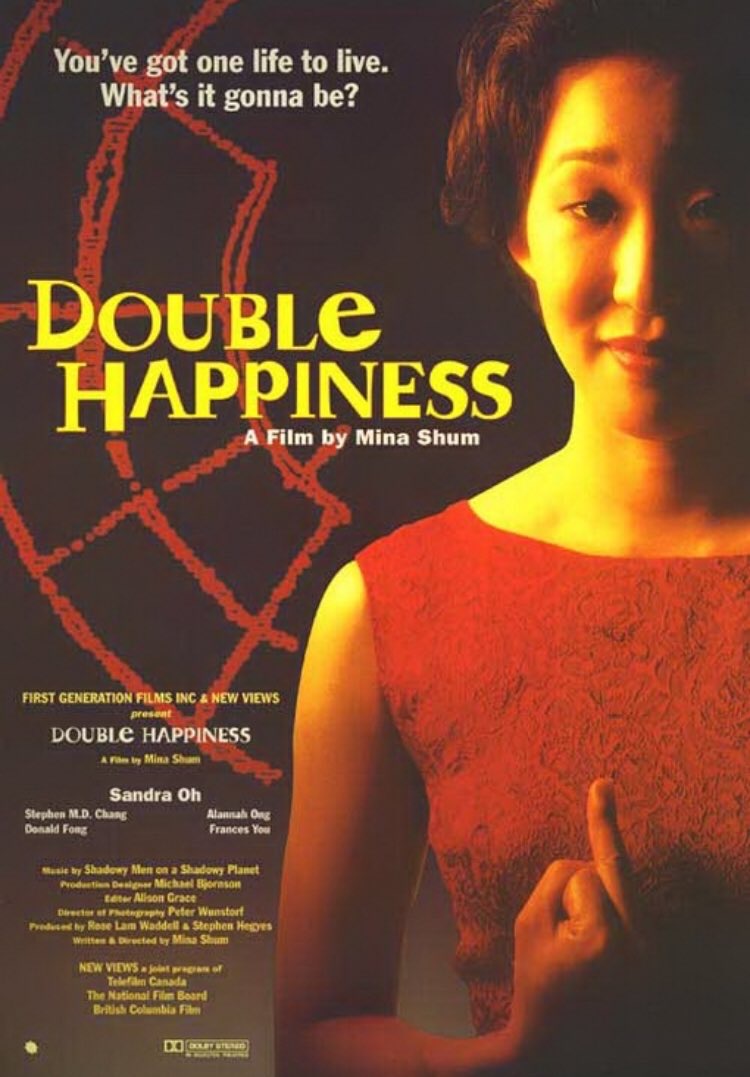
| Double Happiness film poster. |
Although I have yet to watch Sandra Oh’s latest film release— the horror
Umma helmed by Iris K. Shim
— in honor of Women’s History Month, it seemed like the perfect opportunity to revisit another Asian director, Mina Shum, whom Oh has worked with several times in Canada. The humorous classic
Double Happiness brings all kinds of joy to behold.
 |
| Jade (Sandra Oh) jokingly reflects that the difference between her family and The Brady Bunch is that hers have subtitles. DP: Peter Wunstorf. |
Sandra Oh stars as aspiring actress Jade Li in a family of Chinese immigrant parents. Her younger sister Pearl looks up to her. They share a bedroom despite Jade being twenty-two-years old. The girls also have an older brother Winston, but his memory is locked up in a secret box beneath the bed. Apparently, he has been disowned (mostly by their stern, family values protective father) and this symbolism will remain in affect throughout due to Jade’s rebellious spirit. Much like her absent brother, Jade has the desire to break tradition.
 |
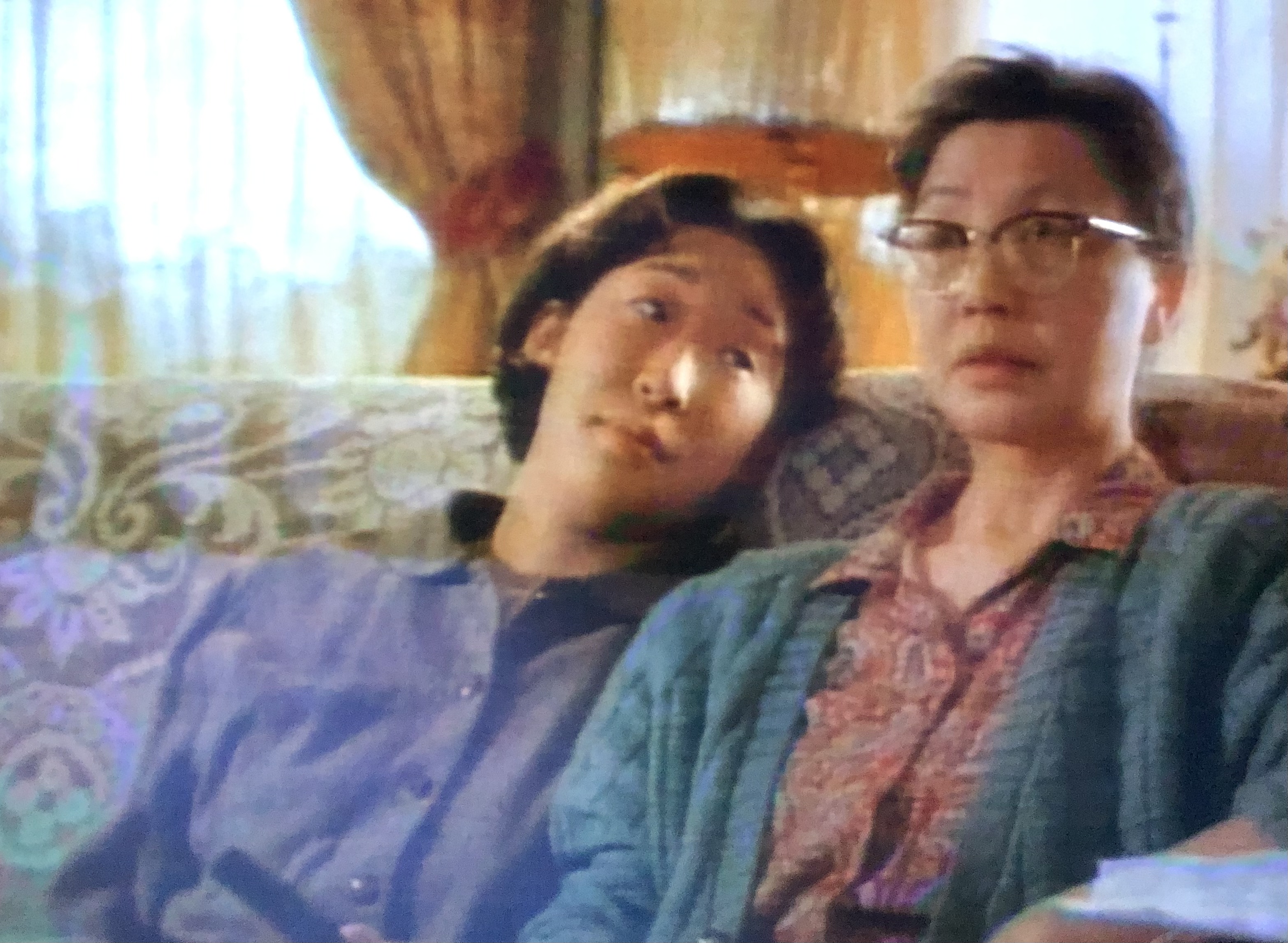
| Jade (Sandra Oh) and Pearl’s (Frances You) relationship is an adorable illustration of sisterhood. They protect each other, dance, eat, and everything in between. DP: Peter Wunstorf. |
Born in Hong Kong and raised in Toronto, Jade is the product of her surroundings, primarily the television and wanting to be on it. Jade is naturally gifted at mimicking everything that she sees and hears— Southern accents and all. Yet in two very specific instances, Jade is confronted by an uncomfortable reality of living in an awkward duality. She must decide between portraying the terribly offensive stereotypical accent or truly understanding what being outside of China has done to her. Jade may be able to speak the Cantonese her parent have taught her, but when it comes to reading the very language itself, it makes her question herself as a Chinese woman. The questions raised to her are valid, deeply personal and will affect her throughout the film. What does being of Chinese descent illustrate to the next generation being raised in a place far removed and situated in another culture?
 |
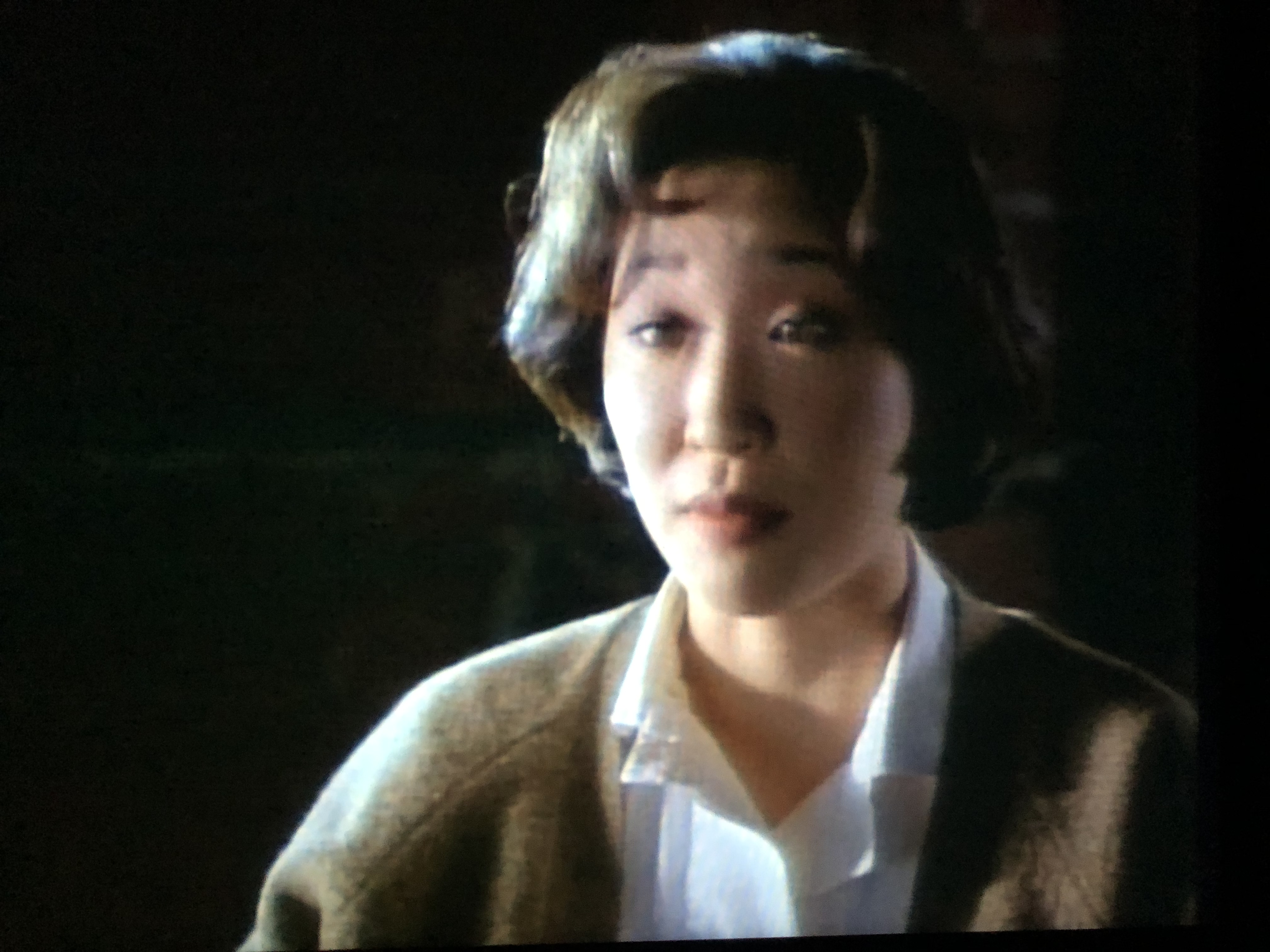
| Jade (Sandra Oh) and Lisa (Claudette Carracedo) share hopes for the future. DP: Peter Wunstorf. |
When Jade’s best friend Lisa asks what her dream is, Jade softly responds that she wants to win the Academy Award for a big part. This is such a sad, bittersweet statement in a twenty-eight year old film where limited stride has been made in an institution that favors white actresses above all others. Last year, Youn Yuh-Jung won Best Supporting Actress for her role as the grandmother in Minari and the previous win in that category was Sayonara’s Miyoshi Umeki in 1957– sixty-four years prior. Truly great Asian actresses from Michelle Yeoh to Maggie Leung and Ziyi Zhang and more have been glaringly overlooked. Thus, Jade’s future hopes are not only incredibly impossible odds— they are proof of the blatant unfairness and racism in Hollywood film awards. Jade is already struggling to find casting directors that appreciate her multifaceted techniques. With the doors continuing to close on her, how could Jade even begin to break out of achieving one slice of her desire?
 |
| Even though her parents not completely invested in Jade’s career choice, Mom (Alannah Ong) doesn’t mind if she takes a more respectable journalism gig. DP: Peter Wunstorf. |
Meanwhile, Jade’s parents and friends continue setting her up with different Asian men in hopes of marrying her off. This dated customary setup doesn’t suit the current landscape. Jade has far too many unconventional ideas, is too focused on independence than subjecting herself to fitting in with the old ways. In Toronto, she feels encouraged to follow another path that does not include the ideal mate, but a preferred partner of her own choosing.
 |
| The sisters must hide their photo with Winston... |
 |
| Under the bed. DP: Peter Wunstorf. |
A very important factor into Jade’s story is Winston continuously being brought up. People would ask how their son is doing. The mother makes up stories, but the father speaks nothing of him. Winston’s blacklisting from the family— his disownment— is primarily the father’s doing. Jade’s sheer independence starts bothering her father, especially the acting and the “talking back.” Jade is supposed to be respectful, demure, obedient, and quiet. Whenever her father becomes angry or disappointed in her, Jade brings him red bean buns and tea as a forgiveness branch. She also becomes mother hen-ly— massaging his back and combing his hair, seeming more wifely than daughterly. Beneath trying to appease her father, Jade aches to be her true authentic self without his constant backlash.
 |
| Jade imagines herself a Southern belle. DP: Peter Wunstorf. |
 |
| Unfortunately, casting agents see one opportunity for women like Jade. DP: Peter Wunstorf. |
So while the older generation continues speaking in their native Cantonese tongue, Jade, Lisa, and Pearl exemplify the turning tide. They understand the language and respond back in English.
 |
When Dad introduces his daughters to Uncle Hong, they must recite a greeting in perfect Cantonese.
|
 |
Uncle Hong (Donald Fong) making dumplings from scratch with his sister-in-law.
|
Double Happiness also shows a huge relationship between food and community. Jade’s family and their friends gather around the table—a constant sturdy structure— eating hefty portions with their chopsticks, having conversations, or making homemade dumplings. It almost has that family restaurant quality, seeing that the mother prepares everything because it is expected of her as the daughters set the table.
 |
| In the standard white dress and classic pearls once more, Jade realizes that the life of her traditional parents is not the life for her. DP: Peter Wunstorf. |
A solid prize winner at the Toronto International Film Festival and Berlin International Film Festival, writer/director Mina Shum’s charming, delightful screenplay is chalk-full of humor, wisdom, and defiance. In a role fresh after the candid biopic The Diary of Evelyn Lau, an utterly brilliant Sandra Oh breathes life into the free-spirited Jade. Oh was deserving of her awards— the Genie Award for Best Actress (the former Canadian equivalent of the Oscars) and a special mention from the Torino International Festival of Young Cinema.
 |
| Red bean buns will not always have sway for Jade’s dad (Stephan Chang). DP: Peter Wunstorf. |
Currently streaming on Prime Video, Double Happiness will have anyone laughing, resonating with a woman’s modern-day independence, and coming back stronger in the face of abject rejection/racism.