Showing posts with label 1990’s. Show all posts

Thursday, October 29, 2020

Rita Slays Her Demons in ‘Vampire in Brooklyn’


Exactly twenty-five years ago, Eddie Murphy presented Vampire In Brooklyn, a comedy-horror directed by the legendary Wes Craven, written by Michael Lucker, Chris Parker, and the late Charlie Murphy— Eddie’s brother and longtime creative partner. At the center of this Coming to America vibe, is Rita Veder, the carbon copy replica of his longtime love (as it so happens in most vampiric tales). The Caribbean hailed Maximilian has arrived in a bloody boat, looking specifically for her. 


After the untimely death of her mother in a mental institution, Rita has been tormented by strange thoughts and dreams. She moonlights as a painter, integrating the dark, supernatural manifestations into surreal pictures on canvas. In fact, her unraveling behavior presents fodder for her insensitive co-workers down at the precinct. It should be duly noted this shows police are incapable of being compassionate towards those afflicting from severe trauma or mental illness. Only Rita’s partner Justice cares about her troubles, shedding an attentive ear and protective garb. 


However, Rita is no damsel in distress. Although terrifying moments occur, like a coffin appearing with her lookalike stowed inside or a hooded cobra striking at her, Rita stays grounded, keeps her cool. She is surrounded by skeptics and naysayers who believe a Black woman is losing her marbles, but Rita cares little for the opinion of others. When she is almost kidnapped by a disguised Max, she manages to gain the upper hand and save herself. Of course, Justice is pissed that he doesn’t get to be her shiny hero. Rita, though, is angry at him, believing that he was the one giving Nikki, her vanishing roommate, a wild romp night. 
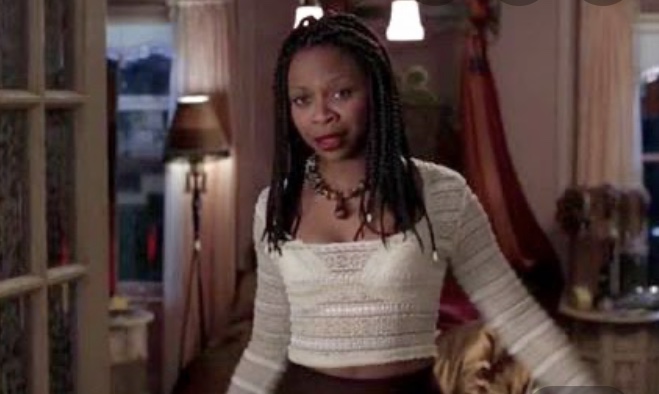

It is wonderful that two gorgeous Black women are onscreen, let alone two women sharing an apartment, but Nikki does not receive full development, let alone a direct conversation with Rita. Nikki is introduced only after Rita lets Justice into the apartment— not before. And yes, there are parts Nikki could have been readily inserted. Nikki tries the seductive temptress route with Justice, but he is not interested in her overly aggressive pursuit. Max, Nikki’s badly mistaken consolation prize, is out in the wings waiting for an opening. She lets the hypnotic vampire inside, succumbing to the full moon needs of sex and blood. Simbi Khali, around twenty-four years old at the time, was definitely underused here. She is a gifted actress, funny, talented. It would have added incredible depth to the script if Nikki were much like the Dr. Zeko character, knowing about the otherworldly phenomenon, talking to Rita about her paintings and her disturbing nightmares. Definitely, missing a potential scene there, but men wrote and directed... 


Academy Award nominated, Golden Globe winning Angela Bassett shines here as the smart, charismatic detective with a profound passion and knowledge for art being wooed by two males eager to dominate. She easily transforms from mourning adult daughter in restricted uniform to a sensual woman drawn to Max’s magnetic prowess. That beautiful black, spaghetti strap dress donned for a first date, accentuated Rita’s deep brown skin— something missing in this colorist landscape of Black cinema. Bassett was absolutely riveting, lighting the screen with her elegant portrayal, miles above the problematic story. As far as supernatural and horror, Bassett stars in several of Ryan Murphy’s American Horror Story anthologies on FX and even survives Critters 4— the only straight-to-video in the tiny furball creature series. 


Vampire in Brooklyn has Rita balancing between the bloodthirsty lure of vampiric existence or remaining an upstanding human. Max wants to show her the entire world, but the cost kills innocents. How could a woman choosing to protect lives handle wreaking such devastation for years and years like Max has? Rita’s internal battle is tough, especially when Justice is literally tantalizing her newfound hunger. She ultimately chooses the best decision fit for the evolution of her selfless character.   


Tuesday, April 7, 2020

‘The Nanny’ Reunion Pandemic First Episode Read

The Nanny debuted on November 3, 1993 and ended on June 23, 1999.
Along with Family Matters, The Fresh Prince of Bel Air, Blossom, and Sister, Sister, and other iconic 90’s sitcoms, The Nanny was among those considered a family gathering moment around the singular television. Thus, imagine the happy surprise of tuning into the reunion pandemic reading of the first episode. The cast (with the exception of guest star James Marsden) read along in their respective homes adding the treat of Ann Hampton Calloway singing and piano playing The Nanny Named Fran theme and Peter Marc Jacobson, The Nanny’s co-creator narrating the start of each scene. 

Reunited bunch. 
Even though separate from each other, they made #StayAtHome work. Charles Shaughnessy (the very dashing Broadway producer/widower Mr. Maxwell Sheffield) with his eloquence and props, Benjamin Salisbury (the problematic middle child, Brighten) with wry humor, Nicholle Tom (the sheltered eldest child, Maggie) with that sincere innocence and surprisingly hilarious switcheroo, Madeline Zima (the youngest, slightly misunderstood child, Grace) humorously embodying a six-year-old’s quirky spirit, Lauren Lane (the catty neighbor CeCe) and Daniel Davis (Brit wit Niles the butler) still maintaining those clipped, haughty tones and perched eyebrows all alit in their hilarious banter, Renee Taylor with the loud, razzle dazzle, and of course the illustrious, down-on-her-luck Fran Drescher herself leading the pack as a cosmetics sales lady turned nanny. 

Peter Marc Jacobson narrating alongside exterior shots from the first episode. 
Although the show is about an unemployed Jewish white woman from Flushing, New York City, there was something daring that I did not catch as a child— the mentioning of President Ronald Reagan’s underhanded interference in Grenada. 

After firing Fran for crossing the line in his parenting, Mr. Sheffield goes, “I overacted, didn’t I?”
“Like Reagan in Grenada,” Niles replies. 

The whole history lesson here is that in order to demolish the People’s Revolutionary Government (which threw out Grenadian system), the profound Maurice Bishop and his followers had to be silenced. Once they were all brutally murdered (with location of their bodies still relatively unknown), the United States invaded the vulnerable Caribbean country under the guise of code name Operation Urgent Fury. Now how this related to The Nanny circa 1993, ten years after this horrific power play abuse, is a huge stretch of a simile, especially considering that the show is lily white. There are no people of color onscreen or behind-the-scenes. It is extremely problematic that this came to be suggested and given the go-ahead. Even now with the United States seizing medical supplies from reaching Barbados— another Caribbean country. In the deliverance of that line, it feels like the laughter is geared more towards what the Reagan administration did to innocent bodies than Mr. Sheffield temporarily firing Fran. 

From afar without sets and props, Fran (Fran Drescher) and Mr. Sheffield (Charles Shaughnessy) still have the chemistry. 
However, one of the more funnier examples of the 90’s many pop culture references of bullying 45, was Fran waving at the unseen Ivana Zelníčková Trump— the first of his three wives— exclaiming, “you’ll find someone new.” Let us hope that comes to who leads the country in this presidential election year. 

While it was wonderful to see the cast reunited and bring back pleasant memories, it does question what flew over our heads in the dialogue. What did we not understand between the laugh tracks? Of course there was plenty of sexual innuendo going on— that happens a lot in most sitcoms. There are levels of sensitivity to consider when formulating scripts. Yet the writers put the umbrella up to let the audience guess. And often times, we miss the mark because the information was not privy to us.