Showing posts with label Horror. Show all posts

Sunday, February 1, 2026

Akasha Rules Her Limited Presence In Lackluster ‘Queen Of The Damned’


Queen of the Damned film poster.

Vampires are the most alluring creatures depicted in both the literary and filmmaking capacity— thirsty for human blood and lustful for warm or cold bodies. We’re often drawn to reading Bram Stoker’s classic Dracula or Sheridan Le Fanu’s earlier novel Carmella. Wes Craven’s Vampire in Brooklyn delivers specific 1990’s laughter and Buffy the Vampire Slayer reruns offer campy nostalgia. Bill Gunn’s Ganja & Hess and Nikyatu Jusu’s Suicide By Sunlight features villainous Final Black Women, a beauty bound to live forever, her blood coated fangs. 

With a criminal sixteen minute screen time, Aaliyah’s final role as Anne Rice’s titular ruler Akasha in Australian director Michael Rohmer’s Queen of the Damned, had such great potential. 

Akasha the stone. DP: Ian Baker.

The film begins very boringly. 
Lestat, an egotistical vampire walking down the streets in typical vamp attire, narrates and isn’t particularly interesting. Marius, Lestat’s sire, had seen something in him. Yet, what? There is no charm, no charisma, a vacancy in his eyes. Of course, he’s meant to be voided, he’s the walking dead. 

The craftsmanship on Akasha’s stone is quite exquisite. DP: Ian Baker. 

When Lestat reflects on his experience being made and his sudden desire for music, he’s led into murdering a young woman (not drinking out of hunger) and it torments him. Still, Marius takes Lestat to some faraway lair in the center of water. Lestat starts playing a fiddle— a fiddle that awakens Akasha, a stone statue.

Why has Marius departed? Jealous that Akasha is more drawn to Lestat even though Marius kept her hidden and otherwise took care of her and her king’s statues? 

Akasha’s awakening involves abstract flashes, past mingling with the present. She will break free almost two hundred years later. DP: Ian Baker.

Meanwhile, a young woman named Jesse obsesses over Lestat, reading his journals and listening to his music. She’s a human attracted to getting into any kind of danger as long as she obtains closeness to Lestat— typical groupie behavior. 

Unfortunately, Akasha exhibits Jesse’s same mindset, Akasha using her superior powers on a grander scale in hopes of snatching up Lestat’s devotion. She’s manipulated minds and situations to ensure Lestat’s success. Now newly awakened and out on the prowl, slim, agile Akasha enters a modern vampire bar dressed in an elaborate silver and gold headpiece, metallic bralette, free flowing skirt and arm bands that sway along her movements. She walks in a purposefully sensuous manner, slow and seductive, her kohl-lined blue eyes holding a mesmerizing magnetism that her fellow creatures cannot break away from. She is their mother, the siren above all sirens. 

And she kills them. 

Everyone. 

The scene is a riot— a sheer exhibition of a vampire who doesn’t always have to physical touch her victims— biting into their flesh or ripping out their hearts and feeding on it. Akasha can burn them alive with the wave of her hand. She’s a grade A narcissist too, caring solely for her own pleasures, her passion for violence and death outweighing the normal vampire levels. They usually want someone to devour tomorrow. Whereas Akasha needs as much as possible, patience be damned. Her appetite is insatiable. Can Lestat truly handle a queen operating without a moral compass? 

Akasha murders a bar of vampires in a slow, methodical power demonstration. DP: Ian Baker.

Akasha walking away in slow motion from the burning bar holds reminders of Carrie leaving behind her burning high school. Akasha did not give a fudge. DP: Ian Baker.


Jesse was not the only one looking forward to Lestat’s concert. DP: Ian Baker.

On the concert day, Jesse decides to continue stalking Lestat (despite watching him kill a poor woman in front of her) and Maurice returns to warn Lestat that Akasha has woken up and killed her longtime king. Lestat only cares about the show, his delight in seeing how many vampires will try to murder him on stage. Later, as he serenades the audience, cloaked assassins in wait, Maurice joins in the sudden fray. They’re seemingly outnumbered until Akasha lets the bodies fray peacefully into the air before she makes her appearance visible. Her hypnotic gaze exists only for the vampire Lestat yet it doesn’t necessarily seem to be shared. He looks grateful, relieved, and surprised. Not the same as the intense need he reveals with Jesse, the innocent naïveté. 

Still, Akasha takes Lestat up on a magical ride through the air that requires no carpet or singing genie. 

At the end of the day, even Akasha becomes fooled by devotion. DP: Ian Baker.

Akasha exemplifies an evil malice that puts other villains to shame. She intended to destroy humanity and rule the vampire underworld. Could Buffy be a match for someone as powerful? It is easy to imagine Black Panther’s foe Kilmonger parading around Akasha’s sadistic ideas and asking her “is this your king?” regarding Lestat. The rockstar vampire showed no authoritative values, especially to be aligned alongside such an inherently wicked goddess. 

It really sucked that the end came down to broadcasting uncomfortable optics: the pure white woman versus a woman of color— the only woman of color person in the film, in the whole vampire coven. It was giving Black women are good for a fun time, not a long time (aka eternity for them). Lestat conveys “your strength was a delicious temporary addiction, I will be taking that, and sticking with my human lover.” Akasha, a cruel chilling force, still manages to convey a human reaction—betrayal— as her family implores her to a barbaric fate akin to a salacious orgy.  

Akasha shows Lestat a kingdom— dead bodies surrounding waters and dirt covered land. She doesn’t understand his obvious discontent. DP: Ian Baker.

Although much promise had been shown in her first part as Romeo Must Die’s sweet-soft heroine Trish O’ Day, Aaliyah's incredible transformation is the primary highlight in Queen of the Damned. She utterly evolved from mysterious, beautiful singer/dancer into a full-fledged femme fatale vampire— her every gesture, her every look spoke terrifying volumes. Her irresistible performance transcends bland material that angered Anne Rice— who deserved a better adaptation of her work. Angus Strathie and Bao Tranchi’s costume designs must be commended for their conjoined talents— the metallic breast plates, the elaborate headpiece and jewelry, and the flowing skirts. This trio were responsible for making Akasha an outstanding villain. 

Famous women who paid homage to Akasha— Anok Yai, Teyana Taylor, Meagan Good, and Normani.

Co-produced by Channing Dungey (former ABC television head), just imagine women filmmakers tackling this gritty material, intending for Akasha to lead her own story, to be the cold, callous villain not relying on a man to wake her up. If Julie Dash or Kasi Lemmons helmed the reins, Akasha’s narrative would probably dive deep into rich Egyptian history, voices told by real figures that actually look of that time period, not white people giving accounts that sound like secondhand make believe. There are too many “Akasha is this” and “Akasha is that” from the vampires, leaving Akasha to barely address her motives. Certain Black women filmmakers love the bonus incentive of exploring diverse cultures (the bonafide research sleuths) and lending that into the scripts to add layered nuances, to even educate the actors and the behind-the-scenes peoples. Akasha, supposedly the most powerful vampire, couldn’t see that her chosen one— after “sleeping for two hundred plus years”— was hung up on Jesse? Lust can blind most folks. A creature of Akasha’s supernatural caliber would have been given Lestat the smoke with the flick of her wrist. Whether due to the poor script or the acting performance, it wasn’t believable that Lestat tricked Akasha and led to her demise. What else was planned before Aaliyah passed away? Although her scenes were completed, the film has an unfinished quality and doesn’t account for why she’s barely in it. Plus, Aaliyah and Korn were to collaborate on music. Perhaps she would have contributed to an edgy soundtrack that included Tricky (a favorite). What If and I Can Be from her last album definitely showcased that her vocals could rival the thrum of an electric guitar riff. 

Akasha exudes a commendable presence. DP: Ian Baker.

Every few years, the itch to rewatch Queen of the Damned comes into effect. Aaliyah only had two differing film roles. Akasha is the hardest as her fiery fictional end is a painful metaphor to the cause of death its portrayer, a phenomenal artist that the world lost way too soon.  


Wednesday, November 29, 2023

The New ‘Goosebumps,’ Analyzing Allison’s Trope Purpose

Goosebumps series poster.

Another revamped version of R. L. Stine’s Goosebumps returns to the small screen. Instead of individual stories set in sporadic places, Rob Letterman and Nicholas Stoller’s series puts the iconic horrors (like Say Cheese and Die— the episode starring a young Ryan Gosling and The Haunted Mask, a personal favorite) in a singular small Washington town. Soon, the young angst brings another horror altogether. Allison, Isaiah’s popular girlfriend, has competition for his waylaid affections in the next door neighbor Margot and even the vengeful, invisible Isabella. Yet, of the three girls, only one isn’t included in the upcoming Scooby Doo-ish quintet that eventually forms.

James (Miles McKenna), Isaiah (Zach Morris), and Allison (Rhinnan Payne) seem to be a tight crew, but they’re anything but. DP: Stephen McNutt and Thomas Yatsko.

If you’ve read any tweets, you can see from the start that watchers write off Allison as an insecure, jealous, and annoying Mean Girl. Allison, a gorgeous Black teen sporting a moisturized Afro and killer fashion sense, vents about her canceled secret party, unknowing that Isabella has been cyber bullying her— supposedly as tit for tat. The quiet, unsuspecting girl is this year’s cruel hacker and it doesn’t take a mask to showcase that Isabella too behaves nastily. She just exhibits it differently. 

Allison’s Halloween party goes off without a hitch at the haunted home of Harold Biddle until new owner Nathan Bratt, the English teacher / failed writer, kicks everyone out. Allison runs into the woods— questionable behavior, Sis— and meets Biddle’s ghost. Isaiah happens to find her and seems genuinely concerned for her well being. This care begins fading away in the next episodes. Allison sees the closeness between Isaiah and Margot and questions it, which is understandable. How can anyone compete with the childhood girl-next-door, the one who has seen him grow up, whose families are also explicitly intertwined? Plus, she’s beautiful, fair, and soft spoken. Of course, Allison feels threatened by Margot, someone many would prefer. The writing makes this storyline glaringly obvious— its noticeably drawn feminine parallels of darker versus lighter complexion characters. Allison showcases a brash and loud external personality whereas Margot is a vulnerable and shy internalized figure. So, yes, this specific (yet expected) conditioning begins early in adolescence. 

Allison inspecting the haunted Biddle House with Isaiah (Zach Morris) and James (Miles McKenna) for her secret costume party. DP: Stephen McNutt and Thomas Yatsko.

The other takeaway is that Isaiah and Margot’s parents went to high school together. They too formed a close-knit pact with the other parents in town, excluding Allison’s own. She would always be on the outside looking in, a girl with no connections other than being the stylish babe on the football player’s arm. There is no interest in developing where she comes from, her Cordelia Chase behavior, or why she even dates Isaiah. Perhaps that’s just old-fashion high school sentiment, the popular always seeks the popular, no questions asked. Often, it seems Isaiah doesn’t really like Allison as much as she likes him. Young, dumb, teenage coupledom stuff. She’s a placeholder until the one he truly wants admits her feelings. 

Once the lights go out, the curious trio: Isaiah (Zach Morris), Allison (Rhinnan Payne), and James (Miles McKenna) inspect the mysterious Biddle House. DP: Stephen McNutt and Thomas Yatsko.

Thus, the cheating happens— a metaphoric coincidence of Isaiah copying off Margot’s test (which she allows) while Margot’s father, the school guidance counselor Colin is having an intimate affair with restaurateur Nora— Lucas’s mother. Meanwhile, Allison is suspicious, asking Isaiah if anything is happening between him and Margot. He denies and denies, expressively stating that nothing is there. Allison’s strong women’s intuition should have told her not to settle, especially upon witnessing the five (Isaiah, Margot, James, Isabella, and Lucas) having secret meetings. Allison could have helped move things further along, the first seeing the ghost burst into flames before her very eyes and keeping mum about the experience.

Instead of being a good boyfriend, much less a genuine pal, Isaiah shuts out Allison on the paranoia tip, but admits the plagiarism with Margot. This again parallels Colin and Nora’s scandalous affair. The sadness and disappointment sweeps across Allison’s face— that “how could you?” despair. Isaiah couldn’t ask Allison for help, ask the teacher or librarian for additional aide, let alone study. No. He runs to Margot and begs the smart girl to let him copy her hard work. Allison says Isaiah’s not who she thought he was and turns her back on him, heading to Colin’s office. In that moment, Allison would either lose a shifty boyfriend or pretend that she could overlook what was manifesting right in front of her. And it had nothing to do with an angry spirit. In that moment, she becomes another villain, a catalyst to the impending coupling of Isaiah and Margot. Also, Allison then is petered out, mentioned only casually as a stinging barb from Isabella’s lips. 

Isaiah (Zach Morris) aka Fred and Margot (Isa Briones) aka Daphne of this makeshift Scooby gang. DP: Stephen McNutt and Thomas Yatsko.

Once Isaiah dumps Allison offscreen, a relieved James vents about how much he never liked her (turncoat!). In the next breath, however, Isaiah relays concern over Margot and her soon-to-be stepbrother Lucas. 

“You don’t think I have anything to worry about, do you?”— Isaiah asks James who gives subtle wingman flashbacks of Greg “You’re So In There” Wuliger from Everybody Hates Chris. It’s an eye rolling contradiction. Alas, that’s the honest thing about youth, still uncertain about who/what you want in your future. You may want mint chocolate chip cookie dough, but the rocky road has always been a divine flavor to your taste buds. Allison doesn’t symbolize true love to Isaiah. She was already established, a comfortable thing already conquered, a dying flame. They almost seemed brother/sister, platonic. Whereas Margot presents the untested boundaries, the forbidden possibility. Also, Isaiah and Margot’s interactions always held a tension that wasn’t apparent between Isaiah and Allison— that’s intentional. 

There’s no room for Allison on this paper bag test couch anyway— the “Scooby” gang: Isaiah “Fred” (Zach Morris), Isabella “Velma” (Ana Yi Puig), James “Shaggy” (Miles McKenna), Lucas “Scooby” (Will Price), and Margot “Daphne” (Isa Briones). Plus, Isabella— who’s also harboring a crush on Isaiah touches his thigh. James is sadly sandwiched between the strangest quadrangle of unrequited crushes. DP: Stephen McNutt and Thomas Yatsko.

Still, for Allison, if I were writing for her, viewers would see her coming to terms with the Biddle ghost and whatever else she’s certainly seen at night. What are her own reservations for the future? Would she prefer staying in a creepy town where ghouls and worm monsters swirl among the strangely empty streets? Or would she have done what typical lovers do— follow her boyfriend wherever he wound up? However, what if that first encounter in the woods made Biddle possess her as opposed to Nathan? Did her parents move to town after the five accidentally burn Biddle alive or did they two witness Slappy in action?

Maria (Rhinnan Payne) in the forthcoming short film, Are You Hungry?— cinematography by Belen Garcia, photo by Luka Ciprian.

Allison’s portrayer Rhinnan Payne, who has a modest amount of film/television credits, shows a promising future here. An upcoming project— Rachel Rose’s short film called Are You Hungry?— has Payne leading as Maria, a star varsity basketball player reflecting on the thrill of the game and appreciating an aggressive coach’s methods. Maria sounds similar to Allison, passionate, determined. There’s about twenty people or more in the male created Goosebumps, so yes, this Maria role definitely gives Payne breathing room outside of big casts, especially as Payne is recurring and not heavily promoted on the latter.

May we always remember Allison (Rhinnan Payne) dressed as Uma Thurman’s infamous Bride and SZA’s Kill Bill playing on the rolling end credits— probably one of the more clever moments in the series. DP: Stephen McNutt and Thomas Yatsko.

After binging all ten episodes (some contain good scares) and seeing that Black girls remain unloved by the white male gaze, the biggest takeaway is that Rhinnan Payne made an impression. Furthermore, Allison may not have been around long, she counts as a Final Black Girl anyway (though no one dies in this Goosebumps except Biddle and his parents— rest in peaches).


Thursday, March 23, 2023

The Short Films of Nikyatu Jusu


The short films of Nikyatu Jusu.

As another Women’s History Month comes to a close, a tremendous blessing has been revisiting Nikyatu Jusu’s phenomenal work. She has four short films available to stream on the Criterion Channel: Flowers, Say Grace Before Drowning, African Booty Scratcher, and Suicide By Sunlight. Meanwhile, Black Swan Theory is available on Vimeo. 

Mya (Amee Apedo) and Erin (Belle Legrand) survive a very dangerous situation in Flowers. DP: Jamal Solomon. 

In Flowers (2015)— co-directed and co-written with Yvonne Michelle Shirley— Mya and Erin set out to avenge Mya’s honor nearly tarnished by her white male tutor, Mr. Ryan. After all, Black girls are not often believed when assaulted. It would be her word against his and hers would bear less weight. Even the ease Mya enters his secure home raises questions. He trusts her like that? Clues reveal Mr. Ryan before he even arrives— mainly the brown baby on his refrigerator. So, he has a taste for Black women, eh? 

When the tension surmounts near the end, an unhinged Mr. Ryan becomes a greater villain, having no problem inflicting sexual or physical assault on Black girls. Has he done this before? Put his hands on the defenseless? His own unseen partner, pregnant with his second child? Through a red haze, he’s only thinking that Erin may destroy his reputation. Heart-pounding fear intensifies for Erin as the adult and teen fall on the floor battling over her phone. How far will both go for control? Mya returns, standing in complete shock at this escalated violence. Gratefully, Mya does not film this— her own tutor taking away her best friend’s agency; stripping away Erin’s earlier candor. The girls have played a hot gamble and they must leave before the flames burn any brighter. 

Mya and Erin both experienced abuse by the hands of Mr. Ryan—  traumatic in different ways and would impact their friendship forever. 

Grace (Ellie Foumbi, director/writer of the buzzy Our Father, the Devil) is impressed that her daughter Hawa (Dennise Gregory) can read well in Say Grace Before Drowning. DP: Daniel Patterson.

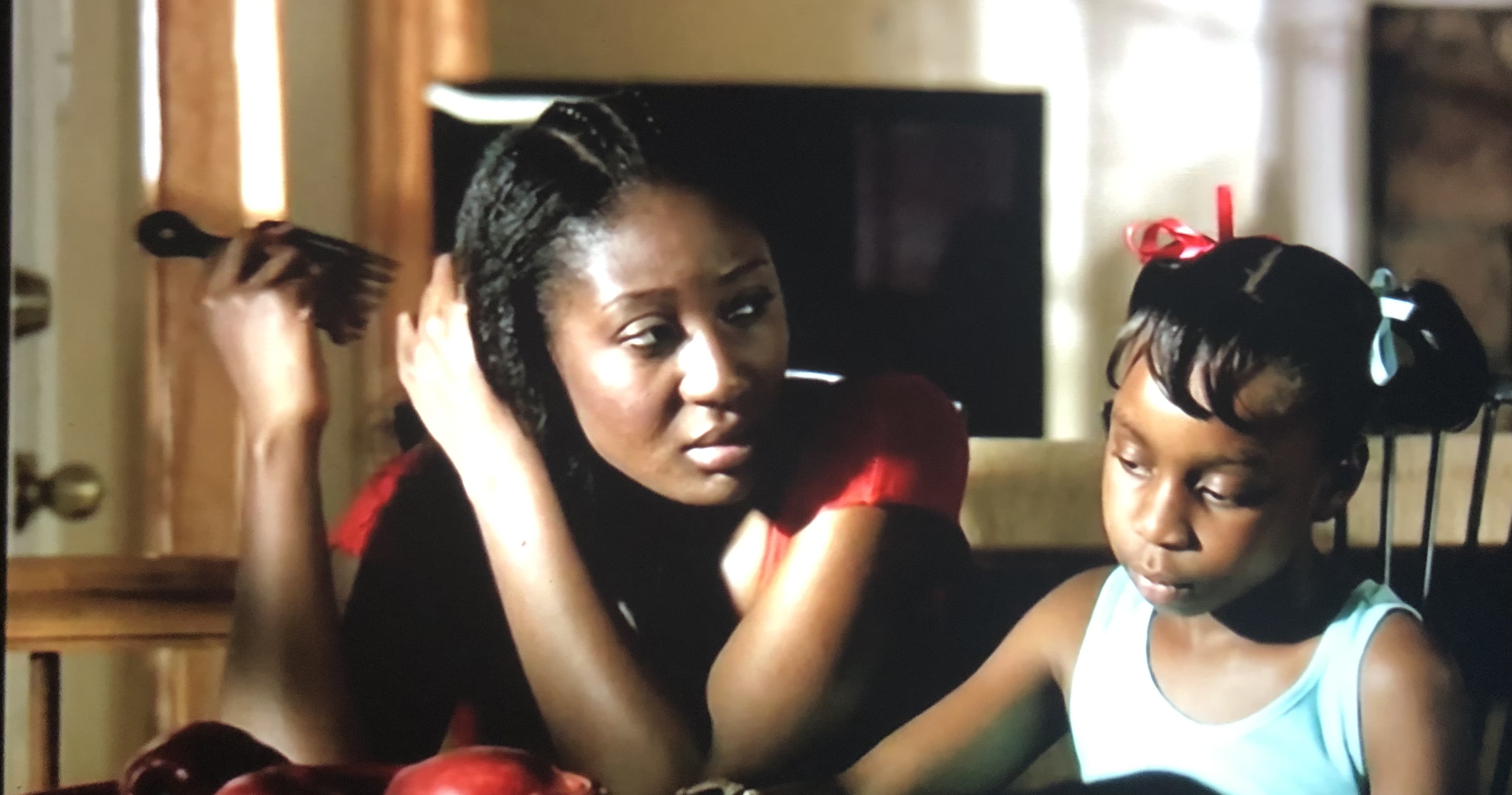
Say Grace Before Drowning (2010) sheds light on Grace, a sexual assault survivor— narrated from the point of view of Hawi, her daughter. Hawi was the first to leave their country, sheltered by Grace’s sister Aisha and her husband Chris. Upon Grace’s arrival, everyone treats her with special care, including Chris who’s touchy-feely actions trigger Grace’s assault. Her reactionary behavior stems from untreated memory dissociation, a mental disorder that stems from heavy, undisclosed trauma. Often, a withdrawn Grace disappears within herself and brightly returns to being Hawi’s mother, braiding her daughter’s hair, complimenting her reading, and sleeping beside her at night. 

By mistaking Chris’s kindness, Grace may be reminded of the soldiers’ mistreatment. After the family pool trip in which Chris teaches Grace to swim, she sets out to seduce her brother-in-law. During a spaghetti meal that Chris is preparing, Grace grinds on him during a song— right in front of Hawi. Grace transforms into her aggressive attackers launching herself at Chris, refusing to take “no” for an answer. In an assault as detrimental as sexual harm, power and domination over the body is essentially the key. Grace wants to repeat that history, but with herself as the wielder of power and domination over Chris, blind to consequences, to Aisha and Hawa’s feelings. Did the soldiers consider Grace’s family or their own wives, girlfriends, daughters as they violated Grace? 

Hawi hears the screaming match between Grace and Chris and abandons the spaghetti to see what the fuss is about. Spaghetti, when not watched and stirred frequently, gets clumped together, uneasy to eat. 

Toby (Angela Burnett) longs for her ancestral foundation. DP: Charles Burnett.

Hawa almost shadows Toby in Alile Sharon Larkin’s Your Children Come Back To You (1979)— story about a child wishing for a Black world whose mother too frequently dissolves into deep depression, neglecting Toby in the process. Whereas Hawi has her aunt Aisha, Toby has a compassionate grandmother. 

Abbie (Ebbe Bassey) and her teenage daughter Isatu (DeWanda Wise) reach an important solution to the prom in African Booty Scratcher. DP: Daniel Patterson.

African Booty Scratcher (2007), an earlier Jusu work, gets its title from an offensive, known and well-traveled taunt. The short stars DeWanda Wise as Isatu, a teenager looking forward to prom. Her hard-working immigrant mother Abbie wants Isatu to wear a traditionalist gown broadcasting her heritage. Isatu’s peers negatively blast anything associated with Africa. Thus, a tradition as American as apple pie, the prom is the biggest event in a young girl’s life— the fashion statement made here can either elevate your status or bring you down. Of course, Isatu believes that wearing  a typical name brand designer would have all eyes on her.

Terence Nance cameos as the mean teen who dumps Isatu via note. What a class act. DP: Daniel Patterson.

At Abbie’s restaurant (serving jollof rice and stews), Isatu works cleaning tables and waitressing in order to obtain money for her dream dress. Isatu sees firsthand that the teasing from schoolmates is nothing compared to how some Black adults look down on African immigrants, a seething hatred that manifests into verbal malice. A potential customer disrespects Abbie and their food in the process— further claiming that the Asians know what Black Americans desire more than the Africans. This avenue plays into Isatu’s own Americanized thought process— her laughing at the girl with the “African Booty Scratcher” card on her back, her preference for pasta over jollof rice, her reaction to the gown Abbie made for her. Perhaps Isatu too will become as bitter as the stranger, turning her back on her ancestral background for the comfort of fried food. Unfortunately, her mental institution has already begun.

Isatu realizes that she too has participated in Abbie’s humiliation. 

Mind-enhancing cocaine allows Sonya (DeWanda Wise) to blur her world in order to cope with her past life as a sniper. DP: Hans Charles.

The dark, disturbing Black Swan Theory (2011)— also starring Wise— focuses on as Sonya, a murder for hire dressed in black sporting a killer braided faux hawk hairstyle. This avant-grade experimental piece has an Afro futuristic meets parental advisory video game aesthetic. Sonya high on drugs and strapped for cash, takes on a murder-for-hire job. Already, she’s imagining killing someone— in a crueler affliction that implies personal vendetta versus a flying bullet. 

The men (played by Erik Clancy, Jeevan D’Souza, Stephen Hill) receive code names straight out of college textbooks—Italian renaissance artist/theorist/engineer Leonardo Da Vinci, French playwright/political activist/critic/existentialist philosopher Jean-Paul Sartre, and German poet/philosopher/composer Friedrich Nietzsche. DP: Hans Charles.

Meanwhile, Sonya’s code name Black Swan lacks that same consideration. DP: Hans Charles.

If there are therapeutic outlets for abuse survivors, do those who killed in the name of their country also have support? What therapist could possibly empathize with cold-blooded murder— even under the semblance of justice? How does a society expect veterans to navigate with normal mental/psychological capacity? Furthermore, Sonya has photographic memory. Even if she shot one person, that image rests in her mind forever. 

Seemingly without support beyond Jordan— her ex and former military comrade coping with the past in his own way— Sonya takes an assignment reminding her of the only skill she acquired whilst overseas. 

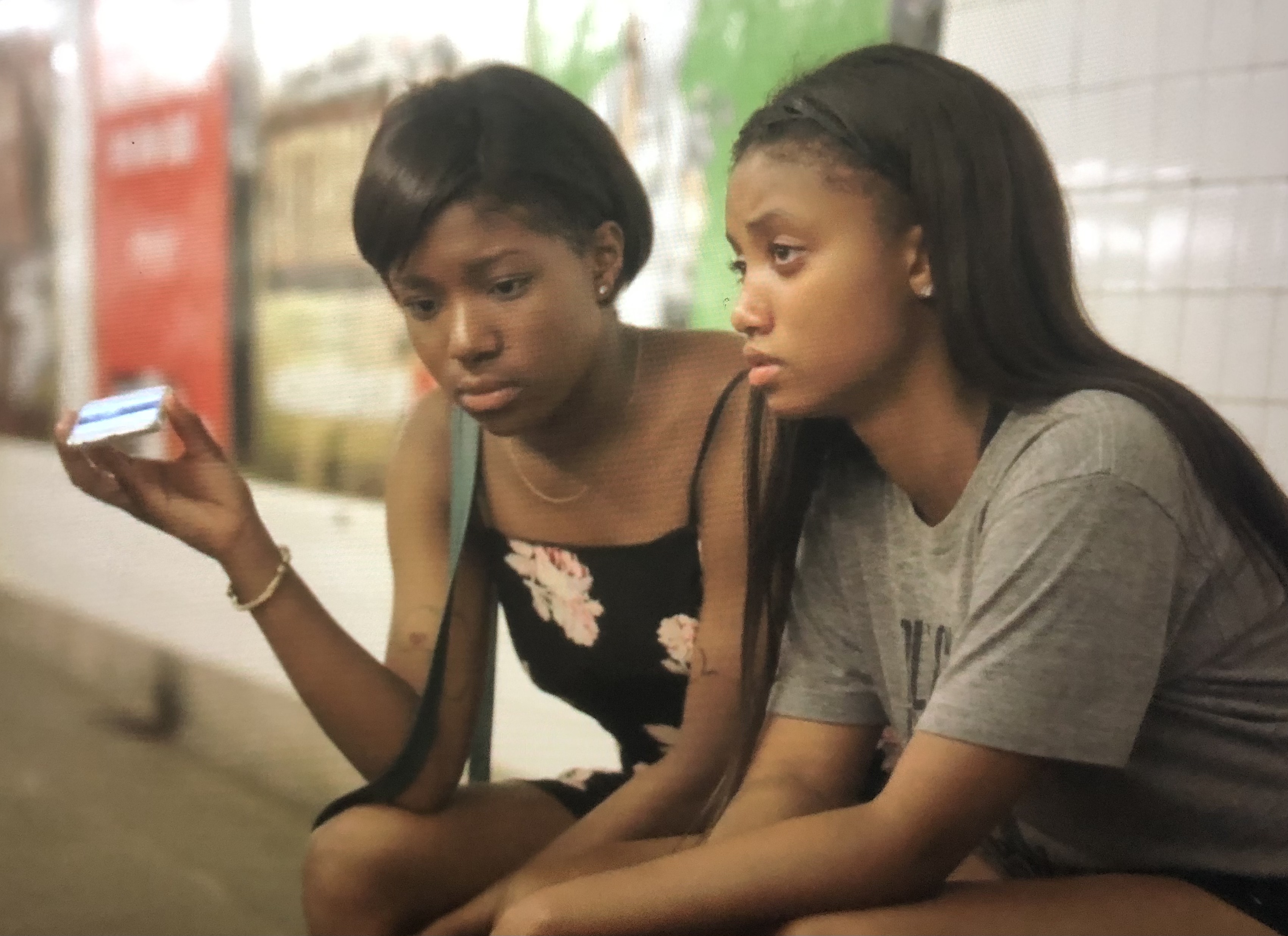
Valentina (Natalie Paul) in the subway in Suicide by Sunlight. DP: Daisy Zhou.

Suicide by Sunlight (2019) currently sits at number one on a list of short films that could be excellent full-length features. Seriously. An amazing film about Black vampires— without the Marvel comic book associations or Eddie Murphy antics. In this incredible world, vampires with melanin have the unique gift of walking through sunlight unscathed and those lacking die by the sun rays if they choose to be brave (or stupid). The shots on Black vampires glowing in the day are stunning; as though the still images bring the style of Gordon Parks to a vivid, creature-feature technicolor. 

Valentina tries to see her daughters, but their father  refuses to relent. DP: Chloe Zhou.

Gorgeous, stylish nurse Valentina juggles her career, bloodlust, and motherhood. She cares deeply for cancer patient Micah, a little boy on the cusp of death. Micah is around the same age as Valentina’s two daughters Hope and Faith and ex Langston makes it impossible for Valentina to see them. He’s part of those in town deadset against the vampires, not realizing that their precious daughters are not excluded— a whole new perspective on the one drop rule. 

Valentina balances her nursing duties; withholding a ferocious hunger that her co-workers and patients know nothing about. At night, however, her lust is insatiable— deadly seductions turn into passionate clenches of her razor sharp fangs piercing flesh. Shockingly, though, Valentina pukes it all up, looking as guilty as Buffy’s ex-boyfriend Angel— the redemptive vampire with a soul. 

When Valentina discovers that Langston has introduced a new woman to Hope and Faith— perhaps as some misguided attempt to replace Valentina and give the girls a makeshift nurturing he himself cannot provide— Valentina decides to give him a lesson. In the process, Valentina shares who they truly are to both Hope and Faith. 

Don’t ever cross Valentina. A beloved mother would do anything to see her children. DP: Daisy Zhou.

The girls Hope (Juniah Williams-West) and Faith (Madison Spicer) trust in their mother. DP: Chloe Zhou.

Jusu’s five short films are well-crafted, sophisticatedly put together and beautiful as a whole oeuvre. All four cinematographers—Jamal Solomon, Daniel Patterson, Hans Charles, Chloe Zhou— captured the rich, multifaceted variations of Black skin in exceptional styles that would make Bradford Young proud. In addition to the experience, it is lovely to see that the same names continue popping up in the credits— Yvonne Shirley (sound mixer on African Booty Scratcher and Say Grace Before Drowning), Terrance Nance (guest actor, producer/title card maker, renaissance Da Vinci, etc), and quadruple threat Jusu editing and production designing. 

Hawa playing in her mother’s makeup as young girls love to do. DP: Jamal Solomon.

“The Oscars are not my center,” Nikyatu Jusu recently said on the Independent Spirit Awards carpet—a valid statement to speak against an industry placing the Academy Awards above all others— the symbolism of “making it” in the filmmaking art. 

Yet, that problematic space relies heavily on its white cinematic history repeating over and over; an institution excluding Black women for years, continuing to nominate the same folks filling the Guinness Book with their record victories. So, even if they fail every year to recognize Black women’s talents onscreen and behind-the-scenes, the audience desires to see themselves reflected, most importantly by women who mirror them, who know their pains and joys, not stories from the anthropologist lens dominating our cinematic experience for far too long. 

“I’ve done a lot of spiritual, intellectual, physical labor, being in predominantly white spaces for my entire life. So now allow me to just focus on the work. But everything comes with a price. Money’s never free; success is never free.... the more breaks I have for myself, the more I’m like, Do I want to be part of that machine and do everything that comes with that? Or do I want to make something I truly believe in every few years and still teach and have my little quiet house and live below my means? The more you see of the figurative monster that is the industry, the more you assess what you’re willing to do to get what other people have gotten.”— Nikyatu Jusu to film critic Angelica Jade Bastién in Vulture

Jusu’s works matter. Every last one. Her brilliant feature-length debut Nanny included. Brown and dark-skinned women star across genres that usually exclude them. Horror rarely ensures their survival. Jusu sets the wrongs to rights, presenting Black women and girls in either unaddressed community topics or imaginative scenarios that broaden the modular spectrum. She utilizes key elements to a solid cinematic experience: breathtaking stories, compelling cinematography, and fresh talented actors/actresses, ensures that the audience will be wholly invested. Plus, the casting stays excellent— friends having believable chemistry, mothers/daughters looking alike. 

Whether Nikyatu Jusu makes another short film between her booked schedule of two feature-length films, whatever comes next will be well worth the wait. The representation of Black girls and women are safe in her capable hands. 


Thursday, January 27, 2022

‘Nanny’ Addresses The Terrifying Price of the American Dream


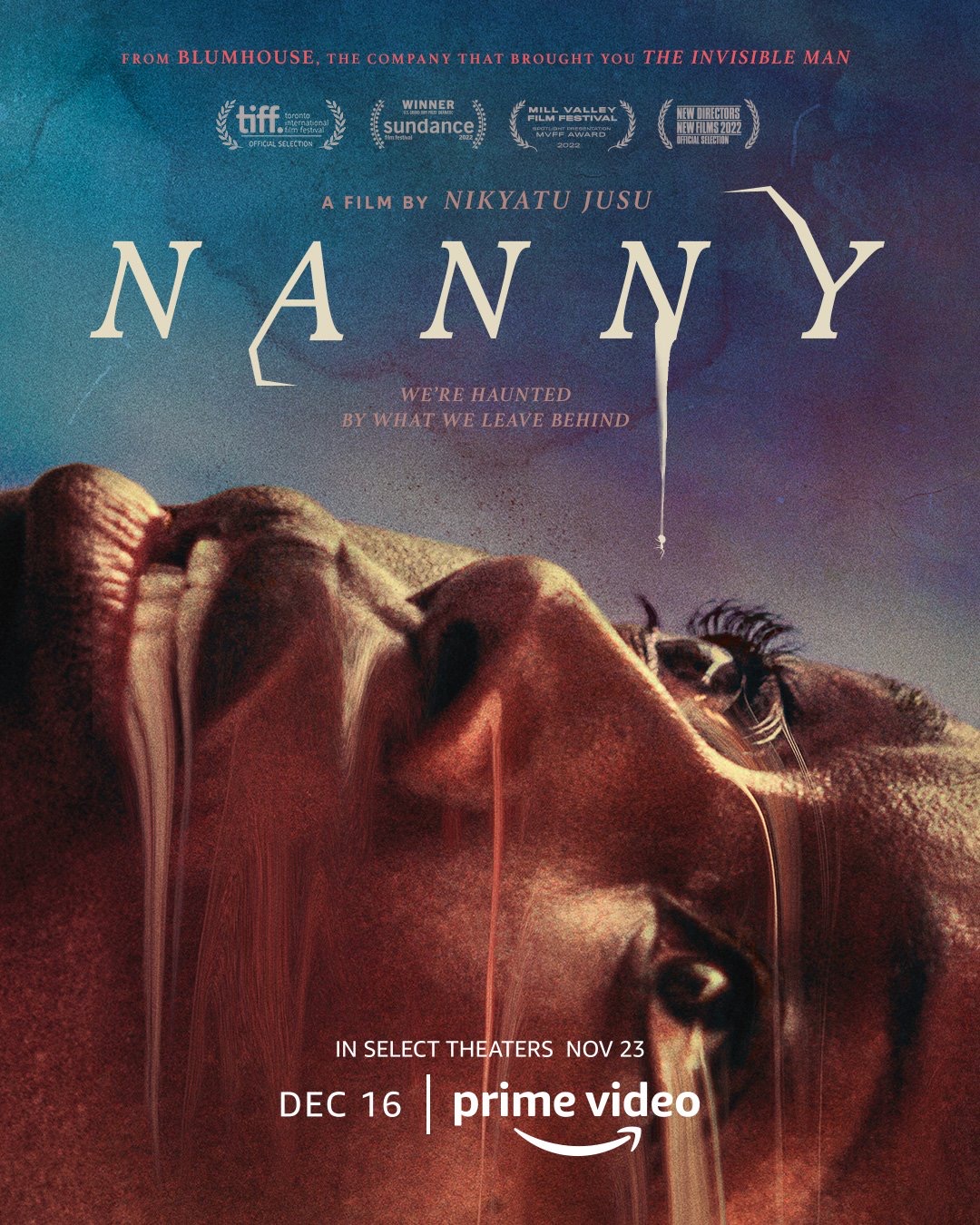
Nanny film poster.

Deceptive appearances crack beneath the calm surface in a slow simmering horror Nanny

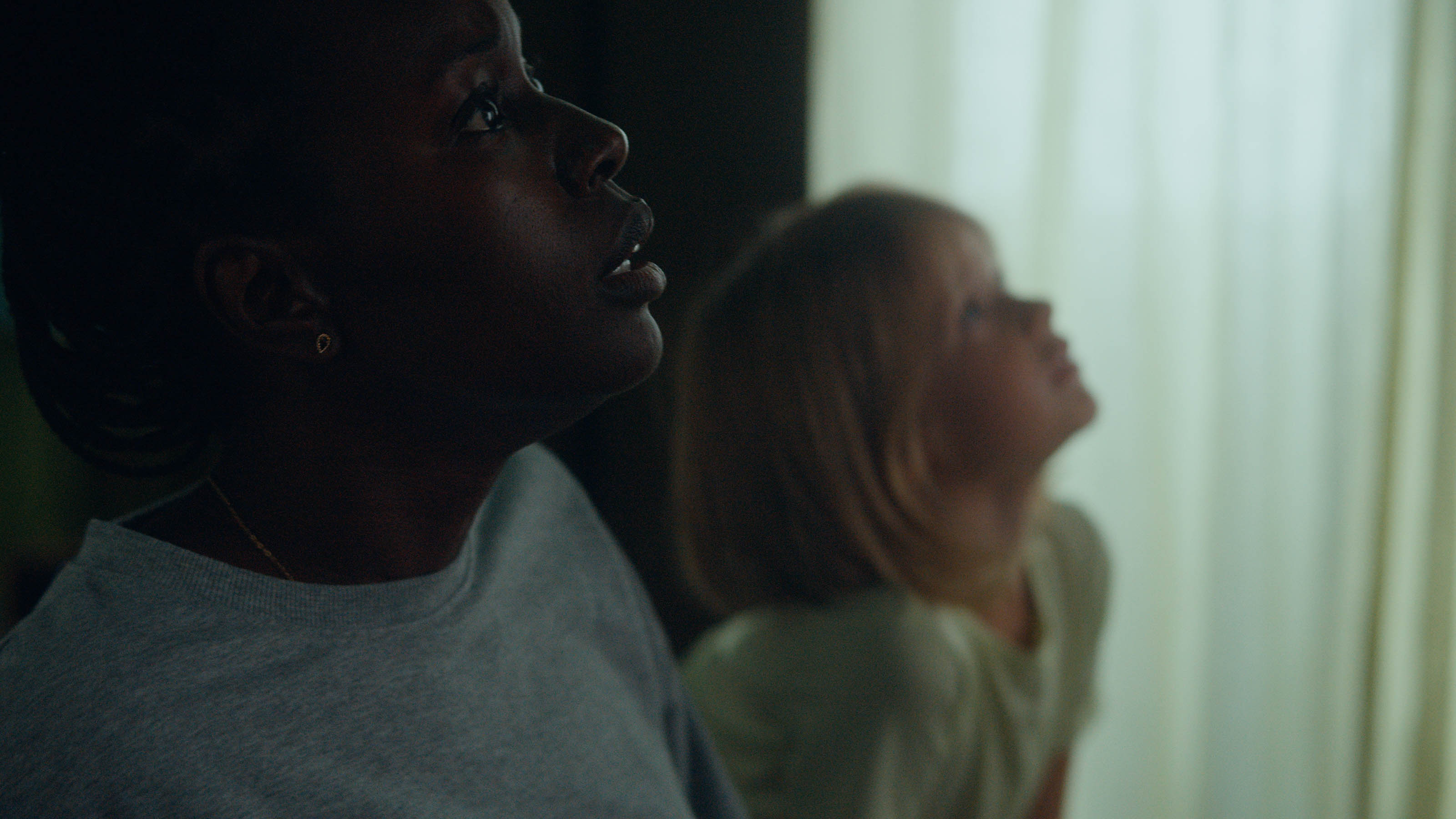
The affluent white savior Amy hires freshly arrived Senegalese immigrant Aisha to take care of her daughter Rose in a clean, immaculate Tribeca penthouse. An eager Aisha plans to have her own son Lamine join her in New York. Their talks on the time-limited phone bring Aisha the most joy. Immediately, Aisha and Rose form an intense connection. Rose is adept to French and even eats much to Amy’s surprise. However, it is Aisha’s food that Rose is enjoying— not the latest food crazes that Amy has been introducing. 

When Amy’s husband Adam returns, he is absolutely cold to Amy, almost causing a humiliating spectacle. He is softer towards Rose, bringing a book on Anansi the Spider from his latest trip. His office reads more museum than personal workspace. His photographs of global activists, the books in various languages— they’re a collection of travel souvenirs and displayed wealth. While Aisha hides her struggle to provide substantial monetary support for Lamine’s journey, Adam is able to travel freely without restraint. The differing lives that Aisha and this couple lead showcase the spaces money allows them to inhabit. Amy’s continued ignorance to pay Aisha her worth and pay that worth on time begins to interfere with the couple’s manufactured politeness. Perhaps Amy believes Aisha doesn’t understand the American dollar system and pays her purely on the Senegalese exchange rate.

Aisha (Anna Diop) and Rose (Rose Decker). Image from Sundance Film Festival. DP: Rina Yang.

An overworked Aisha represents the modern Mammy, a nursemaid to a spoiled child. The longer Aisha is forced to stay in the increasingly estranged couple’s home— often overnight— the more weight the hold has on Aisha’s conscience. This well-executed tension builds to an insurmountable stress and pain beyond physical. Rose is placed high above on a hierarchy that Aisha must obey. The heartbreaking consequences of this terrible truth threatens to wholly consume Aisha. So the rule-breaking spiders crawl with defiant purpose and the surreal waters flood Aisha’s vulnerable thoughts with complicated messages. 

In the midst of the rising supernatural elements, a tenderly constructed romance blossoms between Aisha and the Tribeca penthouse bellhop Malik. The attractive pair have much in common— both raising young sons and working indentured roles. In one particularly striking scene— an appetizing predecessor to beautiful dark brown skinned bodies joining together— is that blissful car ride. The camera turns sharply on Malik driving Aisha along, Sampa The Great’s Grass Is Greener trembles in the background of a perfectly lit night. Aisha deserves a natural, unconditional love. Kind, gentle Malik— in Aisha’s age range— asks for consent, woes her, and offers support including through his grandmother Kathleen. 

Nanny writer/director Nikyatu Jusu integrates her cinematic influences with a sophisticatedly charged personal narrative that strikes the viewer’s emotional core. Firstly, Ousmane Sembène’s La Noire De and his muse Mbissine Thérèse Diop swim across the Atlantic to contemporary America; hoping to test out her waters and fulfill her dreams only to find the abject labor again. The mermaid (which is not a Eurocentric beauty form at all, more creature than seductive siren) comes from many symbolic stories and the noted emphasis on the collage painting by Wangechi Mutu (a Kenyan-American artist) stresses an underlying connection between Aisha’s unconscious demons and the never ending plight of water, this historical Black fear that reaches farther back to the days of drowning bodies. Even cinematographer Rina Yang’s breathtaking scenes of gorgeously lit Black skin were so stunning that blinking became an impossible exercise. 

The cast is led by the utterly remarkable Senegalese actress Anna Diop as Aisha— a role she was destined to become and not just because she shares a certain surname. Diop conveys the personal agonies that continue seeping into Aisha— her fear, her sorrow, her pleasure, her frustration, and her grief. She fiercely portrays a character’s internal struggle, withholds so much from everyone until the shockingly familiar breaking point. Sinqua Falls is given more than the average Black male love interest. Malik is still reeling with regret over the memories of his mentally unstable mother. At the same time, he is falling for a distressed young woman. No one is truly considering her happiness or her well-being. There is so much care in the handling of him, so much gentleness that Falls expresses. Plus, Leslie Uggams— from the Ossie Davis directed classic Black Girl— plays Malik’s wise, insightful Grandmother Kathleen, a wonderful treat seeing legacy Black actresses and actors onscreen. 

While white critics cannot properly comprehend a racial lens horror scope outside Jordan Peele’s ever present shadow, others understand Jusu’s resourceful parallels in Nanny strengthen a cyclic story specifically known to Black women immigrants caring for their charges— at times knowing these children better than their own. The scariest takeaway is that the price people like Aisha pay to reside in a country promising freedom is usually with their lives. 


Wednesday, January 26, 2022

‘Master’ Puts the Phobia In ‘PWI’

Regina Hall stars in Master.

Through a jarring horror lens, Mariama Diallo’s Master candidly insinuates the notion that Black women are the most educated people and often the most disrespected. This disrespect is either demonstrated in the cruelest, most malicious intentions or through more subdued channels.

At the prestigious academic Ancaster College in a New England setting, whiteness reigns in form of faculty, student body, and framed paintings on the very grounds that Salem witches were burned. Gail Bishop is promoted as the first Black woman master just as freshman Jasmine Moore steps foot on the campus. Of course, master suggests many definitions. The ever present servant bells subtly relay a strong message that certain habits cannot ever change. In fact, the institution marks boxes off the “diverse” campaign checklist, but the servants are still Black people quietly seen in the background as janitors, cooks, and servers. They are the absent ones unlisted in brochures and commercials, paying another bargaining price with their labor. 

Gail and Jasmine are isolated from each other— two Black women forced to adapt, to submerge in the sea of a sinisterly evil whiteness— almost entirely alone without friends or family that mirror themselves. The daily microaggressions are bullets that fly constantly. For example, Gail listens to her boss, Diandra change her speech from “Black woman” to “woman of color.” This adds fuel to the existing fire that being Black and proud harms white people in particular, that there is something so unnaturally wrong about the pride of a race once considered three-fourths human. The phrase “woman of color” places Gail in a false sense of inclusion, hiding her true identity for the sake of white comfort. Diandra also emphasizes, “it was different for me” on referencing her previous position as master. This implies her privilege as a white woman. In society’s history of women, the first accomplishments for women were always the more triumphant white woman. They could move into spaces more safely, pushed purely on through by the heavy handed guidance of white male allegiance. Yet Gail is moving through with Diandra’s aide and it is not always with good solidarity.

Meanwhile, a sweet, Afro haired Jasmine— assigned to the haunted room—is trying to fit into her tokenism role as well. The white girls easily clique together. Jasmine’s far worse roommate makes it abundantly clear that Jasmine is not welcome. The students mock her for her blackness and clamor over Black music, pleasurably salivating at the “n” word through song. Her hostile professor makes Jasmine an enemy much as the Black lunch lady. Hell, even the librarian has it out for Jasmine. As the pranks become meaner (nooses and burning crosses) and the nocturnal ghost visits interrupt her dreams, a quieter, straight-haired Jasmine perseveres. The supernatural dangers that threaten her daily existence align heavily with the present school climate. Both determined to squash away Jasmine’s joy. 

Diallo’s confrontational screenplay definitely puts a daring perspective on the terrifyingly psychological and emotional experiences endured at predominantly white institutions and even predominantly white workplaces. There is a conditioning that happens, quite slowly, to especially Black women— the need to satisfy and appease, losing self in the role of seeking gratification to keep their place, a place constantly threatened and undermined. The real scare, depicted believably well, is the moral dilemma. How much can a Black woman withstand from continuous trauma— a trauma that is ultimately generational? 
“You’re so divorced from reality that you can’t tell Black from white!” Gail screams. 
Master also stabs at the injustices of colorism— another undeniable privilege. In academia, Black women are least likely to have tenure. If a Rachel Dolezal can accomplish what many cannot, it is a glaring problem that sadly continues— a problem framed as “transracial.” In Hollywood and media, the weakest biracial and light skinned actresses acquire parts that brilliantly skilled monoracial Black women are passed over for. The hungry, bloodthirsty greed to steal the bare minimum incentives offered is a source of power and entitlement. 

In addition to the gorgeous moody cinematography that enhances the bold screenplay and the sound department’s ability to heighten the most electrifying moments, the cast performances are outstanding. Regina Hall is a dynamic force as Master Bishop. Hall has always been a brilliant actress— in both comedy and drama. Yet in this horror, she must channel bravery in ways Scary Movie could not begin to penetrate. Jinn’s Zoe Renee is utterly impressive as the intelligent college student searching for answers on the past while the present forces her to be conditioned in the face of calculated tortures and manifested rage. Renee is able to maneuver through such strong, sensitive material. 

Master is a hard, uncomfortable monster to swallow. Disturbing paintings of white men hang in nooks and crannies— white men who were likely foul, callous racists and slave owners or supporters of slave owners. It questions the allegiance of institutional legacies, especially imperative in spaces where Black people are encouraged to roam freely to perform for the lasting impact of desegregation. What value lies in having Black people enter without giving them the full background on these men and their perceptions? Aren’t some of their beliefs still indoctrinated into the very core of the facility, faculty, and students? 

Although Gail and Jasmine attempt normality against the haunting, it never stops coming for them. The internal battle for a “seat at the table” goes hand in hand with the battle against an ugly history that cannot ever be forgotten. 


Thursday, October 28, 2021

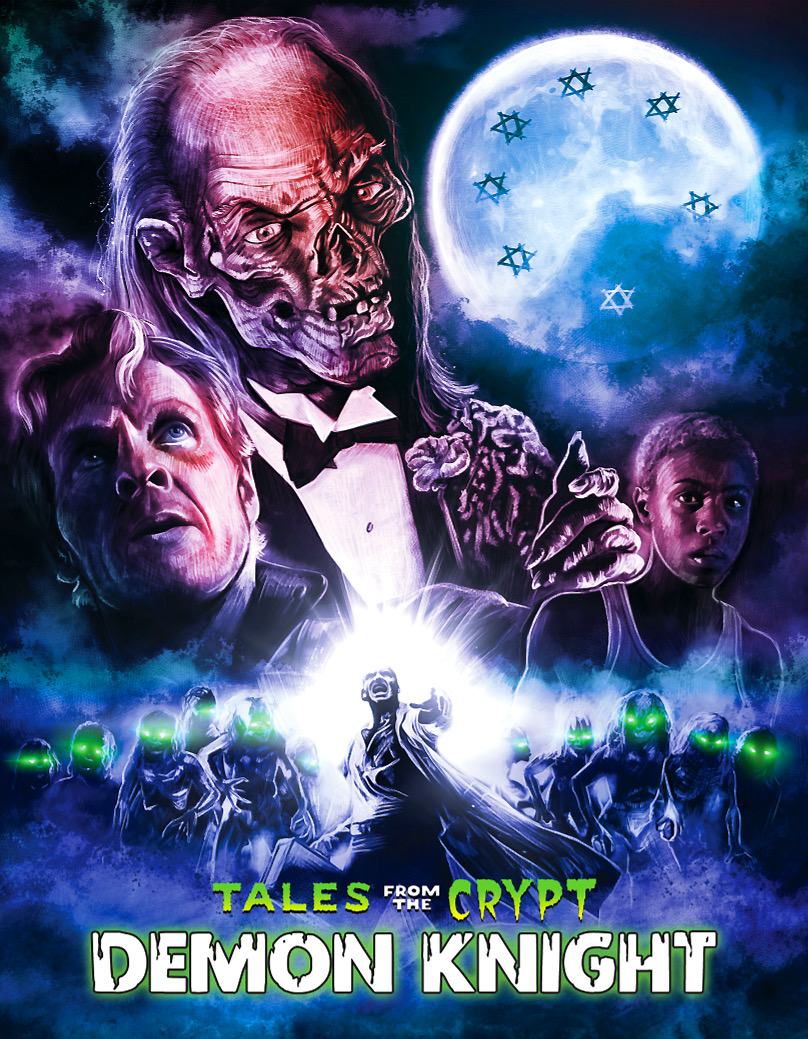
Jeryline Survives A Terrifyingly Monstrous “Tales From The Crypt: Demon Knight”


Tales From The Crypt: Demon Knight film poster. 

After some gratuitous nudity and murder, the humorous Crypt Keeper of the Tales From the Crypt television series introduces Demon Knight

A volatile car crash begins a random evening in Wormwood, New Mexico. It turns deadly still due to the unexpected arrival of those two drivers— a blue-eyed, quiet stranger named Brayker and The Collector, a charming, albeit humorous demon, that soon comes after him. Uncle Willy, an old man who loves to drink, leads Brayker to safety. That safety is The Mission— an old church turned hotel. Irene, the brash owner, overworks Jeryline and believes the girl shows her no gratitude. 

“If I hadn’t made a place for her, she’d be behind bars or dead,” Irene gripes to the guests including Brayker eating a plate of unattractive gruel that Jeryline just made for him. 

Jeryline (Jada Pinkett-Smith) locks eyes with the stranger Brayker....

Just as Irene (CCH Pounder) hands her the keys to Brayker’s room— number six of course. 

Irene and Jeryline’s relationship embodies a bitter business transaction as opposed to resembling a positively healthy mentee/mentor or mother/daughter type camaraderie between colleagues. Irene treats Jeryline as though she were still the thief sentenced to juvenile detention and not a young adult hoping for a change. Yet Irene softens to Wally, the fired mailman accused of stealing mail and Cordelia, the prostitute. Apparently in Irene’s eyes, these two symbolize higher contributors of polite society while Jeryline, who must harbor a more criminal intent, is made such a prime example that even Cordelia tries bossing Jeryline around. 

Irene (CCH Pounder), Jeryline (Jada Pinkett-Smith) and Brayker (William Sadler) look down on the gruesome remains of the decapitated cop. 

So Irene underhandedly calls the police on Brayker and the police have The Collector with them, not knowing how evil this wisecracking threat can be. This begins a night of horrors for the poor souls at The Mission: Irene, Jeryline, Brayker, Cordelia, Wally, Uncle Willy, Cleo— Jeryline’s little black cat, and Roach—Cordelia’s psychotic lover. Once they arrive, one cop is killed by The Collector. Others are viciously gored to bits one by one. Turncoat Roach is fully responsible for Irene’s arm being ripped apart by a demon and this mutilation is especially heinous. 

Irene (CCH Pounder) and Jeryline (Jada Pinkett-Smith) plan to make tea despite the alarming mess (dead demon bodies) in the kitchen. 

While the others are seduced by The Collector’s shallow promises (The Collector cannot physically enter the enchanted hotel sealed by Brayker’s blood relic, he can penetrate minds), Jeryline and Irene are the ones who fight him off— although it does take a moment for Jeryline to break the hold. Deputy Bob also did not succumb, though he has no scene deceptions like the others. Jeryline is shown travels to Italy and model photo shoots and Irene is shown a new replacement arm centering a decorated fruit platter. This perhaps calls to the lives these women lived prior to these dark events. That the hard, gritty small city life has no American dreams for Black people, for Black women. Jeryline and Irene’s prior circumstances let The Collector know that they not desire his falsely advertised lies. 

Jeryline (Jada Pinkett-Smith) is pulled in a surreal dream space, mostly white and Puritan, tying in with the biblical ties the film suggests. 

The Collector (Billy Zane) has a whole arm waiting for Irene. 

And Irene (CCH Pounder) doesn’t take the bait! 

But oh how quickly Cordelia, Wally, Uncle Willy, and Roach were quick to believe. 

Irene’s eventual sacrifice is reminiscent of Jacqui’s in The Walking Dead’s first season. Both older Black women ultimately use their bodies as weapons to protect others. Jacqui felt that since she lost her whole family, she had no reason to move forward in the zombie apocalypse and blows up in a military compound. Irene, most likely feeling useless with having one arm and no way of surviving a single night without receiving proper medical care, straps herself up with grenades. Thus, she wanted Jeryline, Brayker, and Danny, the stray child, to survive a night that she couldn’t. She is not alone either. Bob is right there with her. Also like Jacqui, Irene has someone willing to go the long haul. Still, it is never an easy watch, even in this fictionalized horror film, seeing a Black woman willingly die. 

Brayker (William Sadler), Jeryline (Jada Pinkett-Smith), and Cleo head up before the explosion ignited by Irene and Bob. 

Possessed Uncle Willy and Danny both badly wound Brayker. With his last breath, Brayker exchanges the relic with Jeryline, telling her she is the new Chosen and the seven stars appear on her hand. Unfortunately due to Brayker’s death, the seals made by the blood relic are gone and that leaves Jeryline to handle The Collector by herself. 

And let’s just say that she uses knowledge and instinct to kick serious butt. 

Tidbits— William Sadler who stars as Brayker played Sheriff Jim Valenti on Roswell (also set in New Mexico), a favorite television shows during high school tenure. Jada Pinkett-Smith plays Jeryline also is the lone survivor in Set It Off, leaving again on a bus here and in Jason’s Lyric. CCH Pounder plays Irene and appeared as Brenda, the headstrong owner, in Bagdad Cafe. Rick Bota, the cinematographer (applause for the photo stills), also worked as DP on the Tales From The Crypt TV series and the film director Ernest Dickerson vouched high for Pinkett-Smith over the studio’s preference for Cameron Diaz. Thank heavens for that. 

Jeryline (Jada Pinkett-Smith) manages to save herself. Cleo’s life is unknown. 

Other than that, Tales From The Crypt: Demon Knight mixes weird humor and jump-scare moments and feels heavily steeped in its outdated material, but it’s nice to see Black women unafraid to be brave, to fight the monsters in the dark. Just wish we saw what happened to the little black cat though. 


Thursday, October 29, 2020

Rita Slays Her Demons in ‘Vampire in Brooklyn’


Exactly twenty-five years ago, Eddie Murphy presented Vampire In Brooklyn, a comedy-horror directed by the legendary Wes Craven, written by Michael Lucker, Chris Parker, and the late Charlie Murphy— Eddie’s brother and longtime creative partner. At the center of this Coming to America vibe, is Rita Veder, the carbon copy replica of his longtime love (as it so happens in most vampiric tales). The Caribbean hailed Maximilian has arrived in a bloody boat, looking specifically for her. 


After the untimely death of her mother in a mental institution, Rita has been tormented by strange thoughts and dreams. She moonlights as a painter, integrating the dark, supernatural manifestations into surreal pictures on canvas. In fact, her unraveling behavior presents fodder for her insensitive co-workers down at the precinct. It should be duly noted this shows police are incapable of being compassionate towards those afflicting from severe trauma or mental illness. Only Rita’s partner Justice cares about her troubles, shedding an attentive ear and protective garb. 


However, Rita is no damsel in distress. Although terrifying moments occur, like a coffin appearing with her lookalike stowed inside or a hooded cobra striking at her, Rita stays grounded, keeps her cool. She is surrounded by skeptics and naysayers who believe a Black woman is losing her marbles, but Rita cares little for the opinion of others. When she is almost kidnapped by a disguised Max, she manages to gain the upper hand and save herself. Of course, Justice is pissed that he doesn’t get to be her shiny hero. Rita, though, is angry at him, believing that he was the one giving Nikki, her vanishing roommate, a wild romp night. 


It is wonderful that two gorgeous Black women are onscreen, let alone two women sharing an apartment, but Nikki does not receive full development, let alone a direct conversation with Rita. Nikki is introduced only after Rita lets Justice into the apartment— not before. And yes, there are parts Nikki could have been readily inserted. Nikki tries the seductive temptress route with Justice, but he is not interested in her overly aggressive pursuit. Max, Nikki’s badly mistaken consolation prize, is out in the wings waiting for an opening. She lets the hypnotic vampire inside, succumbing to the full moon needs of sex and blood. Simbi Khali, around twenty-four years old at the time, was definitely underused here. She is a gifted actress, funny, talented. It would have added incredible depth to the script if Nikki were much like the Dr. Zeko character, knowing about the otherworldly phenomenon, talking to Rita about her paintings and her disturbing nightmares. Definitely, missing a potential scene there, but men wrote and directed... 


Academy Award nominated, Golden Globe winning Angela Bassett shines here as the smart, charismatic detective with a profound passion and knowledge for art being wooed by two males eager to dominate. She easily transforms from mourning adult daughter in restricted uniform to a sensual woman drawn to Max’s magnetic prowess. That beautiful black, spaghetti strap dress donned for a first date, accentuated Rita’s deep brown skin— something missing in this colorist landscape of Black cinema. Bassett was absolutely riveting, lighting the screen with her elegant portrayal, miles above the problematic story. As far as supernatural and horror, Bassett stars in several of Ryan Murphy’s American Horror Story anthologies on FX and even survives Critters 4— the only straight-to-video in the tiny furball creature series. 


Vampire in Brooklyn has Rita balancing between the bloodthirsty lure of vampiric existence or remaining an upstanding human. Max wants to show her the entire world, but the cost kills innocents. How could a woman choosing to protect lives handle wreaking such devastation for years and years like Max has? Rita’s internal battle is tough, especially when Justice is literally tantalizing her newfound hunger. She ultimately chooses the best decision fit for the evolution of her selfless character.