Showing posts with label Women Directors. Show all posts

Sunday, July 26, 2026

‘This Tempting Madness’ Torments The Unreliable Heroine With Unusual Degrees Of Pain And Suffering


This Tempting Madness film poster.


Based on a jarring true story, This Tempting Madness opens on Mia dramatically falling. The back of her body suspends in a slow moving arc towards a terrifying bottom, her voluminous hot orange dress spreading out its lush folds in flowery fashion, powerless to cushion against the devastating plight. Without warning, her vulnerable front faces the full brunt of impact. She screams “no!” as sounds of her cracking bones strike against surface after surface, sending bloodcurdling chills down the apprehensive watcher’s spine. Was she violently pushed or had she accidentally lost footing and tripped? Is it not any wonder that she manages to miraculously cheat certain death?

However, Mia surviving these cataclysmic bodily injuries isn’t the sole surprise. Her memory exists in startling fragments that cause ruptured behavioral changes— severe mood swings coming from somewhere deep within. Moments contain a kind, sweet wife and attentive mother standing by her husband Jake’s side. Others showcase an ambitious woman reaping the benefits of her privileged upbringing, either callously putting an often anxious Jake on edge or threatening anyone in her vicinity with intended violence.

Mia’s brother Ajay (Suraj Sharma) seems to be her only friend. DP: Andrew Davis.

Mia’s tied to her family, primarily Ajay, her older brother, a constant, loyal presence at her side. Every time she awakens, pained and grinding teeth, Ajay is there assuring her that she’ll be alright. Yet, Mia only prioritizes Jake. Despite having a damaged mind struggling to grasp normality, Mia becomes a full out menace, crying, whining, and screaming about Jake, believing wholeheartedly in an unproven innocence. 

Furthermore, in a world ruled by patriarchal cruelty, Mia’s mental capacities dissolve into a delusional territory where men can do no wrong. Has all such histories been replaced by the overwhelming compulsion to remain at a husband’s side? Does she not realize that their behaviors alter like clockwork more often than not? An irrational, gravely injured Mia appears to be overcompensating for a happily ever after romance as her own flashbacks give hints that she and Jake do not exemplify a love match. Their chilly relationship lacks warmth and affection including a cold Mia pleasuring herself with a scowling Jake watching. Somehow a daughter was created from this arrangement.  

The film blends mystery, thriller, and medical horror, the best parts navigating through Mia’s reset after trauma, the ways that words and sounds trigger reactions that sometimes frighten her family. The young woman has much to process—being in considerable pain and danger, wearing a metal brace to hold up her chin, prone to excess bleeding as her deranged husband blames her for his own failings. Jake seems to reserve a certain hatred for Mia and her family, has likely hated her for quite some time and tries to convince Mia that the incident was her fault.  
  
Although the story begins on a descent, it ends by arousing more questions than generating any real answers. Were we supposed to root for a woman’s revenge on her abusive husband or a broken, depressed man desperate to escape a family obsessed with success? 
 
Mia finally sees her man in jail and tells him straight up that she believes in his innocence. DP: Andrew Davis.

This Tempting Madness had been on the watchlist since last year’s announcement and hot orange dress scene. Unfortunately, the film proved to be even more limited in theater screenings than Me, You, and Tuscany and Is God Is. No nearby major outlets or small art houses played it. The neon color saturations and unique sound design—among the film’s most solid strengths— would have alone enhanced this cinematic experience. The first time viewing on an iPad robbed an allowance of a big screen and surround speakers. Independent films with a raw, stark edge face greater challenges, especially when helmed by new women filmmakers. Sadly, that struggle will continue if they seek directing a second picture, typically another barrier for them to break through. 

With a certified fresh Rotten Tomatoes seventy-seven percent score, This Tempting Madness has its highlights. Director/co-writer Jennifer Montgomery’s feature-length debut spins an unusual narrative whilst unearthing a stellar performance out of her lead actress Simone Ashley. Cinematographer and co-writer Andrew Davis’s skilled camera work includes multiple point of views on Mia’s fall and the spectacular underwater visuals. Rebekka Karijord’s music composition that understands the complications necessary to fit scene moods. Thus, it must be the actor’s dream of having a physically demanding part whilst demonstrating the many emotional facets that Mia expresses throughout— disorientation, frustration, rage, humility, grace, genuine and forced happiness. Ashley’s complexity exhibits a broad range of psychological depths just by sheer body language. Her tenacious ability to showcase the necessary talents to reveal her character’s unreliable narrative proves what we have been saying all along in regards to her bare presence in the last few seasons of Bridgerton, her own starring season two appearance limited her character’s overall arc and voice. Suraj Sharma (star of Ang Lee’s Oscar winning triumph Life of Pi) also has a commendable supporting role as Ajay, a character who sticks so close to his sister and seems to be hiding his own dirt. 

Mia gives Hitchcockian psycho energy as she wields a knife for self-defense. DP: Andrew Davis.

This Tempting Madness is a must see for its calculated build up of eerie atmospheric tension in the realms of Mia’s mind, the pushes and pulls that affect an off balanced psyche. 


Sunday, April 19, 2026

‘You, Me, and Tuscany’ Chronicles The Life of A Traveling Black Girl Still In Mourning


Me, You, and Tuscany film poster. 

Kat Coiro’s Me, You, and Tuscany provides a refreshing escape to gorgeous scenic Italy, a dream for Anna (The Little Mermaid’s Halle Bailey) and a livelihood for Michael (Bridgerton season one’s Regé-Jean Page). Ryan and Kristin Engle’s co-written screenplay fights against a formulaic nature— as far as romantic dramedies go. One saving grace examines how holding onto grief can have not only a suitcase, it has a passport too. A mourner prefers to travel everywhere with infinite sadness and sometimes infinite sadness mixed with questionable choices. Anna has been doing the most as an Atlanta born, New Yorker, trying out people’s lives for size as a house sitter— employment that screams temporary and unsettled. After the passing of her mother (played in flashback photographs by Joy Bryant aka Cherish the Day’s Chef Sunday St. James), Anna breezily floats through daily routines, masking her pain in charades. 

And there’s consequences to internalizing pain. 

Brash decision maker Anna (Halle Bailey) takes in the sights. DP: Danny Ruhlmann.

When the opportunity comes for Anna to take her act on a bigger scale— in Tuscany—she sees it as kismet. Anna’s late mother already purchased her a plane ticket and the poor girl has five hundred dollars burning a hole in an otherwise nonexistent wallet. The poetic sentiment is that, yes, broke and broken Anna has no real luxuries or grand wealth. There’s this eccentric belief that impoverished people don’t deserve nice things, that they should be grateful for what they can afford— don’t go above and beyond, a notion historically reserved for Black people. Anna—a few credits shy off graduating culinary school— needed a carpe diem moment and seized a courage missing from herself, choosing to fly solo on the other side of the world and taste the fantasy she and her mother had originally planned. The best parts are Anna strolling around in lovely outfits, cherishing the countryside, breathing it all in, expressing pure joy and contentment. Her contagious excitement saturates every scene, making it all the more believable that an entire family could fall in love with her. She’s an utterly radiant gem even when lying through her teeth. 

Anna (Halle Bailey) and Michael (Regé-Jean Page) with the fresh fare for the family restaurant. DP: Danny Ruhlmann.

Enter Michael— the British born man who adores his adopted Italian family— is a “Mr. Steal Your Sandwich” with a touch of a “Mr. Steal Your Girl” type. He’s attractive on the eyes with a deep English accent that’s sure to boil over fine olive oil and quite serious about family, wine, and Mario’s Let Me Love You— a twenty-two-year-old R&B ballad. Sadness lingers about Michael too, wielding around him like a protective shield—a key similarity that he and Anna have in common. Although he lost his biological parents way before her, grief never ever truly fades. Michael’s initial distrust of Anna gradually dissolves over the three day course. 

However, Michael is farther along in life than Anna, staying on an impressive vineyard, operating the vast lands with a pet pig on deck— so he’s financially sound and probably well traveled. Anna has only just begun to follow her passion, a flower on the verge of blossoming. Power imbalance situations are not best in reality. They’re quickly falling for each other through significant glances, lingering touches, and speak briefly on grief. They don’t have heavier conversations, primarily on their current life positions. Michael had scoffed at Anna being at house sitter and Anna made fun of his intense demeanor. 

Despite the youthful appearance of Anna and Michael’s portrayers Halle Bailey and Regé-Jean Page, there is a twelve year age gap between them. Consider great films such as Kathleen Collins’s Losing Ground, leading lady Seret Scott (Sara) was fifteen years younger than Bill Gunn (Victor) and twelve years younger than Duane Jones (Duke). Ever After, one of cinema’s best Cinderella adaptations features Drew Barrymore’s Daniela and Dougray Scott as Prince Henry, a ten year age gap between the actors. Every Jane Eyre adaptation must have a gap (personal favorite is the Ruth Wilson and Toby Stephens version, thirteen year age gap). Small potatoes compared to the twenty-five-year gap for Charade or the eighteen years in Pretty Woman. Bailey and Page do have chemistry, but the screenplay does not warrant enough to be memorable beyond its time. 

Anna (Halle Bailey) and her dear friend Claire (Aziza Scott) eating good in Matteo’s dime. DP: Danny Ruhlmann.

“Don’t call me from no Italian jail!” exclaims Claire, a real friend. DP: Danny Ruhlmann.

Side character girlfriends are usually single women living vicariously through the main girl (i.e. every character Lisa Nicole Carson Nicole Carson plays in the 90s). Claire (Aziza Scott), a happily married soon-to-be mom, works at a prestigious hotel where she’s obviously given Anna help whenever possible. Claire is reminiscent of Courtney Taylor’s Grace in The Invitation— funny and blunt one-liner deliverer yet stays behind while bestie puts herself in potential overseas danger. Grace calls Evie to ensure she’s okay (in vampire territory) and Claire provides the same for Anna (nothing supernatural but real-life monsters are present). Anna also gets a sassy male soundboard for the remainder of the film (and he has more scenes than Claire). Maybe we could get a Claire prequel, Me, You, and the Caribbean Cruise— let’s see how Anna’s dearest friend scored her own bae. Claire’s “convenient” pregnancy bars her from an ending similar to Evie and Grace (the best part of a terrible film), robbing us of her in-person meeting with Anna’s new “family.”

Anna and Michael sweetly run across the endless fields. DP: Danny Ruhlmann.

Matteo is the main gripe— the epitome sufferer from clunky writing. He’s the catalyst for Anna’s decision making and also prodigal son and short term villain? First, Matteo’s failed seduction attempt at the hotel bar turns into Anna’s encouragement to follow her dreams. It also turns out he’s been gone for a little over a year yet the family acts as if he’s been gone for decades. Then again, maybe that’s how close-knit families tend to behave. Anna lost her mother in the same time frame and hid her grief behind drifting nowhere. Still, Matteo returns home, issues Anna two ultimatums within a day. Meanwhile, Matteo’s ex-fiancée is conveniently all over him— and this storyline goes into predictable territory. Also, Matteo’s behavior at the races makes a person wonder why did the family miss this obnoxious jerk so much? His only saving grace was allowing a reluctant Anna to bestow her dormant kitchen talents even though he had never tasted her food before. 

The other pitfall is that the film cannot escape its obvious all-white production (having sole Black producer Will Packer on the press run circuit didn’t help matters). Anna and Michael’s characters feel as though they can be played by anyone. The dialogue is too cliched and unnatural. Claire calling Anna’s situation a little too Get Out seemed not only a big red flag, but an authentic reality to the situation at hand. Anna and Michael are in fact the only two brown people in Tuscany and Matteo’s family are too ready to invite Anna into the fold within three days. The timeline is simply not believable. 

Still, the highlights involve Anna coming into her own, becoming a culinary cook that her mother would have been proud to see. Oftentimes, an unfamiliar environment can either bring out the need to be another person (as Anna sought out to do) or enrich the potential longing to break out of them. Anna’s self reflection, her realizing her strengths was almost stronger than the instant romance between her and Michael. 

In her first ever woman-directed feature-length film (and hopefully not her last—please Black women directors), Halle Bailey continues to prove her star power. She’s able to be sweet, rebellious, innocent, and saucy while an uplifting poster girl for natural hair wearers— locs are always impeccably styled on every film set. Other solid cast decisions include the hilarious Stella Pecollo as Matteo’s sister Francesca (although could easily read as a Bridesmaids Melissa McCarthy knockoff), Stefani Cassini as Matteo’s observant, advice-wielding grandmother Nonna, and the aforementioned stellar Aziza Scott as Claire. 

Anna is no longer afraid of getting her edges wet. DP: Danny Ruhlmann.

Overall, Me, You, and Tuscany plays it a little safe and expectant. The film contains funny, relatable, and charming moments, some titillating pleasures for those desiring unrealistic fantasies that chick flicks promise. The cinematography gives a gratifying look at rich, splendorous Italian scenery through Anna’s wide expressive eyes and the soundtrack includes a catchy Leela James song in addition to a lovely callback of Page and Bailey both singing Mario. It’s definitely directed towards the spirited Black girls and Black women who dare to freely roam the earth as time and money are both limited, obtaining knowledge in all the ways that guarantees valid and valuable experiences. Stay to witness Anna’s therapeutic journey through seeing a new culture up close and personal and building community with the people around her. Of course, remain seated for the hilarious end credit scenes adding another barrel of laughs. 


Monday, July 14, 2025

A Parisian Dream for Chéryl in ‘Jane Austen Wrecked My Life’


Jane Austen Wrecked My Life’s side character Chéryl (Annabelle Lengronne) inspired thoughts. DP: Pierre Mazoyer.

Shakespeare & Co.—one of my favorite places to visit in Paris— is a whole dreamy, otherworldly realm. This charming bookstore contains organized book sections and beguiling stairs leading towards sweetly bound mysteries, overall presenting the best place to lose oneself. My old supreme goal was to have a published book in fiction and my framed picture included among the famous authors wall. Long ago, the bookstore even held an unorthodox residency— spend nights at the bookstore and write a required piece to include in their collection of past residents. 

Bookseller Agathe (Camille Rutherford) is the main character. DP: Pierre Mazoyer.

The shop’s an excellent other character in former employee Laura Piani’s feature length debut, Jane Austen Wrecked My Life. The film dotes on Agathe, a burgeoning writer who doesn’t feel confident enough in her abilities, a trait we have in common. She’s confidently shelving books or reading the anonymous letters posted on the mirror for limerant bookworms and returns home to a pretty flat she shares with her sister and nephew. Unbeknownst to her, Félix, a coworker nicknamed “Breadcrumber,” secretly enters Agathe’s work into the selective Jane Austen Writers Residency. 

She gets in. 

Wearing a cozy purple sweater with fetching dangled earrings touching her neck, Chéryl (Annabelle Lengronne) writes, a cup of tea nearby. DP: Pierre Mazoyer.

At the prestigious Jane Austen Residency located in a rustic French countryside that takes a ferry ride and an eventful car ride, Agathe is joined with other writers including Chéryl, a poet. None of the residents are given backstories except Oliver, an Austen ancestor and his aunt and uncle that run the pleasant house for the occupants. Apparently, Oliver personally read and chose the winners. Chéryl must have been an exceptional candidate out of many. She likely wrote her application as opposed to Agathe. That is not to say that Agathe has no merit or right to be among the chosen few. 

The reclusive Agathe comes out of her shell, befriending the residency creators and a few residents. Agathe and Chéryl hit it off by playing a game steeped in astrology culture and romance. As Agathe is conflicted by her newfound desire for Félix and her tormented affliction for Oliver, Chéryl’s book holds the key to such a predicament. The ladies later have drinks and sing karaoke at an establishment. Chéryl seems an open extrovert personality who loves exploring the earthiness around her with nonjudgmental perspective. 

Chéryl passes along the birthday information Agathe requires— another way to employ the character as a guiding point for Agathe’s conflicted heart. DP: Pierre Mazoyer.

An opened up Agathe has drinks and sings karaoke with Chéryl. DP: Pierre Mazoyer.

The residency hosts a special period soirée where the writers are invited to don clothing worn during Austen’s time. The lovely Chéryl helps prepare Agathe as though she’s her personal servant while the other ladies dress themselves in the background. The moment certainly draws back to historical contexts— Olympia by Èdouard Manet in the Musee D’Orsay (the other museum in Paris as famous as the Louvre) came to my mind, this performative act of kindness and servitude that further relegates the purpose of Chèryl’s character. At the soirée, Agathe dances twice with the surprise visitor Fèlix and Oliver. Chèryl doesn’t receive the honor of dancing with anyone and there’s barely a shot of her full attire. Like Bridgerton, a period show containing beautiful dark-skinned background characters, Chéryl is relegated to be a part of the scenery. 

A corseted Chéryl (Annabelle Lengronne) assists Agathe (Camille Rutherford) with her apricot colored dress. DP: Pierre Mazoyer.

Including lacing it up in the back. Hopefully, Agathe did the same for Chéryl. DP: Pierre Mazoyer.

A closeup of Madeleine the servant from Édouard Manet’s 1863 painting Olympia.

Agathe makes a decision that would devastate anyone who knows the difficulties of applying to residencies (especially abroad opportunities where odds are less than one percent). This leaves us on the abrupt end of Chéryl, the unsubtle incompleteness of the poet’s story. In my imagination, she has finished the requirements necessary for the residency, wishing goodbye to all the attendants and taking her own ferry back to her Paris. She too must work at a place where books live and breathe, a place as wondrously magical as Shakespeare & Co. Maybe she has a flat filled with plants, stuffed notebooks, and autumn sweaters, patterned tea cups and tea pots and lidded jams sit on her clean (or cluttered) counters, and a purple collared black cat awaits. She finds a healthy rhythm between the virtuous recluse and modern day freethinker, her heart yearning for prose alone. Her mailbox would be packed to the brim with love letters, love letters as precious as the ones posted on the Shakespeare & Co. mirror. 

Chéryl (Annabelle Lengbonne), Beth (Liz Crowther), and Agathe (Camille Rutherford). DP: Pierre Mazoyer.

I recommend Jane Austen Wrecked My Life for the delicious cinematography, the terrific score, and its ode to bookworms and sheltered writers. While Agathe and Oliver’s story had my romanticist insides swooning from the sensuous dance to the Mr. Darcy line, my heart still mourned for Chéryl’s potential, for what could never be told, only envisioned. Her talented, scene-stealing portrayer Annabelle Lengronne (known for her award-winning turn in Léonor Serraille’s Mother & Son) deserved more light to shine bright in, a story as vivid and rich as Alice Diop’s Saint Omer. In another world, we could definitely see the English professor / novelist Rama hitting it off with Chéryl, the poet, discussing modern Black women writing around Parisian landscapes as imperative as bookstores like Shakespeare & Co. 


Wednesday, May 29, 2024

‘Love & Suicide,’ A Painful Depiction of Past Catching Up to Choke the Present


Love & Suicide film poster. 

“Being in Cuba has allowed me to live in a society that is not at war with itself. There is a sense of community. It’s a given in Cuba that, if you fall down, the person next to you is going to help you get up.”—Assata Shakur
Sometimes film has the ability to remind a person not to deny the authenticity of their truest selves, their purposes among life’s heaviest burdens.

Lisa France’s history making Love & Suicide left me strangled by the threads of challenging inner turmoils partially steeped by an upbringing damaged by parental absence. I remember once wanting to flee America and drown in Ghana’s people, disappear into a country no one knew me. Furthermore, there are family members drifting away, permanently living off grid. Thus, when the New Yorker character of Puerto Rican and Cuban heritage Tomas (calling himself Tom) seeks a real death in Cuba, the place where his absentee father was born. The fictional parallels spoke an alarmingly unexpected kinship to my reality. 

Tomas (Kamar de los Reyes) is in a dilemma. DP: Demian Lichtenstein. 

Path of self-destruction. DP: Demian Lichtenstein. 

An isolated Tomas descends into disparity, an unkempt man drinking and smoking cigarettes heavily, popping pills, and wielding a gun to his temple, wandering without purpose against Havana’s impoverished landscape, leaving desperate, sporadic voicemails to the unknown caller on the receiving end. The dreary, depressing scenes are extremely sensitive content to those conflicted by the very thoughts Tomas struggles to come to terms with.

Yet, two unconventional strangers pull Tomas out of his misery, revealing a whole beautiful, honest side of him— Alberto, the man with a heart of a gold and the other central figure and Nina, a Los Angeles woman wandering about in a culture that is not her own. 

Tomas is a grouchy grouch to sweet, sensible Alberto who demonstrates diligent patience with his passenger. DP: Demian Lichtenstein.  

The first American film made in Cuba post Fidel Castro’s revolution and without permission by both the United States and Cuban governments, Love & Suicide also symbolizes the film industry in a nutshell, one of many not listed on Letterboxd because so few no of existence, or think it of worthwhile note. It’s as though for all its effortless craft in storytelling— screenplay, acting, and direction— that it deserves burial beneath millions of other works, that it’s not valid enough to be archived, operating surely in a Tomas circumstance. 

Tomas is in a New York State of mind. DP: Demian Lichtenstein. 

Lisa Prince directed a timeless city that looked caught up in the past, a place that seemed outdated yet held a fierce vitality due to its diligent community that thrives in more heartfelt ways. It’s low budget and looks it. At the same time, this grainy abstract piece is effective, poignant, and sentimental. The late Kamar de los Reyes portrayed such a commendable, capable lead, an incredible actor whom I only saw for several years, a few minutes per day, playing a supporting role in the long gone One Life to Live— once my favorite soap opera. As Tomas, de los Reyes provides a strong, multifaceted range into the complexities of a character desiring escape despite having success— achieving the American dream with blood tied to two specific realms tainted by the very country. Luis Moro— producer and co-writer of the script— stars as the humble cab driver Alberto, the beneficial aid who deeply loves his heritage, giving respect, decency, and kindness to Tomas.

Alberto receives a thoughtful parting gift. DP: Demian Lichtenstein. 

The Capital Building holds similarity to the U. S. version yet you cannot help see it’s against the ravaged circumstances of the people. DP: Demian Lichtenstein. 

After Love & Suicide ended, Park Chan-wook’s Decision to Leave came to mind mainly because of the similar triggered emotions. It’s a different cinematic picture and whole other genre, but the deeper story dissects a meaningful predicament for the foreigner overwhelmed by complicated moral sensibilities. The tragic Seo-rae has ancestral ties to Korea, eventually chooses an explicit way out of the messes she causes. Although we know how her story concludes, Tomas leaves us on an ambiguous note, confessing to Alberto rather significant truths that seem both heartbreaking, reflective, and optimistic. 

Thus, Love & Suicide encourages profound reflection on what flows in our blood, the undeniable traits we set to diminish or forget entirely. Sometimes, many can mirror Tomas’s outlook, wanting to drown out certain truths impacted by shame or an unnamed grief. Family and friends can go astray, losing themselves to the jarring temptations that loneliness brings. The harder parts of life’s journey deals with the consequences, those fragile feelings of abandonment, of not being properly loved— especially detrimental if by a parent. Yet, an effervescent light can arise in the darkest hours, often by compassionate strangers who would rather see golden blessings than people haunted by shadows. 

Love & Suicide is available here on YouTube. 


Sunday, March 19, 2023

The Remarkable Journey of Darla Sutton-Bordelon


Darla definitely deserves to be included among Best Television Character Journeys of All Time lists. 

Almost seven years ago, Queen Sugar delivered Darla Sutton-Bordelon, one of the bravest character journeys ever depicted on television. The extremely attentive details come solely from the poignant written components of the former drug addict adapting to society and the incredibly gifted Bianca Lawson’s underappreciated efforts of rendering such a fragile turned resilient woman. 

This essay sheds light on Darla’s countless obstacles and how she faced them. 

Darla (Bianca Lawson) recites a metaphorical “fairy tale” to Blue as Ralph Angel watches from the doorway in season one, episode eight’s Where With All, written by Tina Mabry and directed by Kat Candler.

Darla (Bianca Lawson) and Blue (Ethan Hutchinson) are always so beautiful together. 

In the first season, Darla has been clean and sober for almost two years. She has a steady job and is happy to be allowed to babysit her son, Blue during Ernest’s funeral. Darla’s past often overshadows her continued efforts to be in Blue’s life. That stain comes with addiction. Even when someone comes out the program, conducting the proper steps, to regain trust is difficult. 

“These past eighteen months, I have been clean… I want to thank you. I never got the chance to say ‘thank you, Mrs. Violet.’ You saw me at my lowest, you saw me in hell. I didn’t even want to exist anymore. Not breathe. Not see. Not hear. Love couldn’t even reach me. And you picked up my baby gently… you could have yelled at me and cursed me, but I remember you covering me up and saying, ‘God bless you, girl.’”— Darla to Vi (Tina Lifford) and Hollywood.

The Bordelon family has troubles fully accepting Darla. 

Violet’s grudge is Darla’s biggest hurdle, considering that she is the primary guardian of Blue. Vi’s mind remains haunted by Darla’s darkest, shameful moment. Out of the people she has hurt and harmed the most, Vi is the impenetrable, unforgivable barrier to cross. Vi’s detrimental behavior during the hurricane—wanting Ralph Angel to kick Darla out in the middle of terror— problematic at best. However, Vi says to Charley that the cheating, lying, monstrous Davis has a right to be in Micah’s life while loudly blasting Darla for trying to be a mother to Blue. Ralph Angel calls out her hypocrisy (which is quite patriarchal). Yet heavy foreshadowing comes into play here. In addition to the cheating, Charley ended her marriage to Davis due to him paying his friends to rape a sex worker. 

Darla and Ralph Angel tell Blue that they’re getting married in season two, episode nine’s Yet Do I Marvel, written by Jason Wilborn and directed by Julie Dash.

Darla confides in Charley about trying to reach her parents in season two, episode ten’s Drums At Dusk written by Valerie Chu and directed by Julie Dash. 

Unfortunately, a big problem for Ralph Angel and Darla lies in throwing each other’s past mistakes as missiles. Although they love each other deeply, some wounds are still not fully healed. 

Ralph Angel reluctantly agrees with Darla to undergo pre-marital counseling. They both selected communication as their biggest concern in season two, episode eleven’s Fruit of the Flower written by Dana Greenblatt and directed by Cheryl Dunye.

The second season, Darla becomes more radiant and healthy; her look partly due to rekindling love with Ralph Angel and strengthening her connection with Blue. The struggle to maintain this newfound habit presents the real, authentic portrayal of life post addiction, knowing that people still cannot forgive you for your past. Darla retains no hateful spirit, always conveying her thanks despite knowing that Vi carries an unchanged resentment. Darla finds a perfect balance between motherhood and becoming engaged to the man of her dreams, and finding a job with Charley— her future sister-in-law. Darla soon finds a friend in Charley, an intimate closeness that’s needed for a woman who grew up as an only child. Hotheaded Ralph Angel— who has already shared his late father Ernest’s secret will with her— isn’t too happy about the arrangement, believing that Darla is not on his side. He has already shared his late father Ernest’s will with her. The thing is Ralph Angel expects Darla to always sacrifice for him. She lost a previous job thanks to him. 

Suddenly, the presence of Darla’s parents brings a shocking detail to light. 

The wedding is off and Ralph Angel dumps Darla. 
Darla’s mother Darlene (Michael Michele) puts out the idea that Blue should live with his maternal grandparents for a while— that of which Darla does not agree in season two, episode fourteen’s On These I Stand; written by Jason Wilborn and directed by Christina Alexandra Voros. 

Even with everything crashing around her— losing the Bordelon support including being fired by Charley— Darla manifests painful rejections into a positive activity— swimming in season two, episode sixteen’s Dream Variations written by Davita Scarlett and directed by Kat Candler. 

The third season, after recuperating with her parents back home in Washington D. C., Darla eventually returns to St. Joe to exist beside her wrongs, maintaining the path towards being forgiven. She has changed her appearance (cutting off her signature locks) and hopes to spend more time with Blue by any means necessary. Ralph Angel— hanging onto the hurt—frequently lashes out at Darla. Moreover, Darla also deals with Vi’s scorn and that of Hollywood for the first time. Ralph Angel and Darla tell Blue about their abruptly ended relationship. Darlene then encourages Darla to get the courts involved for a custody arrangement. After all, Darla has earned the right to be in Blue’s life, her smart, inspiring son gives her the heart and energy to thrive, to be clean. She needs his sustainability. 

Darla returns and Ralph Angel isn’t too pleased— having only handed off her phone calls to Blue.

Darla and Ralph Angel peacefully mend fences in season three, episode twelve’s The Horizon Leans Forward, written by Mike Flynn and directed by Kat Candler. The parents train Blue to ride a bicycle. As they watch him from the porch, Darla believes that they should split time fifty/fifty. 

“I’m more than okay. I’m healthy. I’m sober. I have my struggles, but I think of Blue, I think of his joy and I walk through it.”— Darla in season three, episode thirteen’s From on the Pulse of Morning, written by Kat Candler and Anthony Sparks and directed by Candler. 

Season four features an evolved Darla embodying a woman willingly undergoing significant life changes, even sharing similarities with new boyfriend Leo— also a former addict while also continuing a positive co-parenting arrangement with Ralph Angel. She shows no animosity towards Ralph Angel dating the beautiful Deesha, a fellow parent in Blue’s class, demonstrating a release on her earlier attachment issues. In prior seasons, Darla and Ralph Angel were definitely not ready to be married, especially with Darla’s secret looming over them and Ralph Angel’s constant mood swings— very unhealthy and dangerous for Darla. So, Darla appears invincible as she moves forward in making a clean, worthwhile break, putting Blue’s needs and her own at the top of her hierarchy.

“You’re lower than I ever was!”— Darla to Nova on Nova’s book, Blessing & Blood of season four, episode four’s Skin Transparent, written by Valerie Woods and directed by Numa Perrier. 

Darla sinks into deep depression in season four, episode five’s Face Speckled, written by Lisa Morales and directed by Heidi Saman.

Darla takes a hefty sniff of temptation, but manages to not take a single drink.

Ralph Angel explains to Blue that though he’s not his biological father, his soul is in Blue. 

Then Nova’s book Blessing & Blood comes out. Darla’s co-workers quickly figure out she is the mysterious “Star” character. It also affects Blue at school. Darla never intended Blue to find out the truth about his paternity— certainly not this soon. Nova forces Ralph Angel and Darla to have that difficult conversation with Blue, Darla beyond hurt and humiliated that her very wishes are not respected. 

Jordan Montague (Amanda Tavarez) visits St. Joe spilling awful tea whilst drinking like a sailor in season four, episode ten’s Oh Mamere, written by Felicia Pride and Chloe Hung and directed by Cheryl Dunye.

Darla is in stunned disbelief as Jordan laughs about what happened to Darla.

The combined factors push Darla’s carefully constructed world asunder like a row of falling dominos. Leo— who has read Nova’s book— hasn’t returned Darla’s calls or texts. So, she shows up to his band practice. He reacts coldly to her, convinced that she’s teetering. Sure, it would be wise to take Leo’s advice and call her sponsor, but his whole attitude towards Darla plummets her already dwindling self-esteem. The final shove across the cliff comes from Jordan Montague— the worst kind of person. Jordan still believes herself to be Darla’s friend. Heck, Darlene believes this woman is Darla’s friend. At brunch, Jordan gleefully chugs drinks away, not showcasing any empathy towards Darla’s sobriety (perhaps she doesn’t know, but still...). Yet, Jordan reminisces about their glory days of turning tricks, unknowingly filling in the missing pieces of Darla’s fateful night. The vicious savageness to this story paints Jordan in a horrific light— she witnessed Darla being taken advantage of by two men and thought it humorous; not even realizing that Darla could not possibly consent. Even remotely close to sober, a grownup Jordan should realize what her words insinuated. What kind of friend would laugh and openly mock about their friend’s violation? 

Of course, it is very heartbreaking once Darla goes to a bar and engulfs one shot after another. Damn. 

Out of all the people who could have witnessed Darla’s public display of intoxication, a sweet fate intervenes, letting Vi find her.

Vi sits at Darla’s side as Darla tells Ralph Angel about the tragic night of Blue’s conception.

Vi gifts Darla an absolute blessing— the genuine care and sympathy that the young woman needs to process a terrible crime. For a long time, Vi made it perfectly clear where she stood with the former addict, her cruel retorts often heard by Darla. Still, a patient Darla knew that the road to forgiveness was not bound to be simple, let alone quick and painless. Thus, when Darla found herself in grave danger, Vi would be the one to rescue her from herself and disclose a surprising vulnerability. Perhaps, Vi finally sees that she and Darla share common ground— surviving cruel abuse by men. 

Ralph Angel and Darla finally marry in a COVID precaution ceremony in episode May 19, 2020 written by Norman Vance Jr. and directed by Lauren Wolkstein.

By season five and six, Darla and Ralph Angel have grown individuality— so much so that they can fully be committed together without inflicting unnecessary hurt on each other. After a hard, tumultuous year, Darla deserves happiness, she deserves the fairy tale ending— which she acquires through one of the most poignant, most loving weddings ever shown on television. Although Darla’s parents cannot attend mainly due to the COVID pandemic restrictions (brilliantly integrated into the series), a prior virtual bridal shower offers Darla a humbling surprise from Darlene. 

When Darla becomes pregnant in season six, this gorgeous family embarks on this healthy journey together as a married couple, no longer their past— the hustler and the addict struggling to make ends meet. Love has always been their backbone, but wisdom and growth unites them, prepares them for a refreshing future with their son Blue along for the glorious ride. Unfortunately, Ralph Angel has some instinctual reflexes that potentially places his own maturity on the line. 
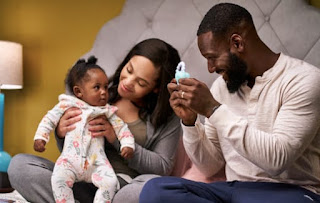
Happy endings are bumpy ways away for Darla, Ralph Angel, and their newborn daughter in season seven, episode three’s Slowly and Always Irregularly written by Francesca Butler and directed by Stacey Muhammad.

Darla is deadset against Nova’s book being turned into a film in season seven, episode five’s With A Kind Of written by Eddie Serrano and directed by Shaz Bennett. 

By the seventh season, Darla settles into marital bliss— a beacon of pure happiness. Again, fate tests her sobriety. Nova has the opportunity to turn her book into a film. Everyone is all excited about the prospect, having changed their earlier scorn into excitement— except Darla. She suffers through their uncontainable glee, her eyes watering, the tension in her body rising. First, her “no” is soft, then she repeats it louder and louder, and races out of the room. As part of the Bordelon family, her consent matters and it’s only right for Nova to go to Darla, to hear her— not exactly for the why, but for her to truly understand what Nova’s book cost Darla. 
“Don’t you dare make this about you! You ruined my life. And now you want forgiveness. I relapsed because of you and that book. Did you really think I would be okay with a movie? Are you really that selfish? Ralph Angel and I... we keep trying to let the past go. But you keep bringing it back. You think that I wanna watch my assault with actors in costumes? Do you think that I want that out there for Blue and Tru to see? More than you’ve already exposed it? All the s*** you stirred, do you think I want that rewound and streamed on people’s TVs for years?.... ARE YOU CRAZY? ARE YOU OUT OF YOUR MIND?”— Darla to Nova. 
After listening to Darla’s passionate monologue, Nova promises to decline the offer of turning Blessings & Blood into a film. To further enhance a pivotally emotional moment, the two sisters by marriage embrace, Darla sobbing on Nova’s shoulder, a newfound bond between them deepening. 

Once that chapter closes, Darla’s remaining hurdles include Ralph Angel’s troubles and the worthless Chase (who doesn’t deserve to be considered Blue’s biological father). Of the latter, Darla boldly confronts her attacker (with her strong, supportive family in tow) and tells him off in a way season one Darla never would. How can you not applaud her for her courage, her unflinching eye? She was a chess player mastermind beating Chase at his own pathetic game. As for Ralph Angel, Darla was right to take the kids with her to Washington D. C. He needed to put his family first: stop returning to his old shady behavior, punishing Darla, and talking to an ex about his marital problems. 

Darla closes the nail on the coffin— having the monster Chase (Eric C. Lynch) sign many documents including a contract worth three million dollars. Talk about a more positive spin on paying out a rape survivor (sorry Charley).
 

Thankfully, by the final episode, one of the best TV couples Darla and Ralph Angel repair their relationship and buy a house together in order for Vi and Hollywood to foster a child. Talk about a rewarding full circle moment for everyone, especially Darla. She fought against constant denial, constant doubt, and stole/melted hearts. 

Insert the sobs. 

Queen Sugar may not be the easiest series to binge. Almost every episode should come with a “sensitive subject matter” warning. Furthermore, an inward pause must be taken to let the heavy images, resonating stories, powerful acting settle in spirit, and tissues to wipe away endless tears. For seven heartrending seasons, viewers have watched the soft-spoken, guilt-ridden Darla transform into a remarkably resilient woman— someone growing into her own strength and agency. Bianca Lawson’s incredible performance of grace, tenderness, and grit makes you see Darla’s multifaceted humanness. She has immense regrets, battles to stay sober, desires to be a better mother and partner, and forge her own destiny. Between her defeats and losses, the blessed Darla still receives wins, joys, and pleasures. Lawson believably embodies a character she was meant to play. After roles in Buffy the Vampire Slayer and Pretty Little Liars, Queen Sugar gave the opportunity of a lifetime— a layered, complex role requiring an emotional weight that Lawson carries well. 

Darla Sutton-Bordelon’s character arc demonstrates a significant part of why Queen Sugar will stand the test of time as one of the most unforgettable series ever rendered.