Showing posts with label Drama. Show all posts

Wednesday, May 29, 2024

‘Love & Suicide,’ A Painful Depiction of Past Catching Up to Choke the Present


Love & Suicide film poster. 

“Being in Cuba has allowed me to live in a society that is not at war with itself. There is a sense of community. It’s a given in Cuba that, if you fall down, the person next to you is going to help you get up.”—Assata Shakur
Sometimes film has the ability to remind a person not to deny the authenticity of their truest selves, their purposes among life’s heaviest burdens.

Lisa France’s history making Love & Suicide left me strangled by the threads of challenging inner turmoils partially steeped by an upbringing damaged by parental absence. I remember once wanting to flee America and drown in Ghana’s people, disappear into a country no one knew me. Furthermore, there are family members drifting away, permanently living off grid. Thus, when the New Yorker character of Puerto Rican and Cuban heritage Tomas (calling himself Tom) seeks a real death in Cuba, the place where his absentee father was born. The fictional parallels spoke an alarmingly unexpected kinship to my reality. 

Tomas (Kamar de los Reyes) is in a dilemma. DP: Demian Lichtenstein. 

Path of self-destruction. DP: Demian Lichtenstein. 

An isolated Tomas descends into disparity, an unkempt man drinking and smoking cigarettes heavily, popping pills, and wielding a gun to his temple, wandering without purpose against Havana’s impoverished landscape, leaving desperate, sporadic voicemails to the unknown caller on the receiving end. The dreary, depressing scenes are extremely sensitive content to those conflicted by the very thoughts Tomas struggles to come to terms with.

Yet, two unconventional strangers pull Tomas out of his misery, revealing a whole beautiful, honest side of him— Alberto, the man with a heart of a gold and the other central figure and Nina, a Los Angeles woman wandering about in a culture that is not her own. 

Tomas is a grouchy grouch to sweet, sensible Alberto who demonstrates diligent patience with his passenger. DP: Demian Lichtenstein.  

The first American film made in Cuba post Fidel Castro’s revolution and without permission by both the United States and Cuban governments, Love & Suicide also symbolizes the film industry in a nutshell, one of many not listed on Letterboxd because so few no of existence, or think it of worthwhile note. It’s as though for all its effortless craft in storytelling— screenplay, acting, and direction— that it deserves burial beneath millions of other works, that it’s not valid enough to be archived, operating surely in a Tomas circumstance. 

Tomas is in a New York State of mind. DP: Demian Lichtenstein. 

Lisa Prince directed a timeless city that looked caught up in the past, a place that seemed outdated yet held a fierce vitality due to its diligent community that thrives in more heartfelt ways. It’s low budget and looks it. At the same time, this grainy abstract piece is effective, poignant, and sentimental. The late Kamar de los Reyes portrayed such a commendable, capable lead, an incredible actor whom I only saw for several years, a few minutes per day, playing a supporting role in the long gone One Life to Live— once my favorite soap opera. As Tomas, de los Reyes provides a strong, multifaceted range into the complexities of a character desiring escape despite having success— achieving the American dream with blood tied to two specific realms tainted by the very country. Luis Moro— producer and co-writer of the script— stars as the humble cab driver Alberto, the beneficial aid who deeply loves his heritage, giving respect, decency, and kindness to Tomas.

Alberto receives a thoughtful parting gift. DP: Demian Lichtenstein. 

The Capital Building holds similarity to the U. S. version yet you cannot help see it’s against the ravaged circumstances of the people. DP: Demian Lichtenstein. 

After Love & Suicide ended, Park Chan-wook’s Decision to Leave came to mind mainly because of the similar triggered emotions. It’s a different cinematic picture and whole other genre, but the deeper story dissects a meaningful predicament for the foreigner overwhelmed by complicated moral sensibilities. The tragic Seo-rae has ancestral ties to Korea, eventually chooses an explicit way out of the messes she causes. Although we know how her story concludes, Tomas leaves us on an ambiguous note, confessing to Alberto rather significant truths that seem both heartbreaking, reflective, and optimistic. 

Thus, Love & Suicide encourages profound reflection on what flows in our blood, the undeniable traits we set to diminish or forget entirely. Sometimes, many can mirror Tomas’s outlook, wanting to drown out certain truths impacted by shame or an unnamed grief. Family and friends can go astray, losing themselves to the jarring temptations that loneliness brings. The harder parts of life’s journey deals with the consequences, those fragile feelings of abandonment, of not being properly loved— especially detrimental if by a parent. Yet, an effervescent light can arise in the darkest hours, often by compassionate strangers who would rather see golden blessings than people haunted by shadows. 

Love & Suicide is available here on YouTube. 


Thursday, October 6, 2022

I Recommend You Watch The Tearjerker ‘Till’ With Kleenex And A Clear Head


Till film poster.

I remember walking into the Whitney Museum and purposely ignoring the Biennial’s Dana Schultz’s Open Casket on several visits. I remember social media muting white professors and former white classmates on their defensive views of why this controversial artwork deserved to be made, that anyone could use history as the basis of creativity. I remember seething with rage when the artist in question made the excuse that she painted this through the eyes of a mother. Yet, let us be perfectly clear that Schultz’s work does not have the same moral, let alone emotional and psychological impact as Mamie Till-Mobley’s historic decision to showcase what racist hatred performed in 1955. 

Till, Chinonye Chukwu’s beautifully riveting biopic, reveals just what a Black mother is forced to endure in a prejudiced America. This ordeal is unlike any other struggle for the average parent. It is our history— the history of loss from the times of Africans being sold to various countries including America to slavery auction blocks permanently separating families to violent killings post Civil War and beyond. Trauma unfortunately weaves into Black generational legacy and no amount of joy can change that fact. There is no rewriting history to make one feel comfortable. We were not meant to have that luxury, that feeling that you can choose to ignore a story as chilling as Mamie and Emmett Till’s. This drama film packs a heavy emotional punch, something more visceral and powerful than any painting hung in an elite gallery space. 

Emmett (Jalyn Hall) gives his mother Mamie (Danielle Deadwyler) his watch at the train station. After his murder, the ring on his finger would be the one identifying factor. DP: Bobby Bukowski.

It opens softly on Mamie Till driving with Emmett on the passenger side. Her eyes are watering, seeming elsewhere as though this whole sequence is a frozen, suspenseful dream. Perhaps she is a clairvoyant already knowing what will happen to her precious son soon. Their sweet camaraderie as mother and child evokes pleasant relationship vibes: protective, nurturing, and so much care. Sweet, affectionate Emmett has a minor speech impediment, but singing songs helps him smooth over his stuttering. Mamie looks on Emmett with elevated pride and happiness, reserving certain motherly glances for him alone. He too adores her immensely as though no other woman in the world could ever replace his compassionate, resilient, beautiful mother. Like Mamie, however, we all wish that Emmett would not be so excited to leave the love and safety nest Chicago, Illinois provides. A cruel fate awaits in Money, Mississippi. When they have their final moments at the train station, Mamie takes as much extra time as possible before Emmett departs. It becomes emotional devastation. The exchanged “I love you” and the crushing embrace between them sets up a heartbreaking foreshadowing. 

Down South, Emmett is introduced to backward conditioning. While racism exists in Chicago through other discrete tactics, Money blatantly displays segregation. From his family cotton picking in the field to the Bryant’s store mishap to the kidnapping— each sequence has key importance to the tragic consequences befallen to Emmett. Slavery may have ended nearly ninety years prior, but cotton remains a commodity and only certain folks are out in the hot sun plucking its worth. Naturally, Emmett finds no pleasure in the humiliating task, joking around to the annoyance of his serious cousins. In Money, Black boys are already seen as laborious adults, having little recess or game play until the day’s work is completed. At the Bryant’s store, presenting a stiff calm before the volatile storm, Emmett’s charm backfires tremendously, turning into a colossal fabrication by a white woman named Carolyn Bryant. One innocent act would later become the catalyst to his kidnapping and eventual murder.  

Emmett’s cousins hanging out in front of Bryant’s store. DP: Bobby Bukowski.

The next sequences are a trigger warning that will have your blood running cold. The very sensitive material is a reality stronger than any painting that unsuccessfully tries to depict a mother’s grief from a place that is not genuine, let alone realistic. Mamie Till’s grief is not a fodder vehicle, not a plot device for spectacle. It is beyond maternal instinct, beyond maternal despair. Her reactions to the kidnapping, the found body, the pine box arrival, and her son’s bloated, mutilated body are especially unsettling. The depth of her endless sorrow knows no amount of medicinal aide or therapeutic elements could ever relieve the vicious claw racism stole from her heart. Although the audience is spared witnessing Emmett’s perverse murder, hearing only his cries on a dark night, his body is shown in horrendously graphic detail, perfectly mirroring the nightmarish pictures in the Jet Magazine. Thus, there was keen commitment in orchestrating the truth of what Mamie saw and lived through— what she bravely showed the world. Also, while grieving, she must deal with the NAACP and their sexist dynamics and pleas that she uses her son’s death for political gain (that remains a campaign promise today until politicians get in office and forget about Black people). Even in the midst of experiencing great despair and shock, we are expected to work, to perform. 

On top of the mourning mother, Mamie decides to push the envelope further by going down to Money and testifying at the murder trial. However, this is a place where racism thrives and ugly white feminism is proudly steeped. In court, Mamie’s responses are tremulous, agonizing moments of vulnerability. The white men refuse to acknowledge her humanity, let alone Emmett’s. When Mamie says, “they’re killing him all over again,” the extent of her words could not be any clearer or wiser. Carolyn is allowed on the stand, lying up a storm, entertaining the men who idolize what she represents— their innocent, unblemished salvation/damsel/victim. Of course, Mamie leaves in the middle of this performative show, intuitively knowing which side the jury is on. 

Mamie (Danielle Deadwyler) and her mother Alma (Whoopi Goldberg). DP: Bobby Bukowski. 

Chukwu’s raw, gut-wrenching first feature Clemency also comes to mind, delivering the candid message that America remains undeniably separated. The law is a complex system, but not so complex that you cannot see that class discrepancies can keep the innocent behind bars and the guilty living their best lives among us. Anthony Woods, a contemporary Black man is found guilty and on death roll for a crime he did not commit. Yet, in Till, the white men who tortured and killed a Black boy are allowed a free existence to live a long life— a pattern still existing today. The murderers can be dirty cops or proclaimed neighborhood watch citizens, brandishing their powers, weaponizing their inferior positions. Rarely, will these real-life villains be subjected to imprisonment, much less having to beg for appeals and mercy like Anthony. In the eyes of the all-white male jury, they saw themselves dulling out the punishment— killing Emmett in order to “protect” Carolyn. That collective “not guilty” meant no crime was committed, it was justice served. 

With a commendable cast led by the visceral force of Danielle Deadwyler’s memorable performance as the icon that sparked a nation, Till is by far one of the most moving biopics ever seen about a Black woman— authentic in every single part of its crafted vision. Honestly, haven’t we had enough of biopics/race films helmed by mostly white men? Aren’t we ready for new, authentic visual experiences seen through a gentle, caring lens? It must be lauded that a commendable Black woman was involved in both Till’s story and direction, a story that never veers away from the heart of the matter— Mamie and Emmett. They are not weighed down by Martin Luther King Jr. (who is a constant fixture in almost every civil rights era drama). Co-written with Keith Beauchamp (mentored in real-life by Mamie Till-Mobley) and Michael Reilly, Chukwu’s incredibly powerful piece demonstrates a Black woman’s plight to honoring her son who deserved to live, who deserved justice in a country denying him that. In addition to Bobby Bukowski’s brilliant cinematography, Abel Korzeniowski’s music comes through scenes with meaningful intentions while others are purely silent, allowing us only the offering of an actor’s pivotal words and breaths. Marci Rodgers, the Black woman costume designer behind High Flying Bird, Passing and episodes of She’s Gotta Have It and Paper Girls, created flawless styles that truly set the tone— Mamie’s wardrobe going from bright yellows to pitch black by the end. 

Mamie Till-Mobley’s path to publicly advocating for her son reflects on our current climate— Samaria Rice, Sybrina Fulton, and other Black women mothers speaking on the injustice of their slain children. DP: Bobby Bukowski. 

My knowledge of Emmett Till started as a teenager watching the late Henry Hampton’s award-winning Eyes On the Prize and later appreciating Ava DuVernay’s August 28th short film which features two Black men working on Emmett’s pine casket box to be shipped from Money to Chicago. As Hannah Black, creator of the open letter to the Whitney Museum, told us, we do not need a white woman to broadcast Emmett Till from her tone-deaf platform. Schultz knows nothing of Black pain and struggle, can never begin to imagine what grieving Black mothers’ are experiencing. They are still hurting yesterday, tomorrow, right now. Better yet, generations later, we are still sequestered in the embittered aftermath that never fades away. Emmett Till never fades away. Thankfully, Till finally exists, allowing a broader chapter revealed from Mamie Till-Mobley’s anguished perspective. She is the reason we know her son. That’s why we must elevate them both. One heartbeat cannot pound hard without the other. 


Friday, March 25, 2022

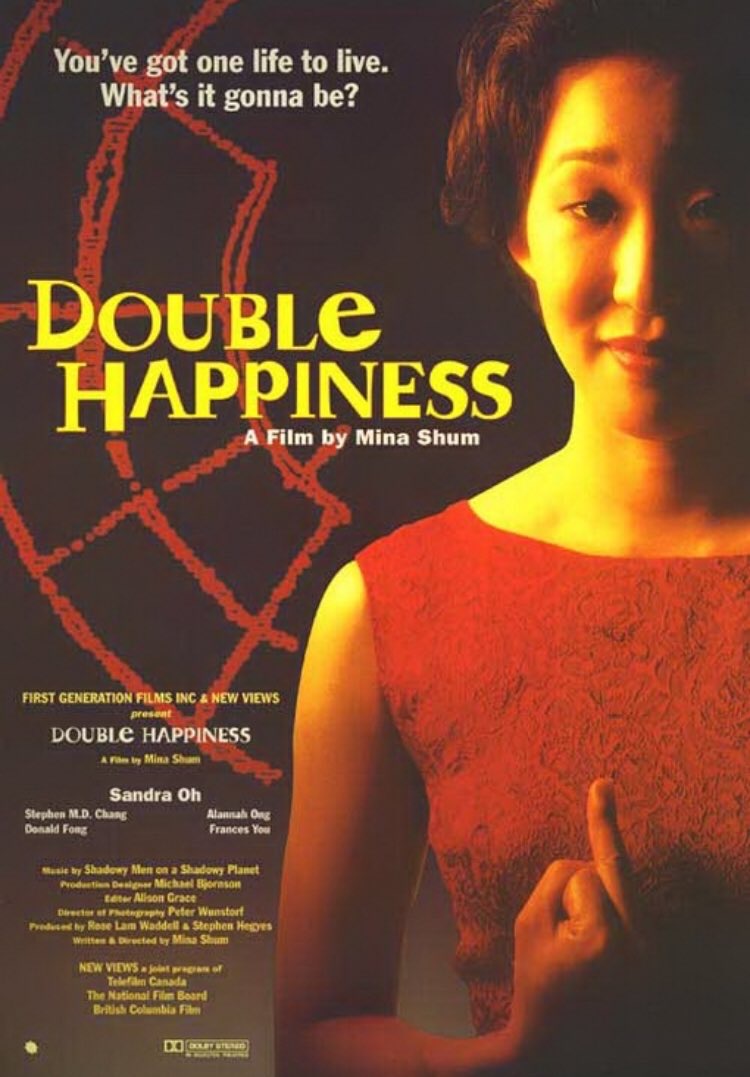
‘Double Happiness,’ Always A Treat to Revisit


Double Happiness film poster. 

Although I have yet to watch Sandra Oh’s latest film release— the horror Umma helmed by Iris K. Shim— in honor of Women’s History Month, it seemed like the perfect opportunity to revisit another Asian director, Mina Shum, whom Oh has worked with several times in Canada. The humorous classic Double Happiness brings all kinds of joy to behold. 

Jade (Sandra Oh) jokingly reflects that the difference between her family and The Brady Bunch is that hers have subtitles. DP: Peter Wunstorf. 

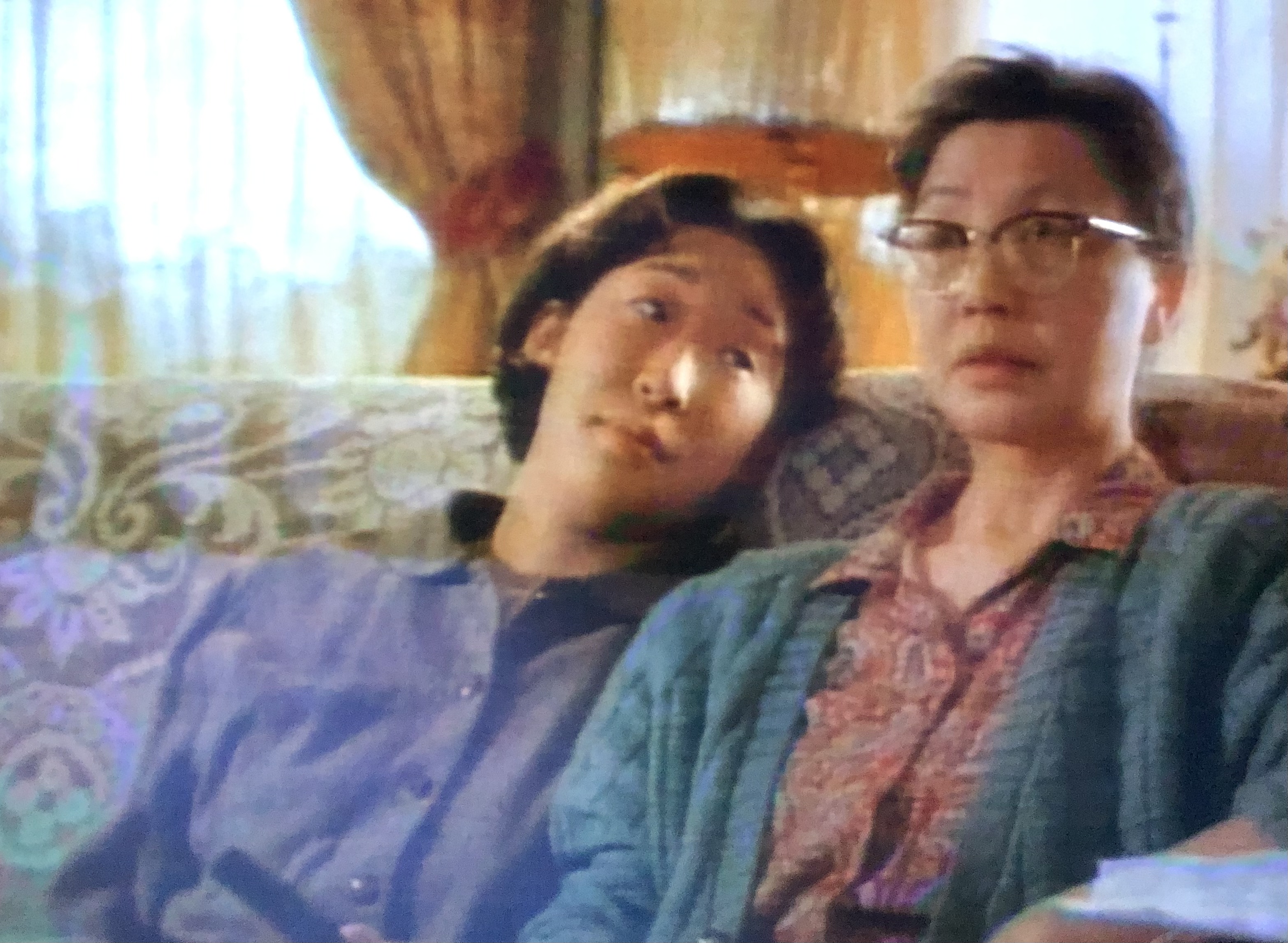
Sandra Oh stars as aspiring actress Jade Li in a family of Chinese immigrant parents. Her younger sister Pearl looks up to her. They share a bedroom despite Jade being twenty-two-years old. The girls also have an older brother Winston, but his memory is locked up in a secret box beneath the bed. Apparently, he has been disowned (mostly by their stern, family values protective father) and this symbolism will remain in affect throughout due to Jade’s rebellious spirit. Much like her absent brother, Jade has the desire to break tradition. 

Jade (Sandra Oh) and Pearl’s (Frances You) relationship is an adorable illustration of sisterhood. They protect each other, dance, eat, and everything in between. DP: Peter Wunstorf.

Born in Hong Kong and raised in Toronto, Jade is the product of her surroundings, primarily the television and wanting to be on it. Jade is naturally gifted at mimicking everything that she sees and hears— Southern accents and all. Yet in two very specific instances, Jade is confronted by an uncomfortable reality of living in an awkward duality. She must decide between portraying the terribly offensive stereotypical accent or truly understanding what being outside of China has done to her. Jade may be able to speak the Cantonese her parent have taught her, but when it comes to reading the very language itself, it makes her question herself as a Chinese woman. The questions raised to her are valid, deeply personal and will affect her throughout the film. What does being of Chinese descent illustrate to the next generation being raised in a place far removed and situated in another culture? 

Jade (Sandra Oh) and Lisa (Claudette Carracedo) share hopes for the future. DP: Peter Wunstorf.

When Jade’s best friend Lisa asks what her dream is, Jade softly responds that she wants to win the Academy Award for a big part. This is such a sad, bittersweet statement in a twenty-eight year old film where limited stride has been made in an institution that favors white actresses above all others. Last year, Youn Yuh-Jung won Best Supporting Actress for her role as the grandmother in Minari and the previous win in that category was Sayonara’s Miyoshi Umeki in 1957– sixty-four years prior. Truly great Asian actresses from Michelle Yeoh to Maggie Leung and Ziyi Zhang and more have been glaringly overlooked. Thus, Jade’s future hopes are not only incredibly impossible odds— they are proof of the blatant unfairness and racism in Hollywood film awards. Jade is already struggling to find casting directors that appreciate her multifaceted techniques. With the doors continuing to close on her, how could Jade even begin to break out of achieving one slice of her desire? 

Even though her parents not completely invested in Jade’s career choice, Mom (Alannah Ong) doesn’t mind if she takes a more respectable journalism gig. DP: Peter Wunstorf.

Meanwhile, Jade’s parents and friends continue setting her up with different Asian men in hopes of marrying her off. This dated customary setup doesn’t suit the current landscape. Jade has far too many unconventional ideas, is too focused on independence than subjecting herself to fitting in with the old ways. In Toronto, she feels encouraged to follow another path that does not include the ideal mate, but a preferred partner of her own choosing. 

The sisters must hide their photo with Winston... 

Under the bed. DP: Peter Wunstorf.

A very important factor into Jade’s story is Winston continuously being brought up. People would ask how their son is doing. The mother makes up stories, but the father speaks nothing of him. Winston’s blacklisting from the family— his disownment— is primarily the father’s doing. Jade’s sheer independence starts bothering her father, especially the acting and the “talking back.” Jade is supposed to be respectful, demure, obedient, and quiet. Whenever her father becomes angry or disappointed in her, Jade brings him red bean buns and tea as a forgiveness branch. She also becomes mother hen-ly— massaging his back and combing his hair, seeming more wifely than daughterly. Beneath trying to appease her father, Jade aches to be her true authentic self without his constant backlash.  

Jade imagines herself a Southern belle. DP: Peter Wunstorf.

Unfortunately, casting agents see one opportunity for women like Jade. DP: Peter Wunstorf.

So while the older generation continues speaking in their native Cantonese tongue, Jade, Lisa, and Pearl exemplify the turning tide. They understand the language and respond back in English. 

When Dad introduces his daughters to Uncle Hong, they must recite a greeting in perfect Cantonese. 

Uncle Hong (Donald Fong) making dumplings from scratch with his sister-in-law. 

Double Happiness also shows a huge relationship between food and community. Jade’s family and their friends gather around the table—a constant sturdy structure— eating hefty portions with their chopsticks, having conversations, or making homemade dumplings. It almost has that family restaurant quality, seeing that the mother prepares everything because it is expected of her as the daughters set the table. 

In the standard white dress and classic pearls once more, Jade realizes that the life of her traditional parents is not the life for her. DP: Peter Wunstorf.

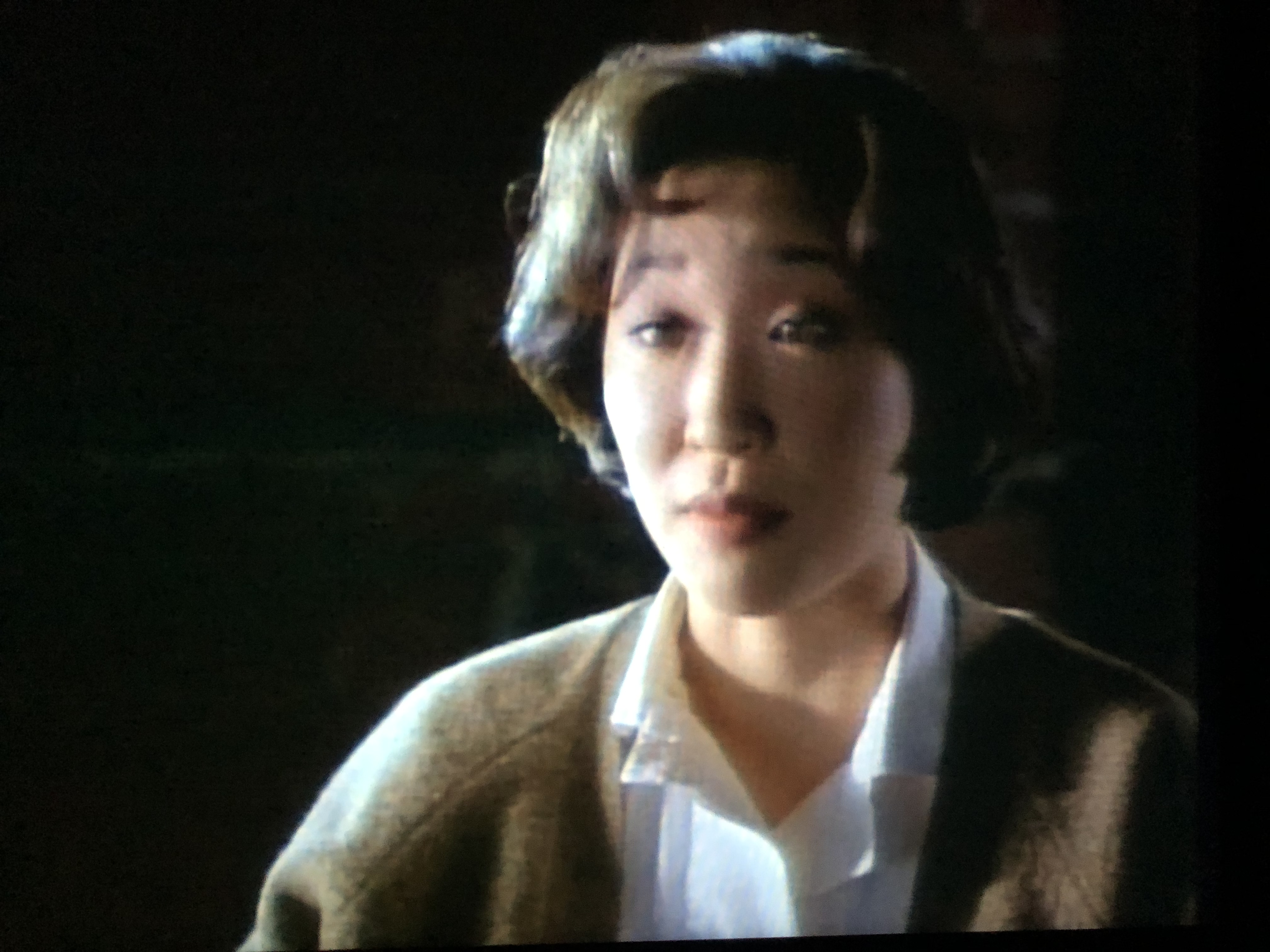
A solid prize winner at the Toronto International Film Festival and Berlin International Film Festival,  writer/director Mina Shum’s charming, delightful screenplay is chalk-full of humor, wisdom, and defiance. In a role fresh after the candid biopic The Diary of Evelyn Lau, an utterly brilliant Sandra Oh breathes life into the free-spirited Jade. Oh was deserving of her awards— the Genie Award for Best Actress (the former Canadian equivalent of the Oscars) and a special mention from the Torino International Festival of Young Cinema. 

Red bean buns will not always have sway for Jade’s dad (Stephan Chang). DP: Peter Wunstorf.

Currently streaming on Prime Video, Double Happiness will have anyone laughing, resonating with a woman’s modern-day independence, and coming back stronger in the face of abject rejection/racism. 


Wednesday, March 23, 2022

The Imperative Themes In The ‘I Know Why The Caged Bird Sings’ TV Adaptation


I Know Why the Caged Bird Sings tv film poster 1979.

The classic TV movie adaptation of Maya Angelou’s autobiography I Know Why the Caged Bird Sings may not have been directed by a woman, but this Fielder Cook helmed film delivers a poignant womanist message that would touch any Black girl’s spirit. From beginning to end, Angelou’s touches on the co-written screenplay (with Leonora Thuna) feels every inch steeped in her narrative that touches on her adolescence in the Deep South. 

Several key themes stand out— strong sibling bonding during an absolutely necessary time, the special branded Black girl’s desire to be a white girl, and blaming self for the consequences of rape and consequent murder. 

The film begins with Marguerite “Maya” and her older brother Bailey Jr. meeting their paternal grandmother at the train station in Stamps, Arkansas— with baggage tags pinned to their clothes. This unsettling scene showcases Black children as objects, not little vulnerabilities worthy of true guardianship. 

As Bailey Jr. (John Driver) recites William Ernest Henley’s Invictus poem from memory, Maya watches on with immense admiration.  

Bailey Jr. often has Maya (Constance Good) in constant awe and maybe some slight jealousy. 

Maya and Bailey Jr.’s relationship is the rigid backbone of I Know Why The Caged Bird Sings. The two close siblings willingly give one another support through the dark, heavy undercurrents of racism and living with god-fearing guardians. In Bailey Jr., Maya entrusts her deepest secrets including this strange, twisted belief that she is a punished white girl sentenced to a detestable blackness. Furthermore, Maya and Bailey Jr. tease each other and play as siblings do. Unfortunately, situations arise that call pause to their childhood— whites looking to defend a white woman’s honor (by harming any adult Black man) so that means hiding their Uncle Willy, witnessing demeaning humiliation of their grandmother by the white locals, and seeing a dead Black body for the first time. Thus, Maya and Bailey Jr. have to band together, be endearingly tight in order to be able to emotionally, psychologically, and physically handle the hard cruelties of the world. 

As a pack of vicious teenage white girls approach, Momma (Esther Rolle) tells Maya (Constance Good) to head inside the store.

With Maya’s admiration of whiteness and wishing to be a blond-haired, blue-eyed girl, also enters her disdain of the white girl’s vicious behavior. Maya believes that European beauty standards defeat hers, mentally contributing to her own erasure. Maya doesn’t value what she sees in the mirror, condemning that her reflection is an error that can only be corrected through her wild imagination. Back in her time, this blatant psychological problem was partly caused by popular toys and television marketed to an audience that did not value blackness. Of course, Maya would admire what she was seeing as beautiful, as prevalent. Interestingly enough, Maya can understand the beauty in her brother Bailey Jr.— idolize every inch of his face and manner. Beneath Maya’s perceptions, colorism may have played a contributing factor. To her— Black boys and Black men are attractive in every tone, but the whitest and brightest are the most feminine, the most worthy of idolization. 

Yet once the white girls come to insult Maya’s grandmother in front of their store, Maya is faced with the darker side of those with the most prized “beauty.” 

The girls watch Maya’s flirtatious father Bailey Sr. with a female admirer. Bailey Sr. has arrived to take his children to California (with a stop in St. Louis). This makes Maya unhappy. 

In addition to leaving their grandmother, Uncle Willy, and the store, another important person to give up was Miss Flowers (Madge Sinclair)— one of the first people who saw Maya’s gifted potential as a writer. 

Bailey Jr. is more excited to see Mother and Father more than Maya. Perhaps Maya is a clairvoyant girl who knows the outcome of leaving the safety (somewhat safety) of their grandmother’s store and sweet canned pineapple in Stamps. Through the car ride to St. Louis, Bailey Jr. rides up front with their philandering father Bailey Sr. Maya stews in the back, disheartened and disinterested. This behavior intensifies once meeting their mother. Maya is naturally distrustful. After all, Bailey Sr. and Vivian had abandoned their children. In love with both parents, Bailey Jr. eventually abandons Maya, leaving her prone to the dangerous attentions of her mother’s boyfriend, Mr. Freeman.   

Grandmother Baxter (Ruby Dee) catches the children overhearing adult business.

The violent assault by the pedophile transforms Maya. She becomes further withdrawn, further internalized. It is as though she has placed a metal fork in a socket and has been shocked into oblivion. Her joy has been depleted, evaporated. How can a child truly define the violence inflicted on their body, understand the implications of such a heinous act— especially a Black girl child with little self-esteem? It is only to Bailey Jr, her sweet, beloved brother and bestest friend, that Maya releases the unbearable weight of her attacker’s name. Instead of feeling some relief at Freeman’s death, a guilt-ridden Maya refrains from speaking. She believes that her vocalized words were an accomplice to what in her young, impressionable mind is humanity’s worst crime— murder. 

Sadly, this historical silence exists today— the notion that Black women must quietly keep Black man’s crimes to heed in order to protect him from prison/death and this starts early— earlier than Maya’s young age. The “ride or die” philosophy subtly brushes into Maya’s formative beliefs. Although the all-white jury acquitted Mr. Freeman of assaulting Maya, Maya still believed that he didn’t deserve any punishment. 

Vivian (Diahann Carroll) tries to cheer Maya up, even throwing a surprise party. Maya remains quiet and a frustrated Vivian can no longer parent her.

A still silent Maya is relieved to be back in Stamps. Once more, their grandmother meets them at the train station.

The cast brings a significant time in Angelou’s story to life led by brilliant newcomers Constance Good and John Driver as Marguerite and Bailey Jr. Warm voiced, utterly beautiful Esther Rolle plays the stern, gentle grandmother (lovingly nicknamed Momma) and revolutionary shop owner bringing community to Stamps. Diahann Carroll is a gem as the gorgeous singing mother Vivian Baxter who heartbreakingly doesn’t understand how deeply traumatized Maya is by the terrible events that transpire in St. Louis. Madge Sinclair delivers valid advice as Maya’s teacher Miss Tulip Flowers. Even Ruby Dee makes a memorable appearance as the Baxter matriarch of Vivian and three overprotective sons. 

Along with the layered story and its eloquent portrayers, Peter Marx’s moving soundtrack brings sweet, sorrowful, and joyous elements to the onscreen drama captured by Ralph Woolsey’s cinematography. 

Interesting that the ending is one of key changes to Angelou’s autobiography. Angelou has her younger self reciting the valedictorian speech complete with leading into the National Negro Anthem instead of another student. Perhaps this was a dream to only be made true through film. 

I Know Why the Caged Bird Sings remains one of the most harrowing literary masterpieces ever written. Although a very heavy yet achingly familiar story, this homage film wholly celebrates Angelou’s impactful bravery in a defiant, meaningful way. It can be found on various YouTube channels that commemorate vintage Black films. 


Sunday, February 6, 2022

‘Livin For Love: The Natalie Cole Story’ Shadowed With Repressed Grief


Livin’ For Love: The Natalie Cole Story film poster. 

On this day, nine time Grammy winner and three time American Music Awards recipient Natalie Cole would have been turning seventy-two years old. Thus, why not celebrate by revisiting Livin’ For Love— her autobiographical film based on her memoirs? Often left off lists of actors/actresses playing themselves in biopics, this Robert Townsend directed work should definitely be included because Cole narrates and co-stars. She is a heartbreaking example of the Hollywood philosophy of lifting a celebrity up and bringing them down hard when they show flaws, human error. 

It begins with a house fire (occurring four days after her 31st birthday). A very high Cole wants to save her drugs above anything else. A privileged upbringing set her apart and should have been the means to growing up with a good head on her shoulders. Daughter of famed jazz singer and pianist Nat King Cole, her younger self lived in a predominantly white neighborhood and attended an affluent private school in New England. She mostly made friends due to her father’s status. Yet she was the apple of her father’s eye; so much a pride and joy that he puts her onto music too. Although he was in big demand—tours, record studios, television— he loved being the family man, especially for the daughter who idolized him. Once the tragedy struck of losing her father, she would later unleash her pent up sadness in a devastating delayed reaction. After all, Maria Cole continued sending her daughter to school, offering limited time to properly grieve, let alone lending an attentive shoulder to cry on. 

College introduced the impressionable, isolated Natalie Cole to darker, obscene pleasures; an ugly underground that took her years to escape. With her natural curiosity to try everything and letting peer pressure guide her into unfamiliar territory, she experiments more and more with hardcore drugs including heroin and crack cocaine. In the meantime, she finds the inclination to sing and sounds impressive, charming. Her mother forbids it, having still not completely recovered over her own grief. On campus, Cole becomes nervous— everyone has discovered she’s music royalty. Her nepotism is expected, exaggerated. Drugs lure her deeper. It becomes easier to use than to be clean. This sends her life in a serious uproar with detrimental consequences. 

Livin’ For Love lets Cole tell her perspective. The failure with a majority of biopics nowadays is an embellished story here or there going too far; made up facts as opposed to revealing the cold hard truth. Sure, the lives of celebrities are wilder than most, but audiences want to be satisfied with some measure of accuracy, especially those of us who research afterward. “Based on a true story” doesn’t cut it if the information is pure fabrication. Cole is very involved in this film as co-writer, star, and producer. 

Diahann Carroll (Maria), Natalie Cole, and Theresa Randle (teen/young adult Natalie). 

Robert Townsend—well-known for films showcasing Black excellence, music in particular— crafts Cole’s story in an engaging way, putting us into her need for love and comfort, seeking solace in addiction, and finding recovery through channeling her father’s music. Diahann Carroll was the perfect choice to portray Cole’s mother Maria, a retired singer who prioritized her husband’s career over her own. A great scene features Maria visiting a strung out Natalie at college; appalled and dismissive of her natural hair and braless attire. Beneath the insult, Carroll combines her trademark diva attitude with a soft sincerity that assures a mother’s heart— buried deep within— exists. Theresa Randle, from Townsend’s earlier classic The Five Heartbeats, stands out as the Natalie Cole in her teen and young adult years, cleverly switching between Black power radicalism to messy drug addict wife. However, Randle could have been pushed more— makeup wise— into portraying the sickness that is drug abuse. The eighties were such a bad time— crack cocaine and heroin killing great artists like Jean-Michel Basquiat. Natalie Cole herself would have been next. In her film, she was a marvelous, apologetic soul expressing regret, pain, sorrow, and joy. Endless tragedy almost killed her spirit, but she was able to turn around and triumph, especially that beautiful voice in a challenging, unforgiving industry. For playing herself, Cole won the NAACP Image Award for Outstanding Actress in a Miniseries or Special. 

Livin’ For Love may be an understated television movie that seems made for Lifetime. It is a humble cinematic treasure that adds an unforgettable piece of Natalie Cole history alongside her impressive musical catalog. When she left us on a cold New Year’s Eve, a remarkable legacy stayed behind and not because of her famous father. 

Natalie Cole was a talent, a star in her own right too. 


Friday, January 28, 2022

‘The Ice Storm,’ Reflecting On Ang Lee’s Artic Drama


The Ice Storm film poster. 

“The meaning of Fantastic Four was that a family is like your own personal anti-matter. Your family is the void you emerge from. And the place you return to when you die.”—Paul Hood contemplating on life whilst reading Fantastic Four Issue #141 The End of The Fantastic Four 

Based on Rick Moody’s novel, the characters in The Ice Storm are as insufferably cold and frigid as the title metaphorically implies. Set between New Canaan, Connecticut and New York City, two middle-class, white suburbia families cross boundaries with each other. These are privileged people— middle aged adults “raising” children who are clearly interested in adult actions— mainly sex, drugs, and alcohol. 

The film opens on Paul’s train. 

And it has stopped operating due to inclement weather.

Fresh off the highs of Sam Raimi’s Spider-Man and Peter Jackson’s Lord of the Rings trilogy, I first watched Ang Lee’s icy classic twenty years ago on VHS with the geeky hope of Tobey Maguire and Elijah Wood sharing scenes together. They don’t. Yet their characters are eerily similar. Paul Hood is an awkward intellectual who philosophizes life through a comic book perspective and smokes pot with his girl stealing roommate, Francis Davenport (played by David Krumholtz). Mikey Carver is a quiet eccentric nerd who is bad at sports and obsessed with molecular science and Paul’s sharp sister younger Wendy. Furthermore, Mikey’s relationship with his father Jim is frosty as opposed to Paul’s stiffly relaxed relationship with Ben. 

Sandy (Adam Hann-Byrd) and Mikey (Elijah Wood) serve guests in aprons at their parents’ dinner and later sneakily drink wine in the kitchen. The adults just never seem to watch their children’s behavior. 

On the surface, the Carvers and the Hoods appear civil to each other. Their marriages, however, are charades put on for the neighbors. Janey and her husband Jim Carver have lost the spark between them— likely due to his constant travels and bed “performance” capabilities. Elena no longer desires to be intimate with her husband Ben Hood. 

Elena (Joan Allen, right) offers to wash the dishes, but Janey (Sigourney Weather, left) nearly blows her head off with her declinations. Afterwards, she plays calm and collected, reasserting her “no” with “it’s quite alright.”

One of the most incredible cropping is this scene of observing retired servants Mikey (Elijah Wood) and Sandy (Adam Hann-Byrd) watching the adults drinking. 

While Elena is extremely timid with Ben, Elena and Wendy do not have the closest mother/daughter relationship either. In Wendy’s mind, Elena represents the rebellious notion, “you are my mother, but I don’t have to like you or be like you.” Wendy is an outspoken political wildfire, a shoplifter, and smoker all at the age of fourteen. And she is very, very interested in the male body in an imperviously wicked way. Polar opposite Elena wants to mimic her daughter— obtaining her lost youth, her lost pleasure. She seems a damaged product of her time— trapped in an unhappy marriage which likely happened at a young age. Yet Elena’s dreamy perception of Wendy is far from who Wendy truly is. 

Red coated Wendy Hood (Christina Ricci) through Elena’s eyes— a free spirited girl who can do anything, be anything. 

But in reality, Wendy is on her way to steal snack cakes…

The Ice Storm hits on heavy territory that may be too sensitive for viewers, especially in the frank and bizarre scenarios involving overtly curious children. By clinically revealing the natural inclination to explore the human body, the film discloses on the deepest, darkest intimate secrets of the young psyche. When Mikey and Wendy are kissing, they are not embracing or touching each other. They are joined only by their experimenting lips, merely approaching the science of this act without the emotional attachment. 

Close up on Mikey and Wendy’s outdoors make out session.

The wide shot angle. 

On the other hand, the unbalanced Sandy Carver— the most terrifying of the children— has the potential to become a vicious grownup. He already has this fixated quality about him— a fixation on violence and an unhinged fixation to Wendy. He appears to be the epitome of danger which is precisely what draws Wendy on in. They both have an unhealthy taste for walking down the wrong tracks. 

Sandy (Adam Hann-Byrd) aims his army soldier at the retreating Wendy. Wendy will later undress the soldier. 

Lines are drawn and some are deliberately trying to cross them. Janey is having sex with Ben, but Ben needs the soundboard aspect too. Predatory Wendy is the center of a strangely demented triangle— two brothers— a secret unboyfriend and a toy to play with. An envious Paul is trying to get a rich New York classmate’s attention, but uses drugs in a ruthless tactic. The teens are too corrupt to make positive choices (and it takes Paul a long while to leave a rape-y situation) and the adults are invested in their own psychological, midlife crises to offer parental guidance. Without such aide, the young ones are left alone raging on hormones and accessible alcohol. Obviously, they all need therapy. 

Janey and Ben are both deprived. 

Bored Janey barely notices what Mikey and Sandy are up to. Between ironically reading Phillip Roth’s When She Was Good (a novel about a severely moral woman), alone with an always traveling Jim, and seeking sexual pleasures from around the neighborhood, Janey is the definition of absent housewife. She tries to assert some authority over the youth though. When Janey spies Sandy blowing up aircrafts with dynamite or Wendy taking advantage of Sandy in her own bathroom, Janey tries to set them both straight on their unlawful behaviors— albeit unsuccessfully. 

Elena (Joan Allen) and Jim (Jamey Sheridan) are the last ones left in the key party house. 

During the weather warning, the local key party builds the climax. Everyone is so enthusiastic for the open relationship phenomenon that a woman even brings her son as her date. A man disgustingly wishes people brought their daughters too. There is no real shame, no ostracizing of this convoluted behavior. Maybe New Canaan residents are all sex crazed and must turn to each other in a nefarious Mister Rogers Neighborhood way. Still, Elena—who has easily figured out Ben and Janey’s affair—reluctantly attends something not in her repressed nature. Like a victorious cougar, Janey pulls out the son’s key and goes off wherever much to the embarrassment of Jim, Ben, and Elena. 

The morning after.

The Ice Storm is a complicated favorite for its compelling, abrasive narrative. The cast is perfect too— Sigourney Weaver, Joan Allen, and Kevin Kline along with Elijah Wood and Tobey Maguire. Another scenic pleasure included Christina Ricci whose Wendy mirrors her earlier Wednesday Adams in The Addams Family. Ang Lee’s daring direction and Frederick Elmes picturesque cinematography combines vividly well to the haunting music Mychael Danna composed. This here is real quality cinema. Heavy yet beautifully made.   

In a light afternoon, Ben (Kevin Kline) picks up Wendy (Christina Ricci) as though she were a child and not a blossoming teenager. 

In the late night, Ben (Kevin Kline) carries Mikey (Elijah Wood) to his car.

The man carrying a red coated child has heartbreaking symmetry. In one moment, Ben holds Wendy away from the Carvers house not just because her feet are cold. Ben naively believes that by shielding his daughter away from the dangers that boys like Mikey represent, that he could protect her innocence— unknowing that that concept is long lost. Ben had earlier given Paul a delayed “birds and bees” talk yet scolded Mikey for fooling around with Wendy. There is celebration for a father’s son to sow wild oats early on, but a daughter remains virtuous in a father’s eyes. By the end, Ben finds Mikey lying face down in a red bubble coat and lifts the cold body of the very boy he blasted. It delivers a tragic parallel between Mikey and Paul— these teenage boys so alike yet never share a moment together—that Mikey reminds Ben of Paul and doesn't necessarily need to voice the grievance aloud. 

Paul (Tobey Maguire) boarding off the train with his Fantastic Four comic, oblivious to the befallen.  

With a soft, clandestine tone surrounded in tremulous ice and whispering wood, The Ice Storm is a startling, eye-opening drama that dissects the roots of repression and sexual awakening. The harrowing credits roll on the sad underlying fact that when death comes, the dying have no choice (broken or not) but to return to the place they came from.