Friday, January 20, 2023

Best Feature Length & Short Films of 2022


List of Best Films Seen In 2022.

Last year alone was a personal record in my film viewership. From being a screener for the second year at the 17th Annual Dayton LGBT Film Festival to virtually attending Sundance and Blackstar Film Festival, to working at an independent movie theater (where our greatest perk is watching films for free), and to supporting various streaming platforms, I can honestly say that my number is around two-hundred, maybe two-hundred fifty films— features and shorts.

Unfortunately, my Letterboxd does not reflect that. 

Nedjma (Lina El Arabi), the tough leader of a girl gang falls for Zina (Esther Bernet-Rollande), a newcomer/ cousin of Nedjma’s rival in Marion Desseigne-Ravel’s modern Shakespearean tale Besties set in gritty part of France. DP: Lucile Mercier.

Some films on top lists I had not personally seen such as Alice Diop’s Saint Omer, Hirokazu Koreeda’s Broker and Saul Williams and Anisia Uzeyman’s Neptune Frost (currently streaming on both Criterion Channel and kanopy). Others I outright refuse— Baz Luhrman’s gaudy biopic on known pedophile Elvis Presley, a Top Gun sequel (surely not meant for my taste), Damien Chazelle’s lengthy Babylon co-starring a problematic Brad Pitt, or James Cameron’s return to colonized Avatar which had white people infiltrate blue people society (primarily played by Black actors). Things can be depicted so beautifully due to high budgets, but these stories certain white filmmakers continue telling reveal such a great lack of respect and sincerity to every person existing in society. 

Cate Blanchett put on a phenomenal performance as the cold, menacing composer Tár, but the film is a challenging bridge to cross. DP: Florian Hoffmeister.

For example, in Todd Field’s Tár, celebrated fictional EGOT winning composer Lydia rants on a biracial pangender college student who refuses to listen to Bach (much like how many of us cancel Woody Allen, Roman Polanski, etc.). This scene has been posted online; the public mostly agreeing with Lydia’s crushing humiliation; saying that just because someone behaves vilely in their personal life does not lessen their talents. Yet, however, the reality is that most problematic white people have the luxury of abusing power; with colonialism setting up the impossible, near unreachable standards, especially in every field of art, film included. After her own public meltdown, Lydia retreats to South Asia, which many wrongfully perceived as punishment, not realizing she still has monetary access, a passport, and a job— signifying that this privileged, resourceful woman has already bounced back. 

Thus, I remember the 2022 films that stood out in a more compelling light, painting the most eclectic pictures staying vividly in mind. Some (primarily Everything, Everywhere All At Once and Danielle Deadwyler’s Till performance) are on the awards radar. Most are not up for big awards, filtering quietly from notice. I think about visual artist Diamond Stingily’s towering presence as Palace in Martine Syms’s stark feature debut taking place in twenty-four hours. The African Desperate conveys the Black person in the typical sea of white in art school. The strong, emotional affair that happens in Busan between murder suspect Seo-rae and police detective Han-joon as Hae-joon’s wife Ahn has these unseen moments with her mysterious co-worker June quietly intensifies the screen in Park Chan-wook’s addictive Decision to Leave. The mourning Black women strongly led Ryan Coogler’s Black Panther: Wakanda Forever sequel, a benefitting tribute to honor the late Chadwick Bozeman felt throughout the entire film. 

My following list highlights films exceptionally captured by an excellent cinematographer and scored by a brilliant composer. They contain impeccable direction, powerful, inclusive stories of resonating human experiences, and starring actors/actresses so good (and grossly ignored), you look up their whole filmography just to see them light up the screen in a different context.

Murder suspect Seo-rae (Tang Wei) puts a dignified, married police officer Hae-joon (Park Hae-il) in Park Chan-wook’s Decision to Leave. DP: KIM Ji-yong/MUBI.

Best Feature-Length Films

Decision To Leave directed by Park Chan-wook and written by Park Chan-wook and Seo-kyeong Jeong

Nanny directed and written by Nikyatu Jusu

Till directed by Chinonye Chukwu and written by Keith Beauchamp, Michael Reilly, and Chinonye Chukwu

The African Desperate directed and written by Martine Syms 

Everything, Everywhere All At Once directed and written by Daniel Kwan and Daniel Scheinert (The Daniels) 

Mars One directed and written by Gabriel Martins

Besties directed and written by Marion Desseigne-Ravel

Petite Maman directed and written by Céline Sciamma

Wheel of Fortune and Fantasy directed and written by Ryusuke Hamaguchi

Black Panther:Wakanda Forever directed by Ryan Coogler and written by Ryan Coogler and Joe Robert Cole

Hazel Gurland-Pooler’s Storming Caesar’s Palace tells the story of activist Ruby Duncan who led the fight against the corruptive welfare system in Las Vegas. 

Best Documentaries 


Black As U R directed and written by Micheal Rice

Storming Caesar’s Palace directed by Hazel Gurland-Pooler

Nelly & Nadine directed by Magnus Gertten and written by Magnus Gertten and Jesper Osmund

Sirens directed and written by Rita Baghdadi
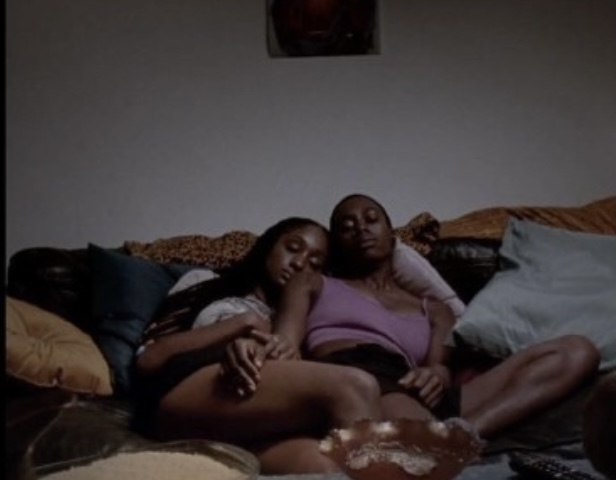
Olivia (Shanay Neusum-James) helps her ex-lover Joy (Deji Tiwo) grieve the one-year anniversary of her sister’s death in Juliana Kusamu’s Losing Joy. DP: Morgan K. Spencer.  

Best Short Films


Code Switch directed and written by Mx. Roti and Davis Alexander Jones

Clones directed and written by Letia Solomon

Losing Joy directed by Juliana Kasumu and written by Nana Duncan 

Glitter Ain’t Gold directed and written by Christian Nolan Jones

Work directed and written by April Maxey

F*** Em’ Right Back directed by Harris Doran and written by Harris Doran and Ddm Ddm 


Tuesday, January 17, 2023

The Problematic Andrea Riseborough Fray


White women are madly frolicking together to campaign for Andrea Riseborough’s work in Michael Morris’s For Leslie.

Low budget films get made every year. 

Yet, for some odd reason, Andrea Riseborough’s high value friends Kate Winslet, Frances Fisher, and Alison Janney (For Leslie costar) are campaigning viciously for Riseborough to take a wild card slot in the upcoming Oscars leading actress race— which has historically favored them since its inception ninety-plus years ago. 

Secondly, this worthwhile discussion of self-promotion campaign led by prominent voters (some who have won Oscars and Emmys) seems louder than any in recent years, especially in the digital age where this is happening in front of our very eyes on Twitter, Facebook, and Instagram. Even Indiewire is writing about this strange supportive rise; Riseborough already moving up to the number five position on Gold Derby, the awards prediction site. Whereas the support of women of color is so quiet, that you could hear a pin drop and nobody would even race to pick it up. Have these same women vouching for Riseborough ever consider the years and years of injustice towards nonwhite candidates? How the Academy can travel all over the world for their nominees and still choose the whitest and brightest to compete for the biggest acting award of their lives? Were they vouching for Alfre Woodard (Clemency), Lupita Nyong’o (Us), Regina Hall (Support the Girls), Hong Chau (Downsizing), any of the Parasite cast, Ziyi Zhang (Memoirs of a Geisha), Maggie Cheung/Tony Cheung (In the Mood for Love)— an endless people of color snubbed for decades? Probably not.

These women’s dream nominees are extremely colorist and ill-favored, excluding the incredible performances of Till’s Danielle Deadwyler and The Woman King’s Viola Davis— whom Frances Fisher claims are locked votes, but this post does not reflect that. At least, Michelle Yeoh is still present— likely the only candidate they can tolerate. They’d probably swap her out for Anya Taylor-Joy’s work in The Menu. 

When white actresses win— do you know who they often call out in vapid, passionless speeches? White men. Think about Frances McDormand winning her third Oscar, talking about making opportunities for women. You wonder “what kind of woman?” Her kind? Or even Michelle Williams (the white actress), whose rarely worked with a woman of color, calling out the male system. Cate Blanchett— who will likely win her third Oscar anyway for playing the cold, talented, patriarchally benefiting conductor Lydia Tar— is another white actress calling out the system that benefits her. Recently, she disregarded white men at the Critics Choice Awards in a tone deaf speech not as passionately or heartily felt as the night’s other winners— first timers Ke Huy Quan, Angela Bassett, and Sheryl Lee Ralph. 

In this post-Trump era, we are witnessing why white women overwhelmingly voted to elect one of history’s most violent presidents. White women can spit on white supremacy until the cows come home, but the reality is that white supremacy has always adored them, cherished them as though they were the prizes of womanhood, of the very cinematic art that still has many firsts to conquer for women of color. In these white women winners, the predominately white voters either see themselves reflected or desired. At times, you question if these awards truly regard talent at all— because they only seem to celebrate each other. In the year 2023, Black women have yet to win Best Direction, Best Screenplay (adapted or original), Best Score, Best Cinematography as well as Indigenous, Latino, and non-binary women. Asian women, especially South Asian, have a longer journey to go. Chloe Zhao may have won many awards in her season, but what if the vehicle was not fronted by an Oscar winning white actress? Would Zhao have been so heavily honored, so riddled with award show firsts? Can you imagine the repercussions to happen if nonwhite industry bigwigs (sadly so few to begin with) campaigned as bravely and passionately as these white people are for Riseborough? Probably very severe in an industry where blacklisting can be so easily arranged. 

This Andrea Riseborough situation reveals a dirtier, uglier side to how powerful whiteness can be, how it can shift votes on the very pedestal that idolizes them. No matter how one feels about the Oscars— a questionable organization that still reeks of a certain privilege— it is very scary.  A nonwhite artist can possess so much talent and play that “working twice as hard as them” game. It doesn’t change the simple fact that someone white can always come out of nowhere and victoriously steal the spotlight, undeserving or not. 


Friday, January 13, 2023

Happy Birthday, Euzhan Palcy: Fem Film Rogue Icon Spotlight


Behind the scenes with Euzhan Palcy.

Euzhan Palcy, an incredible history making filmmaker deserves to be celebrated. Viola Davis said in a powerful introductory speech at the Honorary Oscars ceremony that Palcy is a woman of many firsts, that she did never sacrificed her blackness or womanhood. In the filmmaking field, it takes bravery and courage to get behind the camera and decide as a Black woman to tell evocative Black stories surpassing all genres. As a Black director controlling the Black image— historically almost always white, especially in biopics and blackploitation— Palcy sought to turn the tables in the cinematic medium, pushing out African diaspora in memorably prolific masterpieces.  

Euzhan Palcy with her much deserved honorary Oscar.

Born and raised in Martinique of the French West Indies, Palcy studied French literature and theater at the University of Paris (also called the Sorbonne) and art and archaeology and film/cinematography at the Louis-Lumière College. After The Messenger, a 1975 TV film set in her native Martinique and The Devil’s Workshop, a 1982 short, Palcy’s first major film Sugar Cane Alley— made for a million dollars with help from the French government— placed her on the filmmaking map. Based on Joseph Zobel’s semi-autobiographical Black Shack Alley novel, Palcy’s revolutionary work focuses on the grave injustices white landowners placed on Black sugar cane farmers in 1930’s Martinique. The protagonist young José lives with his grandmother Ma’Tine, witnessing generation after generation of the overworked, beaten Black farmers regardless of their age and health. Sugar Cane Alley— edited by the award-winning Marie-Josèphe Yoyotte— won many awards including the Best Work Award at the Cesar Awards, the Volpi Cup for Best Actress at the Venice Film Festival for Darling Légitimus, and the Public Award at The Panafrican Film and Television Festival of Ouagadougou held in Burkina Faso. 

Euzhan Palcy between Marlon Brando (Ian) and Donald Sutherland (Ben) in the barrister’s office scene. 

A Dry White Season, Palcy’s second feature-length starring Donald Sutherland, Marlon Brando, and Zakes Mokae, exposes South Africa’s brutal, ugly past— the unforgettably evil apartheid. The story unfolds rather quickly— showcasing the idle pleasantries of upper crust white lives versus the precarious uncertainty of peacefully protesting Black people. Even Black children are not safe from vicious political reign. Ben, the oblivious white professor, sees his country for what it is, influencing his young impressionable son Jonathan in the process. Everyone else including his own wife and treacherous elder daughter sees Ben as a traitor— all because he knows that killing Black senselessly is wrong! In Palcy’s film, there are no roses placed on the truth— it is bloody, violent, and heartbreaking. 

Palcy’s other works include the NAACP Image Award nominated Ruby Bridges for the Wonderful World of Disney, the documentary Hassane (“How Are the Kids”), and various shorts, TV films, and TV episodes. Throughout her career of bold, eye-opening risks, Palcy has explored the definition of the globalized experience, highlighting the devastating consequences that colonialism left behind in every nook and cranny of our world, of our tarnished history. 

Behind the scenes with Euzhan. 

Euzhan in action. 

The inspiring Euzhan Palcy— the first to direct a Hollywood film, the first Black filmmaker to win the coveted French Cesar Award and Silver Lion at the Venice Film Festival, a Silver Gavel from the American Bar Association, the Sojourner Truth Award from Cannes Film Festival, and wins at the Philadelphia Film Festival, Durban International Film Festival, and etc.— is a profound testament of commendable strength and diligence. The film industry is a very difficult road to navigate, especially for a Black woman, prone to working with low budgets, awards snubs, and every roadblock in between. That’s why in 2023, there remains a select few that please these juries/voters/guilds still stuck in a certain time, a time that is more often exclusive than inclusive. 

Although no official word yet on if Palcy is working on new projects, there is an audience interested in her past films and whatever comes next. 

Strong, insightful quotes to really think about by Euzhan Palcy:

“I wanted to make a Black story about South Africa. Unfortunately, no producer in Hollywood would put one penny into a Black story.” 

“Some people make movies for money or glory and will take any subject people offer them. But I cannot do that. I need to feel the story and make it mine.” 

“There are many projects I couldn’t get off the ground because they didn’t have white heroes. It’s a problem that everyone who’s been working in Hollywood has been facing.” 

“No one enters this stage alone. I would not be here without the wisdom and love from all those who joined me in my journey. My heart is bursting right now thinking about my grandmother, of my dad, of my mother, and my godmother and godfathers…” 

“Many have asked me why for a time I stepped back from a career that I love. I stepped back so that I could truly stand up and stand tall. If I didn’t make any movies for a few years, it’s because I decided to keep silence… I kept my silence because I was exhausted.” 


Thursday, January 12, 2023

‘Abbott Elementary,’ Best Show of the Year


Abbott Elementary season two advertisement.

“Janine— as teachers at a school like Abbott, we have to be able to do it all. We are admin. We are social workers. We are therapists. We are second parents. Hell, sometimes we’re even first. Why? It sho ain’t the money.”— Barbara Howard, kindergarten teacher brilliantly played by Sheryl Lee Ralph.

Abbott Elementary is the binge-worthy mockumentary comedy we have been waiting forever on. Every episode has moments delivers laughter and tears thanks to commendable writing and superb acting. 

Everyone had to have a teacher (or principal) that dressed like Janine (Quinta Brunson). Thanks to series costume designer Susan Michalek for crafting that reality. 

The environment at Abbott is not always perfect. They struggle on with old books and limited equipment: expected results of the dwindling public school system that has hurt and hindered a lot of us. The determined Janine Teagues, a too-delightful, competitive spirited second grade teacher, tries to make it as fun and exhilarating as possible. Barbara Howard, the warm, soothing kindergarten teacher with a mean bite and her best bud Melissa Schemetti, the other second grade teacher (and often Janine’s playful nemesis), often side against Janine. Thankfully, Janine does have friends in eighth grade teacher Jacob Hill and newcomer Gregory Eddy, a tight circle that nudges our perky, thrifty fashioned girl in the right direction. 

Jacob, the white do-gooder who traveled throughout Africa, may seem an ill fit to this tight team due to his lengthy rants and desire to be more proactive in civil rights. He often adds the amped up fuel to Janine’s well-meaning schemes, showing to be one of her biggest supporters/allies. Also boyfriend Zac, a lover of sneakers just like Jacob, is simply amazing— funny, gifted vocalist, awesome one-liner delivery! Although Jacob has a hard time zipping his lip, he does sprout insight every once in a while. 

The polar opposite of Janine, Principal Ava (Janelle James) is an iconic fashionista with a style that steals the show episode after episode. 

Principal Ava Coleman, however, operates on various noticeable fronts. In the beginning, she seemed too invested in promoting her image, mainly on social media tools like Tik Tok and Poshmark, building her brand versus helping Abbott in any structural way. She even used emergency funds to have a billboard of her stylish self posted in front of the school and buy new wavy hair instead of purchasing desperately needed rugs for the classrooms. Heck, her green screen office is the primary spot to take incredible videos and seller pictures of her brand name merchandise. She even has her own gaudy bathroom installed in the school basement. Yet, Ava has also taken extreme action under circumstances that would overwhelm even the strongest person. She managed to give a compelling speech on being principal in front of the very person she blackmailed to get the job. She successfully substituted sick Janine’s class— funny considering that Gregory, the former substitute fit for the principal role advised Ava on the importance of using Janine’s folder and that Janine is out because Ava left her sandwich out in the window. Who could forget Ava transforming Janine into the Black Marilyn Monroe (or Dorothy Dandridge) for a Halloween party or giving Janine a lift to another club job with her friends during holiday break? 

When Janine (Quinta Brunson) encouraged Gregory (Tyler James Williams) to add personality to his bare classroom walls, it seemed an open metaphor to shift beyond substitution, for permanence, to make a lasting effort on both the students and perhaps Janine’s heart. 

Janine and Gregory’s potential has been simmering from their very first meeting. Janine—the girl next door— frequently visits Gregory’s nearby classroom and vice versa for either old-fashioned good advice or polite small talk riddled in cartoon hearts. Although not usually a big fan of TV office romances (this Collider article is a good one), something about these two makes it impossible not to root for them going the distance. They share common ground. Gregory, a Black man with an overbearing military father, shares his vulnerabilities to Janine, who has an absent mother and an inner lonely girl syndrome beneath her exterior bubbliness and “toxic positivity.” Yet, Gregory knows every facet about Janine, which makes them all the more endearing, considering that most men fail to pay attention and care. Unlike Janine’s selfish, narcissistic, first and so-far only boyfriend Tarik, Gregory knew her favorite film was Jumanji, noticed her hair parted on the other side, and rescued her from countless mishaps on many occasions. While the advantageous Tarik had a kid spirit about him feeding into Janine’s childlike disposition, Gregory has a mature, sensible vibe that would definitely aide in ensuring Janine’s growth. Janine and Gregory provide an alluring adventure, that’s for certain. Maybe, just maybe too, in the future, Gregory may join his father’s landscape company after all and Janine can remain Abbott’s Most Affectionate Second Grade Teacher. 

In addition to phenomenal writing (thanks to a very inclusive staff) and impeccable direction, Abbott Elementary must be applauded for showcasing diverse body types. There’s still an over abundance of thinness and whiteness celebrated and awarded in both television and film industry. Thus, it is a nice change to see tall and short, curvy and robust figures in leading and supporting roles— a beautiful reflection of the world we actually live in. It’s even noticeable with the interesting side characters— Zac, Jacob’s bespectacled boyfriend, Janine’s new friend Erika (played by Courtney Taylor recently Issa’s assistant on Insecure), and Ashley, Melissa’s annoyingly tone-death assistant.  

Abbott Elementary cast at the Golden Globes, winning for Best Actress in a Comedy Series for Quinta Brunson, Best Supporting Actor in a Comedy Series for Tyler James Williams, and Best Comedy Series.

The excellent cast is led by its infectious dimpled creator Quinta Brunson— second Black woman (after Lena Waithe) to win an Emmy for Outstanding Writing in a Comedy Series. Fellow Emmy winner Sheryl Lee Ralph— always a charming, warm spirit— delights as church praising Barbara, who often funnily confuses white and Black actors and wears the best red lipsticks. Tyler James Williams—a versatile talent who ranges from comedic chops on Everybody Hates Chris to drama/horror in Dear White People and The Walking Dead (his death scene remains one of the most gruesome)— shines bright as Gregory, the former ambitious principal turned near-reluctant teacher harboring a sweet crush on Janine. Comedian Janelle James brings infinite laughter as a slacking, multitasking yet on occasion wise Principal Ava, Lisa Ann Walters is the tough, sassy South Philly raised Melissa who has “fix-it” people on speed dial, Chris Perfetti plays the corny, overly talkative, well-meaning eighth grade teacher Jacob, and William Bradford Davis effortlessly plays the thoughtful janitor-of-all-trades Mr. Johnson. Every single person puts in work on this impressive ensemble, making a school setting feel authentically homey, hence why Abbott Elementary has received nominations and awards from the Black Reel, Emmys, Gotham, Independent Spirit, Golden Globes, the Writers Guild Association (WGA), the Producers Guild Association (PGA), the NAACP Image Awards, etc. It is an incredible feat—a long time coming actually— to see a Black woman creator deservedly honored and thoroughly loved by Hollywood sailing behind on the tidal wave of Yvette Lee Bowser, Mara Brock Akil, Shonda Rimes, Ava DuVernay, Hanelle Culpepper, Michaela Coel, and Issa Rae.

With its third season renewal from ABC and half the second season left before summer hiatus in the spring, the wonders of Abbott Elementary never cease.


Wednesday, December 28, 2022

The Generational Plight of the American ‘Black Girl’


Black Girl film poster.

In the late 1960’s, Drama Desk winning playwright Jennie Elizabeth Franklin found success in her fourth play, Black Girl. Not to be confused with Senegalese filmmaker Ousmane Sembène’s 1966 film Black Girl set in France, the African American version directed in 1972 by Ossie Davis is adapted by Franklin, based on her work. While Sembène explores the traumatic plight of the imported immigrant, Franklin and Davis convey the consequential impact that mental conditioning has placed in the Black family structuring; mainly the weighed burdens unfairly set on matriarchs.

Betty Everett— the singer behind the popular track— “The Shoop, Shoop Song (It’s In His Kiss),” sings the title “Black Girl,” playing repeatedly throughout the film. 

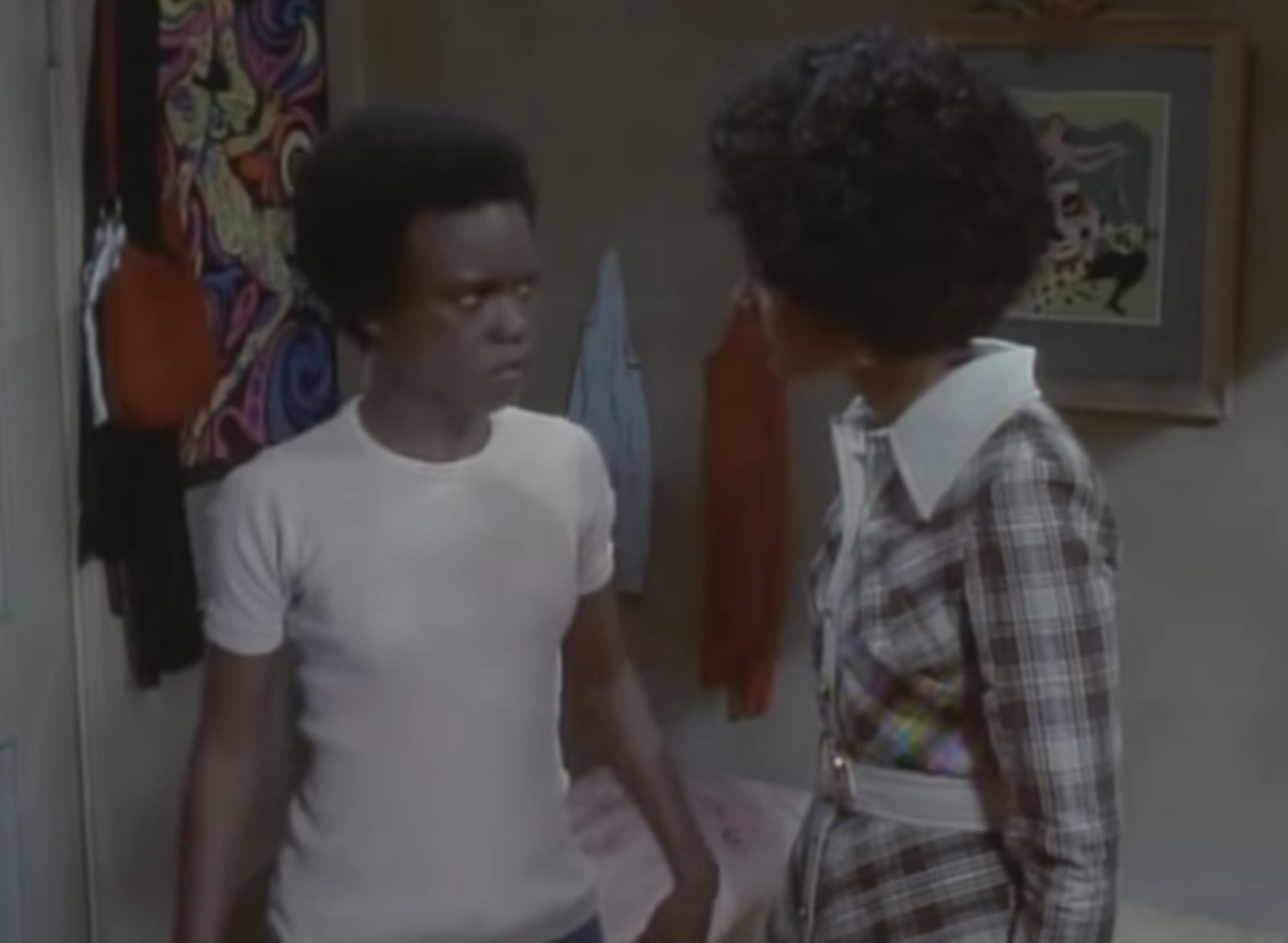
Rose (Louise Stubbs) is angry that Billie Jean (Peggy Pettit) has quit school. DP: Glenwood J. Swanson.

A distressed Billie Jean taking Rose’s unleashed ire. DP: Glenwood J. Swanson.

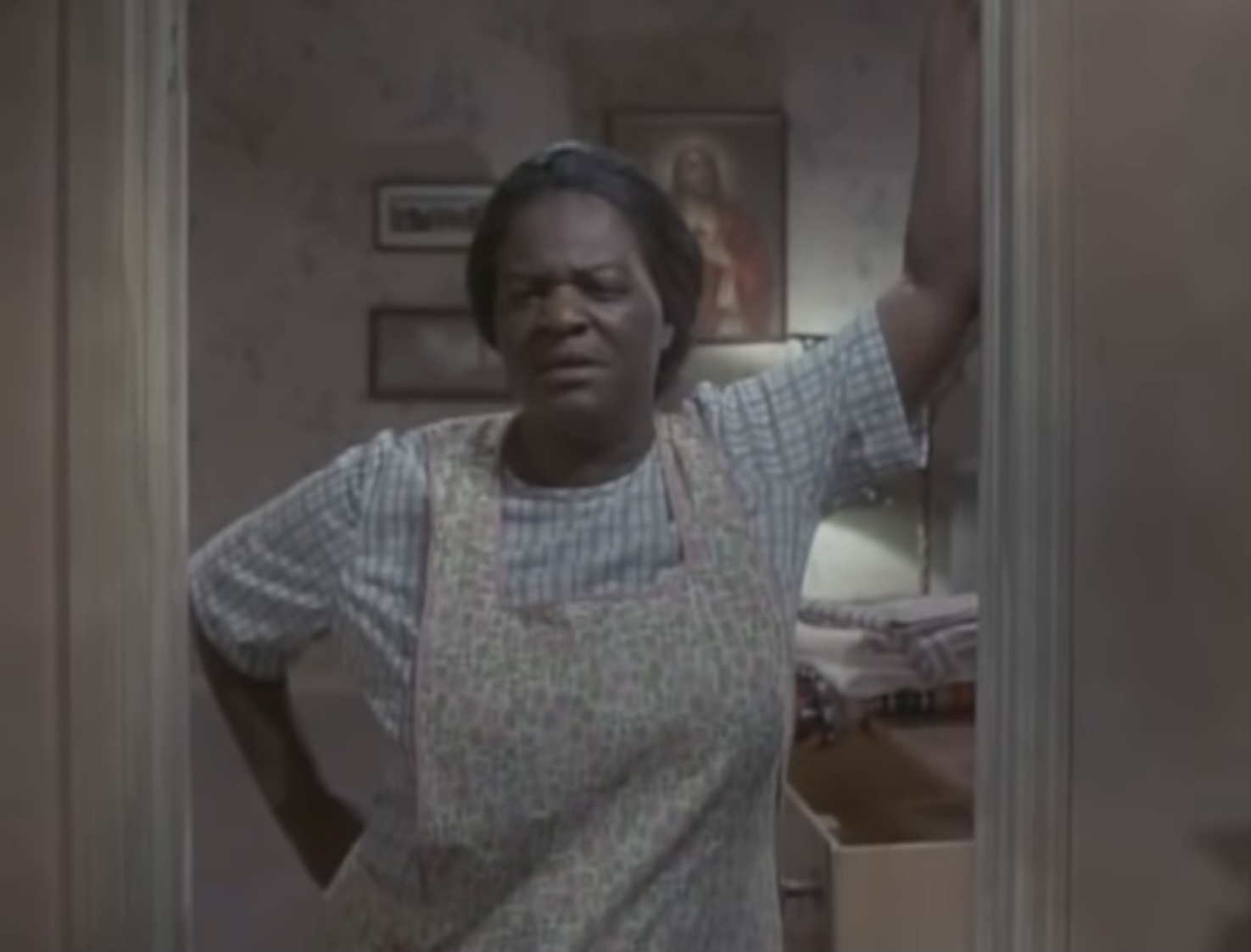
In the American Black Girl, Billie Jean embodies the unnatural fear and hostility nestled in the minds of those who feel threatened by education’s close relationship to success and “betterment.” In order to sabotage Billie Jean, Norma and Ruth Ann, Billie Jean’s manipulative older half-sisters, jeopardize a young girl’s vulnerable mentality with verbal poison. Perhaps in addition to those who tease and taunt her in school, Norma and Ruth Ann are also other reasons that Billie Jean has dropped out. Norma and Ruth Ann represent the pains of being stuck in unhappy situations, of misery loving company. Thus, Norma and Ruth Ann taint Billie Jean’s dancer ambitions, turn it into a patriarchal testament (dancing for the lustful male gaze) instead of a young Black girl embracing the art of her graceful human body. Billie Jean moves in an elegant rhythm similar to ballet style— “ballet” is a word Norma frequently mispronounces. 

Old habits come back to bite as Rose (Louise Stubbs) passionately kisses her philandering ex Earl (Brock Peters) in front of the family. DP: Glenwood J. Swanson.

Mu’ Dear (Claudia McNeil)—Rose’s mother— believes that the “Bible belongs on the shelf not in self” whilst posing in front of white Jesus’s portrait. DP: Glenwood J. Swanson. 

The stern, sacrilegious Rose, mother of the three, is blind to Norma and Ruth Ann’s resentment, believing that Billie Jean is on her way to becoming much like her— a tired existence in a humble, multigenerational house where contempt and strife collide. Often, the disappointed Rose compares Norma, Ruth Ann, and Billie Jean to Netta, her foster daughter up in college aiming to become a teacher and upcoming law student. Rose only saw potential in Netta and gave up hope on her biological daughters altogether. That hurt Billie Jean’s already fragile self-esteem. Norma and Ruth Ann were tearing her down constantly. 

Norma (Gloria Edwards) calling Netta’s photo the callous B word to Ruth Ann (Rhetta Greene)— who then mispronounces the word “deaf.” DP: Glenwood J. Swanson.

Netta (Leslie Uggams) in her dorm talking to Rose about her Mother’s Day plans. Fifty years later, Uggams would star in Nikyatu Jusu’s feature-length debut, Nanny. DP: Glenwood J. Swanson.

Black Girl struck a personal chord with me. I was repeatedly bullied by my teachers and peers over my physical appearance— hair and clothes sadly— and dropped out my senior year of high school. My mother also experienced the same, dropping out at sixteen-years-old (she once told me that she only had two outfits) and later completing her GED after having children. I too received my GED and completed undergraduate and graduate studies; the only member in my family to achieve the feat. Although she never said “I’m proud of you,” I believe that my mother was. My brightest memory is of her clapping at my undergraduate graduation. As proud and strict a parent as Rose, my mother also wasn’t keen on apologizing (which is a strange communal trait). She demonstrated “sorry” in her actions. I believe sometimes parents never want to see their children correct them or showcase knowing what they did not learn or understand. They want to be stay in the dominant roles as parent forever, the person retaining greater knowledge. Still, I admired my mother correcting my English papers or us learning algebra together. 

Billie Jean succumbing to Ruth Ann and Norma’s deceit. DP: Glenwood J. Swanson.

During the big showdown, however, Billie Jean discovers that Norma and Ruth Ann have been destroying Netta’s encouraging letters to Billie Jean. DP: Glenwood J. Swanson.

Norma and Ruth Ann ostracizing Netta for keeping to her studies and not pursuing sexual conquests also hit home. Some people truly are uncomfortable with individuals who seek higher goals, whose ambitions focuses on career pathways and not hookups heavily prevalent in pop culture. I do not talk to my Bible wielding family about my celibacy because it causes distress, harmful jokes, and invasive questions. Last year at my brother’s grandmother’s funeral, my cousin asked me, alone in his car, “why does it seem like you don’t like sex?” In moments that Norma and Ruth Ann circle Netta, accusing her of all kinds of foul, wicked cruelty, Netta’s expression grows more intense, frightened, familiar. These are women around her own age. Why is it so important to know the sex life of someone else, to criticize those uninterested in the act? Netta is educated and virtuous too? Oh, the girls hate that. Or maybe it is not hate at all. Their misplaced envy— their dislike over Netta behaving unlike them—has transformed into a toxic rage, especially Norma, who then pulls out a knife.

Netta also privately assures Billie Jean that Rose has never said “I love you,” much less hugged her foster daughter. Rose withholding motherly affection and praise from Billie Jean has affected the young girl so much. Billie Jean almost turned into Norma and Ruth Ann. DP: Glenwood J. Swanson.

A hypocritical Rose worries that Billie Jean’s dancing will be the makings of future promiscuity, that the generational cycle will repeat. Yet, in the next instant, Rose does little to protect Billie Jean from Herbert, the other house occupant despite Billie Jean protesting her dreams go beyond empty pleasures. Billie Jean’s room connects to the kitchen and back door. Anyone can come through unsupervised. It doesn’t help that Herbert doesn’t knock. Rose nonchalantly says that Billie Jean has nothing Her set hasn’t seen before— setting Billie Jean up for potential sexual harm. Rose comes across as believing such access is natural, not unseemly. Billie Jean is a minor. Who knows what is occupying that man’s mind for him to continue shocking behavior towards a mere child? How can Rose obsess over Billie Jean’s future when she’s not even understanding the present danger under her own roof? This demonstrates the long historical pattern of women purposely turning a blind eye. 

Family at church on Mother’s Day. DP: Glenwood J. Swanson.

Netta giving Billie Jean the hope she needs to move forward. DP: Glenwood J. Swanson.

Thankfully, Netta believes in Billie Jean— a healthy relationship that Norma and Ruth Ann try to destroy. It is already bad enough that Billie Jean is named after Norma and Ruth Ann’s charismatic father, how dare she try to better herself too!

Mu Dear embracing her granddaughter Billie Jean before our heroine finishes school alongside the trustworthy Netta and trains for dancing. DP: Glenwood J. Swanson.

And Rose, finally realizing that the spiritualist was wrong in dismissing the treasure right in front of her very face, her very blood: Billie Jean. DP: Glenwood J. Swanson.

My next goal is to read Jennie Elizabeth Franklin’s Black Girl play and write a compare/contrast essay of source material versus film, seeing as Franklin wasn’t happy with this production. At least, Franklin had a win in ensuring that Peggy Pettit—star of the touring the off-Broadway version— received the starring film role; the studio wanted a lighter skinned actress (Hollywood history still repeats on this unfortunate standpoint). This film, however, does render a heavy story of generational trauma. You think about the tremendous sorrow Sembène’s girl experienced and that of Nikyatu Jusu’s modern Aisha in the horror Nanny; how these three individual vehicles connect together to form a resonating narrative. While Sembène’s girl and Aisha are visibly drowning from the subjective gravity of “slavery by another name” aka underpaid/undervalued servitude, Billie Jean’s self-esteem is constantly threatened to submerge in overwhelming doubt— doubt of which caused not just by her family, but the cyclic damage brought by white supremacy. Although no white characters are present in this piece, the consequences of colonialism is a haunting, terrifying ghost that lingers in the smallest of ways.


Therefore, Jennie Elizabeth Franklin and Ossie Davis’s Black Girl validates a simple desire to be loved and respected, to be treated as though her purpose on earth matters, and that in light of stacked generational odds, her mother will stand right beside her, embracing all that she is and all that she will become. 


Monday, December 26, 2022

Worthy Films Depicting Maternal Loss


Sometimes films encourages mourners to see that the valiant spirit of our mothers (or motherly figures) will always be with us no matter what. 

It has been a year and five months since my mother passed away. 

Every single day after, I have felt the impact of her loss, even in films regarding dying mothers, absent mothers. During my childhood, I always thought it peculiar that Disney animations have the mother figure long expired, leaving female characters with only their fathers for company— Jasmine, Ariel, and Belle for example. While these fairy tale girls grow up lacking maternal guidance, we’re not allowed to see them express loss of the motherhood figure. Perhaps the suggested time has past or their mothers died in childbirth, leaving their memories devoid of real, vital connection. There are no underlying existences for their grief. They just exchange one male presence for another.  

Personally, my grief will never fully heal. It is eternal. Art remains a medicinal beacon for me, especially cinema. When I compiled my list, thinking of works left off from Join Cake regarding this sensitive subject matter, inclusive stories are still a problem to other film writers. Although many of us have yet to see every work ever made, I am performing a service for those who need other recommendations. Some have big names and larger budgets and others do not. 

Here are essential heartbreaker films that deserve notice:

Big Mama prepares holiday feast with her daughters: Teri (Vanessa Williams), Maxine (Vivica A. Fox), and Bird (Nia Long).

George Tillman Jr’s Soul Food (1997) centers on the Joseph family in Chicago: Joe “Big Mama” Hall, a diabetic mother, her three adult daughters: Teri, Maxine, and Bird, and their complex relationships with men and food. Narrated by Maxine’s son Ahmed, the matriarchal structure hangs in the balance as Big Mama’s life falters between life and death. 

Food history plays a distinctive role here. The legacy of labored cooking traditions and cherished recipes are past down from generation to generation. Yes, it can be greasy, cheesy, buttery, salty, and glazed and second and third helping plates may contribute to the generational diseases. That does not change the simple fact that Black food packed in the emotional ingredients of our ancestors far exceeds bland, unseasoned palettes. With the infamous Boys II Men song “Mama,” this messy family dynamic drama somehow makes the heart grow fonder, missing mothers and grandmothers alike. 

Sole (Hope Olaide Wilson) stands up to her maternal grandmother.

In Soul Food’s opposite, Tchaiko Omawale’s experimental film Solace (2018) channels maternal loss as an inherent eating disorder. Although seventeen-year-old Sole’s mother has long since passed away, Sole’s grief is a quietly bottled secret manifesting through the very harmful self-inflicted actions her mother made. Sole misses her father— whom she lost while staying with him in New York City. Yet, when Sole moves into her dead mother’s family house in Los Angeles, California, a dangerous habit threatens to tear this artist’s world asunder. 

Olympia (McKenzie Chinn) relies on her mother Angie (Penelope Wilson) for guidance.

In McKenzie Chinn and Gregory Dix’s Olympia (2018), a struggling Chicago artist named Olympia frequently visits her dying mother Angie at the hospital. It hits home harder than the other films because my mom’s last days were spent at a nursing facility, siting or lying on an assigned bed, always wearing a blue hospital gown despite a closet containing her favorite house dresses. In post-COVID society, we were not granted visitation, not granted a final goodbye. 

Olympia and Angie are two creative souls veering on life’s differing stages; Olympia’s a temporary career setback and Angie’s body ready to make the final bow. Their mother/daughter relationship is beautifully rendered, very caring and heartfelt. Although Olympia is not prepared to lose the strongest figure in her life (none of us are truly), a wise Angie assures Olympia that she has a valid contribution to make in the world. 

Makeup artist Maye (Salli Richardson-Whitfield) values her talented performer aunt Amanda (Beverly Todd) like a devoted daughter.  

Although Ava DuVernay’s poignant debut I Will Follow (2010) focuses on a niece packing up the boxes of her recently deceased aunt’s house, a maternal dignity is richly painted in the close relationship between Maye and Amanda. Abstract and poetic, vividly expressed through Maye’s whimsical memories, the film highlights that incredible notion that our aunts can be our surrogate mothers, our newfound best friends, our significant ties to family tree treasures. Amanda’s love for Maye felt both alike the genuine, sympathetic aunt and the compassionate, generous mother. It was Maye present for Amanda’s final days and Maye reliving those tender moments warmed and bathed in Amanda’s vocalized affection.  

In Seoul, Korea, the mother (Soo-ah Lee) searches for Bin (Song-Lee Kim) and Jin’s (Hee Yeon-kim) estranged father— at the cost of her daughters. They likely will never see her again. 

So Yong Kim’s Treeless Mountain (2008) is a sad story of abandonment— another form of grief entirely as Bin and Jin— two little girls— are left behind without a goodbye from their impoverished mother. This showcases the darker side to single parenting; the depressing desperation that takes place way past the post partum stage (or maybe the mother had never been properly diagnosed). For women without income or a reliable partner— lack of stability for their children begins adding a weight on them, taking a considerable toll on their emotional, physical, and mental well being. In this powerful film, you feel sorry for the suffering mother and also understand her actions to leave Bin and Jin to an undesirable fate. 

Three generations of women celebrate Marion’s birthday— Marion’s mother Nelly (Margot Abascal) and Marion’s future daughter Nelly (Josephine Sanz). Marion (Gabrielle Sanz) blows out her candles.

Céline Sciamma’s Petite Maman (2021) —one of my favorite films of 2022— looks at mourning in a subtle magical innovation. Nelly, a sweet eight-year-old named after her grandmother is transported to playing with her own adolescent mother, Marion— a charming mesh of future and past connecting to the other. While the adult Marion has disappeared to grieve her mother’s death alone from her husband and Nelly, little Marion (who may be the most clever imaginary friend) and Nelly enjoy their precious, limited time together around identical childhood homes.  

I cherish my listed films for showing different types of maternal loss at various ages for the girls and women left behind. I resonate greatly with these grieving characters who must manage to keep their composures together for the sake of those still present on earth— whether for their siblings, aunts, uncles, cousins, their own children, or their own individual self. In the real world, we have to adapt without the sentimental foundation our matriarchs have built and nurtured within us. We the broken-hearted population have to find the good part in surviving without our mothers— daughters most especially— and continue living as we did. 


Saturday, December 24, 2022

‘Kindred,’ Delivers A Botched Hot Mess

Kindred Hulu advertisement.

As far as adaptations are concerned, John Jennings and Damian Duffy’s graphic novel (published 2017) of Octavia Butler’s Kindred (published 1991) far better exceeds this new Hulu series. Just a few sparse choices make these eight episodes bearable. Created by Branden Jacobs-Jenkins, the Obie winning playwright behind Octoroon, his modern day take has a millennial Dana battling severe depression and hooking up with Kevin, a mediocre waiter who may also be suffering from an undisclosed mental illness. 

During Dana’s first trip to the plantation past, she encounters a shocking surprise. FX/Hulu. 

The series begins with Dana having dinner with her Aunt Sarah and Uncle Alan. They are not pleased that she sold the New York City brownstone (inherited from her grandmother) to buy an unfurnished house in Los Angeles. In this economy, how believable is it to make that reckless choice to sell a hard-to-come-by brownstone and move across the country alone anyway? 

Insert Kevin— an awkward white waiter— smiling at Dana throughout her tense family meal. Kevin makes a completely douche-y move: announcing to everyone in vicinity that he’s giving Dana a ride home (wow, Sarah and Alan left Dana stranded in an unfamiliar place knowing she had no transportation?). Although Kevin’s coworkers laugh it off, the gesture does little to soften the discomfort. If he had succeeded in harming a young Black woman— who would have cared about her well-being? 

Dana returns back to the past. FX/Hulu. 

In Butler’s novel, Dana and Kevin are married. This helps establish a stronger foundation than two strangers who begin a “with benefits” situation in the series. Thus, Dana transports back into the past after her preemptive encounter with Kevin, returning in an alarming state. The writers are trying to make Kevin appear genuinely kind for staying with Dana, but it comes across false and rushed. Dana and Kevin need more time as a couple, ample growth to truly know each other way before startling events arise. Kevin seems so desperate for a woman and Dana seems so needy— this pairing has the required ingredients of unhealthy co-dependency.

Meanwhile, Dana’s fractured relationship with Sarah and Alan warrants concern. Retired police officer Alan definitely acts as though he could care less what happens to Dana, often checking in on Dana via Sarah’s orders. He is not her blood uncle, but damn. Also, Alan makes it clear that something may have been wrong in the family— he had purposefully moved Sarah across the country for a reason. Still, does that mean he’s emotionally manipulative or worse? The busy nurse Sarah rightfully worries over her niece’s mental state, but Dana becomes irrational, cold, and standoffish. Neither woman apologizes for the bitter words exchanged at Dana’s empty house. Obviously, this is not the idyllic Black family structure. There is residual pain, mainly for isolated Dana. She has no other family. No girlfriends. When Dana finds her mother alive in the 19th century, the reunion is short lived. Sadly, Dana clings to Kevin, the only person trying to stay with her. 

Kindred’s focus should stick to Dana and her ability to time travel. It should be deciphering why Dana must always rescue Rufus Weylin, red-haired white child of rapist cretin Thomas and villainous poison Margaret. Why is the time longer in the past versus a few minutes back in the present? Is it the Los Angeles house conducting this fantastical thread? Why then during Olivia’s own mysterious disappearance was she able to time travel during a New York City car crash that killed her husband? Carlo and Hermione, the unnecessary couple next door to Dana’s house and Penny, Kevin’s worried sister provide no additional strength and draw in no clues for the mystery at hand. These weakly rendered characters are storyline fodder that shift from the main task at hand: Dana. 

Ronda Racha Penrice— one of few Black women reviewing the series, wrote in The Wrap:

This is not to say that Kindred should have indulged in “trauma porn.” Instead, Jacobs-Jenkins and his collaborators should have dug deeper. Although Johnson and the rest of the cast do a good job in what they have been asked to do, the writing and overall plot and circumstances fail to do the same. As “Kindred” flows from episode to episode, it never fully taps into Dana’s innermost feelings of shock, horror, and perhaps even desperation as an enslaved woman.

Like so many other movies and series set in this era, “Kindred” doesn’t deliver the emotional connection needed to elicit the true outrage we should have for this dastardly institution. And, with the resources available to us today, that is just unacceptable.
Mother/daughter Olivia (Sheria Irving) and Dana (Mallori Johnson) are trapped in the past. FX/Hulu. 

Sacrificial Black women characters is another trope that’s been under the radar— a diversionary plot device that needs to be explored further. Think of Jacqui choosing to blow up in the first season of The Walking Dead or Irene staying behind to die in Tales From the Crypt: Demon Knight; certainly other examples exist. Olivia is in the same defeated place. When Dana tries to give her the option of returning back home in the present, Olivia chooses to remain in the past, helping the enslaved, especially parentless Alice. Beyond that, however, Olivia stays a homebody in her cabin. 

While intimacy coordinators work on many television and film sets, hopefully racial trauma personnel has been created too. Slave centered big and small screen pictures have been gradually growing for years and often an upcoming Black actor’s first major gig and the key to awards contention— certain juries love this genre. The actors undergo an overwhelming amount of recreated Black ancestral humiliations including being whipped. In a dark uncomfortable scene, Dana’s clothes are maliciously ripped by Thomas— not for rape— but another cruel violation altogether. 

With several Butler adaptations (helmed by Issa Rae, Ava DuVernay, Wanuri Kahiu, and Viola Davis) set for the future, perhaps now was not appropriate for this specific story. The series features too many questionable moments: Dana and Kevin’s constant coupling at the plantation, slaves forced to act animalistic in front of drunken white men, Kevin foolishly running his mouth, Kevin opening runaway Winnie’s hiding place in Olivia’s cabin, Kevin arriving back indecently to where only little Alice is present, and Dana transported in present Los Angeles without Olivia (who may have arrived in New York). It took tremendous patience to finish these unwavering episodes. 

Olivia would rather stay on the plantation to raise an orphan girl than build a relationship with Dana, her own daughter who still needs her. FX/Hulu.

If FX/Hulu greenlights a second season of Kindred, let’s hope that the writers try to salvage the spirit of Octavia Butler’s legacy and not continue destroying it for the sake of appearing deceptively woke and modern.   

Until then, Butler fans should reread the actual source material or enjoy the pages of the hardcover comic book.