Showing posts with label Love Jones. Show all posts

Monday, February 14, 2022

Favorite Black Loves In Cinema


Cane River’s Peter (Richard Romain) and Maria (Tommye Myrick).  

Happy Valentine’s (or Single Awareness Day) to those who celebrate all kinds of love, romance, and self-care joy. 

In the Black cinematic world, there is still movement to be made in ways of a well-crafted story, compelling cinematography, and fine acting. Some films have one or two of the ingredients; barely all three to make the recipe complete. When it comes to heteronormative Black love, putting on the classic Love Jones or Jason’s Lyric (which both feature the incredible Lisa Nicole Carson) sparks up the mood whereas the out of the vault Cane River is a marvel to behold. Even the startlingly passionate Ganja & Hess must be recommended for its daring portrayal of Black vampiric lust despite the unhappy ending for the pair. 

Black LGBTQIA+ films such as Moonlight, Pariah, and Rafiki contain the queer violence that comes from sanctimonious communities that cannot accept such a love. Yet that is only for a moment that that ugly bandaid comes off and the healing slowly begins. Moonlight is exceptionally beautiful for showcasing the bonds between skinfolk and kinfolk, subtleties between love and longing, and the desire for men to be themselves alone and with each other. Pariah and Rafiki have these awestruck profoundly engaging periods of Black women love; joining hands in friendship and embarking on bliss no matter the consequences. Bessie, dee rees other film, highlights the musician’s bisexuality starring Queen Latifah who doesn’t need to don a fat suit. This Bessie role suits her and doesn’t end like her tragic Cleo in Set it Off. Overwhelmingly romantic short films tender and pure are charming gems that share a sweet intimacy with thought-provoking conversations and dancing between women. 

As for the asexual spectrum in film, we have a crucial journey ahead. Characters rarely seek happiness outside finding relationships. Although Alike ends on her burgeoning writing path, throughout Pariah, she has a great desire to explore her sexuality, hidden like a flaming shame from her parents. Selah in Selah and the Spades, however, is high on the adrenaline of power, allowing nothing not even the idea of idyllic teenage sex lure her away from her intense drive— a drive that has Paloma looking at Selah in moments of perpetual longing. On the darker side of asexuality, the rooted misogynoir historically depicted through the white lens. Writer Kira Sterrert brushes up on the mammy beginnings in filmdaze; addressing how Black women behind-the-scenes are finally creating their own corrected promotion:

“The more Black women that are writers, directors, and producers in Hollywood, the more they’ll bring narratives that depict positive and real depictions of Black life as a woman or femme. Black women are more than their bodies or their relation to white people, they are multi-hyphenate and multidimensional — pure magic.”

Here’s hoping for a cinematic future filled with all representations of love created that Black filmmakers create for Black cinephiles (and all other cinephiles) to appreciate in the years to come. 

Recommended Films About Black Love By Black Filmmakers 

Love Joneswritten and directed by Theodore Witcher, 1997. 

Pariahwritten and directed by dee rees, 2011.

Moonlight, written by Tarrell Alvin McCraney and Barry Jenkins and directed by Barry Jenkins, 2016.

Ganja & Hess, written by Bill Gunn and directed by Bill Gunn and Lawrence Jordan, 1973. 

Really Love, written by Felicia Pride and Angel Kristi Williams and directed by Angel Kristi Williams, 2020. 

Rafiki, written and directed by Wanuri Kahiu, 2019. 

The Weekend, written and directed by Stella Meghie, 2018.  

Heaven Reaches Down to Earth, written by Tebogo Malebogo and Petrus van Staden and directed by Tebogo Malebogo.

pure, written and directed by Natalie Jasmine Harris, 2021. 

tender, written and directed by Felicia Pride, 2020. 

Cane River, written and directed by Horace Jenkins, 1982, remastered and released 2018. 

Selah and the Spades, written and directed by Tayarisha Poe, 2019.

Jason’s Lyric, written by Bobby Smith Jr. and directed by Doug McHenry, 1994.  

Middle of Nowhere, written and directed by Ava DuVernay, 2012.  

Bessie, written and directed by dee rees, 2015. 
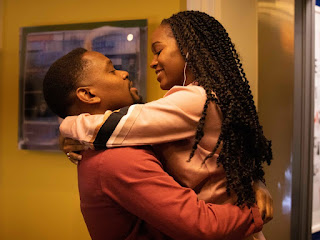
Boxing Day, written and directed by Aml Ameen, 2021.  

How Stella Got Her Groove Back, written by Terry McMillan and Ronald Bass and directed by Kevin Rodney Sullivan, 1998. 


Saturday, January 8, 2022

Marti, Coretta, Josie, & Matty— Honoring Lisa Nicole Carson’s Four Unforgettable Film Characters


The four memorable 1990’s film roles of Lisa Nicole Carson.

“I was a tomboy growing up. Then puberty hit, and seemingly overnight I had a 38DD bra size. I constantly wore sweatshirts and was mad at my body. Then I fell in love as I neared my twenties. I was often the curvy one on set, and I felt beautiful no matter my size.”

Pam Grier and Tamara Dobson— the creme of the 1970’s Blaxploitation era— would certainly pass their torches down to Lisa Nicole Carson, a voluptuous, softly spoken Southern belle whose radiant, dimpled smile lit up the film screen in the 1990’s. Often playing roles so minor, so minuscule, one must not blink in order to truly appreciate her presence, this four time NAACP Image Award nominee and SAG recipient (for being a part of the Ally McBeal TV show ensemble) was memorable in four different roles— dreamy Marti, sensuous Coretta, vicarious Josie, and provocative Matty. 

Marti (Lisa Nicole Carson) takes a moment to reflect and freshen up in Jason’s Lyric, 1994.

No one deserved better than Jason’s Lyric’s Marti— the best friend and fast food co-worker to Lyric. Marti loved memorizing thoughtful quotes and reciting them to Lyric at every opportunity. Her sweet voice articulated findings in ways that made one fancy true romance. Yet resolute on sticking to Lyric’s violent brother, Alonzo, Marti also believed herself unworthy of receiving a love that Lyric had found. 

Director Doug McHenry must have had a purpose in situating the main couples in two particularly different love scenes set outdoors: brightly lit Lyric and Jason are passionately shrouded in a beautiful, floral wilderness while Marti is subjected to a dark back alley romp with Alonzo. 

“I know you think Alonzo isn't perfect, but I'm going to hold on to him... cause he's all I got. The wards ain't full of Jasons. What you found was quiet... in a world full of thunder. I ain't got no choice but to listen to it. You do.”
Marti said those words in a poetic sensibility— regret, sadness, and pain— regret for the limited choices, sadness for the heavy burden that comes with settling for less, and pain for the harm that men like Alonzo cause. In Lyric’s eyes, Marti represents a woman that will never leave a bad situation no matter how rough. These characters were living in endless danger, an endless generational cycle. Marti chooses to stand still with a reactionary Alonzo (who lost his closest friends), armed with sentimental quotes as mere fiction instead of leaving Third Ward, Houston, Texas behind with her now gone friend. 

It often hurts how badly underrated Carson’s promising performance in Jason’s Lyric is. The erotic picture has some flaws, but she is a scene stealing gem right down to the post-Poetic Justice topknot braids, baby hair, heavy jewelry, and long acrylic nails. She is extraordinary, irresistible, authentic, and raw, showing a range of emotional degrees— light hearted humor, seriousness, joy, and vulnerability. When Marti expressed awe in realizing that Lyric was experiencing real love, Carson made the audience believe and yearn for Marti to have that too. 

Coretta (Lisa Nicole Carson) treats World War II veteran Earl Rawlins (played by Denzel Washington) to misleading information and a hot dalliance.  

Carl Franklin’s Devil in a Blue Dress, adapted from Walter Mosley’s detective noir, features short lived  Coretta— a married woman who knows how to blackmail. Unfortunately, the skill does not save her. 

In 1948 Los Angeles, Earl Rawlins just got fired and receives the opportunity of a lifetime— uncover information on the elusive Daphne and send it over. It is super shady, but Earl needs the money for keeping up his fine house. So he goes to a bar and runs into Coretta and her husband Dupree. The familiarity between Earl and Coretta is palpable. She plays the demure Christian wife until they’re home alone (well, technically Dupree’s drunkenly passed out on the bed, but still.....). The cat and mouse game intensifies— Coretta knows who Earl is looking for and smartly uses her feminine wild cards on the poor, sexually starved man. 

In Devil in a Blue Dress, it is imperative to analyze how both Daphne and Coretta treat Earl and each other (offscreen). Daphne puts Earl at arm’s length and leaves him open to all kinds of potential harm. Coretta also withholds vital significance that could help Earl’s case. While Coretta does sleep with Earl in a rather charged, steamy scene, Earl and Daphne have an underlying chemistry too, a “will they, won’t they” friction. Coretta and Daphne are not friends. This intense turmoil between these two women sours awfully. Daphne shows little regret, little empathy about the turn of events. 

In the end, Coretta’s memory at least gives Earl the ammunition needed to clean up the mess. 

Up against Denzel Washington who already obtained his first Oscar prior to filming, Carson is great in her period film glam— straightened, sleek hair, red lipstick, and church lady dress. She understands that her character is calculating, retaining a certain evil about her. After all, instead of going to the police (who all seem corrupt in the film), Coretta wields foul, disgusting criminal activity as potential payout, hiding it in the most unlikely and improper place. Yes, Coretta is a very sexy vixen, but she is also resourceful, curious, enigmatic, and sharp— exactly how Carson portrays her to be. 


After helping pack up and ready for the big move, Josie (Lisa Nicole Carson) has a laugh with her BFF Nina (Nia Long) in Love Jones, 1997.

In Love Jones, Josie has no world of her own making. She vicariously lives through her best friend, Nina’s relationships. While Nina juggles three men— an on/off fiancĂ©, true love, and true love’s frenemy, “the jones” does not strike Josie once. Even though Nina blasts Josie for always thinking about sex, the remark lands oddly. The audience never sees Josie with anyone. From the moment Josie is introduced to Darius Lovehall and his jazzy poet posse, she is submerged into the background, almost like a shy girl hesitant to escape the shadows. This frames her as unimportant, undesirable. Everyone wants Nina. Josie is the sidekick, the therapist, the love guru. Yet she is warm, generous. Her laughter is melodious. 

The story is not even a little bit about Josie’s character, but Carson shines bright alongside Nia Long. Their camaraderie has a real, kindred sisterhood vibe. The car scene alone is hilarious— Nina describing her night of passion with Darius and Josie quietly hanging onto every word. 

In this film about art and poetry, Carson has that syrupy tone meant to be reciting prose. Writer/director Theodore Witcher lost the opportunity to truly put Carson’s brilliance on display. Her last scene is just a vocal (offscreen Josie calls onscreen Darius to let him know about Nina’s job at Vibe Magazine). It would have been awesome having Josie help Nina move again (full circle) or have Josie also take the stage as a virgin to the mic, reciting the Sonia Sanchez prose like everyone else as an inspirational vehicle for her friend. Still, Carson conjured magic with what was given to her. 

At a club, Matty (Lisa Nicole Carson) is caught by her husband Lenny (Roger Guenveur Smith) with the good doc (offscreen Samuel L. Jackson) in Eve’s Bayou, 1997.

The married Matty in Eve’s Bayou happens to be one of several ladies attending to the equally married Dr. Louis Baptiste’s lustful desires. Matty is also the key catalyst to destroying young Eve’s illusions of her father. Believing that they’re alone in the garage while a massive glittering party goes down in the main Baptiste house, Matty and Louis hook up and a confused Eve witnesses them. Older sister Cisely blurs Eve’s memory further by insinuating that she just saw them hug— nothing more. 

Now Matty’s husband Lenny is always gone. So of course, she turns to attentive Dr. Louis— everyone does. The man knows how to cure a women’s ailments— except his wife. Still, Matty and Dr. Louis’s flirtatious evening at the bar turns into horror once Lenny steps in. Whether it is due to voodoo concocted by Eve with Elzora’s aide, Eve is once again left to witness life altering circumstances. 

Although limited in her screen time, Carson holds her own in the debut feature film of actress turned filmmaker Kasi Lemmons. In this supernatural period piece, instead of Los Angeles, the setting is in the mystical gothic Louisiana of 1962. Carson adds an overwhelming sweetness and charm mixed with the sumptuous passions of her previous characters into Matty— a woman who does not need to use magic to get what she wants. 

Lisa Nicole Carson, Essence, July 2015, photographed by Erik Umphery. 

As of now, Carson’s last role was Mae Bell in The New Edition Story— five years ago. The phenomenal actress has been through so much in her career and personal life mainly due to her bipolar diagnosis. It should not be a crime to have an illness as delicate as hers, but Hollywood still likes to shame celebrities for even the tiniest imperfection, the slightest flaw. In this 2015 article in Essence, Carson discusses being back in Los Angeles and starting over fresh

“I’ve returned to L.A. to give my career another try. I’m going on auditions and handling rejection better than I did in the past. I’m tackling the myth that African-American women have to be pillars of strength. We have the right to fall. We have the right not to always have our sh– together. We just have to take our mental health as seriously as we do the physical. Do not be afraid to go to a therapist or a doctor to make sure everything is fine. I am excited for my new chapter. I now am stronger and ready for what’s next, while taking care of my emotional health.”

In the meantime, devoted Lisa Nicole Carson fans should continue to support and pray for her continued success— that she goes bigger and beyond the roles of Marti, Coretta, Josie, and Matty. We have been ready for her to be the leading lady in the story for long enough. 


Wednesday, October 30, 2019

Happy Birthday, Nia Long: Fem Film Rogue Icon Spotlight

Happy birthday, Nia Long.
Nia Long is hands down one of the most iconic Black women actresses of our time. The ageless, acting chameleon stepped out on the Hollywood scene as the fresh faced It Girl showing off a sleek cropped haircut and raisin lipstick, stealing hearts with that unbelievably gorgeous complexion and vivacious style. She played fierce, confident, sexy, intelligent characters that are still being hailed today.

Like Saved By the Bell's Lisa Turtle, Fresh Prince of Bel Air's Lisa Wilkes was a huge 90's fashionista.
Long made her start guest starring on an episode of 227 and The Magical World of Disney before taking turns as Brandi in John Singleton's Oscar nominated classic Boys in Da HoodMade in America, a Black girl finds out that her sperm donor dad is a white man and the role could have easily been offered to a biracial actress, but Long owned Zora Matthews. Long has starred in Friday as the unattainable Hot Girl Debbie. On the small screen, Her Stacey Evans toyed with Kyle's heart on Living Single and her Lisa Wilkes almost married The Fresh Prince of Bel Air.

Long starred as police officer Sasha Munroe on NBC's Third Watch and guest starred on the late soap Guiding Light as well as Judging Amy, Boston Legal, Big Shots, House of Lies, Uncle Buck, Empire, Dear White People, and NCIS: Los Angeles.

Leading Lady Material: Nia Long as Brandi in Boys in Da Hood (with Cuba Gooding Jr.) top left, Nina Mosley in Love Jones (with Larenz Tate) bottom left, and Jordan Armstrong in The Best Man (with Taye Diggs) right. 
Long is most certainly underrated as the romantic film lead. Love Jones will definitely go down as one of her best roles-- the talented, reserved photographer Nina Mosley who deliciously falls for the Casanova poet Darius Lovehall (played by the amazing Larenz Tate) to an amazing soundtrack. In The Best Man series, Jordan Lovehall has a complicated history with Harper Stewart (played by Taye Diggs) who is seriously committed to Robin (Sanaa Lathan) which leads into a very tumultuous triangle-- well rendered by the three actors involved, especially Long, not a loser but victorious by other means. Long can be seen in Soul Food, Big Mamma's House, AlfieKeanuAre We Done Yet and its sequel.

Nia Long with Lemon director Janicza Brazo and co-star Shiri Appleby.
In 2017, Long starred in a Black woman directed film, Lemon, Janicza Brazo's quirky Sundance Best of Next nominated feature-length debut, playing the love interest, Cleo. Hopefully, this opportunity could lead Long into more collaborations with women directors (though yes, women have written some of the screenplays Long has starred in). It would be a dream to see her in something raw and poignant with the likes of Ava DuVernay, Kasi Lemmons, Julie Dash, or Dee Rees. Long has the chops and one of these directors can deliver her juicy material and that juicy material can lead to the awards buzz that Long has deserved forever.


In addition to films and the small screen, Long is also a music video vixen, having starred in videos by Snoop Dogg, Kanye West pre fabricated church era, and other rappers. In Ashanti's Baby (which Long co-directed), Long is serving all kinds of sensational, flawless looks, even singing along to the lyrics to her "lover's" ear.


Long has won three NAACP Image Awards (Best Actress in a Drama Film for The Best Man and  Best Actress in a Drama Series for Third Watch, twice), a Black Reel Award (Best Theatrical Actress in The Best Man), and three honors from the Acapulco Black Film Festival (Star of Tomorrow for 2000, Best Actress and Best Ensemble Cast for The Best Man Holiday).

Up next Long will be in The Banker with Samuel L. Jackson and Anthony Mackie, Life in a Year with Cuba Gooding Jr. and Jaden Smith, and Fatal Affair with KJ Smith and Omar Epps.


In a Hollywood that tragically suffers from colorism, Nia Long has always been that woman to look up to for the multifaceted image of a brown skin woman, choosing dignified, humanist roles.  She is still searching for the roles that are not race and gender specific, that allow her to be so much more than what is stereotypically required of her. Until she finds the answer, she has amassed a sweet body of work worth watching on repeat.


Nia Long Quotes:
"When I requested or wanted more, I was considered difficult, outspoken, entitled, and all of the things that should not be used to describe a woman who has earned her space, her place, and delivers. And that just doesn’t apply to me, that’s for everyone."
"I’m 45. I’m black. And I’m a woman. So those are three really hard things to deal with ... I work really hard to get sometimes crumbs. I feel blessed and lucky to have the career that I have. But there are times that I’ve been beat up in this business. It hasn’t just been roses and fairy tales. It’s been a tough road."
"I’m not trying to be an ingĂ©nue anymore. I wouldn’t want those opportunities because then that would just mean that I haven’t grown."
"No matter what level you’re on in this industry, you’re expected to be excellent. Being excellent — when the material isn’t — can be challenging."
I got to strip down and just be raw and vulnerable and afraid and misunderstood. All of us have a family member that resembles a Miss Peggy. She is you know she’s a hero, really, at the end of the day. ... So for me it was a no-brainer. I love the story.” (on playing Ms. Peggy in Roxanne Roxanne).


Wednesday, August 30, 2017

'Love Jones,' 20 Years, 5 Months Later, A Motion Still Tumbled in Earth

Love Jones DVD cover.
“This here, right now, at this very moment is all that matters to me. I love you and that’s urgent like a mother….”
How can a sis not swoon over grandiose words spoken by teenage crush, Larenz Tate, playing this beatnik brother poet, Darius Lovehall? Trust and believe that is the hardest notion of all, fighting against problematic perceptions of the young black Chicagoan male. Darius is intelligent, eclectic, and charming, the laidback, ear pierced black man whose tiny apartment makes room for an impressive library, listens to the rustic scratchy sounds vintage records make, and understands distinct difference between sadness and melancholy.

Twenty years ago, I wasn’t quite old enough to see Love Jones in theaters, but saw it much, much later. Recently, I rewatched the Sundance Film Festival Audience Prize Winner, hooked to the sweetness of black artists falling in love with each other and their respective practices.

Nina (Nia Long) and Darius (Larenz Tate) giving each other the Kool-Aid smile.
The queen bee eating up spoonfuls of Darius's freestyle scat is gorgeous, talented, fiercely ambitious Nina Mosley. With her crop top blouses (including that amazing outfit at the end), high-waisted denim jeans, and dark lipstick, she defined fashion. An up and coming photographer whose vignette portraits have a Gordon Parks meets James Van Der Vee in the 90s kind of vibe, Nina uses vintage cameras, taking her passion onto the streets, capturing mostly people in love. Big shot magazine editors don't like her style. A man calls her "unpolished" without really defining his criticism. This rejection adds stress to a woman who left her selfish fiance.

Darius and Nina first meet at The Sanctuary, a hip underground nightclub for bohemian sisters and brothers who collectively snap their fingers to open mic visionaries. Darius is part of a black bohemian posse of knowledgeable sophisticates-- Afrocentric vibing Sheila, humble married Savon, cool Eddie, and player Hollywood. The sparks fly immediately, even after a minor fumble at the bar, but Darius walks up to the mic and spills out a raw, sexy poem, Brother to the Night, (A Blues For Nina). Nina's embarrassment is genuine. She doesn't like its sexual components, but she is a tiny bit flattered, putting on a sisterly blush. They meet again and stubborn Darius continues to woe her with sweet, explicit music and dance.

I love that after Nina recites Sonia Sanchez's poetry, Darius believes that Nina will come up with words of her own. He knows it. As well as he knows she is skilled with the camera, he knows that she has other skills up her sleeve, that she too is a poet at heart.

Now growing up, in regards to film watching, I had been mostly exposed to white romances-- white people falling in love, white faces kissing, white bodies thrusting together, the whole nine yards. Hell, my entire middle school sex education was an instructive white people "doing it" cartoon. To see Darius and Nina becoming deeper than two passing strangers: dancing at a reggae spot, passionately making out at her doorstep, dissolving into full fledged intimacy in a beautifully compiled erotic montage. This epic thing of wonder charged with poetic moments of clarity utterly shook and dismantled my whitewashed education. I thought, damn, is this what Hollywood is afraid of? That black people can be fully realized, three dimensional beings that can love the living life out of each other? That they can be hot, sexy, and set the screen on fire without stereotypical exaggeration?

Nina (Nia Long) working with the professional camera.
Darius and Nina have their ups and downs. At the same time, so does the married Savon. Trust is the enemy. Everybody makes mistakes and smashes that needed relationship essential. I understand that Nina wanted to see if she would miss something with Marvin, but his ill-fitting childish behavior obviously wasn't ever going to change. Plus, he would have smothered Nina's independence. Meanwhile, Darius finds Lisa, a new squeeze to warm his bed, but she incites no spark of inspiration. Nina returns to Chicago and is immediately broken-hearted over seeing Darius and Lisa. She turns to Hollywood (eerily similar to Marvin) for affection and fair play turnabout. Savon is lonely after his wife leaves with their son, bringing questionable companions to the posse get togethers. He has a valid outlook on love and relationships, ultimately stating that it's the staying in love that is the most challenging hardship. It's tough seeing his struggle in the marriage. Troubles do not end after "I do." And that's real.

Josie (Lisa Nicole Carson) and Nina (Nia Long).

Ava DuVernay said, “I think that women definitely have a special bond as friends that is hard to describe to men, and we don't often see that portrayed narratively."

That is sort of expressed greatly here. With their amazing girlfriend chemistry, Nina and Josie's onscreen conversations mostly revolve around men and their relationships with them. Apparently, Josie has an active sex life, but her purpose (in this film) is to live vicariously through Nina. However, the taxi cab scene is hilariously memorable, a real game changer in how women discuss male anatomy. When Nina explains that Darius speaks to her down there, it was so much more hysterical than any fake deli orgasm. This was straight fire. Though the male taxi driver overhears and is thoroughly amused, carnal sharing is for the benefit of sisterhood spillage, not for him.

Still, it is a huge missed opportunity to not have the girls celebrating Nina scoring a break (after months of being dismissed) with Vibe Magazine. Would have loved to see these women toasting to that milestone. I appreciated her phone call to Darius and the crushing train scene afterward, but I needed a Nina/Josie girl party. Plus, what the heck did Josie do for a living anyway? She wasn't exactly fleshed out. Also, it is such wasted potential that none of the fine brothers of the posse wanted to engage with her. For example, Hollywood has always wanted Nina-- friend's girl or not. Eddie is a closed book, great deep voice, the host of the soirĂ©es, but without a partner. He and Josie would have hit it off if the chance had been granted. 

On the other hand, Sheila is an amazing, sensational independent woman. She works at Last of the Old Time Record Stores with giant posters of Janet Jackson's Design of a Decade, Eric Clapton's From the Cradle, and funky posters on the front door. She spoke her mind and put characters like Hollywood and Savon in their place if they stepped off. Her side eye expressions put everyone on notice.

Darius and Nina looking like a "One in a Million" couple on the motorcycle.
The film is put together brilliantly, each piece playing its part to utmost perfection-- the acting, the script, the cinematography, the music. From Lauryn Hill’s guitar strumming serenade “The Sweetest Thing” to spoken word sensuality of Meshell Ndegeocello and Mark Miller’s “Rush Over,” the music selection is ridiculously slick, keeping interest flowing from Darius's sexy ode to Nina to Nina's "virgin" popping at Darius in front of the mic. The in between is a lacy groove set of Maxwell, Cassandra Jones, and Duke Ellington designed to never let the mood shift out of a lover's mindset.
Earlier this year, Love Jones received the ABFF (African Black Film Festival) honor for being the Ultimate Black Love Classic.  Omari Hardwick introduced the sweet award to the cast: Bernadette Clarke (Sheila), Theodore WItcher (writer/director), Lisa Nicole Carson (Josie), Larenz Tate (Darius), Leonard Roberts (Eddie), Nia Long (Nina), and Isaiah Washington (Savon).  Bill Bellamy (Hollywood) wasn't present, but they shouted him out. 
Nominated for three Image Awards and four Acapulco Film Festival Awards (winning for Best soundtrack), Love Jones was way above the time of its 1997 release date. Cumulative box office total says nothing about the kind of impact this film made on so many people. The story of Darius and Nina and their surrounding friends stands on the paramount of black romance, standing atop a pedestal so grand that few others can topple its worthy place in nostalgia.

Darius and Nina reuniting in the pouring Chicago rain! 
The Love Jones ending is a special kind of gold that all sisters appreciate. When a grown woman runs out in the pouring rain, risking the world (yes, getting a nice straight press/relaxer wet), that is a sign of true dedication, a willingness to sacrifice everything in the name of love.