Showing posts with label African American Women Filmmakers. Show all posts

Sunday, April 3, 2022

'Down in the Delta' Is The Heirloom Worth Receiving

Down in the Delta film poster.

Down in the Delta is like returning home to a familiar, heartwarming comfort. It must be Alfre Woodward's tenacious ability to play a vulnerable single mother, the sweet graciousness of Mary Alice's matriarchal authority, Loretta Devine's charming Southern hospitality or the hot, hearty bowl of soup that is Al Freeman Jr.'s deep, rustic voice. This talented ensemble wrapped in a tender, thoughtful story is directed by one of the most brilliant minds that ever existed on this earth— the great Dr. Maya Angelou. 

Against the gritty Chicago backdrop, Rosa Lyn Sinclair is helping her daughter, Loretta raise Thomas and Tracy— an autistic little girl prone to screaming fits. The multi generational household is an American reality— not the seemingly unachievable white picket fence dream house, two loving parents, and a pet or two. Loretta is excited about a job opening at a neighborhood grocery store. Although her interview outfit is as presentable as she can make it, the store clerk isn't courteous. Instead of offering to aide Loretta's shortcomings, he lowers Loretta's already dwindling self esteem. Drugs provide a temporary escape, but Rosa Lyn has had enough. She threatens to call children's services and pawns off a family heirloom to buy bus tickets for Loretta, Thomas, and Tracy.

Rosa Lyn (Mary Alice) hopes that the Southern air will inspire new purpose into Loretta (Alfre Woodward) and a rejuvenating environment for Tracy (Kulani Hassen) and Thomas (Mpho Koaho).

When Loretta and her children meet Earl and his wife Annie, Loretta begins to understand the value of patience. Unlike the grocery store clerk in Chicago, down South, Earl gives Loretta the chance to grow into a potential that was heavily denied her. 

Loretta (Alfre Woodard) and Earl (Al Freeman Jr.) don’t always see eye to eye. Yet they slowly bond overtime, trusting each other. 

Tracy (Kulani Hassen) starts to evolve once in the South.
Tracy and Annie are two innocent Black female characters paralleled with mental illness— one a child, the other an elder adult. Both are treated with utmost sensitivity and care.

Loretta (Alfre Woodward) watches Earl (Al Freeman Jr.) bade goodbye to Annie (Esther Rolle).

Down in the Delta's meaningful crux is a sterling silver candelabra named Nathan, tying Loretta's Chicago upbringing with her Southern roots. This devastating symbol for the Sinclair family illustrates the tragic consequences that the stain of slavery has caused. Black bodies were nothing more than bargaining tools often listed alongside the family valuables. 

Earl (Al Freeman Jr.) comforts Loretta (Alfre Woodward).

Down in the Delta explores the Black family dynamic through a filter of humility, compassion, and love.


Thursday, January 27, 2022

‘Nanny’ Addresses The Terrifying Price of the American Dream


Nanny film poster.

Deceptive appearances crack beneath the calm surface in a slow simmering horror Nanny

The affluent white savior Amy hires freshly arrived Senegalese immigrant Aisha to take care of her daughter Rose in a clean, immaculate Tribeca penthouse. An eager Aisha plans to have her own son Lamine join her in New York. Their talks on the time-limited phone bring Aisha the most joy. Immediately, Aisha and Rose form an intense connection. Rose is adept to French and even eats much to Amy’s surprise. However, it is Aisha’s food that Rose is enjoying— not the latest food crazes that Amy has been introducing. 

When Amy’s husband Adam returns, he is absolutely cold to Amy, almost causing a humiliating spectacle. He is softer towards Rose, bringing a book on Anansi the Spider from his latest trip. His office reads more museum than personal workspace. His photographs of global activists, the books in various languages— they’re a collection of travel souvenirs and displayed wealth. While Aisha hides her struggle to provide substantial monetary support for Lamine’s journey, Adam is able to travel freely without restraint. The differing lives that Aisha and this couple lead showcase the spaces money allows them to inhabit. Amy’s continued ignorance to pay Aisha her worth and pay that worth on time begins to interfere with the couple’s manufactured politeness. Perhaps Amy believes Aisha doesn’t understand the American dollar system and pays her purely on the Senegalese exchange rate.

Aisha (Anna Diop) and Rose (Rose Decker). Image from Sundance Film Festival. DP: Rina Yang.

An overworked Aisha represents the modern Mammy, a nursemaid to a spoiled child. The longer Aisha is forced to stay in the increasingly estranged couple’s home— often overnight— the more weight the hold has on Aisha’s conscience. This well-executed tension builds to an insurmountable stress and pain beyond physical. Rose is placed high above on a hierarchy that Aisha must obey. The heartbreaking consequences of this terrible truth threatens to wholly consume Aisha. So the rule-breaking spiders crawl with defiant purpose and the surreal waters flood Aisha’s vulnerable thoughts with complicated messages. 

In the midst of the rising supernatural elements, a tenderly constructed romance blossoms between Aisha and the Tribeca penthouse bellhop Malik. The attractive pair have much in common— both raising young sons and working indentured roles. In one particularly striking scene— an appetizing predecessor to beautiful dark brown skinned bodies joining together— is that blissful car ride. The camera turns sharply on Malik driving Aisha along, Sampa The Great’s Grass Is Greener trembles in the background of a perfectly lit night. Aisha deserves a natural, unconditional love. Kind, gentle Malik— in Aisha’s age range— asks for consent, woes her, and offers support including through his grandmother Kathleen. 

Nanny writer/director Nikyatu Jusu integrates her cinematic influences with a sophisticatedly charged personal narrative that strikes the viewer’s emotional core. Firstly, Ousmane Sembène’s La Noire De and his muse Mbissine Thérèse Diop swim across the Atlantic to contemporary America; hoping to test out her waters and fulfill her dreams only to find the abject labor again. The mermaid (which is not a Eurocentric beauty form at all, more creature than seductive siren) comes from many symbolic stories and the noted emphasis on the collage painting by Wangechi Mutu (a Kenyan-American artist) stresses an underlying connection between Aisha’s unconscious demons and the never ending plight of water, this historical Black fear that reaches farther back to the days of drowning bodies. Even cinematographer Rina Yang’s breathtaking scenes of gorgeously lit Black skin were so stunning that blinking became an impossible exercise. 

The cast is led by the utterly remarkable Senegalese actress Anna Diop as Aisha— a role she was destined to become and not just because she shares a certain surname. Diop conveys the personal agonies that continue seeping into Aisha— her fear, her sorrow, her pleasure, her frustration, and her grief. She fiercely portrays a character’s internal struggle, withholds so much from everyone until the shockingly familiar breaking point. Sinqua Falls is given more than the average Black male love interest. Malik is still reeling with regret over the memories of his mentally unstable mother. At the same time, he is falling for a distressed young woman. No one is truly considering her happiness or her well-being. There is so much care in the handling of him, so much gentleness that Falls expresses. Plus, Leslie Uggams— from the Ossie Davis directed classic Black Girl— plays Malik’s wise, insightful Grandmother Kathleen, a wonderful treat seeing legacy Black actresses and actors onscreen. 

While white critics cannot properly comprehend a racial lens horror scope outside Jordan Peele’s ever present shadow, others understand Jusu’s resourceful parallels in Nanny strengthen a cyclic story specifically known to Black women immigrants caring for their charges— at times knowing these children better than their own. The scariest takeaway is that the price people like Aisha pay to reside in a country promising freedom is usually with their lives. 


Thursday, August 29, 2019

‘August 28: A Day In The Life of a People’ Told Through Poetry and Stunning Visuals

A family watching the presidential nomination of Senator Barack Obama is just one of the moments depicted in Ava DuVernay's August 28: A Day in the Life of a People
Last year, Ava DuVernay announced her commission for the National Museum of African American History and Culture, August 28: A Day in the Life of a People, a part fiction, part documentary short film. For one day only, those who were not in Washington D.C or have yet to visit the museum, received a special invitation to watch the twenty-two minute work on DuVernay’s official website. Malik Sayeed’s mesmerizing cinematography operates to Meshell Ndegeochello’s soft, humble musical composition, setting the appropriate tones required for each layered vignette, baring heavy examples on what transpired on a significant date in Black history. 

A book flying in the flooded waters signify the tragic aftermath of Hurricane Katrina.  
DuVernay’s art always ties to the past with a sharp, charged focus that is especially riveting when it comes to how Black bodies are portrayed. She cares about Black humanity, showcases Black strengths and weaknesses. Alongside a stellar cast that perform their tasks with phenomenal diligence and dignity, the exceptional writings of Frances Ellen Watkins Harper, Maya Angelou, Claude McKay, Langston Hughes, and Zora Neale Hurston and some Motown Records  produced medley (The Marvelettes, Please Mr. Postman) intertwine in the most electrifying ways. Images will speak to the viewer, sing to them, haunt them. 

During the many complimentary watches of August 28: A Day in the Life of a People, certain frames stood out so beautifully, so effortlessly like high contrast photographs, like painted portraits worthy of placing on absent walls. Hopefully, another time will come again when individuals can see this loving piece that DuVernay and her dear friends have created together.

On Wednesday, August 28, 1833, The Slavery Abolition Act passed, freeing many Africans in the Britsh colonies, Canada, and the Caribbean. Glynn Turman recites Frances Ellen Watkins Harper.
They walk along the freedom road. 
And a little Black girl carries a brown doll, a carving in her own image perhaps, in their humble basket of belongings. 
On August 28, 1961, Please Mr. Postman by the Marvelettes was the first song played on the radio by Motown Records. It would also go on to reach number one on the Billboard charts. Regina King stars as a woman listening to the record.
This gorgeous shot of her walking down the hall in 1960's getup 
The beautiful brown ladies dancing in sophisticated dress in a tastefully decorated middle class living room, a moment easily passing a Bechdel test.
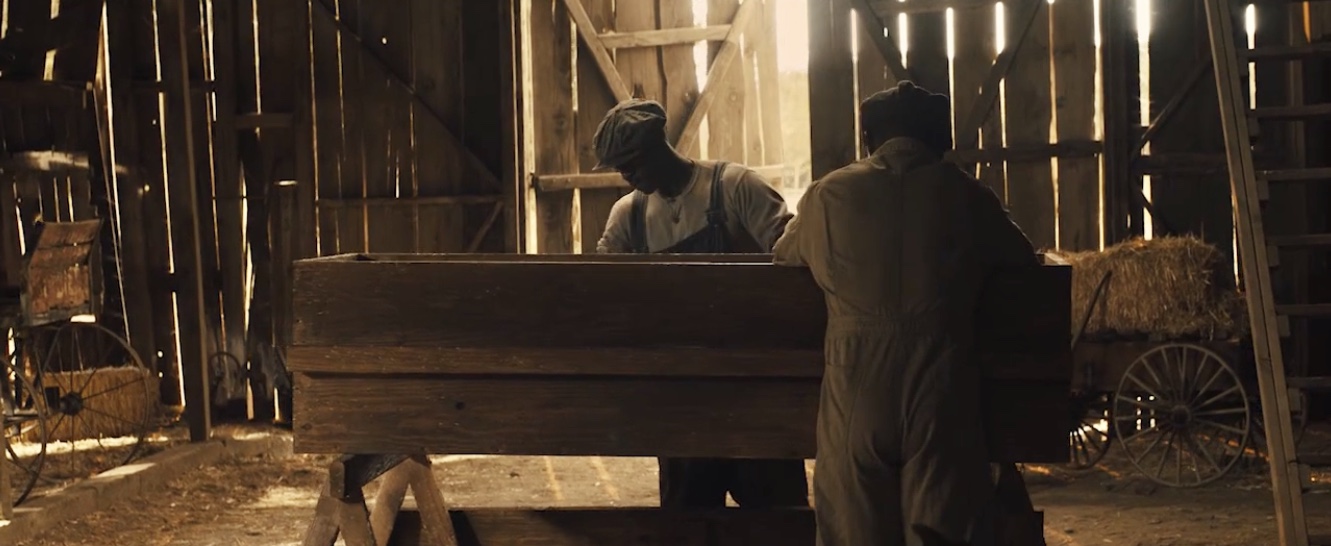
Don Cheadle is part of the narrative about one of the most heinous acts of racist crime ever conceived. In the wee hours of August 28, 1955, fourteen-year-old Emmett Till was graphically lynched for whistling at a white woman (which turned out to be false). Mamie Till would then give him an open casket funeral to let the world know what the monsters had done to her son.

David Oyelowo and Cheadle passionately speak Claude McKay's If We Must Die.
They are building a pine box. Till was shipped back to his mother in a pine box.
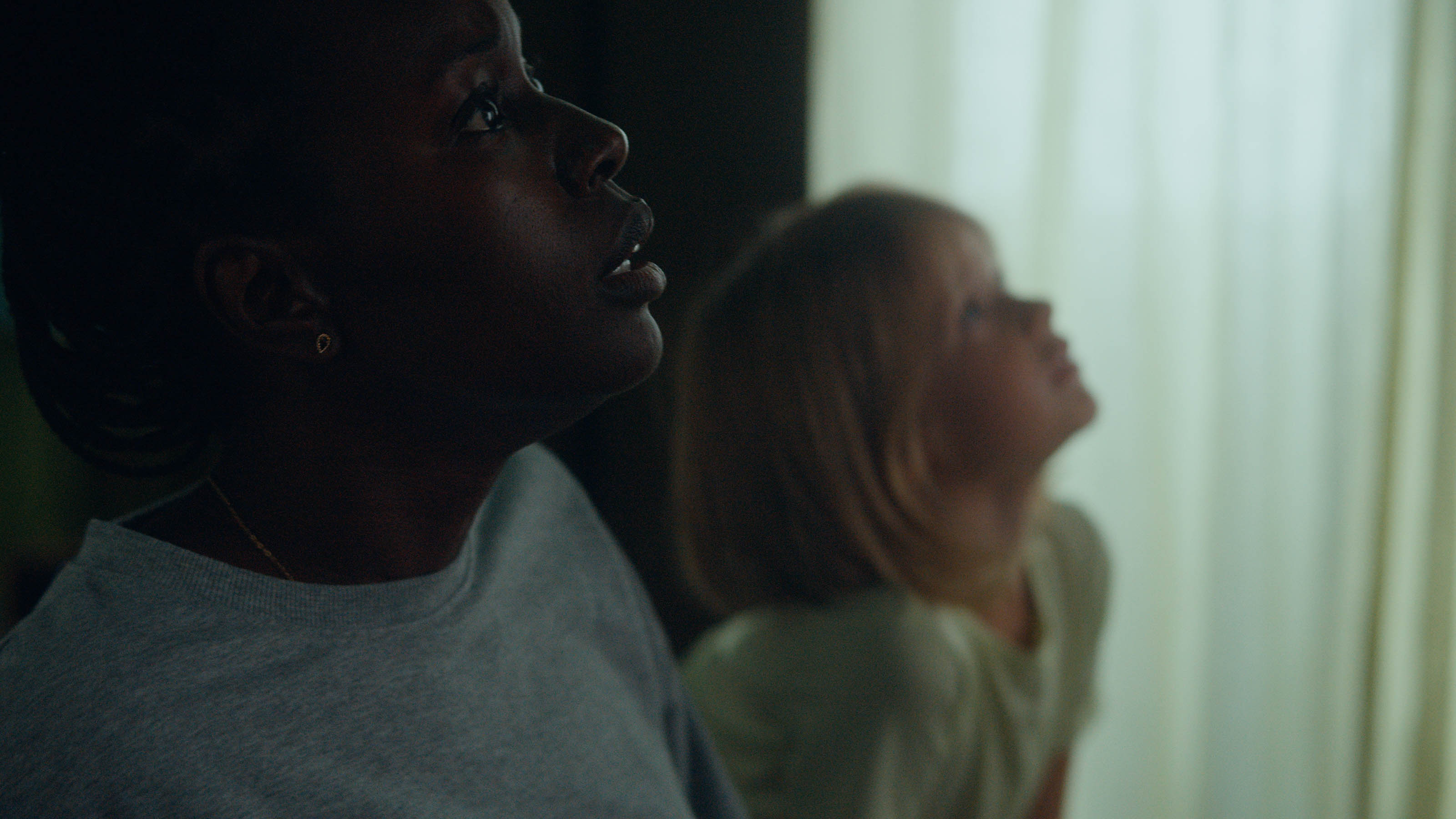
On Thursday, August 28, 2008, then-Senator Barack Obama of Chicago made history accepting the Democratic Party presidential nomination. Michael Ealy and Lupita Nyong'o portray a couple watching the moment on television. They embody Maya Angelou-- who would win the Presidential Medal of Freedom from President Obama two years later.

There is such beauty and positivity in this image.
Their rapt daughter is tuned into a defining, unforgettable moment.

On Sunday, August 28, 2005, Hurricane Katrina, a deadly category four, struck New Orleans. Gugu Mbatha Raw portrays a survivor in a water damaged/buried home whilst reciting Langston Hughes' Negro Speaks of Rivers.
Angela Bassett and Andre Holland recite Zora Neale Hurston's Dust Tracks on a Road and How It Feels to be Colored Me, interacting on Wednesday, August 28, 1963-- the day of Martin Luther King Jr.'s profoundly historic I Have a Dream speech, one of the largest political rallies ever recorded in the U.S.

He offers her replenishment back in a trustful time.

They clap as Martin Luther King Jr. is announced to give his speech.


Sunday, July 14, 2019

Classic 'Daughters of the Dust' Remains a Timeless Tribute to the Past

Daughters of the Dust restored film poster.
Julie Dash's phenomenal Daughters of the Dust embraces the countless ways migration-- this magical realism film's essential theme-- has impacted the Black experience in America. This powerful, riveting narrative poetically touches on how ancient traditions of the Gullah passed down generation to generation and became lost in its fragile handling, evaporated in the midst of displacement, stolen, fresh saltwater Africans desperately grasping onto their history whilst building a new legacy.

Three women: Trula (Trula Hoosier, top left), Eula (Alva Rogers, center), and Yellow Mary (top right). 
Off the coast of South Carolina, on Ibo Island, the Peazant family is led by matriarch Nana, an elder tied to ritualistic healing methods that involve utilizing the earth and carrying spirits of the ancestors. The other women find her practices backward and downright laughable, seeming already influenced by mainland thoughts, one metaphorical migration that of a Westernized mindset. Things are about to change, however, because most of the Peazants plan to move to the safe haven of North-- where historically slaves believed a promised land from the violent South. The water is how they and their ancestors arrived and thus, how they shall leave on a boat by their choice. So the going away celebration goes underway. Men dressed in their best jackets and pants while women don elegant white Victorian lace except Nana who is not going with them. 

Viola is outraged at the talk of no heaven from Nana.
Approaching via boat themselves are Viola and Yellow Mary. They bring sophisticated worldliness and culture, delivering two different forms of education. Whereas the schooled Viola comes introducing Christianity and photography by the way of the enthusiastic Mr. Snead, the well traveled Yellow Mary has a companion named Trula and a series of harsh stories, including a family who tried to keep her like property. Viola lives in a bubble and Yellow Mary paints a grim reality. Yet few women are happy about Yellow Mary's return. She is quickly ostracized, mainly by Haager, a proud, sanctimonious woman married into the family. 

The Peazant girls have dreamy perceptions of what the North would be like.
Several stories are interwoven together during this last family gathering. Eula and are expecting a child (the Unborn Child), but Eli has trouble adjusting after Eula's horrific rape. The newlyweds are still in the love phase. Iona and St. Lucien Lastchild's forbidden romance is tested. Viola's Western religion versus Nana's "hoodoo" causes a huge fuss. Through it all, the narrating Unborn Child travels on the island, her euberic spirit interacting with several characters, Nana most importantly, before reaching her parents.

Many poignant scenes feature women in the cusp of each other's company, offering strength, wisdom, and pure joy.
This family tied by blood and honor on this sacred land are moving forward to the larger landscape, to merge in and blend with American society, reluctantly leaving Nana and the old time rituals behind. The visual language is just as relative as the letters being read, broken memories of spoken are taught, and wispy book pages filled with symbolic text are turned by fingers and magic wind. Indigo also has a journey, from the forever stained hands of dyers to the inked icons and the Unborn Child's ribbon, there is a history in this precious color. 

Black girls are reading, daydreaming, existing. 
This film is one of the first to truly capture the validity of Black women's voices and their bodies. They are presented in a humanizing, nuanced light, multifaceted, loving, nurturing, cynical. Their agency and purpose grants them more freedom and dialogue than the supporting men. Between fixing each other's hair, shucking corn and prepping okra, and having conversation, these sweet women are responsible for the heart and integrity of the family, keep it alive. Some stellar scenes include Yellow Mary, Trula, and Eula bonding beautifully, everyone kneeling down to kiss Nana's "hand" that contains her mother's hair, and Eula defiantly calling out the hypocrisy and standing up for Yellow Mary. It is such a shame that these talented actresses (Cora Lee Day, Barbara O, Alva Rogers) didn't pick up accolades for their tremendous efforts.

Still, Daughters of the Dust is a treat. After all, food activist/writer Vertamae Smart-Grosvenor makes a lovely cameo and she is the subject of one of Dash's future projects. 

Nana (Cora Lee Day) and Yellow Mary (Barbara O) share a tender moment.
Memorable, fully fleshed out characters, Arthur Jafa's gorgeous cinematography, creative hairstyles that depict the incredible versatility of Black women's hair, and the harrowing music that haunts the eardrums tie together Daughters of the Dust's impressive longevity. This award winning film is a pivotal piece of art that gives Black women pedestals to bravely share their candid stories of pain, sorrow, love, anger, and longing with each other. As Dash allows them to reflect on the new world up North, religion/spirituality, womanism, and heritage, there is a real, undeniable attention to dignity and grace in every scene. The thorough research, the genuine authenticity are reasons enough that this film is worth watching again and again.


Sunday, February 11, 2018

The Tale of Four: Gabourey Sidibe's Charged Directorial Debut

The Tale of Four film poster.

Promise reveals itself through the thoughtful directorial debut of Oscar nominated actress Gabourey Sidibe. Between delicately plucking tender flowers to passionately snatching the plants out of their soil pots, Sidibe breaks open Nina Simone's powerful song, "Four Women," composing a short narrative that places itself into contemporary America. In the course of a single day, four different women occupy an apartment complex, facing personal turmoil, coping with images and events that lead to emotional and mental health fragilities that black women must often confront alone, without support. It has always been a disturbing perception that black people, black women in particular, are conditioned to be strong, to be so above showing emotional "weakness."

The Tale of Four shares the struggles, triumphs, and failures of Aunt Sarah, Saffronia, Sweet Thing, and Peaches.

Ledisi is Aunt Sarah.

First, duress and agitated, the black Aunt Sarah, obviously broken by the murder of a black man, cannot bear playing the parental role to two children whom so desperately need her. She is a morose creature, restless demons haunting the despair in her eyes, the burden weighing heavily upon someone so grossly unprepared for offering love to those in need.

Megan Kimberly Smith is Saffronia.

Battered and beaten, Saffronia, on the other hand, is the yellow scarred teen hiding secrets to her mother. In fact, this daughter/mother are both keeping traumatic wounds from each other, these wounds being emotional, sexual, and physical manifestations that must get out in some way before swallowed into internal gutter.

Dana Gourrier is Sweet Thing.

Confident and cocky, Sweet Thing is the tan, curvy vixen who wields sex as a weapon, as her sultry power source. She is raw and sensual. Yet brewing beneath the need for instant gratification, lies a desire for a deeper, fulfilling connection, something much more beautiful than the easy seconds to discard one's body for the empty, meaningless pleasure.  

Aisha Hinds is Peaches.

Peaches is the brown reckless crusader, a power-to-the people savior. Her room is an aggressive triggering of past images. From Emmitt Till's casket photos to slain young black people of our now, the little pictures and newspaper clippings that surround her add fuel to her angry rants, the flare of her message seemingly breaking the fourth wall, instructing viewers to take immediate charge, to bear no more suffering in an unjust society that has never wanted to be equal with any minorities. 

Gabourey Sidibe on set.

The Tale of Four's script is written by Ayanna McMichael and Kia Perry, two women who have worked in various departments of the film industry. This is their first imDb writing credit and the joined effort is pretty solid. It is definitely one of the most captivating perspective's of Nina's wondrous song. There is depth here as if they took the lyrics apart piece by piece and set these individual characters in this specific place, in this specific time. The performances also strengthened the short, especially the gritty significance of Peaches, that rough, embittered particle that passionately screams out injustice. 

Therefore, this short is a resonating piece to add to anyone's Black History Month roster.

Saturday, January 6, 2018

'Mudbound' Is The Most Important Film Release of 2017

Mudbound film poster.

Some films are good. Some films are terrific. Only few will tug at a person's innermost emotions and grip them in its strong, riveting chokehold like a tough, combative wrestler by very end. And Mudbound is that nitty, gritty fighter film that ignites countless thought.
An intense American historical drama entailing egregious societal infrastructure set in stone for black and white residents of the deep South, Mudbound is a real solid game changer for a Netflix feature. Writer/director/producer, Dee Rees addresses-- with such vital clarity-- this racially fueled class system that has established a gross power imbalance since colonialism and slavery upset the natural selection of the whole entire world, leaving behind a great generational devastation.

For starters, raised by Pappy, a vulgar racist father, Jamie and Henry McAllan are brothers who couldn't be any more different from one another. While younger Jamie is bright, reckless, and charismatic, older Henry is a practical and spineless simpleton. Metaphorically throughout the film, the analogy is crystal clear-- Jamie represents dawning of a needed crucial change-- accepting others regardless of race, status, and creed whereas Henry holds on tightly to white privilege like a stern, stubborn mule, his father's son without crass indecency.

Henry marries a spoiled socialite, Laura and they have two children. Henry, who imposes his male dominance over Laura, makes the decision to waste their money on farmland down in Mississippi, and Laura, who absolutely detests the move, has no authority on the matter. Jamie is fighting on European soil, dropping bombs from the sky, bearing witness to the ugly, violent sides of war. The accumulation of medals and honors do not diminish mental and emotional trauma. Jamie returns to America scarred and hurting, using drinking as a consolatory outlet for his pain.

In Mississippi, the Jackson family are humble brood, led by Hap, a preacher with a passionate, authoritative voice in the church and Florence, a loving, devoted mother who would do anything to break the psychological cycle of a mother she barely knew. Ronsel, their eldest son, goes off to become a soldier, thrown into the same fiery ring as Jamie, but is treated like an equal.

The McAllan's and the Jackson's intersect on this gorgeous piece of muddy land with promises of becoming more than what anyone has ever dreamed. However, the power balance is established the moment Henry rudely interrupts the Jackson's dinner, forcing the master and slave relationship to take repulsive shape, eventually threatening to rupture the mesmerizing strength of Hap and Florence. It is quite fascinating to address the differences between how Henry treats Laura and how Hap sees Florence. Henry and Laura are a union of comfort, a product of society privilege. When it comes to Jamie, Laura comes to life, having bitten the taste of forbidden passion, that real intense ardor that of course, Pappy can see. In Hap and Florence's case, the love and tenderness is a sweet dosed prescription of strong, foundational black romance. Hap sees Florence as an equal, a queen and he respects her.

Under the wary, watchful eyes of town, Jamie and Ronsel return from war, changed, eventually forming an intriguing bond.  

Jamie (Garrett Hedlund) befriends Ronsel (Jason Mitchell) despite the turmoil of white and black mingling beyond silent acknowledgement.
"Have you ever been with a white woman?" Jamie asks Ronsel.

Ronsel smiles with pride, jogs around the answer before diving into the nitty gritty affirmative, then later adding:

"We had to show them who we were."

Ronsel's words about proving his humanity to white women (aka sexually) is a startling revelation about black people's desire to be on equal footing with their oppressor. Since his return, he wishes to make the white men see him as a man, especially considering that he fought on their side during war. European white women had freely dallied with Ronsel and his black cavalry, that is after these men proved their fetishist worth, why doesn't the white men show such appreciative kindness, respect even?

In another power trip, after learning what Florence (Mary J. Blige) can do, spoiled Laura (Carey Mulligan) demands the woman to work for her on a permanent basis.
This mirrors Laura's interpretation of Florence. When Henry fetches the woman to cure his daughters' whooping coughs, Laura doesn't warm up to the idea at first, until she realizes that Florence is indeed useful. Without asking Florence herself, Laura demands that the woman "help" her with the children. Reluctantly, Florence agrees, breaking her own inner promise, sadly repeating the life of her mother.

Henry (Jason Clarke) once again requesting help from Hap (Rob Morgan).
Mudbound is rich, concise, layered complexity. The cast operates like a well oiled machine, perfecting their individual parts with brilliant tenacity, grace, and harrowing conviction. Their gritty Southern twanged voice overs, like vital, melodic poems recited at the podium, are painful, dispirited, joyous stories of strife and happiness, of wanting and valuing change, of simple desires. The watchers must snap fingers and cheer collectively at these performances. Mary J. Blige is utterly wonderful as Florence, valiant, soft, and encouraging, with her expressive facial expressions, vocal ability to being a compassionate wife to a broken mother. Carey Mulligan also holds her own as a privileged woman torn by social duty and captivating passion for things that she cannot have. Jason Mitchell is great at portraying Ronsel's struggles with coming back to a town that doesn't deserve his allegiance-- the ending alone ensures a huge sob fest. Plus Kennedy Derosin plays Lilly May Jackson, the young daughter of Hap and Florence, aspiring to become a stenographer. In one scene, she stands her ground against her laughing brothers who don't believe black people can step out of their station. Florence sternly tells him that Lilly May can become anything she wants to be. That smile shared between mother and daughter as well as the scene of Lilly May reading stenography books are beautiful touches about chasing dreams and receiving the treasure of female support. On Film Comment, Rees explains why she choose this path as opposed to Hillary Jordan's original writing.  

"My grandmother grew up in the small town of Ferriday in Louisiana,” said Rees. “She was born in 1925, and she’d talk about riding on her mother’s cotton sack. They owned their land, but they farmed it, and her parents cultivated cotton. She decided early on that she didn’t want to do that, nor did she want to be a domestic. She said she wanted to be a stenographer, so that was a touch I added in the film, when the Jacksons’ daughter declares her career ambition. In [Hillary Jordan’s] book, she can sing, but I didn’t want it to be the typical ‘little black girl can sing’ thing. I found it more interesting that she had this other ambition.”

Dee Rees for The Undefeated. Photo by Khoolod Mid.
Everyone and their grandparents should watch Mudbound. Yes, it would have been epic to see this in theaters, to witness this resoundingly important piece be on the giant big screen. Still, it's humbling to be at home, to not pause this history, to let every bit of the McAllans and the Jacksons steal eyes and ears. Don't let the Netflix factor fool you or anyone else into believing that this isn't a worthy accomplishment of integrity nestled between the acting, the cinematography, music, and all.

Wednesday, September 6, 2017

Coming to America: Hermione Granger Through A Black Woman Lens

Hermione Granger's Quarter Life Crisis.

In J. K. Rowling's epic magical world of men and mayhem, Hermione Granger was the smart, resourceful witch who outsmarted the most horrific baddies. She survived giant trolls, venomous snakes, and the menacing Bellatrix Lestrange (whom I'll never forgive for killing my beloved Sirius). Behind the infamous Boy Who Lived aka Harry Potter, it was Hermione who while embodying feminist principles, a champion with sharp wit, supreme intellect, and phenomenal courage.

So of course black fans, especially women loved imagining frizzy haired brilliance as a black queenly afro goddess. Often a huge look at comic cons and book fares, Hermione Granger fans chose to cosplay one of the finest Gryffindor students the house ever received.

It wasn't just those nerds bringing the idea to life. The Cursed Child, a play that debuted last summer in London set 19 years after Harry Potter and the Deathly Hallows, received a lot of flack for hiring a black woman Hermione, award winning actress Noma Dumezweni. I couldn't escape across the pond to see this. Despite the hoopla (racially based hate from the "I don't see color, but..." crowd), it sounded amazing.

Recently, a friend suggested Hermione Granger and the Quarter Life Crisis, this humorous YouTube web series that also introduces a similar concept, but set much earlier. In it, our curly coifed brainiac is a twenty-five-year old basket case, crashing her friend's pad in Los Angeles, bringing British sorcery into the states. Thus, the pond came to us in refreshing effervescence.

Plus, Hermione kicking back a few drinks? Never imagined that I could enjoy such a sight. She should be allowed to evolve beyond butter beer.

Hermione (Ashley Romans) is about to put a spell on the wrong one.
Now Hermione seems to have everything going for her-- a steady boyfriend, an extended family of red haired misfits and hand-me-downs, and a cushy new promotion at the Ministry of Magic. Her life is what a few twenty-five-year-olds would consider the idyllic dream.

She doesn't think so.

Instead of crashing with the famous Harry Potter, Hermione seeks solace with her out of country girlfriends, former roommate, Parvati Patil and cousin, Laquita Granger (who doesn't know about Hogwarts, magic, muggles, etc). I'm a huge fan of Rowling's work, but the girlfriends aspect was vastly missing. I never wanted to vouch for Hermione being "just one but of the guys" or truly appreciated that all eight film adaptations were directed by men.

In Hermione Granger and the Quarter Life Crisis, women form a circle around Hermione. Juniper Dias, Parvati's roommate, is a bit hesitant, but the sarcastic firecracker comes around. Heck, not everyone has it all together. While Hermione is suffering, Parvati is trying to be taken seriously in the wizardy newspaper business and Juniper is looking for a gig. Laquita appears to have her life together, but she is still a mystery. Maybe in that respect, she is a lot similar to Hermione. She too could be hiding something.

However, after the episode five cliffhanger, who knows what to expect....

Glammed up Hermione.
The terrific highlight about Hermione Granger and the Quarter Life Crisis is that this takes off the shimmering invisibility cloak off a wonderful character. She is very much present in the Harry Potter spectrum, but the books are mostly about him, his growth, and the people he surrounded himself with. This compelling web series explores Hermione, giving her mobile space, a real speaking voice in an overwhelmingly welcomed female environment produced by women. These episodes are painting intriguing relationships with her fellow female wizards and muggle cousin. Hermione gets to be herself—smart and cautious, still a bit awkward—no lightning bolt scars to keep her awake at night. There is no nonsensical tug of war triangle between friends, the complications that suddenly emerged in her later teen years with her, Harry, and Ron. The latter was in Ron’s mind, but it still sucked the air from the trio, that the threat of jealousy would have torn them apart.

At last, Hermione is just Hermione.

Eliyannah Amarah Yisrael leads a female production team of writers, producers, and manager.

Eliyannah Amirah Yisrael, series creator/director has put an innovative spin by telling Hermione’s story at a relatable stage. The late twenties seem to be this faulty, implausible time where people feel life should be near put together, nicely constructed, white picket fence and all. It is a myth. In truth, things take longer. Immediately, offscreen Ron wants to get married, have children, and everything. He is beyond ready. But Hermione, who rarely had opportunity to breathe away from London air and her male best friends, needs the time and space to think, to figure her tangled web outside of them. She’ll always love Harry and Ron, but it has been wonderful seeing her around other individuals. Olive Hernandez and Jessica Jenks are taking turns writing thought provoking scripts, letting viewers know that it takes longer than a few nights on a friend’s sofa to find the answers.

The cast is well put together, especially fist bumping the choice of Ashley Romans as Hermione. She has been a pleasure to watch grow and interpret Hermione. Romans chemistry with Tamara French (Laquita), Sinead Pursuad (Pavarti) and Stephanie Ezeklel (Juniper) is sweet and comforting, a real genuineness. There are enough scenes with trios and quartets of these women that begging for more would be unnecessary.

Hopefully, next season promises stronger story direction, a new path for Hermione, her friends, and that five dollars she spent. Still, unclear on where Draco Malfoy would fit into this equation, in L.A., in Hermione's life, but biting my nails.

Thus, in other words, happily looking forward to round two of mischief, fun, tough love, and afro envy.

Do the Hermione dance.
Finally, it is great to see a black woman in Harry Potter land, having more than a few lines, not going the bloody Dean Thomas route.

Tuesday, September 5, 2017

Revisiting 'Pariah,' A Must See That Transcends Time

Pariah film poster.
Still, some years later, I find myself returning to something amazingly profound, a work that comes back, hugging close like an old friend.

Pariah is an astounding, vibrant piece of finely weaved storytelling with thoughtfully spoken artistry. This independent film centers on Brooklyn high school teen, Alike (pronounced ah-lik-e) an exceptionally good student and aspiring poet from a hard working middle class family. In her underground world, the shy girl hangs out with bold, outspoken, Laura, who has already proudly come out and lives with her sister.

Alike, however, is much too afraid of such honesty and chooses to entrap herself with dual identities- switching from hood gear to chic fashion, she is trying to do right by parents, Arthur and Audrey, but it's her little sister, Sharonda that begins suspecting the truth first.

Laura (Pernell Walker) and Alike (Adepero Oduye) test out a certain kind of package.

Filled with hilarity, wit, and compassion, viewers follow Alike’s course of adolescence as she tries unsuccessfully talking to women, tests out her first strap on with Laurie’s aide, writes poetry in a colorful composition notebook, and privately shares her talents with the encouraging English teacher.

All the while Audrey is desperate to make Alike appear more feminine and attractive to boys and wishing Alike to stop hanging around Laura, someone she clearly detests. Yet Arthur turns a blind eye, seeming not to give a care about his overbearing wife’s feelings and accepts Alike "flaws" and all.

Mother and daughter Aubrey (Kim Wayans) and Alike (Adepero Oduye) don't see eye to eye.
Fed up with Laura, an interfering Audrey wants Alike to be friends with "normal" girl, Bina. But unbeknownst to Audrey, Bina shows the kind of interest in Alike that would have had her head spinning. A smart, intelligent, and worldly artistic individual, she shares a lot of compelling ideas and music with Alike, striking up a friendship that soon blossoms into a refreshing first love.

Spending time at clubs and critiquing each others writings, things were so blissful.

However, her immediate discarding of their relationship the morning after was quite detrimental and heartbreaking.

Alike breaks down, guttural and hurt by the strange 180, but sadly has no one to tell and transforms that anguish into poetry.
Bina (Aasha Davis) shows Alike (Adepero Oduye) mixed signals.

Once Alike finally confesses to her parents, hell breaks loose tenfold.

In the very turbulent scene, Sharonda pleas with Alike not to get in between the battle of their parents who are loudly arguing about her sexual orientation, but valiant Alike bravely wages on and puts up with an emotionally distressed Audrey who then verbally attacks and violently beats her revulsion into Alike.

After that climatic horror, things change.

With a condoning mother seeing lesbianism as a treacherous disease deemed unlovable, Arthur is the exact opposite. A man harboring his own secrets, he seemed to have always known that Alike was a unique case. Not due to her escalating intelligence and her disdain for pretty clothing. Their relationship is much closer and because of this, it makes his understanding of Alike’s lifestyle believable.

In Laura’s own story, she also has a mother disgusted by her choices. Looking disgusted, she makes no move to be affectionate and slams the door in Laura’s face even as Laura expresses joy over passing the GED. This makes her friendship to Alike all the more genuine. Their mothers' intolerance for their lifestyle is another common factor.

Though she is an active flirt and very popular with the ladies, it’s perfectly clear that Laurie needs constant companionship and love and once she sees Alike having fun with Bina, her jealousy comes clawing out. 

A worthy note of mention, Dee Rees has done an exceptional job of not only showcasing strong female relationships, but also revealing the blunt shift that occurs when weakened and severed, especially the natural bond of a mother and daughter.

Alike (Adepero Oduye) knows the world is her oyster.

Adepero Oduye’s portrayal is touching, riveting, and beautiful as she plays a character struggling with the great divide, breaks free from timidity, and falls in love. Breathing sophisticated complexion into Alike, Oduye is divine poetry in motion, expelling words articulately and with tenderly, perfected bravado. From the moment she tearfully tells her mother she loves her and that end scene on the bus, Oduye showcases Alike’s proud acceptance into a promising future that only she can control.

Now this is the kind of African American role that the Academy is deadest against honoring. A woman who doesn’t allow herself to repressed by negativity and has the strength to move forward to better opportunities with talent driving her. To the conservative viewer- it’s crucial. Not only is this young African American woman smart and gifted, she happens to be gay.

Definitely robbed of an Oscar nod, here's hoping that Oduye nabs another pivotal role that garners attention from the snubbing Hollywood elite.

The rest of the cast played their parts commendably, especially the incredible Kim Wayans, a famed comedian utterly unrecognizable in a very dramatic role. The polar opposite of Monique's character in Precious, Wayans was marvelous as the cruelly ashamed, Bible clinging mother.

In terms of story holes, Pariah does have its little flaws.

Alike delivers two powerful poems like a heavenly prophet. Thirsting for more, especially with Bina making suggestions to open mic nights and poetry clubs, there was an expectancy to seeing Alike come further out of her shell and share her gifts to an audience that actually wants to hear fresh talent onstage.

Alas no such scenes came into play.

What of Laura and Alike's relationship?

Do they come together as a couple and bond even further?

What secrets was Arthur keeping under tabs?

A scene of him on the phone and then changing into a silk black shirt while chatting to Alike seemed oddly questionable. With them being so close, one imagined that he would voice his affair to Alike.

Now if it were with another man, Audrey would never be the same...


Pariah's writer/director Dee Rees with stars Kim Wayans and Adepero Oduye.

I greatly appreciate the woman’s voice and their courage to tell such a profound story. Hoping that Dee Rees continues on the path of enlightening women and minorities to come forth and share their creative vision, bring their enriching narratives to independent screens and beyond. Let the age old statistics of white men being sole judge and victor be a thing of the past.

It's been high time for segregation in the film honor system to be buried. 

Women have more than breasts to bare, they have vocal hearts and fervent souls to unleash and set free.

Pariah passionately illustrates that though the uncertain future can be filled with failures, heartbreak, and disappointments, there are rewards despite the ugly, gritty turmoil that comes and goes.

That wherein lies life's bittersweet poetry.

*This post, although edited, first appeared here and was cross posted here.