Showing posts with label Selma. Show all posts

Thursday, April 4, 2024

Happy Birthday, Lorraine Touissaint: Fem Film Rogue Icon Spotlight


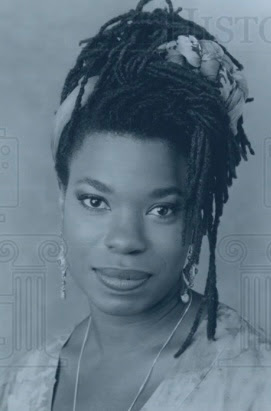
Lorraine Touissaint’s headshot, 1992.

You know a film or television series will be especially wonderful if among the cast includes brilliant Lorraine Touissaint, a Trinidadian-born, Juilliard School graduate. It’s been high time to give her flowers. 

Ten years ago, Joe Reid wrote this Atlantic article, Five Essential Performances By ‘Orange is the New Black’ Standout Lorraine Touissaint, highlighting Touissaint’s contributions to the silver and big screen. Touissaint spent ten years on the New York theater stages before obtaining her first television role as Vera Williams on the soap opera One Life To Live. Her warm presence calls to mind that of the late Mary Alice mixed with the regal elegance of Cicely Tyson. She has the power to brew beneath her characters and come out sharp and strong, delivering her words with esteemed clarity.

However, Touissaint has yet to lead a big grand picture and definitely deserves that. She should be in rooms, talked about and given cover opportunities showcasing her distinctive smile. 

Then again, history continues to repeat itself— Black women actresses remain relegated to supporting roles, as crutches to primary white counterparts. Fortunately, Touissaint will always eat up her screen time. Her presence is meaningful and memorable no matter how many minutes she’s allotted. She could be the most insensitive mother in Middle of Nowhere or the most gentle grandmother in Fast Color. Even her short moments in RZA’s Love Beats Rhymes as Azealia Banks’s character Coco’s restaurant running mama Nichelle are divine perfection. She lit up a whole murky screenplay. The unique sound of her voice is part of her craft, her signature, able to wield soft sincerity and wisdom while also forcing us to take two steps backward, fear her wrath and fury. 

Nancy Miller and Deborah Joy DeVine’s Lifetime drama series Any Day Now stars Lorraine Touissaint and Annie Potts. Touissaint and Potts grace the cover of Philadelphia Inquirer’s TV Week, August 23-29, 1998.

Inside contents: Lorraine Touissaint as adult Rene and Annie Potts as adult Elizabeth on the left, Shari Dyon Perry as young Rene and Mae Middleton as young Elizabeth on the right. 

Touissaint bloomed on the Lifetime series Any Day Now co-starring with Annie Potts. Her lucrative television résumé eventually stretched into various different dramas— Frasier, Crossing Jordan, Ugly Betty, Grey’s Anatomy, Scandal, Forever, Friday Night Lights, Orange Is the New Black, Rosewood, and Young and the Restless. Her voice has been heard in animated series such as Static Shock, She-Ra and the Princesses of Power, and Summer Camp Island. She’s starred in two TV movie adaptations co-starring Oscar winner Halle Berry— Queen based on the 1993 novel by Alex Haley and David Stevens loosely based on Haley’s grandmother and Darnell Martin’s Their Eyes Were Watching God based on Zora Neale Hurston’s powerful 1937 novel.

Lorraine Touissaint and Allison Jones star in the 1996 film Nightjohn directed by Charles Burnett (To Sleep With Anger, Killer Sheep), DP: Elliot Davis (Something Wicked This Way Comes, Get On the Bus, and Out of Sight). The film has a 100% rating on Rotten Tomatoes. 

Over the years, on the film side of life, Touissaint has worked with prominent women directors such as Ava DuVernay (Middle of Nowhere and Selma), Julia Hart (Fast Color), and Maggie Greenfield (Sophie and the Rising Sun), and Dianne Houston (Runaway Island), the first and only Black woman to be nominated for a filmmaker Oscar (Tuesday Morning Ride, short film). Another favorite Touissaint performance was Grandma Marley from Jenn Shaw’s 2023 short film Gaps, highlighted here in my essay at Carefree Mag. Hopefully it becomes a full-length feature. Touissaint has also received accolades from the Black Reel, Black Film Critics Circle, Critics Choice, the Chlotrudis, Screen Actors Guild, and Essence Black Women in Hollywood and nominations from the NAACP Image (six so far), Independent Spirit, and the EwWy (renamed Poppy) Awards. 

Touissaint in Oscar winning film Selma. DP: Bradford Young. 

Of Selma, Touissaint shared in Collider that her small role as the late civil rights activist Amelia Boynton was meant to be bigger:

“Pivotal scenes of mine were cut, that would have helped explain her in a better way. We don’t really know that she’s the character that invited Martin to Selma, and that she is the one that almost single-handedly had been prepping this community for years. She was relentlessly registering people to vote, and holding secret night classes to tutor the voters. She was prepping this community and building up the pressure in it, very quietly. By the time you meet her, she had been arrested countless times.”

Currently, Touissaint stars in the Equalizer TV series alongside Queen Latifah and will be in Todd Strauss-Schulson’s Silent Retreat co-starring with Dennis Haysbert and Larry Owens (Zach on Abbott Elementary). 

Touissaint plays Aunt Viola “Vi” Marsette to Queen Latifah’s Robyn McCall in the CBS series Equalizer. Maybe a future essay would compare Touissaint’s Aunt Vi with Tina Lifford’s Aunt “Vi” Violet Bordelon-Desonier on Queen Sugar, 2016-2022.

Other profound Lorraine Touissaint Quotes:

"Often times, the business is designed to make us feel powerless. I learned early on the power of [saying] 'no.' And as difficult as it has been, especially early on in your career, I knew that there was power in it. There are just some things that I just say no to." (BUILD Series, 2019)

“ I had an extraordinary mother who at 10, I said—I didn’t grow up with a TV—at 10, I said I want to be an actress. When everyone else in my family laughed, my mother did not. She’s the one who taught to live and ultimately taught me how to die.” (Essence, 2020)

“I don't take those kinds of compliments for granted, because there aren't a lot of roles being offered to African American women, especially age forty and above. I don't think there are enough roles in the media like Rene Jackson. But, I'm hopeful because the fact that our show exists is testament that things are changing, and I believe the networks are paying very close attention to our little show on cable.” (answer to a CNN.com transcript response regarding her “intelligent Black female portrayal” in Any Day Now, 2001)

Tuesday, February 10, 2015

Screw Unjust Obstables! 'Selma' Proves An Equality Dream Should Never Die

"Selma" film poster.
The first time I went to see Selma, a month ago, it was packed. When end credits rolled, everyone clapped. Thunderous applauding hands echoed joyously as poignant black and white still film photographs flashed over Common and John Legend's Oscar nominated “Glory.” So magnificent. So honorable. So necessary.
On a Thursday afternoon last week, I sat alone. Nestled in the unchained memories and siren's songs. Some one hundred eighty four seats empty. I felt a pang in chest new and painful.
If you haven't seen Selma yet, why haven't you? Why have you not set foot inside the theaters to see this remarkable illustration? As disappointed as the Oscar directing, screenplay, cinematography, and acting snubs were, I feel that the greatest robbery of all is never getting to see this on the big screen. That truly is an award in itself. It is beautiful, horrifying, intense, grisly, and authentic. Please don't miss this.
Selma opens with civil rights icon Martin Luther King Jr. and wife Coretta readying for Nobel Peace Prize ceremony in Islo, Norway. Prestigious award gifted to those demonstrating nonviolent practice in midst of war and terror. Just as he is being rewarded, among applause and honor, six chattering children walk down stairs having trivial conversation. Loud, sonorous boom suddenly crashes through, resonating into viewers ears like a sickening firecracker. Slow moving debris particles fly across sinister scene in a harrowing dance touching sensitive tear ducts. Bodies lie still, forever silent. We know the sinister account. The September 15, 1963 real life 16th Street Baptist Church stole innocent lives of Addie Mae Collins, Carole Robinson, Cynthia Wesley, and Denise McNair. Murderers acquitted and set free like so many other trials of the past, trials of now that echo how little black lives matter. No matter the age. Brown skin equals death. The true monsters that detonate bombs and shoot bullets and lynch and spit on blameless with a blind hatred. People are so unconvinced, so naive into believing we are one good desegregated melting pot. That race is an unseen straw to grasp. Well, Ava DuVernay's leadership, Paul Webb's commendable script, and riveting cast performances paints a ghastly truth unlike any other film receiving acclaim this year. It is a dream that is manifested into both sadistic and poignant realms, unlike any nightmare unconscious ever encountered.

David Oyelowo (Martin Luther King Jr.) and Carmen Ejogo (Coretta Scott King) put on noteworthy performances that astound and amaze. Heart strings will be pulled to fullest capacity.
Racial strain runs high in the deep Jim Crow fueled South. Annie Cooper (played by wonderful Oprah Winfrey) has been taunted and ridiculed before being rejected to vote. At the same time, in the nation's capital, Martin Luther King Jr.'s private conversation with President Lyndon B. Johnson has no immediate success. The president refuses to see importance of equal voting rights. Thus begins a long, hard road to Selma, Alabama. Non-violent protests, jail cells and, inglorious death await. In between despair, frightening foreboding and heartache, among unsettling pills to swallow, viewer is rewarded grateful glimpses. Seeing the Southern Christian Leadership Conference (SCLC) in their hearty, lighthearted moments, the radiating joy and camaraderie. Mahalia Jackson's soulful singing into desperate ears over the telephone. Rampant turmoils and earth shattering events lead well into Bloody Sunday.
On March 7, 1965, a raw, televised terror leaves no stone left unturned. Civil conversation is not allowed. What happens next is worse than any film in horror film genre combined. This is no dream. This is an accurate composition of sickening revulsion out of pure hatred and grotesque racial prejudice. And the pleasure in the onlookers is Smoke plummets the screen. Thick clouded haze does not hide or disguise remorseless actions of white supremacy disguised in the uniforms of law and order. Horses race fast and fly like Pegasus. The batons beat against flesh. Repeated thumps are pounding drums as bodies run and scream. Aide comes. From pre-assassinated Malcolm X (didn't march, but still...), James Reeb, Viola Liuzzo, and countless others, no one is safe before and after the final march from Selma to Montgomery, Alabama.
We are left with names. With raw footage. With our tears choking.
So when I think back to that empty theater, pain returns afresh. People are mad. Upset. It isn't due to Martin Luther King Jr.'s shocking accusations of infidelity or smoking cigarettes in the darkness angering folks left and right. It's Lyndon B. Johnson's depiction having them running scared and creating a smear campaign against this fine work of art.
"Oh that white man was on the side of justice!"
"How dare DuVernay depict him in such a negative light?"
"How dare she make him such a cold hearted villain?"
Ah, but he was no cold hearted villain. He was a man turning around. And that turn was slow. A man in wait. This film sugarcoats no one. I believe Lyndon B. Johnson's mediocre supporting narrative frightens viewers, frightens the inner racism in themselves. They want to believe someone is one hundred percent good for all the papers signed and let depiction interfere with larger picture, the larger issue. That issue is equal rights obtained for every person in the country.
Performances were outstanding all throughout. From Tom Wilkinson to Oprah Winfrey to Colman Dolmingo and beyond. Yet David Oyelowo and Carmen Ejogo stole every scene and gutted every heartbeat.

Ralph Abernathy (Colman Domingo), Martin Luther King Jr. (David Oyelowo), and Andre Holland (Andrew Young) lead marchers towards the Selma Courthouse.
David Oyelowo has Martin Luther King Jr. down to a science. From the Southern dialect to the mastered way of King Jr.'s impressive speech articulation, Oyelowo breathed this role within every fiber of talented being. The way "white" itself rolls off his tongue delivers the most compelling chills. Here DuVernay speaks about the process of changing a classically trained British actor into a profound civil rights activist in Deadline.
He did the standard stuff like gain weight and change his hairline, but that was nothing compared to what he did to get that speech pattern right. It was not a mimic, and not an impersonation. He gave you a feeling of authenticity. There is a lot of great work he did to get there, I hope people really see it. And the key was we didn’t ever want to mimic; it was all about just getting close but not too close. And there were times where he was getting very close, doing it really spot on, and we actually pulled that back because I think you start to get into an impersonation. David was fantastic in really being able to find the sweet spot. What helped is he stayed in that vocal space, so even when we weren’t shooting he was always speaking as King.
Supreme well-renowned group in civil rights activism: Diane Nash (Tessa Thompson),  James Orange (Omar Dorsey), Ralph Abernathy (Colman Domingo), David Oyelowo (Martin Luther King Jr.), Andre Holland (Andrew Young), Rev. C.T. Vivian (Corey Reynolds) and Lorraine Touissant (Amelia Boynton) stand ground.
Carmen Ejogo, who too is British born, put on one hell of a supporting performance. I do not mean as a woman cajoling her husband's ego, stroking his intelligence whilst lessening or forgetting her own. Coretta Scott King is not just a wife and mother. She too is a valiant defender of the people. One of the most imperative scenes portrayed Coretta confessing heartbreaking woe to the remarkable Amelia Boynton (Lorraine Toussiant is great here). Boynton's small yet significant monologue was a pivotal reminder that the definition of bravery is kicking ass in spite of the weak emotion, an emotion flogged against minorities. Bound by chains and arriving on slave ships facing God knows what, Coretta must remember the blood of her ancestors flowing in veins. This sets into her brain, into her heart, cementing a stamp in her legacy, of earning title "First Lady of the Civil Rights Movement." That reluctant hesitancy seeded from fear grows into a brazen, unfettered allegiance. Not just to Martin. But for her children, for her fellow ancestors and for those marching and dying all around her. She is no sitting duck, no servant, no dutiful female. A heroine. An inspiration. When thinking back to those girls murdered whilst idle chattering Coretta's glossy curled hair, the viewers see more than a beautiful face and that glossy curled hair. We are rewarded with what those girls lost. That opportunity to see beyond scope of physical appearance. Ejogo's remarkable ability to showcase commanding poise and strength in the face of adversity, to be a willing champion in the face of ugliness and contempt is a commendable force to witness.
Ava DuVernay is gold. David Oyelowo (who wrote a wonderful letter to get her director's chair) and Oprah Winfrey (who produced and championed this vehicle) are her right and left wings, angling this valiant director to keep on flying with her head aimed at an endless horizon. She is bound to continue breaking barriers and giving an array of bright hope to up and coming female filmmakers everywhere.
DuVernay's has created a fine piece of filmmaking that will go down as one of the most incredible, thought-provoking pictures showcased this year. I loved Independent Spirit and Sundance winning Middle of Nowhere-- her second feature film, the one that put articulate voice on Hollywood radar. Selma just slices another onion layer of DuVernay's esteemed caliber. This film is the harmonious, gritty poem that bogs the mind, eats away consciousness, and bites any lingering ignorance residue. Just gets inside impenetrable walls and forever sticks. It's a magic only talented visionaries can pull off. DuVernay has that ability. She has mastered magic. Bradford Young's stunning cinematography gets in the heart of DuVernay's matter. For each scene is an emotionally driven painting, a painting of beauty and horror and sorrow. Among soft, crackling, hymn inspired soundtrack of the 1960s era, is a time where a hero is needed, a champion for a country still divided by brutal racial boundaries. Despite abolished slavery and desegregation, senseless acts of violence continued being inflicted upon a defenseless race. They just wanted to live on the soil. Be as free and equal to those who stole their ancestors. No justice would be rewarded to grieving families, especially without them having rights to vote. That meant subjection to white supremacy. Subjection to Confederate flag waving worshipers. Those worshipers cheering whom they no longer control. The slaves that their ancestors once stole in Africa, now as unchained vessels no longer picking their cotton fields. Generations upon generations of brainwashed individuals with bitter hatred seeds implanted in minds. They see no humanity. they see no equality. They see mongrels, monsters deserving to die at hands of oppressors. And this emotion is felt hard.
We the viewers learn what is softened and smoothed over-- the real reality. From Jan at Hot Pink Pen:
DuVernay’s genius is to show us exactly why the real Martin Luther King, Jr. (who died in 1968) and the real Coretta Scott King (who died in 2006) were able to bear this heavy load, and pay a price which they can both feel imminent in their bones just as surely as we know it today from our history books.
Selma tells us we need a guide, a helpful, wise, intelligent hand. That must be partly why marketing strategists shows Martin Luther King Jr.'s back in the film poster. He may have been one of the most clever, oratorically gifted leaders. He was not without those standing beside and behind him. Beside and behind him physically, mentally, and emotionally. Yet we don't have someone substantial to lay down the line, someone folks are willing to follow. The time to act is now. Not tomorrow. Today.
Together we can beat the odds and make the most seemingly impossible dream become the greatest possible reality in the whole wide world.