Showing posts with label 1990’s film. Show all posts

Tuesday, May 12, 2026

‘Naked Acts,’ A Bonafide Revelation’s Essential Resurgence


Naked Acts film poster. 

Writer/director Bridgett M. Davis’s recently unearthed thirty-year-old Naked Acts has been tucked away for far too long. Like a pirate treasure buried beneath the depths of an abyssal sea to either be discovered or permanently left abandoned, Black women’s films remain the hardest pieces to find, maintain, and archive, ensuring its imperative survival. This practice has always seemed intentional. 

Naked Acts exemplifies lost treasure.

The moment now is to promote its multifaceted beauty to the world.  

Lydia Love (Patricia DeArcy) and her daughter Cicely (Annette Myrie). DP: Herman Lew.

Ronnie (Ajene Robinson) and Cicely (Annette Myrie). DP: Herman Lew.

“Emotional work can lead to a lot more vulnerability than nudity ever could.”—Marcel Brown. 

Backed against the gritty 1990’s aesthetic, sharp, intelligent Cicely aka Cece stands out. An enormous chip sits on her shoulder. 

That chip is a survivor’s maneuver to silence traumatic abuse. A heartbreaking tragedy all too familiar for Black girls navigating through the complexities of “acting too grown,” “mature for your age,” etc. 

With an aggressive, strong-willed personality hand-carved from the harsh, bitter clay of resentment and rage, Cece wields a brash attitude in order to be taken seriously. She knows the hard, painful way— through experience— that a woman cannot ever be too soft. To bear open the soul risks being taken advantage of. 

Adult Cece (Jake-Ann Jones) hides behind wigs, layered clothes, and a massive attitude. DP: Herman Lew.

Naked Acts breaks away from the three typical stereotypes Black women are boxed into— Jezebel, Sapphire, and Mammy. Cece cannot be tied down to a specific trope. She’s a multifaceted individual embodying a shape-shifting chameleon, changing styles to fit her moods: an electric red empowerment pixie cut, a dirty blond updo, a sleek jet black bob, and the natural textures in between, begging the question— who is the real Cece? The outside becomes a stage for her to repeatedly reinvent these personas. Yet, the constant factor is her discomfort for disrobing. As much as she takes acting passions off the set, this is no method technique. Unhealed trauma manifests into other areas of her life, turning the beautiful, natural human form into a dirty, ugly existence. Cece struggles to survive psychologically, mentally, emotionally, and psychically— and her extreme guardedness comes across as a negative to the people she encounters. 

Cece passionately advocates for making changes to her Elana character to Marcel (John McKie). DP: Herman Lew.

While Black women constantly fight against pigeonholes, the patriarchal society offers men a greater grace. The three male characters symbolize different wavelengths of inherent predatory nature— Ronnie, her mother’s boyfriend, Joel, the film director, and Marcel Brown, the producer. Ronnie causes Cicely’s pain on the account of stolen innocence. Career-focused and absentminded, Lydia left Cicely unsupervised, not fully understanding that not all men are quality men. Perhaps, she was raised in that era of village raising children, but there’s a problematic “quiet as kept” history in the community regarding family members, churchfolk, and boyfriends/step parents. Ronnie behaves the worst, preying in a practiced kind voice, using harmer's language. 

Joel, the theater director helming his first feature film, seems to care about Cece. The two have a history. After all, he believes in her enough to give her a meaty part and demonstrates gentle patience when it comes down to her mental health— at first. Yet, when all the vulnerabilities crumble at his feet through a passionate love scene addressing several forms of Cece’s necessary release and explicit trust, Joel later makes a selfish decision that only proves he misunderstood the whole meaning of the moment.  

Marcel— as stern and stubborn as Cece— vouches strongly for Cece to take the nude part, mainly as being a fan of her famous mother and her “well endowed behind” shadow. Despite reaching common ground and receiving the high compliment of Cece finally achieving a piece of her thespian grandmother’s craft, Marcel’s short-lived compromise broadcasts how little he thinks of Cece’s ambitions. 

Randi (Natalie Robinson) and Winsome (Sandye Brown) acting out their respective parts in Marcel’s film. DP: Herman Lew.

Humor adds subtle breaks from the weighted heaviness. Lydia’s corny porno videos lays on extra thick cheesiness and the pre-production film readings between Joel’s casted trio of Cece, Randi, and Winsome broadcasts Marcel’s anger simmering in the distance. Randi cannot separate her unabashed sassiness from artisan Marcel’s comical contradiction of a character that must “exude an air of sensuality and innocence.” Acting may not be Randi’s strongest forte, but neither is attempting to portray a character that can only exist in the male imagination. Simultaneously inexperienced and provocative? Ha! Winsome, the former nude model, may be a silent observer, but her has panic attacks make Cece uneasy. For example, Winsome’s an annoyingly fickle sport that would try anyone’s nerves. The names Randi, Winsome, and Cece also appear to be metaphorical for whom these women are. 

Cece and Joel’s (Ron Cephas Jones) relationship is tested by the film and her low self-esteem. DP: Herman Lew.

At its very core, Naked Acts presents a profoundly womanist concept, the poignant women relationships bearing the strongest fruit. Cece and Lydia’s fractured mother/daughter embark on the difficult road to repair and redemption. A adamant Lydia commands little Cece not to ever cry, that tears were intolerable. In turn, Lydia did not want her daughter showcasing any despair, any sadness— signs of weakness. Imagine years of withholding the suffering. Crying became Cece’s biggest acting flaw having grown up suppressing a natural inclination to express sorrow. Yet, it will be harrowing tears that unite them, that softly rips apart the tide that’s separated who they are to one another. It goes beyond the acting journeys. 

Meanwhile, the second centered womenfolk relationship contains therapeutic vibes and spiritual connection—ingredients Cece needs to replenish herself, move through her trauma. Diane, aka Di the film’s still photographer, coaxes Cece out from her tough outer shell. Di’s terms can be brutal yet she’s also gentle and patient, doesn’t manipulate Cece into spilling every last secret. Di just wants Cece to value her body, to see her form as a blessing and not an ugly curse. 

Diane (Renee Cox) holds the pivotal key to Cicely’s transformative journey. DP: Herman Lew.

Comedy and drama align. Di wants Cece to come to terms as a lady comedian tells jokes on the stage. DP: Herman Lew.

With Bridgett M. Davis’s solid direction and fresh storytelling, Jake-ann Jones leads an impressive cast. Her phenomenal performance should have been the gateway to opening doors. The late Herman Lew’s incredible shots of the artfully arranged set designs celebrate Black uniqueness: Lydia’s video store, Cece’s apartment, Di’s art studio, and the objects around Marcel’s desk. Cecelia Smith’s compositions provide a pleasing soundtrack as insightful song lyrics allow a glimpse into the characters. 

A Black women’s cinema curriculum could build foundation on Davis’s commendable Naked Acts, joining hand in hand with groundbreaking women centered classics such as Julie Dash’s Daughters of the Dust, Zeinabu irene Davis’s Compensation, Kathleen Collins’s Losing Ground, and Alile Sharon Larkin’s A Different Image. Naked Acts embraces resilience, overcoming terrible experiences, and finding encouragement through other women. The resurgence is both a crime and a blessing— a crime for not being readily available at the time of its release and a blessing for the nurturing narrative that would inspire many souls to find comfort in a healing Cece. Black women directed films have a distinctive honesty that shows up more and more as their long buried works come out into the limelight. In this day and age, cinema still heavily promotes Black men and white filmmakers telling Black women’s stories, mainly pushing out the same tired agendas. Meanwhile, Black women storytellers stick needles of wisdom, charm, mystery, humor, and love into their leading ladies, bringing in a touching depth. By refusing to retell certain tropes, they risk limited funding resources, work largely unseen, and no other true support. 

Cece confronts her mother at the video store. DP: Herman Lew.

Naked Acts highlights the struggles Black women undergo to be taken into consideration. Cece is the poster girl, the metaphor competing for bare minimum roles in productions that will undermine her presence— sassy best friend, magical negro, oversexed promiscuity, slave, poorly rendered biopic. And colorism is another beast to face as Hollywood remains pushing for lighter skinned actresses portraying their preference of Black girls and women. The boys and men, however, can be dark as midnight. Every year awards shows snub Black women’s excellence with white people uniting against them (i.e. that unforgettable Andrea Riseborough situation). Black women directed films are offered little to no distribution. Thus, audiences lose out on correct Black women promotion— nuanced, dignified, and intriguing characters leading well-crafted pictures. 

Thankfully, Kino Lorber—a distribution godsend next to Criterion, Oscilloscope Laboratories, Strand Release, and Janus Films—alongside Maya Cade of BlackFilmArchive have banded together with Lightbox Film Center to restore this breathtaking masterpiece. Naked Acts is on streaming platforms and has been physically available (with Davis’s brilliant short film Creative Detours). Art house cinemas and avant garde spaces across the globe have been hosting specialty screenings, reinvigorating the “word of mouth” effort. 

Naked Acts deserves this newfound light shining bright on its resonating beauty. It was a film we urgently needed to see back then and it’s a film that we must see right now— on repeat. 


Friday, March 25, 2022

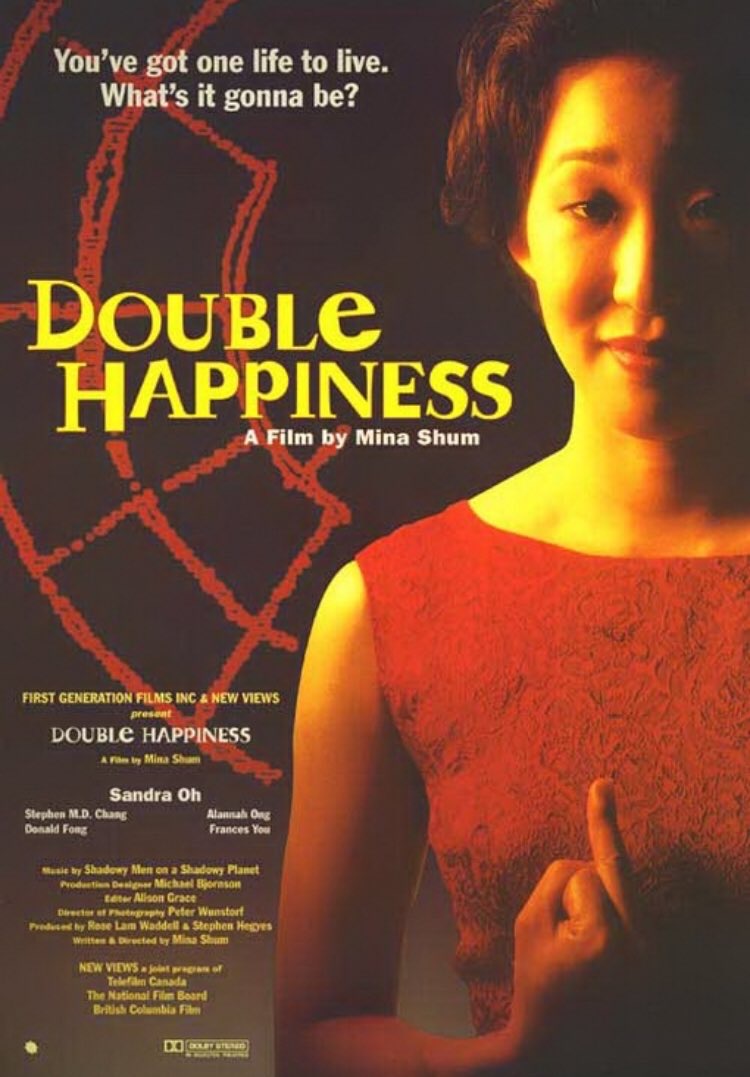
‘Double Happiness,’ Always A Treat to Revisit


Double Happiness film poster. 

Although I have yet to watch Sandra Oh’s latest film release— the horror Umma helmed by Iris K. Shim— in honor of Women’s History Month, it seemed like the perfect opportunity to revisit another Asian director, Mina Shum, whom Oh has worked with several times in Canada. The humorous classic Double Happiness brings all kinds of joy to behold. 

Jade (Sandra Oh) jokingly reflects that the difference between her family and The Brady Bunch is that hers have subtitles. DP: Peter Wunstorf. 

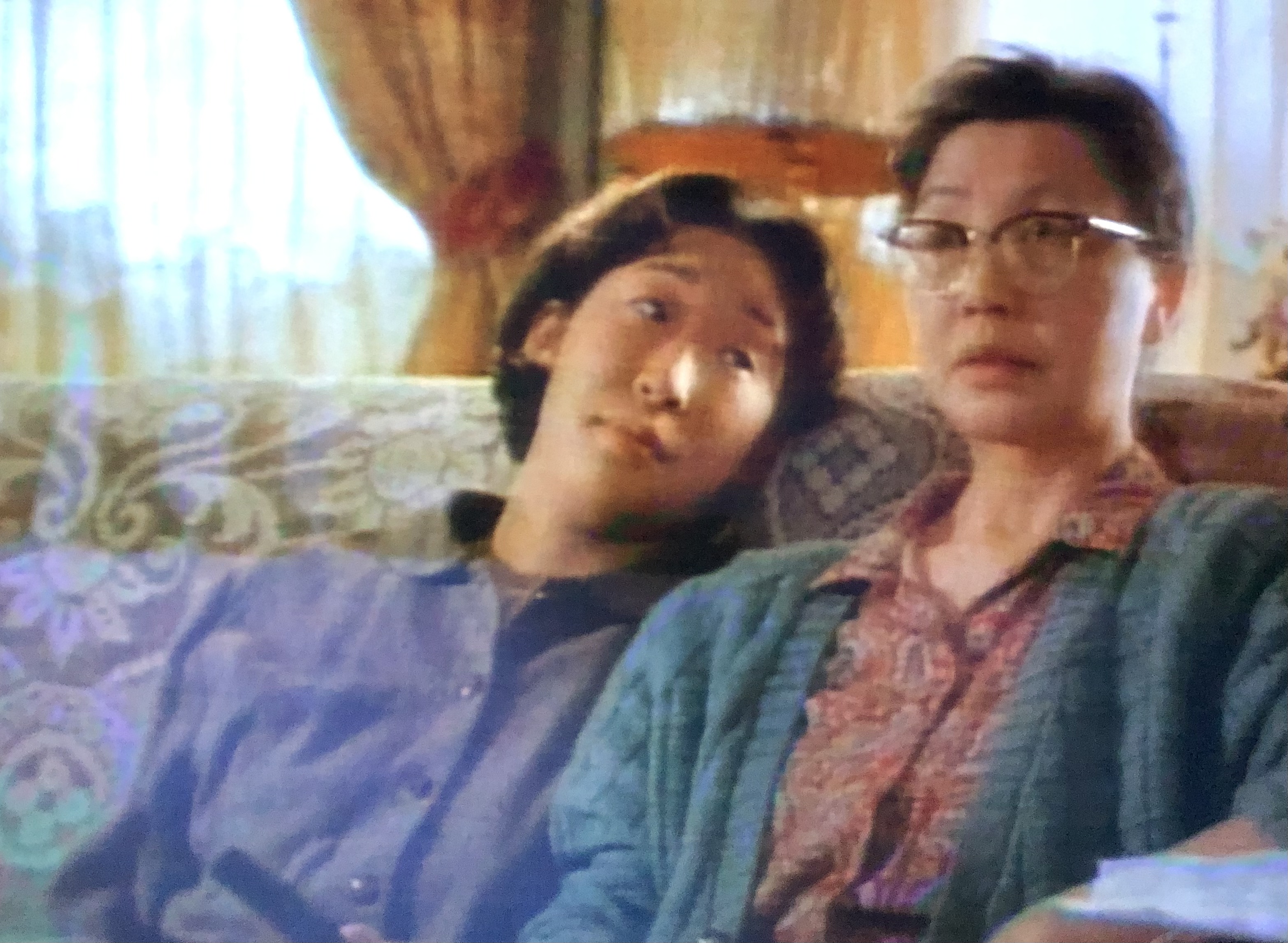
Sandra Oh stars as aspiring actress Jade Li in a family of Chinese immigrant parents. Her younger sister Pearl looks up to her. They share a bedroom despite Jade being twenty-two-years old. The girls also have an older brother Winston, but his memory is locked up in a secret box beneath the bed. Apparently, he has been disowned (mostly by their stern, family values protective father) and this symbolism will remain in affect throughout due to Jade’s rebellious spirit. Much like her absent brother, Jade has the desire to break tradition. 

Jade (Sandra Oh) and Pearl’s (Frances You) relationship is an adorable illustration of sisterhood. They protect each other, dance, eat, and everything in between. DP: Peter Wunstorf.

Born in Hong Kong and raised in Toronto, Jade is the product of her surroundings, primarily the television and wanting to be on it. Jade is naturally gifted at mimicking everything that she sees and hears— Southern accents and all. Yet in two very specific instances, Jade is confronted by an uncomfortable reality of living in an awkward duality. She must decide between portraying the terribly offensive stereotypical accent or truly understanding what being outside of China has done to her. Jade may be able to speak the Cantonese her parent have taught her, but when it comes to reading the very language itself, it makes her question herself as a Chinese woman. The questions raised to her are valid, deeply personal and will affect her throughout the film. What does being of Chinese descent illustrate to the next generation being raised in a place far removed and situated in another culture? 

Jade (Sandra Oh) and Lisa (Claudette Carracedo) share hopes for the future. DP: Peter Wunstorf.

When Jade’s best friend Lisa asks what her dream is, Jade softly responds that she wants to win the Academy Award for a big part. This is such a sad, bittersweet statement in a twenty-eight year old film where limited stride has been made in an institution that favors white actresses above all others. Last year, Youn Yuh-Jung won Best Supporting Actress for her role as the grandmother in Minari and the previous win in that category was Sayonara’s Miyoshi Umeki in 1957– sixty-four years prior. Truly great Asian actresses from Michelle Yeoh to Maggie Leung and Ziyi Zhang and more have been glaringly overlooked. Thus, Jade’s future hopes are not only incredibly impossible odds— they are proof of the blatant unfairness and racism in Hollywood film awards. Jade is already struggling to find casting directors that appreciate her multifaceted techniques. With the doors continuing to close on her, how could Jade even begin to break out of achieving one slice of her desire? 

Even though her parents not completely invested in Jade’s career choice, Mom (Alannah Ong) doesn’t mind if she takes a more respectable journalism gig. DP: Peter Wunstorf.

Meanwhile, Jade’s parents and friends continue setting her up with different Asian men in hopes of marrying her off. This dated customary setup doesn’t suit the current landscape. Jade has far too many unconventional ideas, is too focused on independence than subjecting herself to fitting in with the old ways. In Toronto, she feels encouraged to follow another path that does not include the ideal mate, but a preferred partner of her own choosing. 

The sisters must hide their photo with Winston... 

Under the bed. DP: Peter Wunstorf.

A very important factor into Jade’s story is Winston continuously being brought up. People would ask how their son is doing. The mother makes up stories, but the father speaks nothing of him. Winston’s blacklisting from the family— his disownment— is primarily the father’s doing. Jade’s sheer independence starts bothering her father, especially the acting and the “talking back.” Jade is supposed to be respectful, demure, obedient, and quiet. Whenever her father becomes angry or disappointed in her, Jade brings him red bean buns and tea as a forgiveness branch. She also becomes mother hen-ly— massaging his back and combing his hair, seeming more wifely than daughterly. Beneath trying to appease her father, Jade aches to be her true authentic self without his constant backlash.  

Jade imagines herself a Southern belle. DP: Peter Wunstorf.

Unfortunately, casting agents see one opportunity for women like Jade. DP: Peter Wunstorf.

So while the older generation continues speaking in their native Cantonese tongue, Jade, Lisa, and Pearl exemplify the turning tide. They understand the language and respond back in English. 

When Dad introduces his daughters to Uncle Hong, they must recite a greeting in perfect Cantonese. 

Uncle Hong (Donald Fong) making dumplings from scratch with his sister-in-law. 

Double Happiness also shows a huge relationship between food and community. Jade’s family and their friends gather around the table—a constant sturdy structure— eating hefty portions with their chopsticks, having conversations, or making homemade dumplings. It almost has that family restaurant quality, seeing that the mother prepares everything because it is expected of her as the daughters set the table. 

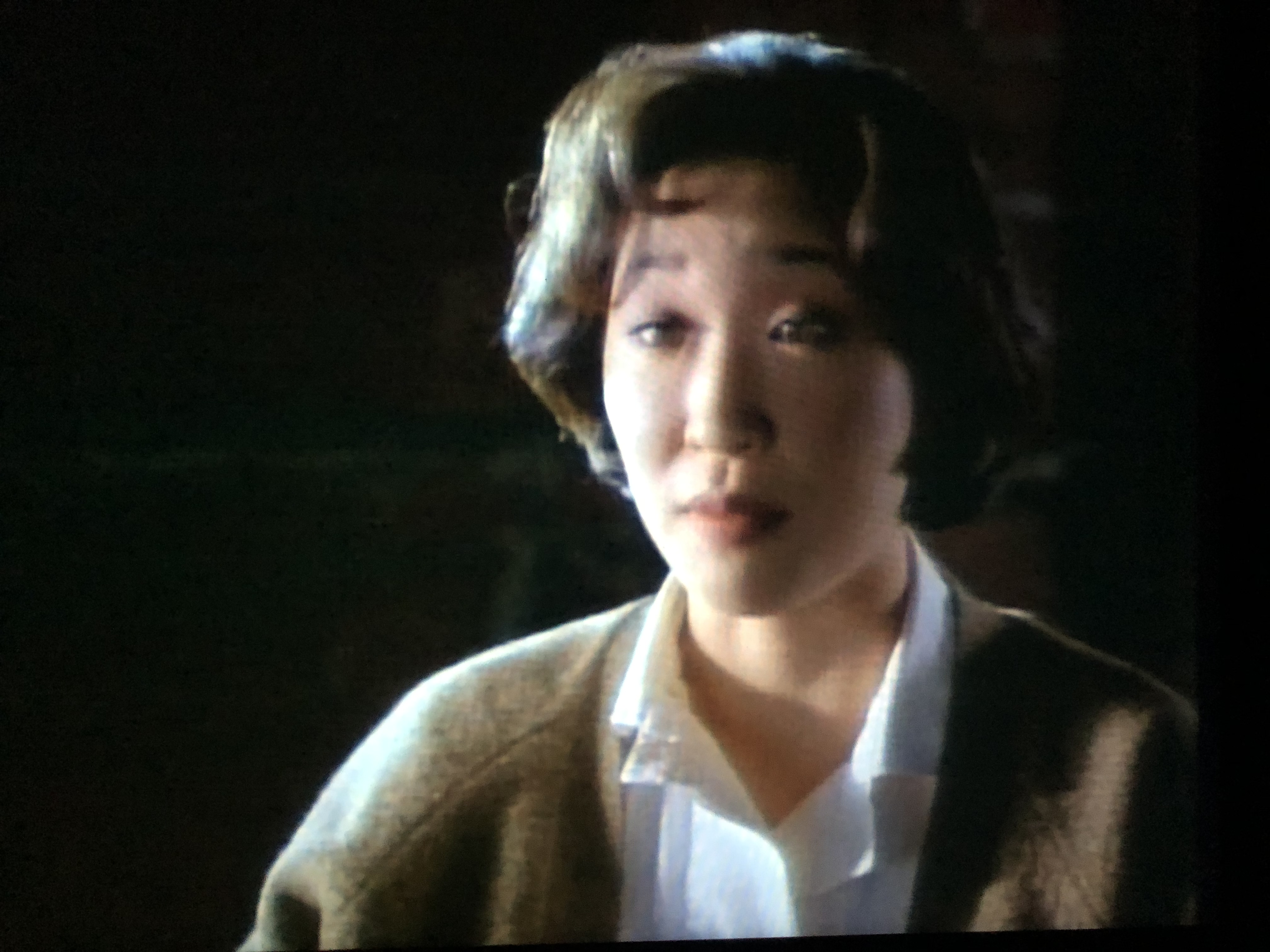
In the standard white dress and classic pearls once more, Jade realizes that the life of her traditional parents is not the life for her. DP: Peter Wunstorf.

A solid prize winner at the Toronto International Film Festival and Berlin International Film Festival,  writer/director Mina Shum’s charming, delightful screenplay is chalk-full of humor, wisdom, and defiance. In a role fresh after the candid biopic The Diary of Evelyn Lau, an utterly brilliant Sandra Oh breathes life into the free-spirited Jade. Oh was deserving of her awards— the Genie Award for Best Actress (the former Canadian equivalent of the Oscars) and a special mention from the Torino International Festival of Young Cinema. 

Red bean buns will not always have sway for Jade’s dad (Stephan Chang). DP: Peter Wunstorf.

Currently streaming on Prime Video, Double Happiness will have anyone laughing, resonating with a woman’s modern-day independence, and coming back stronger in the face of abject rejection/racism. 


Friday, January 28, 2022

‘The Ice Storm,’ Reflecting On Ang Lee’s Artic Drama


The Ice Storm film poster. 

“The meaning of Fantastic Four was that a family is like your own personal anti-matter. Your family is the void you emerge from. And the place you return to when you die.”—Paul Hood contemplating on life whilst reading Fantastic Four Issue #141 The End of The Fantastic Four 

Based on Rick Moody’s novel, the characters in The Ice Storm are as insufferably cold and frigid as the title metaphorically implies. Set between New Canaan, Connecticut and New York City, two middle-class, white suburbia families cross boundaries with each other. These are privileged people— middle aged adults “raising” children who are clearly interested in adult actions— mainly sex, drugs, and alcohol. 

The film opens on Paul’s train. 

And it has stopped operating due to inclement weather.

Fresh off the highs of Sam Raimi’s Spider-Man and Peter Jackson’s Lord of the Rings trilogy, I first watched Ang Lee’s icy classic twenty years ago on VHS with the geeky hope of Tobey Maguire and Elijah Wood sharing scenes together. They don’t. Yet their characters are eerily similar. Paul Hood is an awkward intellectual who philosophizes life through a comic book perspective and smokes pot with his girl stealing roommate, Francis Davenport (played by David Krumholtz). Mikey Carver is a quiet eccentric nerd who is bad at sports and obsessed with molecular science and Paul’s sharp sister younger Wendy. Furthermore, Mikey’s relationship with his father Jim is frosty as opposed to Paul’s stiffly relaxed relationship with Ben. 

Sandy (Adam Hann-Byrd) and Mikey (Elijah Wood) serve guests in aprons at their parents’ dinner and later sneakily drink wine in the kitchen. The adults just never seem to watch their children’s behavior. 

On the surface, the Carvers and the Hoods appear civil to each other. Their marriages, however, are charades put on for the neighbors. Janey and her husband Jim Carver have lost the spark between them— likely due to his constant travels and bed “performance” capabilities. Elena no longer desires to be intimate with her husband Ben Hood. 

Elena (Joan Allen, right) offers to wash the dishes, but Janey (Sigourney Weather, left) nearly blows her head off with her declinations. Afterwards, she plays calm and collected, reasserting her “no” with “it’s quite alright.”

One of the most incredible cropping is this scene of observing retired servants Mikey (Elijah Wood) and Sandy (Adam Hann-Byrd) watching the adults drinking. 

While Elena is extremely timid with Ben, Elena and Wendy do not have the closest mother/daughter relationship either. In Wendy’s mind, Elena represents the rebellious notion, “you are my mother, but I don’t have to like you or be like you.” Wendy is an outspoken political wildfire, a shoplifter, and smoker all at the age of fourteen. And she is very, very interested in the male body in an imperviously wicked way. Polar opposite Elena wants to mimic her daughter— obtaining her lost youth, her lost pleasure. She seems a damaged product of her time— trapped in an unhappy marriage which likely happened at a young age. Yet Elena’s dreamy perception of Wendy is far from who Wendy truly is. 

Red coated Wendy Hood (Christina Ricci) through Elena’s eyes— a free spirited girl who can do anything, be anything. 

But in reality, Wendy is on her way to steal snack cakes…

The Ice Storm hits on heavy territory that may be too sensitive for viewers, especially in the frank and bizarre scenarios involving overtly curious children. By clinically revealing the natural inclination to explore the human body, the film discloses on the deepest, darkest intimate secrets of the young psyche. When Mikey and Wendy are kissing, they are not embracing or touching each other. They are joined only by their experimenting lips, merely approaching the science of this act without the emotional attachment. 

Close up on Mikey and Wendy’s outdoors make out session.

The wide shot angle. 

On the other hand, the unbalanced Sandy Carver— the most terrifying of the children— has the potential to become a vicious grownup. He already has this fixated quality about him— a fixation on violence and an unhinged fixation to Wendy. He appears to be the epitome of danger which is precisely what draws Wendy on in. They both have an unhealthy taste for walking down the wrong tracks. 

Sandy (Adam Hann-Byrd) aims his army soldier at the retreating Wendy. Wendy will later undress the soldier. 

Lines are drawn and some are deliberately trying to cross them. Janey is having sex with Ben, but Ben needs the soundboard aspect too. Predatory Wendy is the center of a strangely demented triangle— two brothers— a secret unboyfriend and a toy to play with. An envious Paul is trying to get a rich New York classmate’s attention, but uses drugs in a ruthless tactic. The teens are too corrupt to make positive choices (and it takes Paul a long while to leave a rape-y situation) and the adults are invested in their own psychological, midlife crises to offer parental guidance. Without such aide, the young ones are left alone raging on hormones and accessible alcohol. Obviously, they all need therapy. 

Janey and Ben are both deprived. 

Bored Janey barely notices what Mikey and Sandy are up to. Between ironically reading Phillip Roth’s When She Was Good (a novel about a severely moral woman), alone with an always traveling Jim, and seeking sexual pleasures from around the neighborhood, Janey is the definition of absent housewife. She tries to assert some authority over the youth though. When Janey spies Sandy blowing up aircrafts with dynamite or Wendy taking advantage of Sandy in her own bathroom, Janey tries to set them both straight on their unlawful behaviors— albeit unsuccessfully. 

Elena (Joan Allen) and Jim (Jamey Sheridan) are the last ones left in the key party house. 

During the weather warning, the local key party builds the climax. Everyone is so enthusiastic for the open relationship phenomenon that a woman even brings her son as her date. A man disgustingly wishes people brought their daughters too. There is no real shame, no ostracizing of this convoluted behavior. Maybe New Canaan residents are all sex crazed and must turn to each other in a nefarious Mister Rogers Neighborhood way. Still, Elena—who has easily figured out Ben and Janey’s affair—reluctantly attends something not in her repressed nature. Like a victorious cougar, Janey pulls out the son’s key and goes off wherever much to the embarrassment of Jim, Ben, and Elena. 

The morning after.

The Ice Storm is a complicated favorite for its compelling, abrasive narrative. The cast is perfect too— Sigourney Weaver, Joan Allen, and Kevin Kline along with Elijah Wood and Tobey Maguire. Another scenic pleasure included Christina Ricci whose Wendy mirrors her earlier Wednesday Adams in The Addams Family. Ang Lee’s daring direction and Frederick Elmes picturesque cinematography combines vividly well to the haunting music Mychael Danna composed. This here is real quality cinema. Heavy yet beautifully made.   

In a light afternoon, Ben (Kevin Kline) picks up Wendy (Christina Ricci) as though she were a child and not a blossoming teenager. 

In the late night, Ben (Kevin Kline) carries Mikey (Elijah Wood) to his car.

The man carrying a red coated child has heartbreaking symmetry. In one moment, Ben holds Wendy away from the Carvers house not just because her feet are cold. Ben naively believes that by shielding his daughter away from the dangers that boys like Mikey represent, that he could protect her innocence— unknowing that that concept is long lost. Ben had earlier given Paul a delayed “birds and bees” talk yet scolded Mikey for fooling around with Wendy. There is celebration for a father’s son to sow wild oats early on, but a daughter remains virtuous in a father’s eyes. By the end, Ben finds Mikey lying face down in a red bubble coat and lifts the cold body of the very boy he blasted. It delivers a tragic parallel between Mikey and Paul— these teenage boys so alike yet never share a moment together—that Mikey reminds Ben of Paul and doesn't necessarily need to voice the grievance aloud. 

Paul (Tobey Maguire) boarding off the train with his Fantastic Four comic, oblivious to the befallen.  

With a soft, clandestine tone surrounded in tremulous ice and whispering wood, The Ice Storm is a startling, eye-opening drama that dissects the roots of repression and sexual awakening. The harrowing credits roll on the sad underlying fact that when death comes, the dying have no choice (broken or not) but to return to the place they came from. 


Saturday, January 8, 2022

Marti, Coretta, Josie, & Matty— Honoring Lisa Nicole Carson’s Four Unforgettable Film Characters


The four memorable 1990’s film roles of Lisa Nicole Carson.

“I was a tomboy growing up. Then puberty hit, and seemingly overnight I had a 38DD bra size. I constantly wore sweatshirts and was mad at my body. Then I fell in love as I neared my twenties. I was often the curvy one on set, and I felt beautiful no matter my size.”

Pam Grier and Tamara Dobson— the creme of the 1970’s Blaxploitation era— would certainly pass their torches down to Lisa Nicole Carson, a voluptuous, softly spoken Southern belle whose radiant, dimpled smile lit up the film screen in the 1990’s. Often playing roles so minor, so minuscule, one must not blink in order to truly appreciate her presence, this four time NAACP Image Award nominee and SAG recipient (for being a part of the Ally McBeal TV show ensemble) was memorable in four different roles— dreamy Marti, sensuous Coretta, vicarious Josie, and provocative Matty. 

Marti (Lisa Nicole Carson) takes a moment to reflect and freshen up in Jason’s Lyric, 1994.

No one deserved better than Jason’s Lyric’s Marti— the best friend and fast food co-worker to Lyric. Marti loved memorizing thoughtful quotes and reciting them to Lyric at every opportunity. Her sweet voice articulated findings in ways that made one fancy true romance. Yet resolute on sticking to Lyric’s violent brother, Alonzo, Marti also believed herself unworthy of receiving a love that Lyric had found. 

Director Doug McHenry must have had a purpose in situating the main couples in two particularly different love scenes set outdoors: brightly lit Lyric and Jason are passionately shrouded in a beautiful, floral wilderness while Marti is subjected to a dark back alley romp with Alonzo. 

“I know you think Alonzo isn't perfect, but I'm going to hold on to him... cause he's all I got. The wards ain't full of Jasons. What you found was quiet... in a world full of thunder. I ain't got no choice but to listen to it. You do.”
Marti said those words in a poetic sensibility— regret, sadness, and pain— regret for the limited choices, sadness for the heavy burden that comes with settling for less, and pain for the harm that men like Alonzo cause. In Lyric’s eyes, Marti represents a woman that will never leave a bad situation no matter how rough. These characters were living in endless danger, an endless generational cycle. Marti chooses to stand still with a reactionary Alonzo (who lost his closest friends), armed with sentimental quotes as mere fiction instead of leaving Third Ward, Houston, Texas behind with her now gone friend. 

It often hurts how badly underrated Carson’s promising performance in Jason’s Lyric is. The erotic picture has some flaws, but she is a scene stealing gem right down to the post-Poetic Justice topknot braids, baby hair, heavy jewelry, and long acrylic nails. She is extraordinary, irresistible, authentic, and raw, showing a range of emotional degrees— light hearted humor, seriousness, joy, and vulnerability. When Marti expressed awe in realizing that Lyric was experiencing real love, Carson made the audience believe and yearn for Marti to have that too. 

Coretta (Lisa Nicole Carson) treats World War II veteran Earl Rawlins (played by Denzel Washington) to misleading information and a hot dalliance.  

Carl Franklin’s Devil in a Blue Dress, adapted from Walter Mosley’s detective noir, features short lived  Coretta— a married woman who knows how to blackmail. Unfortunately, the skill does not save her. 

In 1948 Los Angeles, Earl Rawlins just got fired and receives the opportunity of a lifetime— uncover information on the elusive Daphne and send it over. It is super shady, but Earl needs the money for keeping up his fine house. So he goes to a bar and runs into Coretta and her husband Dupree. The familiarity between Earl and Coretta is palpable. She plays the demure Christian wife until they’re home alone (well, technically Dupree’s drunkenly passed out on the bed, but still.....). The cat and mouse game intensifies— Coretta knows who Earl is looking for and smartly uses her feminine wild cards on the poor, sexually starved man. 

In Devil in a Blue Dress, it is imperative to analyze how both Daphne and Coretta treat Earl and each other (offscreen). Daphne puts Earl at arm’s length and leaves him open to all kinds of potential harm. Coretta also withholds vital significance that could help Earl’s case. While Coretta does sleep with Earl in a rather charged, steamy scene, Earl and Daphne have an underlying chemistry too, a “will they, won’t they” friction. Coretta and Daphne are not friends. This intense turmoil between these two women sours awfully. Daphne shows little regret, little empathy about the turn of events. 

In the end, Coretta’s memory at least gives Earl the ammunition needed to clean up the mess. 

Up against Denzel Washington who already obtained his first Oscar prior to filming, Carson is great in her period film glam— straightened, sleek hair, red lipstick, and church lady dress. She understands that her character is calculating, retaining a certain evil about her. After all, instead of going to the police (who all seem corrupt in the film), Coretta wields foul, disgusting criminal activity as potential payout, hiding it in the most unlikely and improper place. Yes, Coretta is a very sexy vixen, but she is also resourceful, curious, enigmatic, and sharp— exactly how Carson portrays her to be. 


After helping pack up and ready for the big move, Josie (Lisa Nicole Carson) has a laugh with her BFF Nina (Nia Long) in Love Jones, 1997.

In Love Jones, Josie has no world of her own making. She vicariously lives through her best friend, Nina’s relationships. While Nina juggles three men— an on/off fiancĂ©, true love, and true love’s frenemy, “the jones” does not strike Josie once. Even though Nina blasts Josie for always thinking about sex, the remark lands oddly. The audience never sees Josie with anyone. From the moment Josie is introduced to Darius Lovehall and his jazzy poet posse, she is submerged into the background, almost like a shy girl hesitant to escape the shadows. This frames her as unimportant, undesirable. Everyone wants Nina. Josie is the sidekick, the therapist, the love guru. Yet she is warm, generous. Her laughter is melodious. 

The story is not even a little bit about Josie’s character, but Carson shines bright alongside Nia Long. Their camaraderie has a real, kindred sisterhood vibe. The car scene alone is hilarious— Nina describing her night of passion with Darius and Josie quietly hanging onto every word. 

In this film about art and poetry, Carson has that syrupy tone meant to be reciting prose. Writer/director Theodore Witcher lost the opportunity to truly put Carson’s brilliance on display. Her last scene is just a vocal (offscreen Josie calls onscreen Darius to let him know about Nina’s job at Vibe Magazine). It would have been awesome having Josie help Nina move again (full circle) or have Josie also take the stage as a virgin to the mic, reciting the Sonia Sanchez prose like everyone else as an inspirational vehicle for her friend. Still, Carson conjured magic with what was given to her. 

At a club, Matty (Lisa Nicole Carson) is caught by her husband Lenny (Roger Guenveur Smith) with the good doc (offscreen Samuel L. Jackson) in Eve’s Bayou, 1997.

The married Matty in Eve’s Bayou happens to be one of several ladies attending to the equally married Dr. Louis Baptiste’s lustful desires. Matty is also the key catalyst to destroying young Eve’s illusions of her father. Believing that they’re alone in the garage while a massive glittering party goes down in the main Baptiste house, Matty and Louis hook up and a confused Eve witnesses them. Older sister Cisely blurs Eve’s memory further by insinuating that she just saw them hug— nothing more. 

Now Matty’s husband Lenny is always gone. So of course, she turns to attentive Dr. Louis— everyone does. The man knows how to cure a women’s ailments— except his wife. Still, Matty and Dr. Louis’s flirtatious evening at the bar turns into horror once Lenny steps in. Whether it is due to voodoo concocted by Eve with Elzora’s aide, Eve is once again left to witness life altering circumstances. 

Although limited in her screen time, Carson holds her own in the debut feature film of actress turned filmmaker Kasi Lemmons. In this supernatural period piece, instead of Los Angeles, the setting is in the mystical gothic Louisiana of 1962. Carson adds an overwhelming sweetness and charm mixed with the sumptuous passions of her previous characters into Matty— a woman who does not need to use magic to get what she wants. 

Lisa Nicole Carson, Essence, July 2015, photographed by Erik Umphery. 

As of now, Carson’s last role was Mae Bell in The New Edition Story— five years ago. The phenomenal actress has been through so much in her career and personal life mainly due to her bipolar diagnosis. It should not be a crime to have an illness as delicate as hers, but Hollywood still likes to shame celebrities for even the tiniest imperfection, the slightest flaw. In this 2015 article in Essence, Carson discusses being back in Los Angeles and starting over fresh: 

“I’ve returned to L.A. to give my career another try. I’m going on auditions and handling rejection better than I did in the past. I’m tackling the myth that African-American women have to be pillars of strength. We have the right to fall. We have the right not to always have our sh– together. We just have to take our mental health as seriously as we do the physical. Do not be afraid to go to a therapist or a doctor to make sure everything is fine. I am excited for my new chapter. I now am stronger and ready for what’s next, while taking care of my emotional health.”

In the meantime, devoted Lisa Nicole Carson fans should continue to support and pray for her continued success— that she goes bigger and beyond the roles of Marti, Coretta, Josie, and Matty. We have been ready for her to be the leading lady in the story for long enough.