Showing posts with label 2000's Film. Show all posts

Sunday, February 1, 2026

Akasha Rules Her Limited Presence In Lackluster ‘Queen Of The Damned’


Queen of the Damned film poster.

Vampires are the most alluring creatures depicted in both the literary and filmmaking capacity— thirsty for human blood and lustful for warm or cold bodies. We’re often drawn to reading Bram Stoker’s classic Dracula or Sheridan Le Fanu’s earlier novel Carmella. Wes Craven’s Vampire in Brooklyn delivers specific 1990’s laughter and Buffy the Vampire Slayer reruns offer campy nostalgia. Bill Gunn’s Ganja & Hess and Nikyatu Jusu’s Suicide By Sunlight features villainous Final Black Women, a beauty bound to live forever, her blood coated fangs. 

With a criminal sixteen minute screen time, Aaliyah’s final role as Anne Rice’s titular ruler Akasha in Australian director Michael Rohmer’s Queen of the Damned, had such great potential. 

Akasha the stone. DP: Ian Baker.

The film begins very boringly. 
Lestat, an egotistical vampire walking down the streets in typical vamp attire, narrates and isn’t particularly interesting. Marius, Lestat’s sire, had seen something in him. Yet, what? There is no charm, no charisma, a vacancy in his eyes. Of course, he’s meant to be voided, he’s the walking dead. 

The craftsmanship on Akasha’s stone is quite exquisite. DP: Ian Baker. 

When Lestat reflects on his experience being made and his sudden desire for music, he’s led into murdering a young woman (not drinking out of hunger) and it torments him. Still, Marius takes Lestat to some faraway lair in the center of water. Lestat starts playing a fiddle— a fiddle that awakens Akasha, a stone statue.

Why has Marius departed? Jealous that Akasha is more drawn to Lestat even though Marius kept her hidden and otherwise took care of her and her king’s statues? 

Akasha’s awakening involves abstract flashes, past mingling with the present. She will break free almost two hundred years later. DP: Ian Baker.

Meanwhile, a young woman named Jesse obsesses over Lestat, reading his journals and listening to his music. She’s a human attracted to getting into any kind of danger as long as she obtains closeness to Lestat— typical groupie behavior. 

Unfortunately, Akasha exhibits Jesse’s same mindset, Akasha using her superior powers on a grander scale in hopes of snatching up Lestat’s devotion. She’s manipulated minds and situations to ensure Lestat’s success. Now newly awakened and out on the prowl, slim, agile Akasha enters a modern vampire bar dressed in an elaborate silver and gold headpiece, metallic bralette, free flowing skirt and arm bands that sway along her movements. She walks in a purposefully sensuous manner, slow and seductive, her kohl-lined blue eyes holding a mesmerizing magnetism that her fellow creatures cannot break away from. She is their mother, the siren above all sirens. 

And she kills them. 

Everyone. 

The scene is a riot— a sheer exhibition of a vampire who doesn’t always have to physical touch her victims— biting into their flesh or ripping out their hearts and feeding on it. Akasha can burn them alive with the wave of her hand. She’s a grade A narcissist too, caring solely for her own pleasures, her passion for violence and death outweighing the normal vampire levels. They usually want someone to devour tomorrow. Whereas Akasha needs as much as possible, patience be damned. Her appetite is insatiable. Can Lestat truly handle a queen operating without a moral compass? 

Akasha murders a bar of vampires in a slow, methodical power demonstration. DP: Ian Baker.

Akasha walking away in slow motion from the burning bar holds reminders of Carrie leaving behind her burning high school. Akasha did not give a fudge. DP: Ian Baker.


Jesse was not the only one looking forward to Lestat’s concert. DP: Ian Baker.

On the concert day, Jesse decides to continue stalking Lestat (despite watching him kill a poor woman in front of her) and Maurice returns to warn Lestat that Akasha has woken up and killed her longtime king. Lestat only cares about the show, his delight in seeing how many vampires will try to murder him on stage. Later, as he serenades the audience, cloaked assassins in wait, Maurice joins in the sudden fray. They’re seemingly outnumbered until Akasha lets the bodies fray peacefully into the air before she makes her appearance visible. Her hypnotic gaze exists only for the vampire Lestat yet it doesn’t necessarily seem to be shared. He looks grateful, relieved, and surprised. Not the same as the intense need he reveals with Jesse, the innocent naïveté. 

Still, Akasha takes Lestat up on a magical ride through the air that requires no carpet or singing genie. 

At the end of the day, even Akasha becomes fooled by devotion. DP: Ian Baker.

Akasha exemplifies an evil malice that puts other villains to shame. She intended to destroy humanity and rule the vampire underworld. Could Buffy be a match for someone as powerful? It is easy to imagine Black Panther’s foe Kilmonger parading around Akasha’s sadistic ideas and asking her “is this your king?” regarding Lestat. The rockstar vampire showed no authoritative values, especially to be aligned alongside such an inherently wicked goddess. 

It really sucked that the end came down to broadcasting uncomfortable optics: the pure white woman versus a woman of color— the only woman of color person in the film, in the whole vampire coven. It was giving Black women are good for a fun time, not a long time (aka eternity for them). Lestat conveys “your strength was a delicious temporary addiction, I will be taking that, and sticking with my human lover.” Akasha, a cruel chilling force, still manages to convey a human reaction—betrayal— as her family implores her to a barbaric fate akin to a salacious orgy.  

Akasha shows Lestat a kingdom— dead bodies surrounding waters and dirt covered land. She doesn’t understand his obvious discontent. DP: Ian Baker.

Although much promise had been shown in her first part as Romeo Must Die’s sweet-soft heroine Trish O’ Day, Aaliyah's incredible transformation is the primary highlight in Queen of the Damned. She utterly evolved from mysterious, beautiful singer/dancer into a full-fledged femme fatale vampire— her every gesture, her every look spoke terrifying volumes. Her irresistible performance transcends bland material that angered Anne Rice— who deserved a better adaptation of her work. Angus Strathie and Bao Tranchi’s costume designs must be commended for their conjoined talents— the metallic breast plates, the elaborate headpiece and jewelry, and the flowing skirts. This trio were responsible for making Akasha an outstanding villain. 

Famous women who paid homage to Akasha— Anok Yai, Teyana Taylor, Meagan Good, and Normani.

Co-produced by Channing Dungey (former ABC television head), just imagine women filmmakers tackling this gritty material, intending for Akasha to lead her own story, to be the cold, callous villain not relying on a man to wake her up. If Julie Dash or Kasi Lemmons helmed the reins, Akasha’s narrative would probably dive deep into rich Egyptian history, voices told by real figures that actually look of that time period, not white people giving accounts that sound like secondhand make believe. There are too many “Akasha is this” and “Akasha is that” from the vampires, leaving Akasha to barely address her motives. Certain Black women filmmakers love the bonus incentive of exploring diverse cultures (the bonafide research sleuths) and lending that into the scripts to add layered nuances, to even educate the actors and the behind-the-scenes peoples. Akasha, supposedly the most powerful vampire, couldn’t see that her chosen one— after “sleeping for two hundred plus years”— was hung up on Jesse? Lust can blind most folks. A creature of Akasha’s supernatural caliber would have been given Lestat the smoke with the flick of her wrist. Whether due to the poor script or the acting performance, it wasn’t believable that Lestat tricked Akasha and led to her demise. What else was planned before Aaliyah passed away? Although her scenes were completed, the film has an unfinished quality and doesn’t account for why she’s barely in it. Plus, Aaliyah and Korn were to collaborate on music. Perhaps she would have contributed to an edgy soundtrack that included Tricky (a favorite). What If and I Can Be from her last album definitely showcased that her vocals could rival the thrum of an electric guitar riff. 

Akasha exudes a commendable presence. DP: Ian Baker.

Every few years, the itch to rewatch Queen of the Damned comes into effect. Aaliyah only had two differing film roles. Akasha is the hardest as her fiery fictional end is a painful metaphor to the cause of death its portrayer, a phenomenal artist that the world lost way too soon.  


Sunday, January 18, 2026

Revisiting The Significance Of Trish O’ Day In ‘Romeo Must Die,’ Nearly Twenty-Six Years Later


Romeo Must Die film poster. 

Romeo Must Die finds an authentic, modern-day Juliet Capulet in Trish O’Day. She’s a cherished figure in the community, often smiling and laughing, especially around the neighborhood children— joy is at the top of her hierarchy. Her vibrant, colorful Serpentine Fire boutique features women coworkers and seems a positive base for the frequent youth. They call her name with singsong cheerfulness, implying a valuable reciprocated kindness. This protective healing ground is a carefully built strategy for her, a positive luxury stemming from rising above her past environment, a turmoil that she seeks to escape. While some would reap the benefits of nepotism and allow the privileged lifestyle to inflate their egos, Trish embodies “being the change you want to see in the world” philosophy. An individual can be raised rich and affluent, but knowing the whys and how’s of being rich and affluent can push a humble spirit into setting themselves apart, building a foundation on healthier terms. 

Trish (Aaliyah) choreographing a dance with her coworker Lori (Fatima Robinson—Aaliyah’s primary real-life choreographer and friend) and the kids.

Serpentine Fire Crew: Trish and Lori. DP: Glen MacPherson.

Trish’s father Isaak O’Day seems too polite to be in gang affiliation while his associate Mac has an oily ruthlessness that shines bright. Mac does not employ loyalist qualities and Isaak’s heavy reliance on him is not a good look for someone who has been in gang-related business a long time. Also, what happened to Trish and Colin’s mother— death at the hands of a vengeful foe or a clandestine departure? Trish’s situation bears similarities to the problematic Disney Princess trope as most of those girls grow up motherless and dealing with either overprotective or centered masculine characters. Again, Isaak acts like a gentle papa bear and wouldn’t be a Titan figure setting off to blow up Trish’s most treasured boutique. Though a barbershop does explode among other events for the small owners who refuse to sign over their deeds. 

When breaking down the name Serpentine Fire, serpentine meaning snake-like and fire as burning flames, a phoenix comes to mind, a powerful bird that rises from the ashes. Trish has that mentality of being reborn, reshaping herself by creating a close-knit workplace. Although there are not many scenes in the shop, it comes up in as also being used by Trish’s brother Colin, his preference to hide behind his sister’s good deeds. She isn’t dumb, however— keenly aware what game he’s playing and telling him not to bring that mess. 

In order to escape her newly assigned bodyguard, Trish hops into the cab of Han Sing (Jet Li). DP: Glen MacPherson.

Despite stranger danger, Trish doesn’t mind being in Han Sing’s stolen cab or Han later entering her apartment without the chivalry of knocking. It is Darius grabbing Nina’s address off the check in the record store in Love Jones or Jason following Lyric’s bus to her door in Jason’s Lyric— red flags bow tied as romance. Except in Trish and Han’s case, they behave as strictly platonic friends that save each other throughout the film. 

Colin (DB Woodside) obviously would come to a bad end. DP: Glen MacPherson.

Trish blames her father Isaak (Delroy Lindo) for Colin’s bad choices. DP: Glen MacPherson.

Now Colin O’Day shares a single apiece with Trish and Isaak. The reactions to his fate seem grossly unearned, especially in juxtaposition with Han’s storyline. We’re not given much to prove Colin, Trish, and Isaak as a connective family, as loving and supportive of each other in light of lacking a maternal figure (Han has this as well). Trish is defensive with Colin and rightfully so as he constantly weaponizes Serpentine Fire. If the brother truly loved his sister, he would have found a better place to conduct whatever his mysterious plans were. Meanwhile, Colin informs Isaak about wanting to be his own man, his own boss, to step out of the O’Day shadows. Later, we learn that both Trish and Colin were college educated. Why didn’t Colin want to be on a straight and narrow path like Trish? Had Isaak unintentionally enticed Colin into gang related warfare? Furthermore, Isaak planned to finally leave that life and own a sports team, leave behind a legacy for Colin to run. Isaak waiting until his children are full grown adults to be legit though? That’s wild. It is ninth-world  wonder Colin and Trish survived as long as they did. 

Trish’s pretty apartment is painted in lighter shades of purplish pink with gold accents. DP: Glen MacPherson.

Trish’s sweet, sentimental embellishments in her childhood bedroom tell a story of innocent girlhood. DP: Glen MacPherson.

A wide awake Trish lays next to her stuffed animals. DP: Glen MacPherson.

Trish’s vulnerable moments are reserved with Han who shares commonalities. Han’s backstory is almost perfectly constructed (except again, no mother). The disgraced former cop escaped a Chinese prison and manages to find his family in America. His only mission is to figure out who killed his little brother, no indication if he is interested in law enforcement. When Han finds out that his last phone call was Serpentine Fire, Han requests Trish’s help. 

What joy looks like— big grins and ice cream cones. DP: Glen MacPherson.

Trish sharing a story about a prank gone wrong. DP: Glen MacPherson.

Trish mimics Han— entering his apartment (technically his deceased brother’s home)— without knocking. During this poignant scene, Trish gives a moving monologue, a small glimpse into her childhood, confessing that she fully understands her mother’s reaction to a heinous prank. With cartoons and video games promoting violence as everyday hijinks, naturally giving kids grand ideas, Trish and Colin’s mother probably easily believed this horrible joke because she witnessed the realities that her family faced firsthand. 

Han uses Trish to help fight an assassin. DP: Glen MacPherson.

The moves are playfully referenced in Aaliyah’s award-winning Try Again music video. 

Romeo Must Die’s all male production team— from the direction by Polish director Andrzej Bartkowiak to three writers Mitchell Kapner, Eric Bernt, and John Jarrell, and to cinematographer Glen MacPherson— could have made a film along the lines of Foxy Brown type blaxplotation to Proud Mary and other films that mirror it. Ironically enough, men shepherded Aaliyah’s whole musical career including her own uncle. Trish existed in the man’s world that James Brown sang about— a character made for Aaliyah to play. However, having no mother figure, Trish is shielded from being stripped of her agency, balancing between an outgoing, free-spirited nurturer to strong and firm in her values, her enigmatic quality lending itself to Aaliyah’s charismatic portrayal. The strongest range of depth was Trish’s sensitive emotional state, her grieving both a brother and mother through a distinctive core memory, a promising indication that acting could have been Aaliyah’s next step achievement. 
“What I like about Trish is that she's tough. She's independent,” Aaliyah says. “She doesn't take anything off anybody. But at the same time, she loves her family. She's got a sweet side. So I felt I could play her, and people could get into her. It would be realistic to people, being that people know me as Aaliyah, the artist -- there is this image that I have. I wanted to make the right transition and have people understand where I was going, and I felt Trish embodied all of that.”
Aaliyah’s magical chemistry with Jet Li also makes for a wonderful watch. The deep connective friendship between them created a believable strength onscreen. That familiar Romeo and Juliet formula—two different worlds meeting and colliding— works here. Unfortunately, mute-worthy, badly cast Anthony Anderson ruins things a bit. With plentiful peppered in laughter and light-hearted moments, the goofy, incompetent moronic bodyguard wasn’t needed, especially by an actor whose exploits will never age well and almost tarnishes the film’s legacy. Isaak would have selected a more capable, stern figure to protect his daughter. Delroy Lindo, one of the finest, most underrated thespians, put on a terrific performance as a father in the late-blooming stage of doing right. DMX as Silk the shortlived nightclub owner was a bonafide scene stealer. If only they gave him more than five minutes…

Trish in her childhood bedroom. DP: Glen MacPherson.

Trish in her element on the dance floor. DP: Glen MacPherson.

Other highlights are the dynamite fighting sequences— Han using Trish as a creative weapon is still riveting. The killer soundtrack features Aaliyah’s four songs produced by Timbaland (music executive of the film), Joe’s Rose in a Concrete World (playing in two different scenes), and Chanté Moore’s This is a Test— the film’s other saving grace. 

Trish with the smoking gun. DP: Glen MacPherson.

Trish O’Day will go down in history as a soft-hearted woman who had her father’s fire flowing on her veins. She couldn’t deny the instinctual prowess to become a valiant leader, knowing that when it comes to survival and shielding people that you care about from harm, sometimes violence is the answer. 


Wednesday, May 29, 2024

‘Love & Suicide,’ A Painful Depiction of Past Catching Up to Choke the Present


Love & Suicide film poster. 

“Being in Cuba has allowed me to live in a society that is not at war with itself. There is a sense of community. It’s a given in Cuba that, if you fall down, the person next to you is going to help you get up.”—Assata Shakur
Sometimes film has the ability to remind a person not to deny the authenticity of their truest selves, their purposes among life’s heaviest burdens.

Lisa France’s history making Love & Suicide left me strangled by the threads of challenging inner turmoils partially steeped by an upbringing damaged by parental absence. I remember once wanting to flee America and drown in Ghana’s people, disappear into a country no one knew me. Furthermore, there are family members drifting away, permanently living off grid. Thus, when the New Yorker character of Puerto Rican and Cuban heritage Tomas (calling himself Tom) seeks a real death in Cuba, the place where his absentee father was born. The fictional parallels spoke an alarmingly unexpected kinship to my reality. 

Tomas (Kamar de los Reyes) is in a dilemma. DP: Demian Lichtenstein. 

Path of self-destruction. DP: Demian Lichtenstein. 

An isolated Tomas descends into disparity, an unkempt man drinking and smoking cigarettes heavily, popping pills, and wielding a gun to his temple, wandering without purpose against Havana’s impoverished landscape, leaving desperate, sporadic voicemails to the unknown caller on the receiving end. The dreary, depressing scenes are extremely sensitive content to those conflicted by the very thoughts Tomas struggles to come to terms with.

Yet, two unconventional strangers pull Tomas out of his misery, revealing a whole beautiful, honest side of him— Alberto, the man with a heart of a gold and the other central figure and Nina, a Los Angeles woman wandering about in a culture that is not her own. 

Tomas is a grouchy grouch to sweet, sensible Alberto who demonstrates diligent patience with his passenger. DP: Demian Lichtenstein.  

The first American film made in Cuba post Fidel Castro’s revolution and without permission by both the United States and Cuban governments, Love & Suicide also symbolizes the film industry in a nutshell, one of many not listed on Letterboxd because so few no of existence, or think it of worthwhile note. It’s as though for all its effortless craft in storytelling— screenplay, acting, and direction— that it deserves burial beneath millions of other works, that it’s not valid enough to be archived, operating surely in a Tomas circumstance. 

Tomas is in a New York State of mind. DP: Demian Lichtenstein. 

Lisa Prince directed a timeless city that looked caught up in the past, a place that seemed outdated yet held a fierce vitality due to its diligent community that thrives in more heartfelt ways. It’s low budget and looks it. At the same time, this grainy abstract piece is effective, poignant, and sentimental. The late Kamar de los Reyes portrayed such a commendable, capable lead, an incredible actor whom I only saw for several years, a few minutes per day, playing a supporting role in the long gone One Life to Live— once my favorite soap opera. As Tomas, de los Reyes provides a strong, multifaceted range into the complexities of a character desiring escape despite having success— achieving the American dream with blood tied to two specific realms tainted by the very country. Luis Moro— producer and co-writer of the script— stars as the humble cab driver Alberto, the beneficial aid who deeply loves his heritage, giving respect, decency, and kindness to Tomas.

Alberto receives a thoughtful parting gift. DP: Demian Lichtenstein. 

The Capital Building holds similarity to the U. S. version yet you cannot help see it’s against the ravaged circumstances of the people. DP: Demian Lichtenstein. 

After Love & Suicide ended, Park Chan-wook’s Decision to Leave came to mind mainly because of the similar triggered emotions. It’s a different cinematic picture and whole other genre, but the deeper story dissects a meaningful predicament for the foreigner overwhelmed by complicated moral sensibilities. The tragic Seo-rae has ancestral ties to Korea, eventually chooses an explicit way out of the messes she causes. Although we know how her story concludes, Tomas leaves us on an ambiguous note, confessing to Alberto rather significant truths that seem both heartbreaking, reflective, and optimistic. 

Thus, Love & Suicide encourages profound reflection on what flows in our blood, the undeniable traits we set to diminish or forget entirely. Sometimes, many can mirror Tomas’s outlook, wanting to drown out certain truths impacted by shame or an unnamed grief. Family and friends can go astray, losing themselves to the jarring temptations that loneliness brings. The harder parts of life’s journey deals with the consequences, those fragile feelings of abandonment, of not being properly loved— especially detrimental if by a parent. Yet, an effervescent light can arise in the darkest hours, often by compassionate strangers who would rather see golden blessings than people haunted by shadows. 

Love & Suicide is available here on YouTube. 


Sunday, February 19, 2023

‘Brown Sugar,’ Full of Potential, Bittersweet And Sour


Brown Sugar film poster.

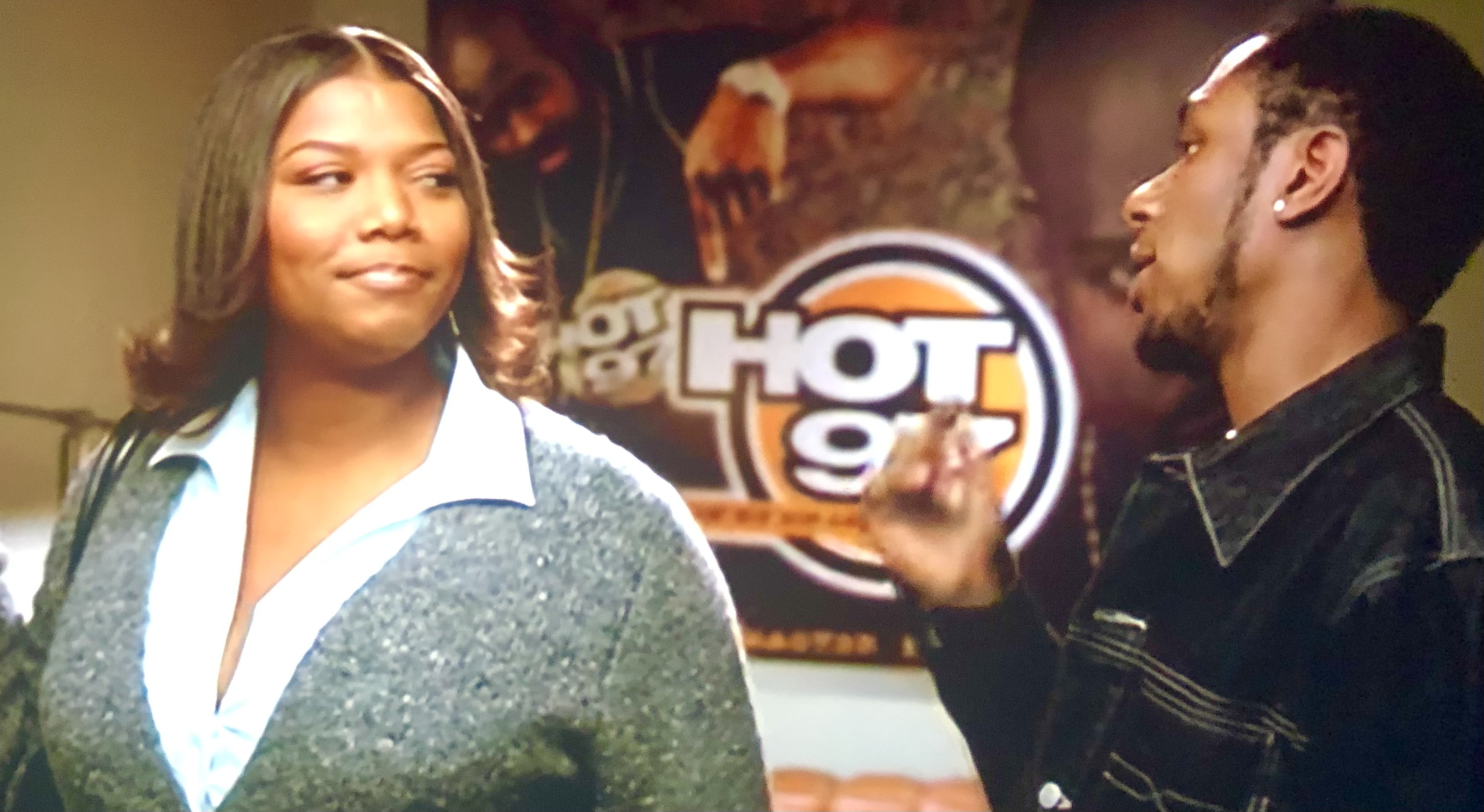
Recently rewatched Rick Fumiymao’s Brown Sugar and must note that several featured hip hop artists talking about falling in love with the genre are problematic towards women— Russell Simmons, Talib Kweli. Also, no real-life women pioneers spoke— MC Lyte, Roxanne Shante, Da Brat (seeing as this seemed mostly Def Jam affiliated), etc. Perhaps they thought having Queen Latifah co-star as divorcee Francine in the film was enough. 

Probably would have made for an excellent story if Francine (Queen Latifah) was an underground MC that Syd (Sanaa Lathan) interviewed for a future Vibe story. DP: Jeff Barnett and Enrique Chediak. 

They reserved the hip hop love for Syd Shaw—Francine’s cousin.  

Unlike Love & Basketball which also features the “childhood friends to lovers” trope (also starring Sanaa Lathan), Brown Sugar does not have the violent scene between Black boys and Black girls. Little Syd bonds with Dre Ellis over watching Slick Rick rap battle on the playground, their heads bobbing together in a rhythm. Years later, Syd has become a hip hop journalist sensation, a Columbia University grad; pitching for L. A. Times and obtaining a sweet gig at Vibe Magazine. Whereas Dre has sold his soul as an A&R executive at a corny record label more interested in manufacturing gold and platinum hits than finding artists with the pure authentic sound Dre searches for. The best thing about Dre is that he reads and saves Syd’s writings. He respects her talent and shows pride in her success; harboring no ill will, no jealousy— on that particular front. 

Dre (Taye Diggs) proposes to Reese— a woman he has known for only a few months. DP: Jeff Barnett and Enrique Chediak.

Optically, Brown Sugar is no Love Jones either. There are no sistahs proudly wearing locs and afros, no vibe that correlates with the chords of D’Angelo’s 1995 track and album sharing the film title. At a Simmons party, the man himself enters with the statuesque Kimora Lee Simmons surrounded by lighter complexion women. The Black men, however, are the ones allowed to arrive in all shades including Dre who introduces Reese— his thin, bright eyed lawyer-girlfriend to Syd. Scientifically, brown sugar is processed by adding molasses to sugar— not to compare Black people to food, but towards Dre’s philosophy that a brown sugar woman is someone respectable with the whole complete package and other type (the women called derogatory names in the hip hop lyrics) are still good for one thing only. 

Brown Sugar’s other downside unfortunately rests on Dre’s shoulders. Before his big wedding day to an almost complete stranger, he visits Syd (who ironically opens her door wearing a towel and neglects to don a robe) and unleashes his nervous uncertainty. Syd comforts him with a hug and a passionate kiss. Thus, this set up trying to say that men and women can be friends even when one friend is barely dressed fails. Dre married anyway, but would later reference this scene as the moment he realizes that he loved Syd more than a platonic buddy. 

Reese was just a woman invested in the wrong man at the wrong time. DP: Jeff Barnett and Enrique Chediak.

Reese would eventually become the woman we feel most sorry for. She married a man who cheated on her before her wedding day— a man who likely thought about Syd the entire time he feigned loving Reese. Dre cannot tell Reese that he quit his job first, let alone other secrets that he tells to Syd, especially regarding their marriage. Dre’s emotional connection to Syd would always be coming between Dre and Reese, something that should have been better established. Then again, Dre and Reese knew little about each other despite Reese kindly inviting Syd to her wedding shower as a way of getting closer to her man’s BFF. That backfired quickly once Syd witnessed all the flirtatious men surrounding a flattered Reese— and Syd was quick to expose that to Dre. This showcases that Syd can lift a man up when he’s down, but when times get tough Reese is weighing her next options. 

The slightly narcissistic Kelby promises to read all of Syd’s past and current articles. DP: Jeff Barnett and Enrique Chediak.

Syd, a smart, educated writer working on her first book, finds a date outside of her “face massager,” kicking it off well with basketball player Kelby Dawson. He finesses her quite lavishly with prepared dinners and flowers galore, using his wealth to woo her like a Queen. Perhaps no man has ever treated Syd in such a way including the subjects of her articles, let alone Dre. Yet, Syd always finds the time to save Dre— a man who did not save money to start his record label before abruptly quitting his job. You cannot fault a man for leading his life with dignity and purpose, but he must bear responsibility for being a weak life planner— in career and marriage— both of which affects Syd. She lends Dre money, listens to his growing jealousy of Kelby, and scouts alongside Dre to hear the rapper named Cav— a cab driver by day, a performer at night. In the meantime, Syd and Dre are becoming closer once more, leading to life-altering late night confessions that cause them both to put their desires above everything else. 

Sadly, Syd cheats on Kelby with a six-minute Dre (who is not even divorced from Reese yet). DP: Jeff Barnett and Enrique Chediak.

Before Love Actually, Dre wrote on a cue card asking Syd to date him at the radio station via elementary school style. Is it a creative nod to their childhood together or a symbolism of future struggle love? DP: Jeff Barnett and Enrique Chediak. 

So while Syd and Dre’s romance is bonafide messy, Francine is wasted for sexual innuendo and soundboard— that typical sidekick stereotype. The underdeveloped relationship between Francine and Cav deserved more attention and care— these two characters were the real scene stealers too. At a runtime of an hour and forty-nine minutes, five-to ten minutes of extra dialogue, a date, a dance, a unique moment for them would have sufficed. 

Francine asks the awkward stumbling Cav out. DP: Jeff Barnett and Enrique Chediak.  

Dre and Syd may be kissing away in Angie Martinez’s Hot 97 radio station, but it’s what’s blossoming in the background leaving room to be desired. DP: Jeff Barnett and Enrique Chediak. 

Overall, the Brown Sugar soundtrack is the film’s real treat— of course, skip the problematic musicians though. 


Friday, August 19, 2022

‘Barrier Device’ Takes An Intriguing Inspection Into The Other Woman


Barrier Device film poster.

Audrey is an independent researcher conducting a study on the female condoms. Life could not be anymore complicated— that is until one of Audrey’s subjects adds an unexpected personal commonality. Serena just so happens to be sleeping with Jay, Audrey’s ex. 

Audrey (Sandra Oh) interviews a new candidate for her research study on female condoms. DP: Patti Lee.

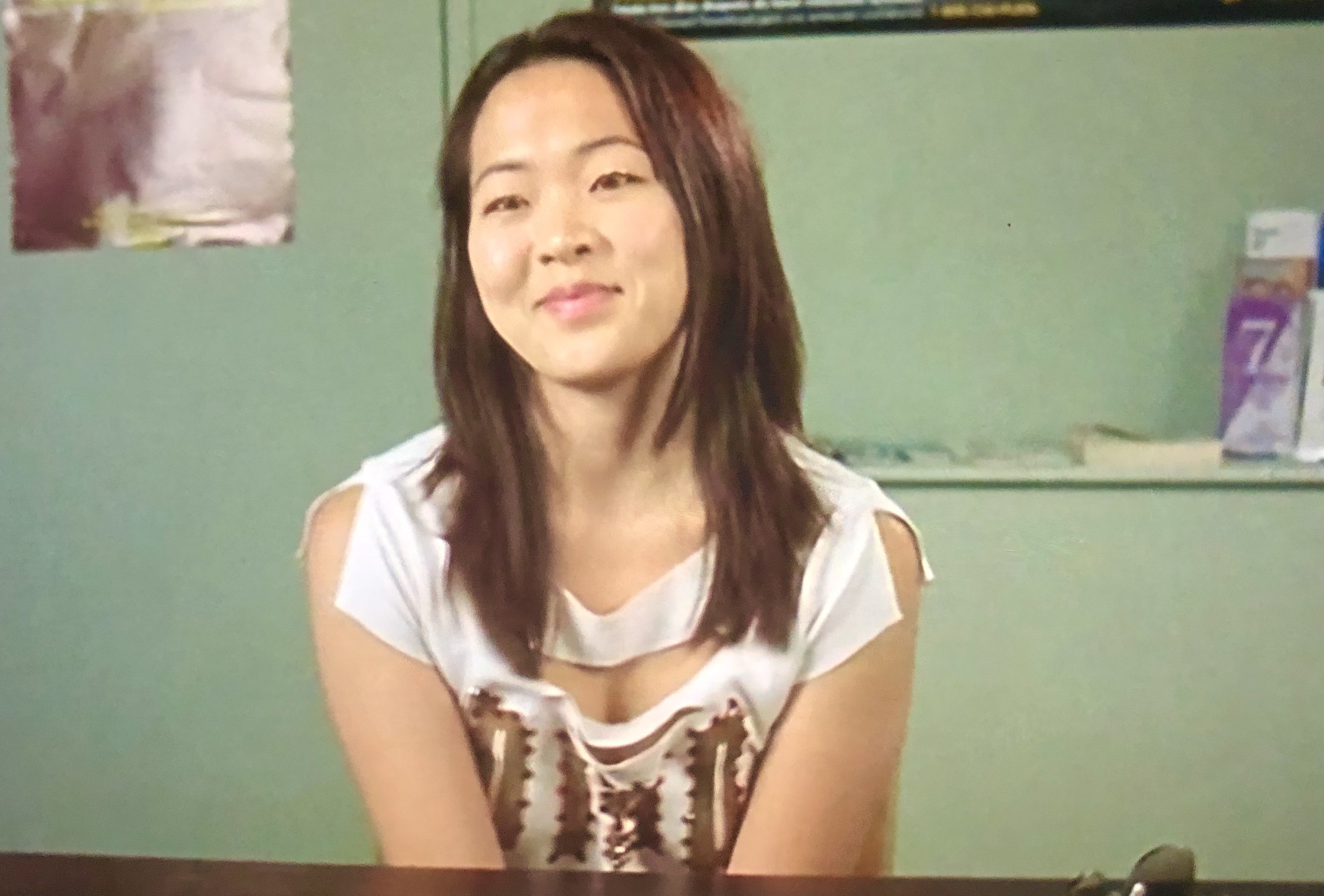
Serena (Suzy Nakamuru) is selected. DP: Patti Lee.

Serena comes in for further conversation with Audrey, telling her that she is currently intimate with two men— Jay and Michael. DP: Patti Lee.

Serena is everything that Audrey is not— younger, vivacious, adventurous. Serena has an open outlook on the world around her. However, Serena also proudly wears Audrey’s grandmother’s necklace with every outfit no matter how much it doesn’t suit her clothes. Perhaps the necklace is not aligned with the wearer as well. The jewelry holds sentimental value to Audrey. In fact, prior to, Audrey calls Jay to find it for her. He is no help. Serena wields a certain power over Jay, a lying, facetious man who only wants Serena because she is not as sexually frigid as Audrey. For him to even ruthlessly give away an object precious to Audrey paints him in a cold, callous light despite his voice being the only thing the audience hears. Jay— although unseen— is a present force occupying space between Audrey, Serena, and Audrey’s grandmother’s necklace. As a result of his shallow, untrustworthy behavior, Audrey is able to put the heartbreaking pieces together. 

Audrey has called her ex about her grandmother’s necklace, but he swears having not seen it and hangs up. Later, Audrey sees it... DP: Patti Lee.

On Serena’s neck. DP: Patti Lee.

Multiple times. DP: Patti Lee.

Still, Audrey cannot resist this newer form of research. It is in her nature to be curious and test situations; seek results. Thus, Audrey begins invading Serena’s life casually, going down the rabbit hole of friendship, seemingly as a mere experiment. After all, the lonely, isolated Audrey lets work occupy her time. Essentially, Audrey’s getting to know Serena on a deeper, connective level appears similar to her work, analyzing and comparing notes— comparing herself to her ex’s new lover. While Audrey has trouble adjusting to the female condoms, Serena is quite adept at getting Jay to use them. 

Audrey reads through Serena’s sex journal. DP: Patti Lee.

Apparently, Serena and her man are quite active. DP: Patti Lee.

Serena shares her sex journal with Audrey. Naturally, Audrey assumes that this is with Serena’s other partner, Michael. It is a much easier exercise than imagining your ex having an excessive amount of physical enjoyment whereas Audrey has trouble getting a man to even fathom the idea of female condoms. One such partner asks, “can we just do it the normal way?” As though the very act of role reversal muddies the potential pleasure experience for both parties. When Serena admits her journal is all about Jay and that Jay enjoys using the female condoms, this puts more blow to Audrey’s already fragile self esteem. Not only is Serena sexually explorative (and even good at a few lies in the act), but she has gotten Jay actively involved, actively participating. The real kicker is that Serena supports Jay’s writing too— another intimate sector that breaks Audrey’s heart. Worse, Jay’s writing is influenced by their past relationship. Audrey, putting work above everything in her life including Jay who needed the ego boost that Serena could offer him. 

Audrey even goes to Serena’s house. There she finds her grandmother’s necklace among Serena’s jewelry. Serena enters and suggests that Audrey try it on. DP: Patti Lee.

However, Jay is not the winning side. Jay is no hero in this catastrophe. He cheated on Audrey with Serena and had the audacity to present Audrey’s grandmother’s necklace to Serena.

Serena cleans out Audrey’s ears and picks out Audrey’s gray hairs. DP: Patti Lee. 

Smartly written and directed by Grace Lee, Barrier Device, a near thirty minute short film riddled with lighthearted womanist connections, tense drama, and warm humor, is a worthwhile watch due to the remarkable chemistry between its leads Sandra Oh and Suzy Nakamuru. When the confrontation finally happens near the end, Oh and Nakamuru play Audrey and Serena’s emotional spirals with great believable ease. Audrey’s despair over Serena’s perfection and Serena’s agony over being misled by Audrey touches on the darker sides of women relationships— especially how jealousy can be a severe, jeopardizing poison. Yet after the hard truths are revealed and the grandmother’s necklace is returned to its rightful owner, Audrey and Serena reach a genuinely sweet understanding. 

Audrey unleashes her fury onto Serena who has barged into one of Audrey’s sessions. DP: Patti Lee.

Serena claims that Audrey has destroyed her life. DP: Patti Lee.

Audrey and Serena reach the climatic point to a rather complex relationship. DP: Patti Lee.

Although it would seem that Jay ironically brought Audrey and Serena together, perhaps their mutual togetherness comes too from the recognizable necklace too. Maybe it was Audrey’s grandmother encouraging Audrey and Serena to see how they had the ability to help each other— with the combined strength and resilience to move past Jay.