Showing posts with label Criterion Channel. Show all posts

Thursday, April 25, 2024

‘A Different Image’ Breaks Down The Stigmatized Roles Ingrained In Our Mindsets


A Different Image promo image.

Alile Sharon Larkin’s A Different Image addresses the theory that some men will set women up to believe in a false friendship— a scheme that has existed since the dawning of time. They disguise their true intentions in order to become closer to another goal altogether.

That’s the unfortunate case between Alana and Vincent. 

Alana (Margòt Saxton-Federella) at rest. DP: Charles Burnett.
  
Alana draws a neighborhood boy (who later shockingly disrespects her). DP: Charles Burnett.

The stylish Alana, a talented visual artist and office receptionist, lives faraway from her family, enjoying her secluded, mix-patterned space decorated in vintage photographs of Black people and an eclectic array of objects relating to African diaspora. Her independent vibe is carefree and spiritual, the wonderful traits creatives usually exhibit. 

Alana also enjoys a camaraderie with Vincent, a young man in her class. They eat lunch together, do yoga, and read books— platonic activities. Diane, a nosy co-worker, believes that Alana and Vincent are bound to become an item soon. When dismissing the notion, no guile is in Alana’s response. No mischievous eyes or blushing smile that suggests anything more than stern disinterest. Alana buys into her friendship with Vincent one hundred percent because that is all that she hopes to obtain from him. She even requests that he give her an African name, instilling trust in such a meaningful task. 

Yet, this brings up the paradoxical question— can men and women be just that? 

What if the other falls in love and wants more? 

Vincent (Adisa Anderson) scopes out a woman (Bella Dilworth). DP: Charles Burnett. 

Ralph (Michael Bruce) encourages Vincent to act on his desires. DP: Charles Burnett.

Vincent is already seduced by societal’s masculine expectations. He often stares at the billboards and adult magazines featuring fit, beautiful women, a natural part of patriarchal conditioning that has men viewing women’s bodies as lust objects. A crude young boy who objectifies Alana while she’s drawing him signifies how early this misconduct starts. 

Although Vincent seems to want to stay on the right track, he is bitten hard by societal expectations, drawn not to seeing women beyond sexual relief. It’s displayed in how he looks at them once they past him by, his body language is suspect. Plus, his hands begin lingering too long on Alana, computing how much she lets him get away with. 

It also doesn’t help that testosterone heavy friend Ralph eggs Vincent to “do something” with Alana. Ralph— the scandalous devil on Vincent’s shoulder— believes Alana is leading Vincent on, that her friendship is only a facade that must be preyed on. Ralph presents a problematic advisor, pushing the agenda even further, conflicting Vincent’s already troubling mindset.  

Ralph is too busy with Alicia (Mandisa Oliver) to help Vincent move— again a demonstration of his deplorable character. DP: Charles Burnett.

Alana crashes on Vincent’s floor. DP: Charles Burnett.

At the climax, Alana’s trusting nature becomes her downfall to Vincent’s compromised mental state. The fault is not hers. Alana did not cause Vincent’s predatory nature to unveil itself. He is a manifestation of both his environment and the constant voice in his head (Ralph) promoting destructive behavior, unleashing the need to assert dominance. When Alana realizes that she cannot be vulnerable around Vincent, that he does not comprehend a women’s multifaceted personhood, let alone their emotional integrity and consent, the perceived friendship is tainted and unsafe. Vincent does give Alana an African name, but the bond between them has been severed, especially since he doesn’t offer a genuine explanation for his violation. She can forgive him. 

Yet, forgetting what he did…

Furthermore, Alana lives alone in an unfamiliar place, isolated with little friends. If anything, it’s easier to believe that she will eventually cut ties with Vincent. She may find another who respects her boundaries or searches for positive girlfriends. At least she has art to express her innermost emotions in the meantime— the best form of therapy and happiness. 

A conflicted Vincent tries to play cards. Does he understand that what did to Alana was wrong? Is that what guilt looks like? DP: Charles Burnett.

A guarded Alana in deep thought, perhaps unsettled by both the burden of her own naivety and trying to move past Vincent’s corrupt behavior. DP: Charles Burnett. 

Images are the first things we understand before words and definitions. Beneath certain pronounced cues delivering outdated gender norms, subliminal messages can have lasting effects as demonstrated in Vincent’s character. 

A Different Image harbors between short film and feature-length, containing the moralistic edge apparent in most L. A. Rebellion works. A few renowned members provided aid to writer, producer, and director Alile Sharon Larkin— Charles Burnett as cinematographer and Julie Dash on continuity. The actors played their roles well— Margòt Saxton-Federella in her only part and Adisa Anderson (Daughters of the Dust) present a conflict that still exists today. It’s a familiar story about society’s mental interference, women’s roles in a limited man’s imagination, and that women must still have to be careful about “wolves in sheep’s clothing.” 


Thursday, March 23, 2023

The Short Films of Nikyatu Jusu


The short films of Nikyatu Jusu.

As another Women’s History Month comes to a close, a tremendous blessing has been revisiting Nikyatu Jusu’s phenomenal work. She has four short films available to stream on the Criterion Channel: Flowers, Say Grace Before Drowning, African Booty Scratcher, and Suicide By Sunlight. Meanwhile, Black Swan Theory is available on Vimeo. 
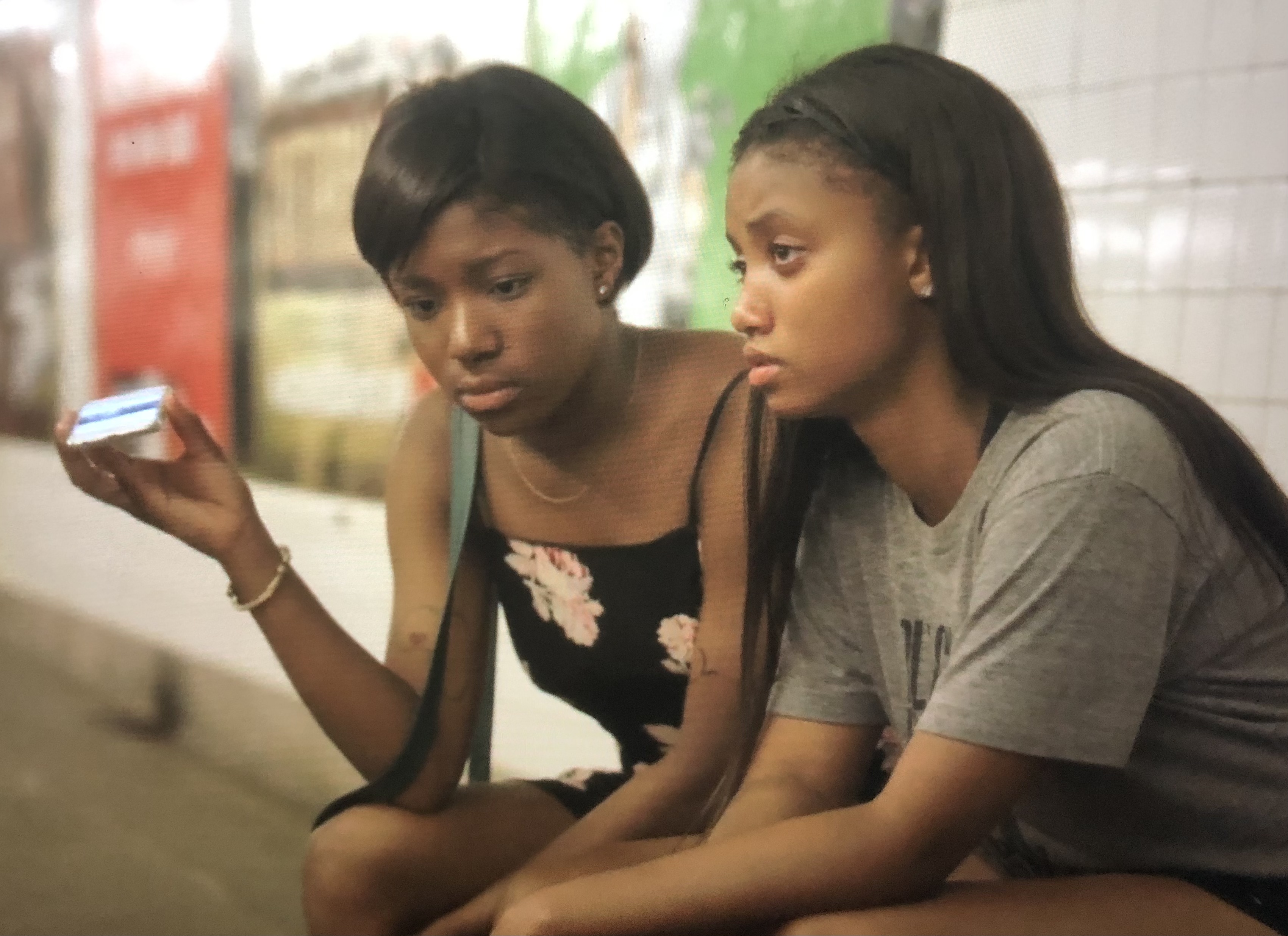
Mya (Amee Apedo) and Erin (Belle Legrand) survive a very dangerous situation in Flowers. DP: Jamal Solomon. 

In Flowers (2015)— co-directed and co-written with Yvonne Michelle Shirley— Mya and Erin set out to avenge Mya’s honor nearly tarnished by her white male tutor, Mr. Ryan. After all, Black girls are not often believed when assaulted. It would be her word against his and hers would bear less weight. Even the ease Mya enters his secure home raises questions. He trusts her like that? Clues reveal Mr. Ryan before he even arrives— mainly the brown baby on his refrigerator. So, he has a taste for Black women, eh? 

When the tension surmounts near the end, an unhinged Mr. Ryan becomes a greater villain, having no problem inflicting sexual or physical assault on Black girls. Has he done this before? Put his hands on the defenseless? His own unseen partner, pregnant with his second child? Through a red haze, he’s only thinking that Erin may destroy his reputation. Heart-pounding fear intensifies for Erin as the adult and teen fall on the floor battling over her phone. How far will both go for control? Mya returns, standing in complete shock at this escalated violence. Gratefully, Mya does not film this— her own tutor taking away her best friend’s agency; stripping away Erin’s earlier candor. The girls have played a hot gamble and they must leave before the flames burn any brighter. 

Mya and Erin both experienced abuse by the hands of Mr. Ryan—  traumatic in different ways and would impact their friendship forever. 

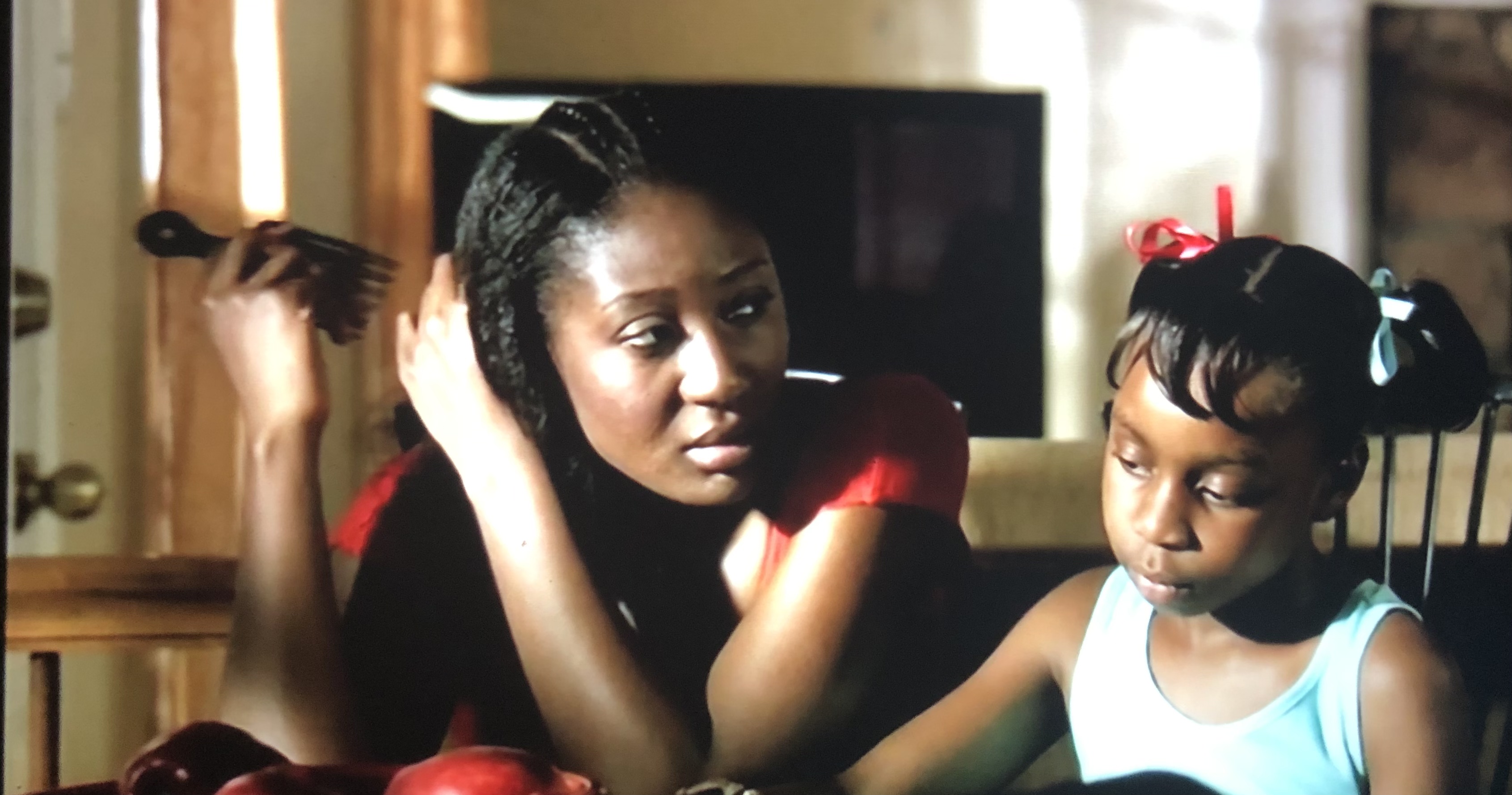
Grace (Ellie Foumbi, director/writer of the buzzy Our Father, the Devil) is impressed that her daughter Hawa (Dennise Gregory) can read well in Say Grace Before Drowning. DP: Daniel Patterson.

Say Grace Before Drowning (2010) sheds light on Grace, a sexual assault survivor— narrated from the point of view of Hawi, her daughter. Hawi was the first to leave their country, sheltered by Grace’s sister Aisha and her husband Chris. Upon Grace’s arrival, everyone treats her with special care, including Chris who’s touchy-feely actions trigger Grace’s assault. Her reactionary behavior stems from untreated memory dissociation, a mental disorder that stems from heavy, undisclosed trauma. Often, a withdrawn Grace disappears within herself and brightly returns to being Hawi’s mother, braiding her daughter’s hair, complimenting her reading, and sleeping beside her at night. 

By mistaking Chris’s kindness, Grace may be reminded of the soldiers’ mistreatment. After the family pool trip in which Chris teaches Grace to swim, she sets out to seduce her brother-in-law. During a spaghetti meal that Chris is preparing, Grace grinds on him during a song— right in front of Hawi. Grace transforms into her aggressive attackers launching herself at Chris, refusing to take “no” for an answer. In an assault as detrimental as sexual harm, power and domination over the body is essentially the key. Grace wants to repeat that history, but with herself as the wielder of power and domination over Chris, blind to consequences, to Aisha and Hawa’s feelings. Did the soldiers consider Grace’s family or their own wives, girlfriends, daughters as they violated Grace? 

Hawi hears the screaming match between Grace and Chris and abandons the spaghetti to see what the fuss is about. Spaghetti, when not watched and stirred frequently, gets clumped together, uneasy to eat. 

Toby (Angela Burnett) longs for her ancestral foundation. DP: Charles Burnett.

Hawa almost shadows Toby in Alile Sharon Larkin’s Your Children Come Back To You (1979)— story about a child wishing for a Black world whose mother too frequently dissolves into deep depression, neglecting Toby in the process. Whereas Hawi has her aunt Aisha, Toby has a compassionate grandmother. 

Abbie (Ebbe Bassey) and her teenage daughter Isatu (DeWanda Wise) reach an important solution to the prom in African Booty Scratcher. DP: Daniel Patterson.

African Booty Scratcher (2007), an earlier Jusu work, gets its title from an offensive, known and well-traveled taunt. The short stars DeWanda Wise as Isatu, a teenager looking forward to prom. Her hard-working immigrant mother Abbie wants Isatu to wear a traditionalist gown broadcasting her heritage. Isatu’s peers negatively blast anything associated with Africa. Thus, a tradition as American as apple pie, the prom is the biggest event in a young girl’s life— the fashion statement made here can either elevate your status or bring you down. Of course, Isatu believes that wearing  a typical name brand designer would have all eyes on her.

Terence Nance cameos as the mean teen who dumps Isatu via note. What a class act. DP: Daniel Patterson.

At Abbie’s restaurant (serving jollof rice and stews), Isatu works cleaning tables and waitressing in order to obtain money for her dream dress. Isatu sees firsthand that the teasing from schoolmates is nothing compared to how some Black adults look down on African immigrants, a seething hatred that manifests into verbal malice. A potential customer disrespects Abbie and their food in the process— further claiming that the Asians know what Black Americans desire more than the Africans. This avenue plays into Isatu’s own Americanized thought process— her laughing at the girl with the “African Booty Scratcher” card on her back, her preference for pasta over jollof rice, her reaction to the gown Abbie made for her. Perhaps Isatu too will become as bitter as the stranger, turning her back on her ancestral background for the comfort of fried food. Unfortunately, her mental institution has already begun.

Isatu realizes that she too has participated in Abbie’s humiliation. 

Mind-enhancing cocaine allows Sonya (DeWanda Wise) to blur her world in order to cope with her past life as a sniper. DP: Hans Charles.

The dark, disturbing Black Swan Theory (2011)— also starring Wise— focuses on as Sonya, a murder for hire dressed in black sporting a killer braided faux hawk hairstyle. This avant-grade experimental piece has an Afro futuristic meets parental advisory video game aesthetic. Sonya high on drugs and strapped for cash, takes on a murder-for-hire job. Already, she’s imagining killing someone— in a crueler affliction that implies personal vendetta versus a flying bullet. 

The men (played by Erik Clancy, Jeevan D’Souza, Stephen Hill) receive code names straight out of college textbooks—Italian renaissance artist/theorist/engineer Leonardo Da Vinci, French playwright/political activist/critic/existentialist philosopher Jean-Paul Sartre, and German poet/philosopher/composer Friedrich Nietzsche. DP: Hans Charles.

Meanwhile, Sonya’s code name Black Swan lacks that same consideration. DP: Hans Charles.

If there are therapeutic outlets for abuse survivors, do those who killed in the name of their country also have support? What therapist could possibly empathize with cold-blooded murder— even under the semblance of justice? How does a society expect veterans to navigate with normal mental/psychological capacity? Furthermore, Sonya has photographic memory. Even if she shot one person, that image rests in her mind forever. 

Seemingly without support beyond Jordan— her ex and former military comrade coping with the past in his own way— Sonya takes an assignment reminding her of the only skill she acquired whilst overseas. 

Valentina (Natalie Paul) in the subway in Suicide by Sunlight. DP: Daisy Zhou.

Suicide by Sunlight (2019) currently sits at number one on a list of short films that could be excellent full-length features. Seriously. An amazing film about Black vampires— without the Marvel comic book associations or Eddie Murphy antics. In this incredible world, vampires with melanin have the unique gift of walking through sunlight unscathed and those lacking die by the sun rays if they choose to be brave (or stupid). The shots on Black vampires glowing in the day are stunning; as though the still images bring the style of Gordon Parks to a vivid, creature-feature technicolor. 

Valentina tries to see her daughters, but their father  refuses to relent. DP: Chloe Zhou.

Gorgeous, stylish nurse Valentina juggles her career, bloodlust, and motherhood. She cares deeply for cancer patient Micah, a little boy on the cusp of death. Micah is around the same age as Valentina’s two daughters Hope and Faith and ex Langston makes it impossible for Valentina to see them. He’s part of those in town deadset against the vampires, not realizing that their precious daughters are not excluded— a whole new perspective on the one drop rule. 

Valentina balances her nursing duties; withholding a ferocious hunger that her co-workers and patients know nothing about. At night, however, her lust is insatiable— deadly seductions turn into passionate clenches of her razor sharp fangs piercing flesh. Shockingly, though, Valentina pukes it all up, looking as guilty as Buffy’s ex-boyfriend Angel— the redemptive vampire with a soul. 

When Valentina discovers that Langston has introduced a new woman to Hope and Faith— perhaps as some misguided attempt to replace Valentina and give the girls a makeshift nurturing he himself cannot provide— Valentina decides to give him a lesson. In the process, Valentina shares who they truly are to both Hope and Faith. 

Don’t ever cross Valentina. A beloved mother would do anything to see her children. DP: Daisy Zhou.

The girls Hope (Juniah Williams-West) and Faith (Madison Spicer) trust in their mother. DP: Chloe Zhou.

Jusu’s five short films are well-crafted, sophisticatedly put together and beautiful as a whole oeuvre. All four cinematographers—Jamal Solomon, Daniel Patterson, Hans Charles, Chloe Zhou— captured the rich, multifaceted variations of Black skin in exceptional styles that would make Bradford Young proud. In addition to the experience, it is lovely to see that the same names continue popping up in the credits— Yvonne Shirley (sound mixer on African Booty Scratcher and Say Grace Before Drowning), Terrance Nance (guest actor, producer/title card maker, renaissance Da Vinci, etc), and quadruple threat Jusu editing and production designing. 

Hawa playing in her mother’s makeup as young girls love to do. DP: Jamal Solomon.

“The Oscars are not my center,” Nikyatu Jusu recently said on the Independent Spirit Awards carpet—a valid statement to speak against an industry placing the Academy Awards above all others— the symbolism of “making it” in the filmmaking art. 

Yet, that problematic space relies heavily on its white cinematic history repeating over and over; an institution excluding Black women for years, continuing to nominate the same folks filling the Guinness Book with their record victories. So, even if they fail every year to recognize Black women’s talents onscreen and behind-the-scenes, the audience desires to see themselves reflected, most importantly by women who mirror them, who know their pains and joys, not stories from the anthropologist lens dominating our cinematic experience for far too long. 

“I’ve done a lot of spiritual, intellectual, physical labor, being in predominantly white spaces for my entire life. So now allow me to just focus on the work. But everything comes with a price. Money’s never free; success is never free.... the more breaks I have for myself, the more I’m like, Do I want to be part of that machine and do everything that comes with that? Or do I want to make something I truly believe in every few years and still teach and have my little quiet house and live below my means? The more you see of the figurative monster that is the industry, the more you assess what you’re willing to do to get what other people have gotten.”— Nikyatu Jusu to film critic Angelica Jade Bastién in Vulture

Jusu’s works matter. Every last one. Her brilliant feature-length debut Nanny included. Brown and dark-skinned women star across genres that usually exclude them. Horror rarely ensures their survival. Jusu sets the wrongs to rights, presenting Black women and girls in either unaddressed community topics or imaginative scenarios that broaden the modular spectrum. She utilizes key elements to a solid cinematic experience: breathtaking stories, compelling cinematography, and fresh talented actors/actresses, ensures that the audience will be wholly invested. Plus, the casting stays excellent— friends having believable chemistry, mothers/daughters looking alike. 

Whether Nikyatu Jusu makes another short film between her booked schedule of two feature-length films, whatever comes next will be well worth the wait. The representation of Black girls and women are safe in her capable hands. 


Friday, August 19, 2022

‘Barrier Device’ Takes An Intriguing Inspection Into The Other Woman


Barrier Device film poster.

Audrey is an independent researcher conducting a study on the female condoms. Life could not be anymore complicated— that is until one of Audrey’s subjects adds an unexpected personal commonality. Serena just so happens to be sleeping with Jay, Audrey’s ex. 

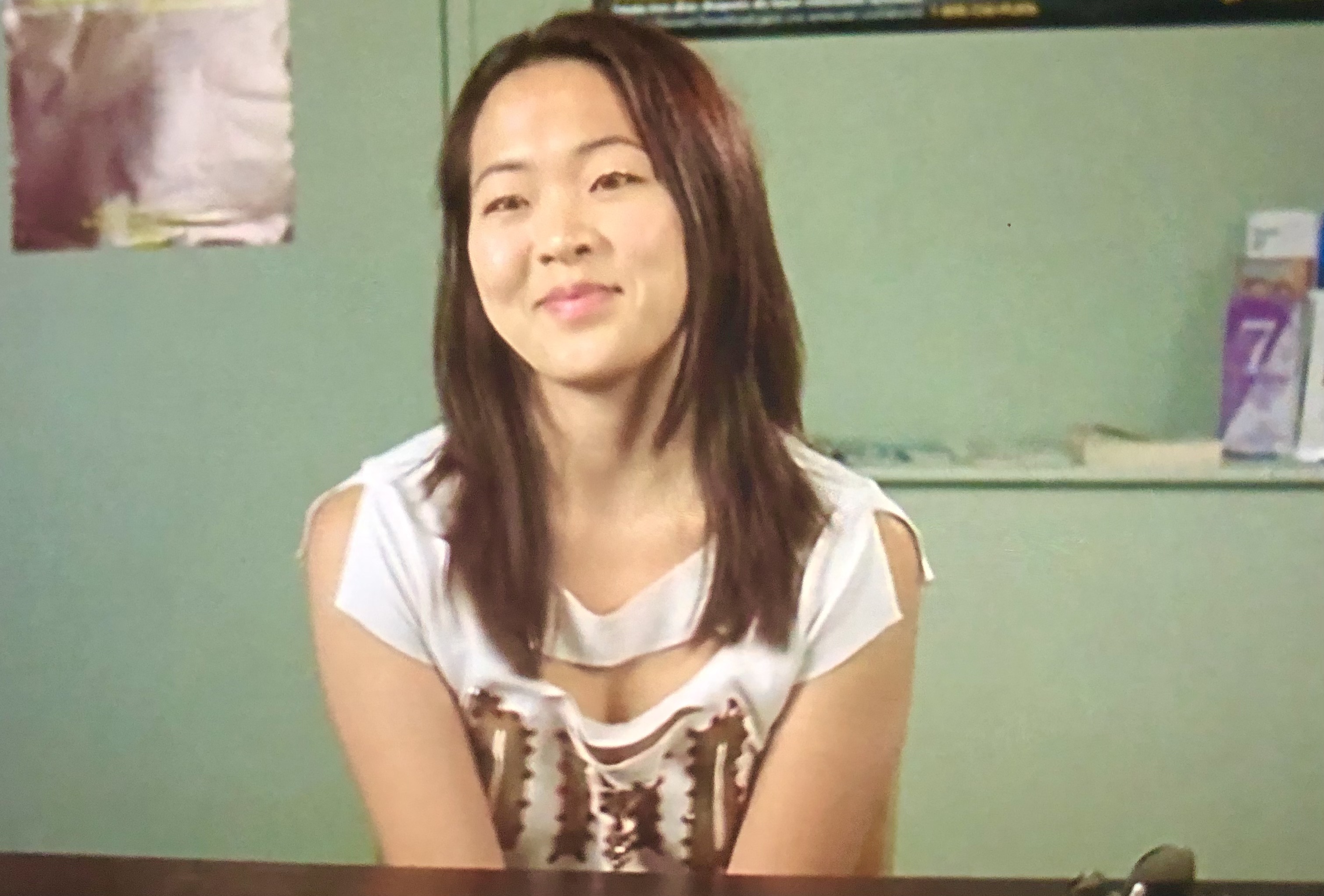
Audrey (Sandra Oh) interviews a new candidate for her research study on female condoms. DP: Patti Lee.

Serena (Suzy Nakamuru) is selected. DP: Patti Lee.

Serena comes in for further conversation with Audrey, telling her that she is currently intimate with two men— Jay and Michael. DP: Patti Lee.

Serena is everything that Audrey is not— younger, vivacious, adventurous. Serena has an open outlook on the world around her. However, Serena also proudly wears Audrey’s grandmother’s necklace with every outfit no matter how much it doesn’t suit her clothes. Perhaps the necklace is not aligned with the wearer as well. The jewelry holds sentimental value to Audrey. In fact, prior to, Audrey calls Jay to find it for her. He is no help. Serena wields a certain power over Jay, a lying, facetious man who only wants Serena because she is not as sexually frigid as Audrey. For him to even ruthlessly give away an object precious to Audrey paints him in a cold, callous light despite his voice being the only thing the audience hears. Jay— although unseen— is a present force occupying space between Audrey, Serena, and Audrey’s grandmother’s necklace. As a result of his shallow, untrustworthy behavior, Audrey is able to put the heartbreaking pieces together. 

Audrey has called her ex about her grandmother’s necklace, but he swears having not seen it and hangs up. Later, Audrey sees it... DP: Patti Lee.

On Serena’s neck. DP: Patti Lee.

Multiple times. DP: Patti Lee.

Still, Audrey cannot resist this newer form of research. It is in her nature to be curious and test situations; seek results. Thus, Audrey begins invading Serena’s life casually, going down the rabbit hole of friendship, seemingly as a mere experiment. After all, the lonely, isolated Audrey lets work occupy her time. Essentially, Audrey’s getting to know Serena on a deeper, connective level appears similar to her work, analyzing and comparing notes— comparing herself to her ex’s new lover. While Audrey has trouble adjusting to the female condoms, Serena is quite adept at getting Jay to use them. 

Audrey reads through Serena’s sex journal. DP: Patti Lee.

Apparently, Serena and her man are quite active. DP: Patti Lee.

Serena shares her sex journal with Audrey. Naturally, Audrey assumes that this is with Serena’s other partner, Michael. It is a much easier exercise than imagining your ex having an excessive amount of physical enjoyment whereas Audrey has trouble getting a man to even fathom the idea of female condoms. One such partner asks, “can we just do it the normal way?” As though the very act of role reversal muddies the potential pleasure experience for both parties. When Serena admits her journal is all about Jay and that Jay enjoys using the female condoms, this puts more blow to Audrey’s already fragile self esteem. Not only is Serena sexually explorative (and even good at a few lies in the act), but she has gotten Jay actively involved, actively participating. The real kicker is that Serena supports Jay’s writing too— another intimate sector that breaks Audrey’s heart. Worse, Jay’s writing is influenced by their past relationship. Audrey, putting work above everything in her life including Jay who needed the ego boost that Serena could offer him. 

Audrey even goes to Serena’s house. There she finds her grandmother’s necklace among Serena’s jewelry. Serena enters and suggests that Audrey try it on. DP: Patti Lee.

However, Jay is not the winning side. Jay is no hero in this catastrophe. He cheated on Audrey with Serena and had the audacity to present Audrey’s grandmother’s necklace to Serena.

Serena cleans out Audrey’s ears and picks out Audrey’s gray hairs. DP: Patti Lee. 

Smartly written and directed by Grace Lee, Barrier Device, a near thirty minute short film riddled with lighthearted womanist connections, tense drama, and warm humor, is a worthwhile watch due to the remarkable chemistry between its leads Sandra Oh and Suzy Nakamuru. When the confrontation finally happens near the end, Oh and Nakamuru play Audrey and Serena’s emotional spirals with great believable ease. Audrey’s despair over Serena’s perfection and Serena’s agony over being misled by Audrey touches on the darker sides of women relationships— especially how jealousy can be a severe, jeopardizing poison. Yet after the hard truths are revealed and the grandmother’s necklace is returned to its rightful owner, Audrey and Serena reach a genuinely sweet understanding. 

Audrey unleashes her fury onto Serena who has barged into one of Audrey’s sessions. DP: Patti Lee.

Serena claims that Audrey has destroyed her life. DP: Patti Lee.

Audrey and Serena reach the climatic point to a rather complex relationship. DP: Patti Lee.

Although it would seem that Jay ironically brought Audrey and Serena together, perhaps their mutual togetherness comes too from the recognizable necklace too. Maybe it was Audrey’s grandmother encouraging Audrey and Serena to see how they had the ability to help each other— with the combined strength and resilience to move past Jay.  


Wednesday, June 26, 2019

'Black Girl' Bears A Heavy Mental Diagnosis for Black Women

Black Girl film poster.
Despite being released in 1960, Ousmane Sembène's award-winning Black Girl exposes the oppressive system set in the colonialist world today and should be required watching material for those invested in classic films revealing deeper provocation through a Black lens. Black Girl is one of the better offerings on the eclectic Criterion Channel streaming service, launched after Film Struck's unfortunate demise.

Diouana (Mbissine Thérèse Diop) is a stylish, carefree young woman in Dakar seeking a job to support her family.

A picture of joy and passion (here in her boyfriend's bedroom), Djouana's disposition will shift in the employ.
In this compelling masterpiece, it is like a grand fairy tale that an excited Senegalesen woman named Diouana is singled out and chosen to care for a French woman's children. She has dreams for seeing the big, fancy city and becoming as sophisticated as the European magazine models (though quite frankly she is already utterly beautiful and charming). Anything must be more fascinating than the rural life of the impoverished village girl in Dakar. Yet the white Madame has entirely different intentions. At first polite and accommodating Madame gradually changes into a name-calling, slaphappy villain. And Madame's husband, Monsieur, though lenient and kind to Diouana, is silent to his wife's obnoxious behavior.

Diouana slowly becomes morose and solitary, staying in rooms too long, her sanity compromised for the benefit of a rich, bossy stranger. She obviously feels great humiliation from this unexpected betrayal, weighted down by the naivety of illusions. Diouana has fallen under the spell that these misguided illusions cast, often making Black women believe that her country, that where she comes from is less valid than the falsely advertised, materialistic propaganda.

That hungry desire for something better cannot always be found in predominantly white spaces.

Madame (Anne-Marie Jelinek) and Diouana (Mbissine Thérèse Diop) with the letter from Diouana's mother.
Black Girl raises existing concerns about white women's damaging perception and desire to control Black women's bodies-- a whole ugly history entirely. They are not innocent flowers more like complicit allies-- abusing Black women's bodies in any way possible, especially considering their role in slavery (which was not simply just a demonstration of white man's physical, mentally, emotional power over Black bodies). For example, Madame continuously calls Diouana "lazy." Tired, overworked Diouana, the Madame's mule, is the one cooking, cleaning, and watching the madam's children. Under the guise of feminism, certain white women defensively keep hold of white patriarchal views and white supremacy because in both instances white women are the primary victor, the apple in the white man's eye. Recently, even a non-Black woman of color author called out a transit worker on social media for eating on public transit. In so many critical eyes, Black women are incapable of showing weakness (sleepiness, hunger, sadness, etc.) and that fabrication needs to end today. Madame ruthlessly enjoyed having authority over Diouana and utilized it every chance she could.
 
Diouana may have felt unsatisfied in Dakar. Perhaps something 

Mon Cherie is likely familiar to modern day publications Seventeen, Vogue, Glamour, etc., magazines that amp up the white women's beauty while making women of color find their own lacking.

Diouana is not allowed a moment's peace. The girl cannot do her own hair without Madame needing assistance.
Diouana's mental illness--often grossly questioned in the Black community-- affects encounters with her further abusive employer. Withdrawn and internalizing her sadness without a true outlet to release frustrations, Diouana's plight from humble beginning to bittersweet end presents a psychological parallel raising awareness on the harmful effects of a specific form of white abuse. She is grossly lied to, manipulated, paraded about, exhibited like a wild savage to the madam's rude dinner friends. An isolated Black woman in a foreign country without no friends and no resources has only the option of remaining in their employ or running away and being subjected to all sorts of other dangerous cruelties in the streets. 
 
Diouana calls Madame and Monsieur's house a prison, merely stating that that she has no free agency to exist in a role beyond a racialized, gender specific stigma. The bars are invisible. Yet her emotional frame of mind is broken, irreparable. 
 
In her room, a depressed Djouana admits a devastating defeat.


Black Girl is a short yet morally important film that stands the test of time. With a resonating "yesterday" feeling weaved into Diouana's heartbreaking story, it is groundbreaking work in its exploration of mental crisis caused by racism and the problematic scope of white women's lack of supporting Black women's interior and exterior being. Plus, Mbissine Thérèse Diop's underrated performance (as well as some of her own handmade clothes) is worth the sixty-minutes.