Showing posts with label African American Woman Director. Show all posts

Wednesday, December 31, 2025

Twentieth Anniversary Of Heartfelt Student Film ‘Saving Jackie’


Saving Jackie film poster.

“One morning, I was standing in the kitchen freebasing, three or four days had gone by, I said to my husband, ‘wait a minute, what are we doing?’ I don’t want to be a professional drug addict.” 

This past summer the second annual Dayton Black Women’s Film Festival featured a special presentation of Selena Burks-Rentschler’s evocative documentary, Saving Jackie, a film she made while a student at Wright State University. This incredibly unique work debuted at the late Robert Redford’s founded Sundance Film Festival, a prestigious institution that continues to embrace and encourage the spirit of independent filmmaking in a box office favored cinema. 

Burks-Rentschler’s tragic picture explores the domino effects drugs places on the vulnerable communities, especially families succumbing to those activated desires rather than participating as full-time parents and partners. The 1980’s epidemic put a tougher penalty on Black and brown communities, both the drug dealers and the drug addicts always depicted as monsters— villains. The leading film’s subject— Jackie, the filmmaker’s own mother— has such a vivacious personality intensely punching through the screen. Burks-Rentschler prepares us, the soft-toned voiceover promises a “selfish and stubborn woman.” Sharp, oftentimes unapologetic and brazen, Jackie admits her imperfections, owning up to the harm she’s caused her loved ones. As she smokes a cigarette, she’s well aware of the sacrifices and struggles that have occurred due to her twenty-year crack addiction, regret and sadness reflected in her deep brown eyes. Whenever Jackie smiles or releases a laugh, there lies a contagious need to do so alongside her, to reassure this woman the humanness in having joyous feelings, however rare it seems in her case. 

Burks-Rentschler and her younger sister Lorita both appear, two growing figures voicing desperation and fear for their mother. Instead of traditional girlhood rites of passage, their shared experience has deepened their sibling bond, strengthened by their need to lean on each other, escape the severe plight they’re in together. If only Jackie could commit to remaining clean, if only she showed up for her daughters the way they keep showing up for their mother. Although the world crashes down all around her, losing a home, a car, and eventually custody of her two children, Jackie’s sad, all too familiar story paints a dreary picture of dangerous ingrained habits— that becoming high in any way possible meant more to her than anything. 

Poignant, powerful Saving Jackie’s tight editing arouses questions regarding how much heartbreaking footage remains as there must be hours worth of sensitive material, hours worth of pain and grief for the filmmaker’s family. It takes phenomenal bravery to turn the lens on a beloved family member, to reveal the deep dark depths of the fall from grace. For all her mistakes, Jackie still deserved to live until old age, to watch her daughters become full-fledged adults. 

Saving Jackie crafted a road to a mother’s redemption, unearthing the real culprit in the face and the consequential aftermath of choosing an unhealthy path over real, unconditional love. And that’s what feelings come as the credits roll— an intense, burning sentiment that a daughter has for her mother even in light of her mother having wronged her. 


Thursday, March 23, 2023

The Short Films of Nikyatu Jusu


The short films of Nikyatu Jusu.

As another Women’s History Month comes to a close, a tremendous blessing has been revisiting Nikyatu Jusu’s phenomenal work. She has four short films available to stream on the Criterion Channel: Flowers, Say Grace Before Drowning, African Booty Scratcher, and Suicide By Sunlight. Meanwhile, Black Swan Theory is available on Vimeo. 
Mya (Amee Apedo) and Erin (Belle Legrand) survive a very dangerous situation in Flowers. DP: Jamal Solomon. 

In Flowers (2015)— co-directed and co-written with Yvonne Michelle Shirley— Mya and Erin set out to avenge Mya’s honor nearly tarnished by her white male tutor, Mr. Ryan. After all, Black girls are not often believed when assaulted. It would be her word against his and hers would bear less weight. Even the ease Mya enters his secure home raises questions. He trusts her like that? Clues reveal Mr. Ryan before he even arrives— mainly the brown baby on his refrigerator. So, he has a taste for Black women, eh? 

When the tension surmounts near the end, an unhinged Mr. Ryan becomes a greater villain, having no problem inflicting sexual or physical assault on Black girls. Has he done this before? Put his hands on the defenseless? His own unseen partner, pregnant with his second child? Through a red haze, he’s only thinking that Erin may destroy his reputation. Heart-pounding fear intensifies for Erin as the adult and teen fall on the floor battling over her phone. How far will both go for control? Mya returns, standing in complete shock at this escalated violence. Gratefully, Mya does not film this— her own tutor taking away her best friend’s agency; stripping away Erin’s earlier candor. The girls have played a hot gamble and they must leave before the flames burn any brighter. 

Mya and Erin both experienced abuse by the hands of Mr. Ryan—  traumatic in different ways and would impact their friendship forever. 

Grace (Ellie Foumbi, director/writer of the buzzy Our Father, the Devil) is impressed that her daughter Hawa (Dennise Gregory) can read well in Say Grace Before Drowning. DP: Daniel Patterson.

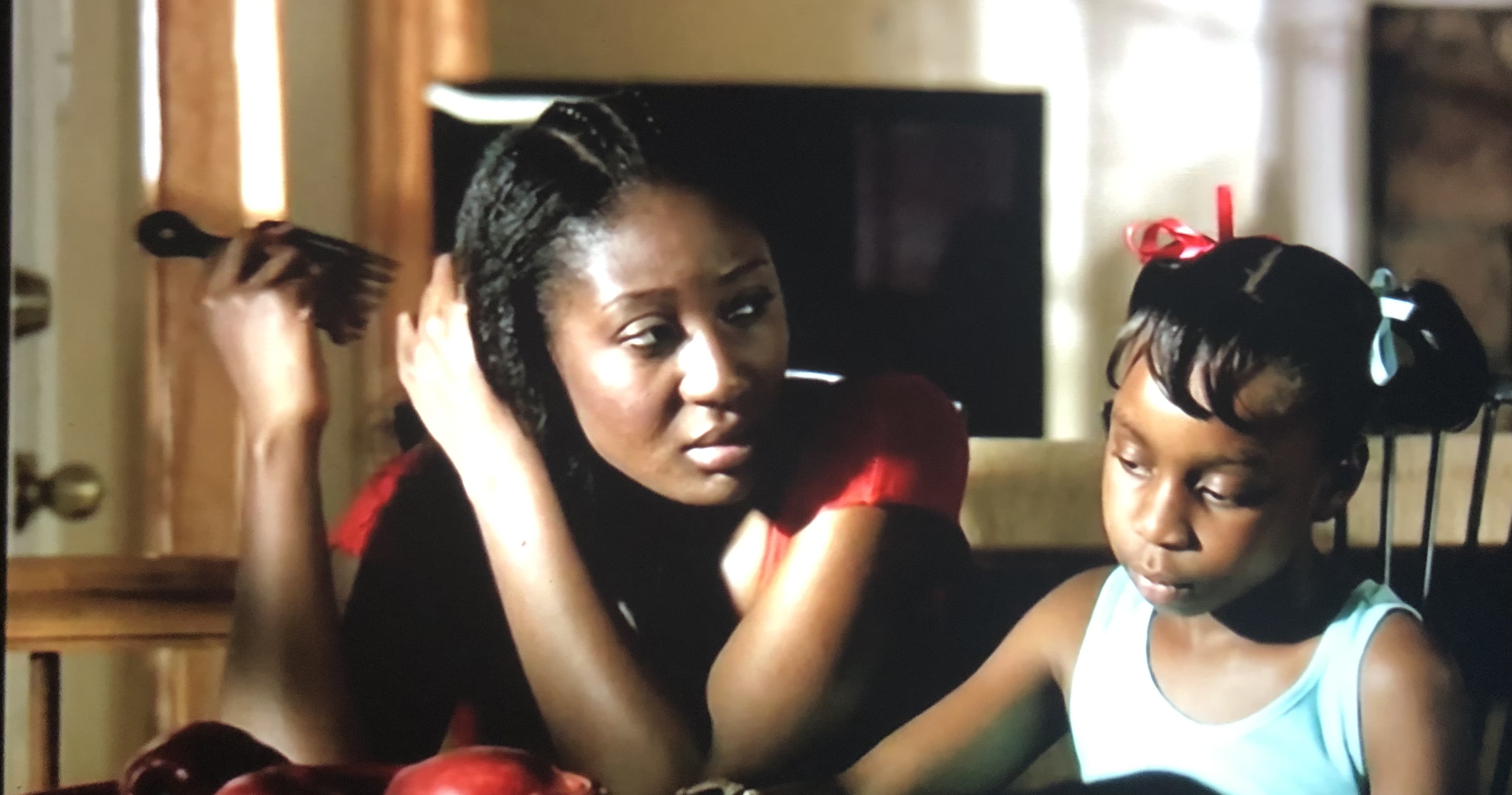
Say Grace Before Drowning (2010) sheds light on Grace, a sexual assault survivor— narrated from the point of view of Hawi, her daughter. Hawi was the first to leave their country, sheltered by Grace’s sister Aisha and her husband Chris. Upon Grace’s arrival, everyone treats her with special care, including Chris who’s touchy-feely actions trigger Grace’s assault. Her reactionary behavior stems from untreated memory dissociation, a mental disorder that stems from heavy, undisclosed trauma. Often, a withdrawn Grace disappears within herself and brightly returns to being Hawi’s mother, braiding her daughter’s hair, complimenting her reading, and sleeping beside her at night. 

By mistaking Chris’s kindness, Grace may be reminded of the soldiers’ mistreatment. After the family pool trip in which Chris teaches Grace to swim, she sets out to seduce her brother-in-law. During a spaghetti meal that Chris is preparing, Grace grinds on him during a song— right in front of Hawi. Grace transforms into her aggressive attackers launching herself at Chris, refusing to take “no” for an answer. In an assault as detrimental as sexual harm, power and domination over the body is essentially the key. Grace wants to repeat that history, but with herself as the wielder of power and domination over Chris, blind to consequences, to Aisha and Hawa’s feelings. Did the soldiers consider Grace’s family or their own wives, girlfriends, daughters as they violated Grace? 

Hawi hears the screaming match between Grace and Chris and abandons the spaghetti to see what the fuss is about. Spaghetti, when not watched and stirred frequently, gets clumped together, uneasy to eat. 

Toby (Angela Burnett) longs for her ancestral foundation. DP: Charles Burnett.

Hawa almost shadows Toby in Alile Sharon Larkin’s Your Children Come Back To You (1979)— story about a child wishing for a Black world whose mother too frequently dissolves into deep depression, neglecting Toby in the process. Whereas Hawi has her aunt Aisha, Toby has a compassionate grandmother. 

Abbie (Ebbe Bassey) and her teenage daughter Isatu (DeWanda Wise) reach an important solution to the prom in African Booty Scratcher. DP: Daniel Patterson.

African Booty Scratcher (2007), an earlier Jusu work, gets its title from an offensive, known and well-traveled taunt. The short stars DeWanda Wise as Isatu, a teenager looking forward to prom. Her hard-working immigrant mother Abbie wants Isatu to wear a traditionalist gown broadcasting her heritage. Isatu’s peers negatively blast anything associated with Africa. Thus, a tradition as American as apple pie, the prom is the biggest event in a young girl’s life— the fashion statement made here can either elevate your status or bring you down. Of course, Isatu believes that wearing  a typical name brand designer would have all eyes on her.

Terence Nance cameos as the mean teen who dumps Isatu via note. What a class act. DP: Daniel Patterson.

At Abbie’s restaurant (serving jollof rice and stews), Isatu works cleaning tables and waitressing in order to obtain money for her dream dress. Isatu sees firsthand that the teasing from schoolmates is nothing compared to how some Black adults look down on African immigrants, a seething hatred that manifests into verbal malice. A potential customer disrespects Abbie and their food in the process— further claiming that the Asians know what Black Americans desire more than the Africans. This avenue plays into Isatu’s own Americanized thought process— her laughing at the girl with the “African Booty Scratcher” card on her back, her preference for pasta over jollof rice, her reaction to the gown Abbie made for her. Perhaps Isatu too will become as bitter as the stranger, turning her back on her ancestral background for the comfort of fried food. Unfortunately, her mental institution has already begun.

Isatu realizes that she too has participated in Abbie’s humiliation. 

Mind-enhancing cocaine allows Sonya (DeWanda Wise) to blur her world in order to cope with her past life as a sniper. DP: Hans Charles.

The dark, disturbing Black Swan Theory (2011)— also starring Wise— focuses on as Sonya, a murder for hire dressed in black sporting a killer braided faux hawk hairstyle. This avant-grade experimental piece has an Afro futuristic meets parental advisory video game aesthetic. Sonya high on drugs and strapped for cash, takes on a murder-for-hire job. Already, she’s imagining killing someone— in a crueler affliction that implies personal vendetta versus a flying bullet. 

The men (played by Erik Clancy, Jeevan D’Souza, Stephen Hill) receive code names straight out of college textbooks—Italian renaissance artist/theorist/engineer Leonardo Da Vinci, French playwright/political activist/critic/existentialist philosopher Jean-Paul Sartre, and German poet/philosopher/composer Friedrich Nietzsche. DP: Hans Charles.

Meanwhile, Sonya’s code name Black Swan lacks that same consideration. DP: Hans Charles.

If there are therapeutic outlets for abuse survivors, do those who killed in the name of their country also have support? What therapist could possibly empathize with cold-blooded murder— even under the semblance of justice? How does a society expect veterans to navigate with normal mental/psychological capacity? Furthermore, Sonya has photographic memory. Even if she shot one person, that image rests in her mind forever. 

Seemingly without support beyond Jordan— her ex and former military comrade coping with the past in his own way— Sonya takes an assignment reminding her of the only skill she acquired whilst overseas. 

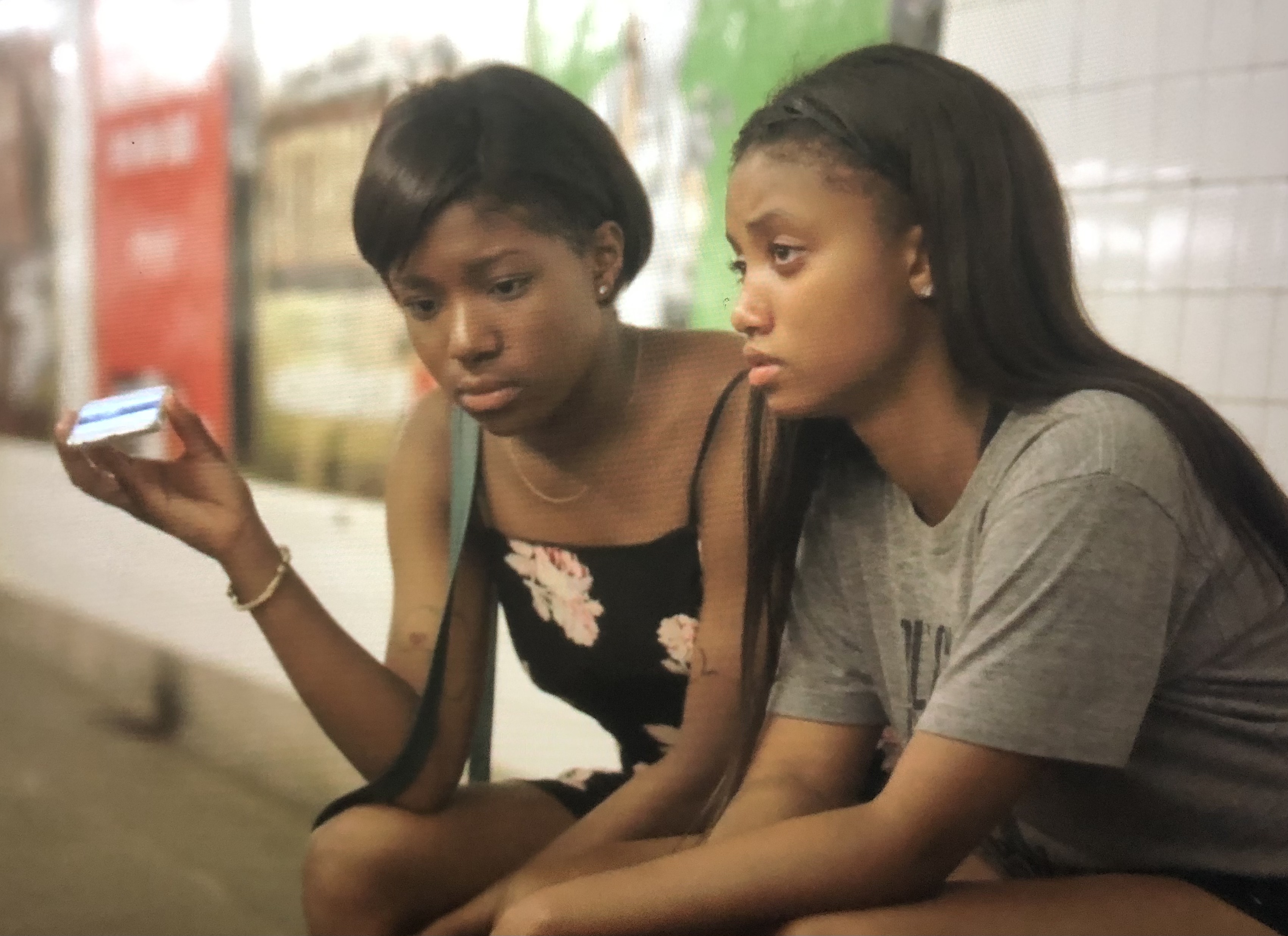
Valentina (Natalie Paul) in the subway in Suicide by Sunlight. DP: Daisy Zhou.

Suicide by Sunlight (2019) currently sits at number one on a list of short films that could be excellent full-length features. Seriously. An amazing film about Black vampires— without the Marvel comic book associations or Eddie Murphy antics. In this incredible world, vampires with melanin have the unique gift of walking through sunlight unscathed and those lacking die by the sun rays if they choose to be brave (or stupid). The shots on Black vampires glowing in the day are stunning; as though the still images bring the style of Gordon Parks to a vivid, creature-feature technicolor. 

Valentina tries to see her daughters, but their father  refuses to relent. DP: Chloe Zhou.

Gorgeous, stylish nurse Valentina juggles her career, bloodlust, and motherhood. She cares deeply for cancer patient Micah, a little boy on the cusp of death. Micah is around the same age as Valentina’s two daughters Hope and Faith and ex Langston makes it impossible for Valentina to see them. He’s part of those in town deadset against the vampires, not realizing that their precious daughters are not excluded— a whole new perspective on the one drop rule. 

Valentina balances her nursing duties; withholding a ferocious hunger that her co-workers and patients know nothing about. At night, however, her lust is insatiable— deadly seductions turn into passionate clenches of her razor sharp fangs piercing flesh. Shockingly, though, Valentina pukes it all up, looking as guilty as Buffy’s ex-boyfriend Angel— the redemptive vampire with a soul. 

When Valentina discovers that Langston has introduced a new woman to Hope and Faith— perhaps as some misguided attempt to replace Valentina and give the girls a makeshift nurturing he himself cannot provide— Valentina decides to give him a lesson. In the process, Valentina shares who they truly are to both Hope and Faith. 

Don’t ever cross Valentina. A beloved mother would do anything to see her children. DP: Daisy Zhou.

The girls Hope (Juniah Williams-West) and Faith (Madison Spicer) trust in their mother. DP: Chloe Zhou.

Jusu’s five short films are well-crafted, sophisticatedly put together and beautiful as a whole oeuvre. All four cinematographers—Jamal Solomon, Daniel Patterson, Hans Charles, Chloe Zhou— captured the rich, multifaceted variations of Black skin in exceptional styles that would make Bradford Young proud. In addition to the experience, it is lovely to see that the same names continue popping up in the credits— Yvonne Shirley (sound mixer on African Booty Scratcher and Say Grace Before Drowning), Terrance Nance (guest actor, producer/title card maker, renaissance Da Vinci, etc), and quadruple threat Jusu editing and production designing. 

Hawa playing in her mother’s makeup as young girls love to do. DP: Jamal Solomon.

“The Oscars are not my center,” Nikyatu Jusu recently said on the Independent Spirit Awards carpet—a valid statement to speak against an industry placing the Academy Awards above all others— the symbolism of “making it” in the filmmaking art. 

Yet, that problematic space relies heavily on its white cinematic history repeating over and over; an institution excluding Black women for years, continuing to nominate the same folks filling the Guinness Book with their record victories. So, even if they fail every year to recognize Black women’s talents onscreen and behind-the-scenes, the audience desires to see themselves reflected, most importantly by women who mirror them, who know their pains and joys, not stories from the anthropologist lens dominating our cinematic experience for far too long. 

“I’ve done a lot of spiritual, intellectual, physical labor, being in predominantly white spaces for my entire life. So now allow me to just focus on the work. But everything comes with a price. Money’s never free; success is never free.... the more breaks I have for myself, the more I’m like, Do I want to be part of that machine and do everything that comes with that? Or do I want to make something I truly believe in every few years and still teach and have my little quiet house and live below my means? The more you see of the figurative monster that is the industry, the more you assess what you’re willing to do to get what other people have gotten.”— Nikyatu Jusu to film critic Angelica Jade Bastién in Vulture

Jusu’s works matter. Every last one. Her brilliant feature-length debut Nanny included. Brown and dark-skinned women star across genres that usually exclude them. Horror rarely ensures their survival. Jusu sets the wrongs to rights, presenting Black women and girls in either unaddressed community topics or imaginative scenarios that broaden the modular spectrum. She utilizes key elements to a solid cinematic experience: breathtaking stories, compelling cinematography, and fresh talented actors/actresses, ensures that the audience will be wholly invested. Plus, the casting stays excellent— friends having believable chemistry, mothers/daughters looking alike. 

Whether Nikyatu Jusu makes another short film between her booked schedule of two feature-length films, whatever comes next will be well worth the wait. The representation of Black girls and women are safe in her capable hands. 


Saturday, February 25, 2023

A Tale of Two Teen Pregnancies


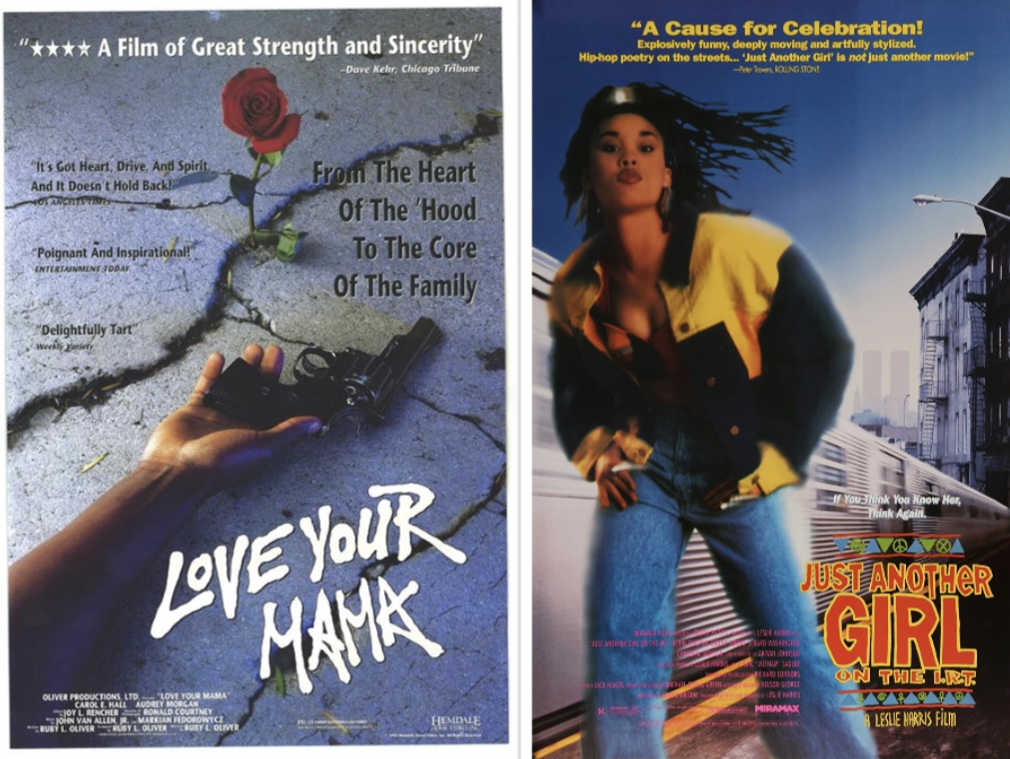
Love Your Mama and Just Another Girl on the I. R. T. film posters.

Duality may have been a major theme of A Tale of Two Cities by Charles Dickens. Yet, a specific duality runs a deliberate course through Ruby Oliver’s Love Your Mama (1989) and Leslie Harris’s Just Another Girl on the I. R. T. (1992)— two parallel Black teenagers facing pregnancy. This occurrence existed around prior in my own life— my grandmother giving birth to children since she was thirteen, two girls my senior year of high school balancing school and motherhood (one of them married her high school sweetheart). The stigma is unlike any other. At a vulnerable age where the slightest mar can harm an image, the frowned upon teenage pregnancy could make a girl’s life extra traumatic and beyond complicated. Not the boy/man, just her life seemed altered, in jeopardy. She believes the biggest danger is her parents’ finding out when the reality of attempting to hide a pregnancy can present the most dangerous affect on their still very young bodies and unprepared state of mind. 

Leola (Carol Hall) and her friend Barbara (Jacqueline Williams)—a single mother who repeats senior year in Love Your Mama. Barbara manages to get Zeke and the Boys to play for the senior dance. Leola has a massive crush on Zeek which leads to consequences. DP: Ronald Courtney.

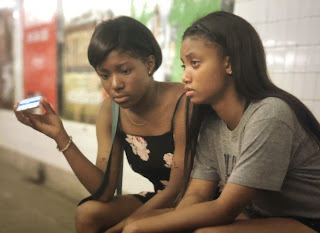
Chantal (Ariyan Johnson) and Natete (Ebony Jerido) run into Denisha (Monet Dunham), a high school dropout at the subway in Just Another Girl on the I. R. T. DP: Richard Connors. 

On the yearbook staff and desperately praying for a loan to attend college, Leola is a smart, adept high schooler living in Southside Chicago’s projects hoping to open up a daycare. Often, she hangs out with Barbara—a girl repeating her senior year due to having a child of her own. 

On the other hand, fourth-wall-breaking Chantal is a bright, sassy teen with a potty mouth and fabulous fashion sense living in the Brooklyn projects, raising her siblings as her parents work most of the time. She aims to complete high school early and attend college to become a future doctor. Chantal and Natete are super close friends that also hang out with Denisha— a former classmate who dropped out due to pregnancy. 

Thus, Leola and Chantal bear witness to the difficult struggle of balancing educational pursuits and other personal betterment goals with early motherhood, limited support. There are no parties, no socializing, no late nights for Barbara and Denisha unless baby related. 

Some typical teenage sexual scenarios convince girls to make a boy feel better. Zeek (Norman Hoosier) suggests Leola (Carol Hall) temporarily remedy his grief. DP: Ronald Courtney.

Tye (Kevin Thigpen) demands sex from Chantal (Ariyan Johnson) because her behavior at the party implied promiscuity to him. DP: Richard Connors.

Leola’s mother struggles to make ends meet with four children and an alcoholic cheating husband that the whole neighborhood knows about. After the husband decides to quit his job, it affects the family and causes Leola’s mother to take drastic (illegal) action. Leola sees firsthand that certain men waste women’s youth, resilience, and courage, even squander a woman’s good nature just because he can. Her mother will never leave her husband, using religion as a key to staying in a detrimental situation. Thus, Leola remains focused on her goals to open a daycare even as her younger brothers decide to take on a criminal route to life, disappointing their mother in the process. 

Meanwhile, Chantal works at a corner store after school and returns home to babysit her younger brothers as her dad sleeps before his shift. Her mom and dad have alternating schedules— one works while the other rests. Yet, when is Chantal allowed to get true rest between school, employment, and babysitting her own siblings? Chantal and Natete sneak off to a party where Denisha has also joined them, getting her mother to babysit. Chantal ditches her date to dance with other people, gaining the attention of Tyrone nicknamed Tye. 

Leola’s mother (Audrey Morgan) instills constant wisdom in Leola (Carol Hall). She believes boys will not make it out, but girls can. DP: Ronald Courtney. 

Chantal’s mother barely has five minutes to look in Chantal’s direction, much less give her any sound advice. DP: Richard Connors.

Leola and Chantal’s introduction to sex almost mirrors each other in that they are both unromantic experiences sorely made by the urgent request of a male. Leola’s first time is a stolen moment caused by a vulnerable situation— being alone in a teenage boy’s room. As soon as the door is closed, Zeek puts down the telephone book (perhaps that had been his goal all along) and immediately situates himself into Leola’s personal space, reasserting his sadness over his grandmother’s passing. He doesn’t deliver any poetic sentiments or flowery gestures (despite being a musician) that suggest any genuine desire for Leola. He has centered only his own need. And Leola (maybe feeling her crush reciprocated) does not deny him, let alone recognizes the manipulative ploy. 

Tye seemed very kind at first— taking Chantal to nice restaurants, picking her up in his jeep. Yet, also alone in his bedroom, Tye turns completely enraged when Chantal refuses to sleep with him sans a condom. He exhibits toxic masculinity— an ignorant disbelief that somehow it is belittling to be asked (much similar behavior to those who do not like request for STD tests prior to). He deliberately brings up her behavior at the party, that of which drew him to her. Chantal then complies and the couple have numerous encounters afterward. 

Despite their riff, Barbara (who knows firsthand what it’s like as a single teen mother) offers to pay the balance for Leola’s abortion. DP: Ronald Courtney.

However, Leola cannot go through with the procedure. DP: Ronald Courtney.

Chantal takes several pregnancy tests— they all come to the same conclusion. Weeks later, Chantal lies to Natete about receiving her period, trying to buy herself time for the things she’s mentally unprepared for. DP: Richard Connors.

Chantal likely knows that her friendship with Natete cannot survive because pregnancy means the end of certain pasttimes. DP: Richard Connors.

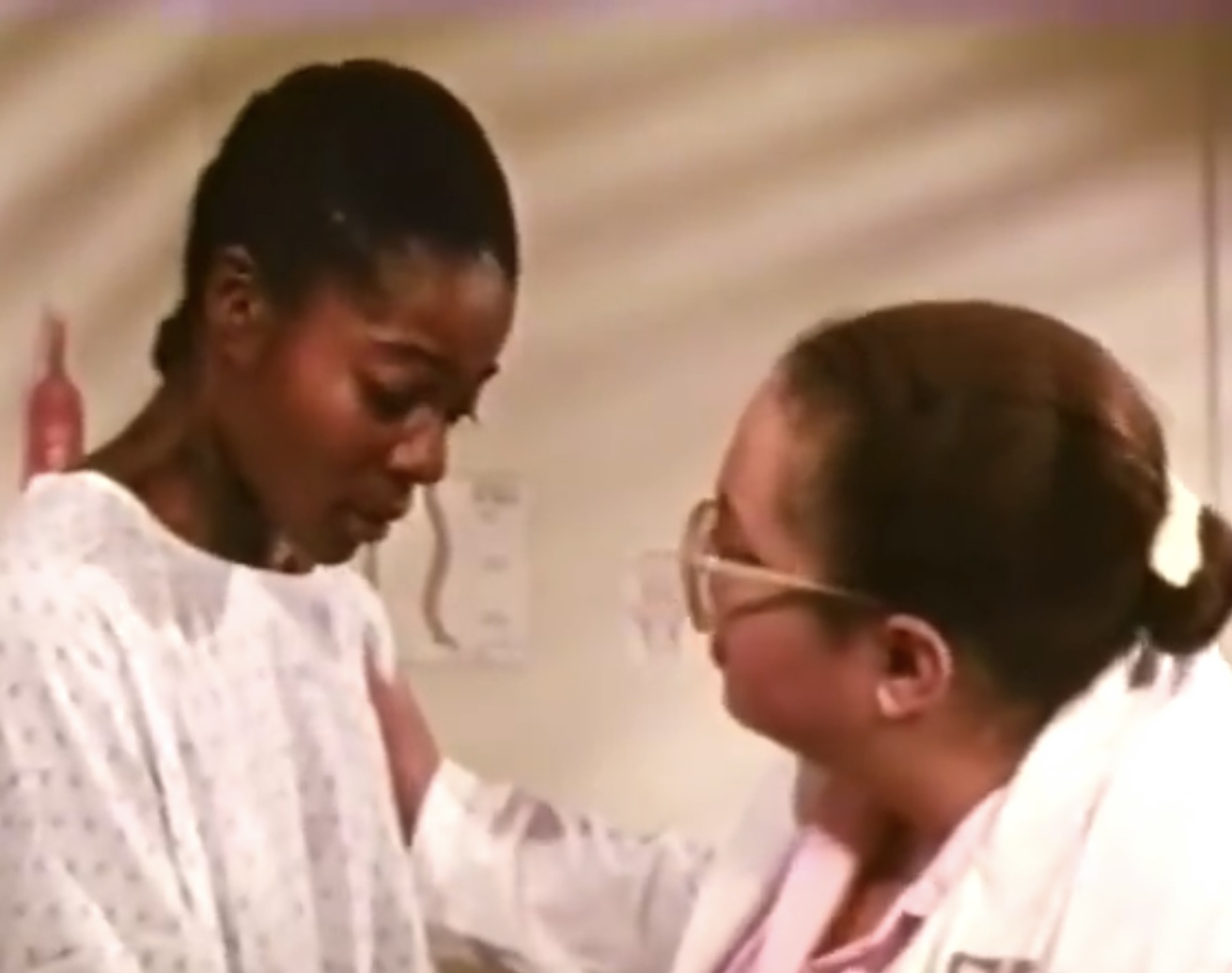
Other than Tye, a counselor is the only one who knows about Chantal’s pregnancy. She would be their savior during the labor. DP: Richard Connors.

The male reaction to the pregnancies are not surprising. Zeek asks Leola to marry him even though he clearly does not love her. While Leola does not exactly love Zeek either, she did harbor an earlier crush on him. He never knew she existed— according to Barbara. Whereas when Chantal tells Tye, Tye blows up and claims that the baby must not be his fully knowing well that he was Chantal’s first lover. In Tye’s incomprehensible mind, it still goes back to Chantal’s behavior at the party, eluding her old boyfriend to dance with every guy. Tye equates dancing to being a tease, a maneater. In a follow up scene, he softens (only a tad) to convince Chantal to have an abortion. 

A calm Zeek softly tells Leola that they will get through it together. DP: Ronald Courtney.

An outraged Tye berates Chantal in various public places— the girl’s bathroom, the library, and the great outdoors— to make a decision. DP: Richard Connors. 

Fortunately, Leola does not have to face her pregnancy alone. Barbara financially supports her abortion, but in the fifth hour Leola changes her mind, the nurse comforting her about the hard choice. Her mother then takes it further, being quite kind despite the pregnancy not being what she had in mind for her daughter’s future. Leola ultimately drops out, fearing what others will say about her. Teen pregnancy shame exists and no one wants to walk that walk, especially Chantal. She refuses to tell Natete, keeping the pregnancy a secret. Tye has his uncle give him money for an abortion in New Jersey. Chantal blows it all alongside Natete at the mall, but ultimately steps away from the friendship, withholding her inner distraught about pregnancy. Isolated and melancholic, Chantal puts effort in maintaining a facade— buying the same clothes yet larger, buying pads, hiding her increasing weight in a girdle. So alone in this choice, time passes and passes, she doesn’t even know how far advanced the pregnancy is until going into labor.  

Leola and her daughter on the playground. DP: Ronald Courtney.

Leola and her mama after the opening of Leola’s daycare. DP: Ronald Courtney.

Chantal also gives birth to a girl— and at Tye’s apartment where conveniently his mom is not home. DP: Richard Connors. 

Chantal and Tye choose to co-parent in the end. She attends community college. DP: Richard Connors. 

Love Your Mama and Just Another Girl On the I. R. T. are low budget cinema rich in very intelligent narrative highlighting the cons of teenage pregnancy, especially the impact on Black girls— and its essential pros. The films could have served well as educational resources versus what was actually given: outdated videos on sexual how to and heavy promotion of abstinence. Those learning devices did little to protect girls and women from sexual situations, from escaping coercion and peer pressure. Ruby Oliver and Leslie Harris shed light on the options granted if Leola and Chantal did not want their children. Outreach facilities/clinics and counselors are always available to help. They know that becoming a mother means leaving behind your freedom, the last of your girlhood tendencies as your body significantly changes. A baby alters life plans, but that doesn’t mean your dreams die completely. Although Chantal almost goes the terrible route, she undergoes an extreme change of heart at the right moment. Whereas Leola’s labor is unseen, Chantal goes right into it, including an afterbirth (which is almost never depicted onscreen). Leola and Chantal eventually take a positive outlook on their situations, facing challenges head on, and have managing a strong support system in a society determined to leave girls like them in problematic governmental programming.

They may read like Public Service Announcements, mainly the unpolished Love Your Mama, but the heartfelt stories about Leola and Chantal handle their weight in sensitive material with precious care. 


Thursday, January 26, 2023

‘Rain (Nyesha)’ And Other Nods to Melvonna Ballenger

Still of Evlynne Braithwaithe as the woman from Melvonna Ballenger’s Rain (Nyesha), 1978. 

Melvonna Ballenger, a Communications graduate of Howard University, was another exceptional Black woman studying at the UCLA to become a filmmaker, befriending the likes of Alile Sharon Larkin, Stormé Bright Sweet, Zeinabu irene Davis, Jacqueline Shearer, and Julie Dash during the incredible occurrence otherwise known as the L. A. Rebellion.

Rain (Nyesha)—made as her “Project One” MFA assignment and accessible on the UCLA Film & Television Archive YouTube channel— showcases Ballenger’s commendable filmmaking promise as a twenty-four-year-old film student. She voices over the black and white short which combines the grainy moving image with experimental poetry and sound; centering on a hard working Black secretary who dreads the weary weather that invades her otherwise mundane daily routine. After some heartfelt complaining and reluctantly getting out of bed, the single Black woman draws a white robe over her white chemise and wanders about her sparse, immaculate apartment. She turns on the radio knobs, switching on station after station. In a perfect, utterly charming coincidence, they each play songs about rain including Lena Horne’s Stormy Weather, Nancy Wilson’s rendition of Don’t Rain on My Parade, and The Dramatics classic In the Rain

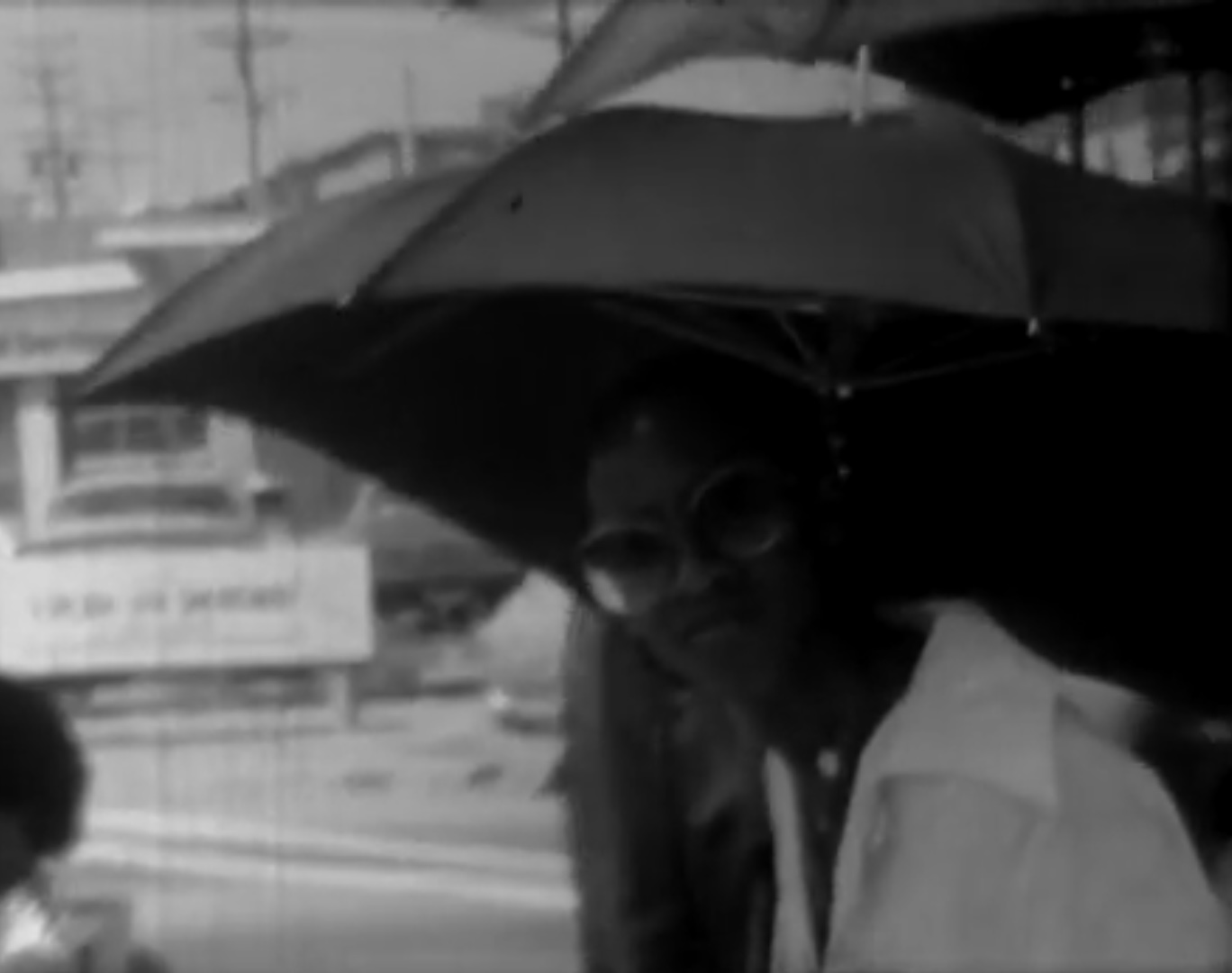
Our umbrella wielding girl misses her bus. However, in missing the bus, fate intervenes.  

In her wait, the bespectacled woman meets the bespectacled man; their almost matching sunglasses a form of sameness. 

Haitian filmmaker/actor Bernard Nicholas portrays the man whose poetry soon meshes with the woman’s, an exchanging of mental prose eloquently blending together, a voice over another voice. The urgent need for human connection becomes an apparent matter, a tie to the threads absent in their individual lives. 

Once leaving the place she desperately longs to stay, en route to work on the smooth backdrop of John Coltrane’s After The Rain, the office typist encounters an Afro haired street activist (who slightly reminisces the great poet Gil Scott Heron in his actions) demanding liberation for all. His cause becomes her cause, a precious serendipitous moment echoes the Black person’s right to exist at the edge of the Black Is Beautiful movement. She lives, travels, and works alone, finds supreme pleasure in her own company (a woman should value herself enough to celebrate her bliss, especially a Black woman existing in a society lying to her on a daily basis). Yet, the man initiates their contact in a respectful manner, tenderly, a real chivalrous sort who respects her and requests her part in the revolution, expressing that it is theirs to share. 

Her typing job of their joint manifesto…

…also becomes his duty as well. 

At sixteen minutes long, Rain (Nyesha) is a much more provocative Black romance/activism piece than many seen over the years. The film paints a beguiling, straightforward portrait, honest and authentic, a genuine caring spirit in its two central characters. Unfortunately, this remains to be Ballenger’s solely available work. While she later did the cinematography on former school mate Alile Sharon Larkin’s Dreadlocks and the Three Bears (1983), performed script continuity on Rain (Nyesha)’s Bernard Nicholas’s short film Gidget Meets Hondo (1980), and sound mixed on Gay Abel-Bey’s Fragrance (1991), Ballenger unexpectedly passed away at the young age of forty-eight on June 25, 2003. At that time, for twenty years, she had been preparing for a compelling project described in full detail from the Los Angeles Archive Collective

Nappy-Headed Lady began production in 1980 and according to notes found with the donated materials, ‘will portray a young black woman growing up in the 1960s who rebels against her parents’ desire to have her hair straightened.’ Intent on mixing documentary footage from the period to ‘connect the protagonist’s struggle with the nationwide Black movement,’ the scripted scenes were shot on 16mm black and white film over several shoots in the Springs of 1980 and ‘81.

The Archive retains 43 items related to this project, among them the following unconformed audio elements: ‘Hair Washing takes 1, 2, 3, 4,’ ‘Health Spots (Immunization),’ ‘Swimming pool scene,’ ‘Inside kitchen,’ ‘Shower scene,’ ‘Telephone conversation,’ ‘TV noise, commercials,’ ‘wild sound,’ and a ¼ inch audio cassette tape of sound effects. The only clue to how the film may have eventually looked exists as a work-in-progress edit on a DVD transfer of a ¾ inch tape, and is available to scholars via an appointment with our Archive Research and Study Center on the UCLA campus.

This incomplete version of the film, which was assembled in 1985 likely as a work sample created in the hopes of securing completion funds, hints at what the narrative portions of the story would have depicted: a teenager’s struggle to keep her ‘natural’ against her parent’s wishes, her father’s heat-soaked beat as a mail delivery man in Los Angeles, a nurse’s argument with her supervisor about her ‘unprofessional’ Afro.”
We film cinephiles missed out on what would probably have been a remarkable, deserved-to-be-made film, especially for that time when most starred straight haired Black women protagonists (if they existed)— a noticeable presentation shift from the main character of Rain (Nyesha)

Julie Dash, Alile Sharon Larkin, Stormé Bright Sweet, and Melvonna Ballenger. L. A. Archivist Collective. 

Alile Sharon Larkin, Stormé Bright Sweet, Melvonna Ballenger, and Julie Dash. L. A. Archivist Collective. 

Nappy-Headed Lady’s intriguing scene titles “swimming pool” and “shower” would likely divulge on the intimate knowledge of Black women’s psychological displeasure of water when not surrounded by the ideals of hair washing. This Wizard of Oz Wicked-Witch-of-the-West effect (Dorothy throws water on the villain and the villain melts) mirrors our overzealous reactions to what water physically does to our strands: destroys hairstyles, promotes shrinkage and potential dryness, and temporarily alters curl patterns. Oh yes, the hair dilemma is the real struggle. Imagine a Black woman character sitting poolside, refusing to swim without a protective cap or never having learned to swim due to the generational instruction to avoid water situations that do not involve shampoo and conditioner. In the shower, on a non-wash day, she would twist her body in all kinds of ways so that the spray does not touch her head. 

This film is apparently thirty-minutes in length and maybe worth making an appointment to UCLA. 

Still from Ballenger’s unfinished film, Nappy-Headed Lady. L. A. Archivist Collective

Another still from Nappy-Headed Lady. L. A. Archivist Collective.

With the jazzy renaissance that Rain (Nyesha) brings, Melvonna Ballenger delivered a quiet, satisfying narrative that has all the makings of a Black romantic classic. It simmers deeply in a poet’s soul— the repeated refrains about the woman author’s misery for the weather’s precipitation and the man’s desire for equality and peace slowly meld into a resolution that suits both parties. 


Thursday, October 6, 2022

I Recommend You Watch The Tearjerker ‘Till’ With Kleenex And A Clear Head


Till film poster.

I remember walking into the Whitney Museum and purposely ignoring the Biennial’s Dana Schultz’s Open Casket on several visits. I remember social media muting white professors and former white classmates on their defensive views of why this controversial artwork deserved to be made, that anyone could use history as the basis of creativity. I remember seething with rage when the artist in question made the excuse that she painted this through the eyes of a mother. Yet, let us be perfectly clear that Schultz’s work does not have the same moral, let alone emotional and psychological impact as Mamie Till-Mobley’s historic decision to showcase what racist hatred performed in 1955. 

Till, Chinonye Chukwu’s beautifully riveting biopic, reveals just what a Black mother is forced to endure in a prejudiced America. This ordeal is unlike any other struggle for the average parent. It is our history— the history of loss from the times of Africans being sold to various countries including America to slavery auction blocks permanently separating families to violent killings post Civil War and beyond. Trauma unfortunately weaves into Black generational legacy and no amount of joy can change that fact. There is no rewriting history to make one feel comfortable. We were not meant to have that luxury, that feeling that you can choose to ignore a story as chilling as Mamie and Emmett Till’s. This drama film packs a heavy emotional punch, something more visceral and powerful than any painting hung in an elite gallery space. 

Emmett (Jalyn Hall) gives his mother Mamie (Danielle Deadwyler) his watch at the train station. After his murder, the ring on his finger would be the one identifying factor. DP: Bobby Bukowski.

It opens softly on Mamie Till driving with Emmett on the passenger side. Her eyes are watering, seeming elsewhere as though this whole sequence is a frozen, suspenseful dream. Perhaps she is a clairvoyant already knowing what will happen to her precious son soon. Their sweet camaraderie as mother and child evokes pleasant relationship vibes: protective, nurturing, and so much care. Sweet, affectionate Emmett has a minor speech impediment, but singing songs helps him smooth over his stuttering. Mamie looks on Emmett with elevated pride and happiness, reserving certain motherly glances for him alone. He too adores her immensely as though no other woman in the world could ever replace his compassionate, resilient, beautiful mother. Like Mamie, however, we all wish that Emmett would not be so excited to leave the love and safety nest Chicago, Illinois provides. A cruel fate awaits in Money, Mississippi. When they have their final moments at the train station, Mamie takes as much extra time as possible before Emmett departs. It becomes emotional devastation. The exchanged “I love you” and the crushing embrace between them sets up a heartbreaking foreshadowing. 

Down South, Emmett is introduced to backward conditioning. While racism exists in Chicago through other discrete tactics, Money blatantly displays segregation. From his family cotton picking in the field to the Bryant’s store mishap to the kidnapping— each sequence has key importance to the tragic consequences befallen to Emmett. Slavery may have ended nearly ninety years prior, but cotton remains a commodity and only certain folks are out in the hot sun plucking its worth. Naturally, Emmett finds no pleasure in the humiliating task, joking around to the annoyance of his serious cousins. In Money, Black boys are already seen as laborious adults, having little recess or game play until the day’s work is completed. At the Bryant’s store, presenting a stiff calm before the volatile storm, Emmett’s charm backfires tremendously, turning into a colossal fabrication by a white woman named Carolyn Bryant. One innocent act would later become the catalyst to his kidnapping and eventual murder.  

Emmett’s cousins hanging out in front of Bryant’s store. DP: Bobby Bukowski.

The next sequences are a trigger warning that will have your blood running cold. The very sensitive material is a reality stronger than any painting that unsuccessfully tries to depict a mother’s grief from a place that is not genuine, let alone realistic. Mamie Till’s grief is not a fodder vehicle, not a plot device for spectacle. It is beyond maternal instinct, beyond maternal despair. Her reactions to the kidnapping, the found body, the pine box arrival, and her son’s bloated, mutilated body are especially unsettling. The depth of her endless sorrow knows no amount of medicinal aide or therapeutic elements could ever relieve the vicious claw racism stole from her heart. Although the audience is spared witnessing Emmett’s perverse murder, hearing only his cries on a dark night, his body is shown in horrendously graphic detail, perfectly mirroring the nightmarish pictures in the Jet Magazine. Thus, there was keen commitment in orchestrating the truth of what Mamie saw and lived through— what she bravely showed the world. Also, while grieving, she must deal with the NAACP and their sexist dynamics and pleas that she uses her son’s death for political gain (that remains a campaign promise today until politicians get in office and forget about Black people). Even in the midst of experiencing great despair and shock, we are expected to work, to perform. 

On top of the mourning mother, Mamie decides to push the envelope further by going down to Money and testifying at the murder trial. However, this is a place where racism thrives and ugly white feminism is proudly steeped. In court, Mamie’s responses are tremulous, agonizing moments of vulnerability. The white men refuse to acknowledge her humanity, let alone Emmett’s. When Mamie says, “they’re killing him all over again,” the extent of her words could not be any clearer or wiser. Carolyn is allowed on the stand, lying up a storm, entertaining the men who idolize what she represents— their innocent, unblemished salvation/damsel/victim. Of course, Mamie leaves in the middle of this performative show, intuitively knowing which side the jury is on. 

Mamie (Danielle Deadwyler) and her mother Alma (Whoopi Goldberg). DP: Bobby Bukowski. 

Chukwu’s raw, gut-wrenching first feature Clemency also comes to mind, delivering the candid message that America remains undeniably separated. The law is a complex system, but not so complex that you cannot see that class discrepancies can keep the innocent behind bars and the guilty living their best lives among us. Anthony Woods, a contemporary Black man is found guilty and on death roll for a crime he did not commit. Yet, in Till, the white men who tortured and killed a Black boy are allowed a free existence to live a long life— a pattern still existing today. The murderers can be dirty cops or proclaimed neighborhood watch citizens, brandishing their powers, weaponizing their inferior positions. Rarely, will these real-life villains be subjected to imprisonment, much less having to beg for appeals and mercy like Anthony. In the eyes of the all-white male jury, they saw themselves dulling out the punishment— killing Emmett in order to “protect” Carolyn. That collective “not guilty” meant no crime was committed, it was justice served. 

With a commendable cast led by the visceral force of Danielle Deadwyler’s memorable performance as the icon that sparked a nation, Till is by far one of the most moving biopics ever seen about a Black woman— authentic in every single part of its crafted vision. Honestly, haven’t we had enough of biopics/race films helmed by mostly white men? Aren’t we ready for new, authentic visual experiences seen through a gentle, caring lens? It must be lauded that a commendable Black woman was involved in both Till’s story and direction, a story that never veers away from the heart of the matter— Mamie and Emmett. They are not weighed down by Martin Luther King Jr. (who is a constant fixture in almost every civil rights era drama). Co-written with Keith Beauchamp (mentored in real-life by Mamie Till-Mobley) and Michael Reilly, Chukwu’s incredibly powerful piece demonstrates a Black woman’s plight to honoring her son who deserved to live, who deserved justice in a country denying him that. In addition to Bobby Bukowski’s brilliant cinematography, Abel Korzeniowski’s music comes through scenes with meaningful intentions while others are purely silent, allowing us only the offering of an actor’s pivotal words and breaths. Marci Rodgers, the Black woman costume designer behind High Flying Bird, Passing and episodes of She’s Gotta Have It and Paper Girls, created flawless styles that truly set the tone— Mamie’s wardrobe going from bright yellows to pitch black by the end. 

Mamie Till-Mobley’s path to publicly advocating for her son reflects on our current climate— Samaria Rice, Sybrina Fulton, and other Black women mothers speaking on the injustice of their slain children. DP: Bobby Bukowski. 

My knowledge of Emmett Till started as a teenager watching the late Henry Hampton’s award-winning Eyes On the Prize and later appreciating Ava DuVernay’s August 28th short film which features two Black men working on Emmett’s pine casket box to be shipped from Money to Chicago. As Hannah Black, creator of the open letter to the Whitney Museum, told us, we do not need a white woman to broadcast Emmett Till from her tone-deaf platform. Schultz knows nothing of Black pain and struggle, can never begin to imagine what grieving Black mothers’ are experiencing. They are still hurting yesterday, tomorrow, right now. Better yet, generations later, we are still sequestered in the embittered aftermath that never fades away. Emmett Till never fades away. Thankfully, Till finally exists, allowing a broader chapter revealed from Mamie Till-Mobley’s anguished perspective. She is the reason we know her son. That’s why we must elevate them both. One heartbeat cannot pound hard without the other. 


Thursday, March 24, 2022

‘Solace’ Courageously Examines A Quiet Black Girl’s Eating Disorder


Solace film poster.

Tchaiko Omawale’s candid feature-length debut Solace strikes home hard. It focuses on Sole, a seventeen-year-old Black girl, who uses food and art as a coping mechanism after her father’s death. Instead of staying in New York City with a teacher who truly cares about her well-being, Sole is sent to live with her judgmental maternal grandmother Irene in Los Angeles. 

Sole (Hope Olaide Wilson) in her new bedroom in Los Angeles. 

Solace resonates with a personal history that still carries through my daily life. Sole reminds me of many weekends spent in my bedroom not eating in hopes of maintaining an extremely underweight frame. This mindset was a mixture of admiring the frail girls on the WB network and the hope to not have the same body types as my maternal side of the family. Still, I binged on snacks primarily candy like a high junky craving munchies whilst dreaming of flattened breasts and flattened stomach. Several scenes have Sole’s fingers blindly reaching inside snack bags and robotically stuffing chips, crackers, etc. into her mouth, eating and eating out of pain, out of boredom no matter the hour. Despite this constant snacking, Sole is obsessed with her figure and the figure of her thinner neighbor, Jasmine. 

Sole has trouble seeing eye to eye with Irene (Lynn Whitfield). 

Irene wants Sole to go out more— especially with the local church girls— although Irene herself is not the typical Christian values woman. 

As Sole often scrummages the cabinets for midnight cravings, the rough tension escalates between her and Irene. A headstrong, determined Sole anxiously yearns to return home and false church lady Irene desperately wants to build a relationship with her granddaughter. Sole sees right through Irene’s phoniness right down to the strange relationship between Irene and her special friend, Pastor Clay. It also doesn’t help that Irene makes negative comments on Sole’s eerie eating habits and labels her “fat.” 

Guedado (Luke Rampersad) and Jasmine (Chelsea Tavares) are two broken spirits that draw Sole into their world of drugs, alcohol, clubbing culture, and kissing experimentation. 

Jasmine falls asleep in Sole’s arms. 

Positioned between Sole’s story is an abstracted nude Black woman wrapped in clear plastic, trying to break free from the barrier. This avant-garde break may metaphorically imply the mental trappings that overwhelm the physical self so much that it interferes in the way of daily existence. This body cries out in despair, in agony. Most importantly, she is fighting to escape alone. 

“If you’re silent about your pain, they will say you enjoyed it,” Zora Neale Hurston said in How It Feels To Be Colored Me, a quote that highlighted my personal struggles, that extends towards Sole’s quiet pain. 

Meanwhile, Sole prefers becoming intimately close with her neighbors Jasmine and Guedado instead of Irene’s church friends’ daughters (which includes Martha played by Pariah’s Sahra Melllesse aka Alike’s accepting younger sister, Sharonda). Sole needs their help for winning an art project that would fund her return to New York. Eventually, however, the trio are an inseparable triangle with a curious Sole attracted to both Jasmine and Guedado— both affecting her in different ways. Yet between the jarring opposite magnets pulling the lost, vulnerable Sole in deeper and deeper, her eating disorder overwhelms any possible high or munchy craving. 

At the same time, the chain smoking Irene—pissed at her granddaughter for choosing the eccentric neighbors over her own family— is getting in good with her friend Pastor Davis. The film does not stray away from the notion of older people having sex, lingering on every curve of hypocritical Irene’s body and every indented line of Clay’s. Whilst in the throes of passion, Irene giggles, hoping Sole doesn’t hear them. 

The trio successfully shoot in front of Pastor Clay’s church— that is until he comes down and threatens to call the cops. 

Winner of the Best Ensemble Cast Award at the Los Angeles Film Festival and Narrative Feature Audience Award at the New Orleans Film Festival, Solace deserves more praise and attention for responding to the quiet underbelly of Black girls suffering from constant body criticism. Ours is much different than that of others. 

When Sole reaches a startling breaking point, Irene is there to pick up the shattered pieces. 

Solace made me feel seen and understood. This powerful film addressed an inner battle to make a resolution to my past body issues. Black girls and women much like Sole have to be encouraged to break through this glaring cycle of hatred, of not valuing what is before us. Although societal standards still vouch for European ideals, Omawale’s important film instructs Black women to embrace the distinctive shape of their bodies, to accept their appearances in all its facets. Haven’t we been punished enough already in this world? 

Furthermore, Solace is an experimental expression that not only discusses the Black female body, it blends together grief in a coming of age narrative, sexuality/sexual politics, and art form.