Showing posts with label 2010's TV Show. Show all posts

Sunday, March 19, 2023

The Remarkable Journey of Darla Sutton-Bordelon


Darla definitely deserves to be included among Best Television Character Journeys of All Time lists. 

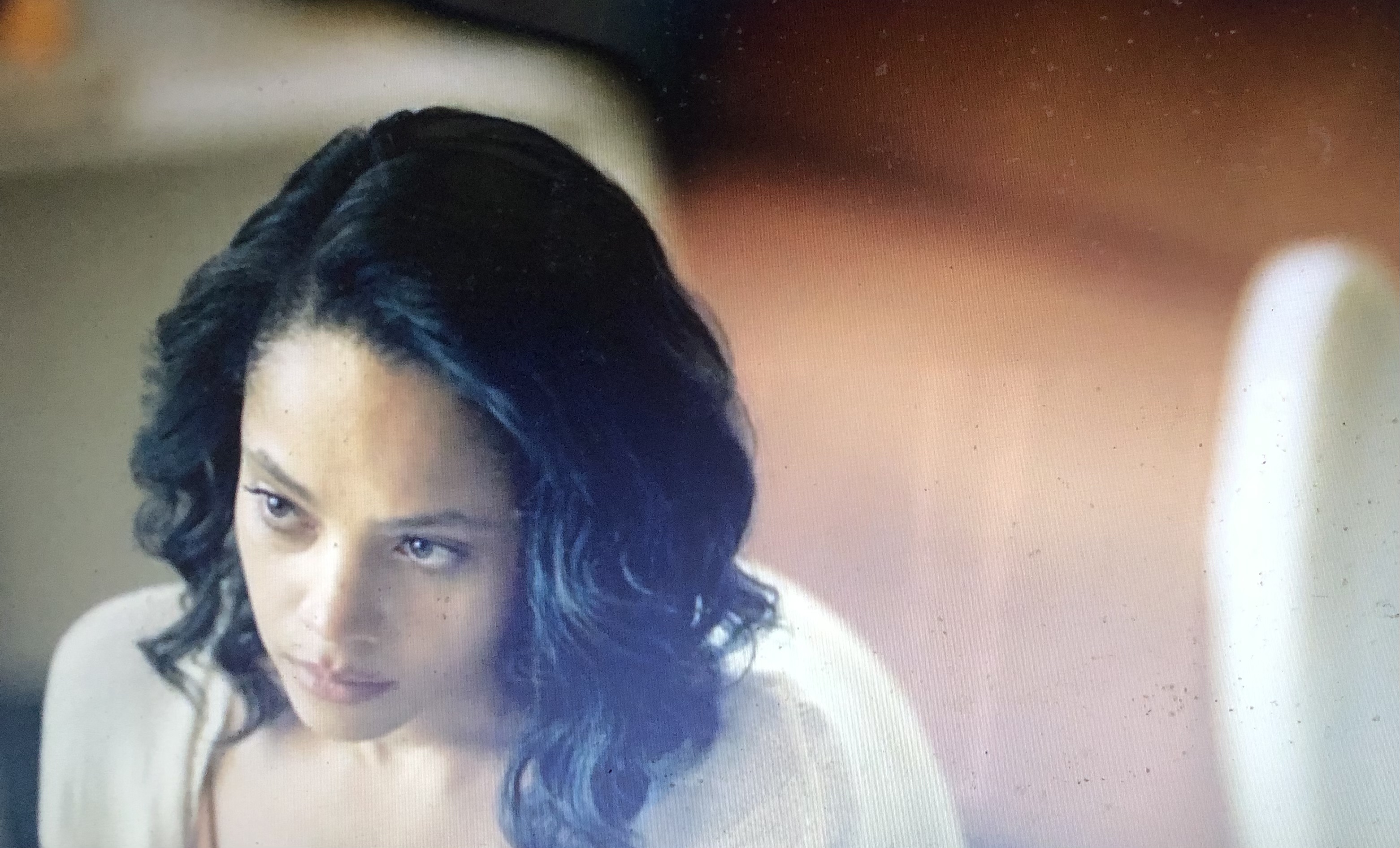
Almost seven years ago, Queen Sugar delivered Darla Sutton-Bordelon, one of the bravest character journeys ever depicted on television. The extremely attentive details come solely from the poignant written components of the former drug addict adapting to society and the incredibly gifted Bianca Lawson’s underappreciated efforts of rendering such a fragile turned resilient woman. 

This essay sheds light on Darla’s countless obstacles and how she faced them. 

Darla (Bianca Lawson) recites a metaphorical “fairy tale” to Blue as Ralph Angel watches from the doorway in season one, episode eight’s Where With All, written by Tina Mabry and directed by Kat Candler.

Darla (Bianca Lawson) and Blue (Ethan Hutchinson) are always so beautiful together. 

In the first season, Darla has been clean and sober for almost two years. She has a steady job and is happy to be allowed to babysit her son, Blue during Ernest’s funeral. Darla’s past often overshadows her continued efforts to be in Blue’s life. That stain comes with addiction. Even when someone comes out the program, conducting the proper steps, to regain trust is difficult. 

“These past eighteen months, I have been clean… I want to thank you. I never got the chance to say ‘thank you, Mrs. Violet.’ You saw me at my lowest, you saw me in hell. I didn’t even want to exist anymore. Not breathe. Not see. Not hear. Love couldn’t even reach me. And you picked up my baby gently… you could have yelled at me and cursed me, but I remember you covering me up and saying, ‘God bless you, girl.’”— Darla to Vi (Tina Lifford) and Hollywood.

The Bordelon family has troubles fully accepting Darla. 

Violet’s grudge is Darla’s biggest hurdle, considering that she is the primary guardian of Blue. Vi’s mind remains haunted by Darla’s darkest, shameful moment. Out of the people she has hurt and harmed the most, Vi is the impenetrable, unforgivable barrier to cross. Vi’s detrimental behavior during the hurricane—wanting Ralph Angel to kick Darla out in the middle of terror— problematic at best. However, Vi says to Charley that the cheating, lying, monstrous Davis has a right to be in Micah’s life while loudly blasting Darla for trying to be a mother to Blue. Ralph Angel calls out her hypocrisy (which is quite patriarchal). Yet heavy foreshadowing comes into play here. In addition to the cheating, Charley ended her marriage to Davis due to him paying his friends to rape a sex worker. 

Darla and Ralph Angel tell Blue that they’re getting married in season two, episode nine’s Yet Do I Marvel, written by Jason Wilborn and directed by Julie Dash.

Darla confides in Charley about trying to reach her parents in season two, episode ten’s Drums At Dusk written by Valerie Chu and directed by Julie Dash. 

Unfortunately, a big problem for Ralph Angel and Darla lies in throwing each other’s past mistakes as missiles. Although they love each other deeply, some wounds are still not fully healed. 

Ralph Angel reluctantly agrees with Darla to undergo pre-marital counseling. They both selected communication as their biggest concern in season two, episode eleven’s Fruit of the Flower written by Dana Greenblatt and directed by Cheryl Dunye.

The second season, Darla becomes more radiant and healthy; her look partly due to rekindling love with Ralph Angel and strengthening her connection with Blue. The struggle to maintain this newfound habit presents the real, authentic portrayal of life post addiction, knowing that people still cannot forgive you for your past. Darla retains no hateful spirit, always conveying her thanks despite knowing that Vi carries an unchanged resentment. Darla finds a perfect balance between motherhood and becoming engaged to the man of her dreams, and finding a job with Charley— her future sister-in-law. Darla soon finds a friend in Charley, an intimate closeness that’s needed for a woman who grew up as an only child. Hotheaded Ralph Angel— who has already shared his late father Ernest’s secret will with her— isn’t too happy about the arrangement, believing that Darla is not on his side. He has already shared his late father Ernest’s will with her. The thing is Ralph Angel expects Darla to always sacrifice for him. She lost a previous job thanks to him. 

Suddenly, the presence of Darla’s parents brings a shocking detail to light. 

The wedding is off and Ralph Angel dumps Darla. 

Darla’s mother Darlene (Michael Michele) puts out the idea that Blue should live with his maternal grandparents for a while— that of which Darla does not agree in season two, episode fourteen’s On These I Stand; written by Jason Wilborn and directed by Christina Alexandra Voros. 

Even with everything crashing around her— losing the Bordelon support including being fired by Charley— Darla manifests painful rejections into a positive activity— swimming in season two, episode sixteen’s Dream Variations written by Davita Scarlett and directed by Kat Candler. 

The third season, after recuperating with her parents back home in Washington D. C., Darla eventually returns to St. Joe to exist beside her wrongs, maintaining the path towards being forgiven. She has changed her appearance (cutting off her signature locks) and hopes to spend more time with Blue by any means necessary. Ralph Angel— hanging onto the hurt—frequently lashes out at Darla. Moreover, Darla also deals with Vi’s scorn and that of Hollywood for the first time. Ralph Angel and Darla tell Blue about their abruptly ended relationship. Darlene then encourages Darla to get the courts involved for a custody arrangement. After all, Darla has earned the right to be in Blue’s life, her smart, inspiring son gives her the heart and energy to thrive, to be clean. She needs his sustainability. 

Darla returns and Ralph Angel isn’t too pleased— having only handed off her phone calls to Blue.

Darla and Ralph Angel peacefully mend fences in season three, episode twelve’s The Horizon Leans Forward, written by Mike Flynn and directed by Kat Candler. The parents train Blue to ride a bicycle. As they watch him from the porch, Darla believes that they should split time fifty/fifty. 

“I’m more than okay. I’m healthy. I’m sober. I have my struggles, but I think of Blue, I think of his joy and I walk through it.”— Darla in season three, episode thirteen’s From on the Pulse of Morning, written by Kat Candler and Anthony Sparks and directed by Candler. 

Season four features an evolved Darla embodying a woman willingly undergoing significant life changes, even sharing similarities with new boyfriend Leo— also a former addict while also continuing a positive co-parenting arrangement with Ralph Angel. She shows no animosity towards Ralph Angel dating the beautiful Deesha, a fellow parent in Blue’s class, demonstrating a release on her earlier attachment issues. In prior seasons, Darla and Ralph Angel were definitely not ready to be married, especially with Darla’s secret looming over them and Ralph Angel’s constant mood swings— very unhealthy and dangerous for Darla. So, Darla appears invincible as she moves forward in making a clean, worthwhile break, putting Blue’s needs and her own at the top of her hierarchy.

“You’re lower than I ever was!”— Darla to Nova on Nova’s book, Blessing & Blood of season four, episode four’s Skin Transparent, written by Valerie Woods and directed by Numa Perrier. 

Darla sinks into deep depression in season four, episode five’s Face Speckled, written by Lisa Morales and directed by Heidi Saman.

Darla takes a hefty sniff of temptation, but manages to not take a single drink.

Ralph Angel explains to Blue that though he’s not his biological father, his soul is in Blue. 

Then Nova’s book Blessing & Blood comes out. Darla’s co-workers quickly figure out she is the mysterious “Star” character. It also affects Blue at school. Darla never intended Blue to find out the truth about his paternity— certainly not this soon. Nova forces Ralph Angel and Darla to have that difficult conversation with Blue, Darla beyond hurt and humiliated that her very wishes are not respected. 

Jordan Montague (Amanda Tavarez) visits St. Joe spilling awful tea whilst drinking like a sailor in season four, episode ten’s Oh Mamere, written by Felicia Pride and Chloe Hung and directed by Cheryl Dunye.

Darla is in stunned disbelief as Jordan laughs about what happened to Darla.

The combined factors push Darla’s carefully constructed world asunder like a row of falling dominos. Leo— who has read Nova’s book— hasn’t returned Darla’s calls or texts. So, she shows up to his band practice. He reacts coldly to her, convinced that she’s teetering. Sure, it would be wise to take Leo’s advice and call her sponsor, but his whole attitude towards Darla plummets her already dwindling self-esteem. The final shove across the cliff comes from Jordan Montague— the worst kind of person. Jordan still believes herself to be Darla’s friend. Heck, Darlene believes this woman is Darla’s friend. At brunch, Jordan gleefully chugs drinks away, not showcasing any empathy towards Darla’s sobriety (perhaps she doesn’t know, but still...). Yet, Jordan reminisces about their glory days of turning tricks, unknowingly filling in the missing pieces of Darla’s fateful night. The vicious savageness to this story paints Jordan in a horrific light— she witnessed Darla being taken advantage of by two men and thought it humorous; not even realizing that Darla could not possibly consent. Even remotely close to sober, a grownup Jordan should realize what her words insinuated. What kind of friend would laugh and openly mock about their friend’s violation? 

Of course, it is very heartbreaking once Darla goes to a bar and engulfs one shot after another. Damn. 

Out of all the people who could have witnessed Darla’s public display of intoxication, a sweet fate intervenes, letting Vi find her.

Vi sits at Darla’s side as Darla tells Ralph Angel about the tragic night of Blue’s conception.

Vi gifts Darla an absolute blessing— the genuine care and sympathy that the young woman needs to process a terrible crime. For a long time, Vi made it perfectly clear where she stood with the former addict, her cruel retorts often heard by Darla. Still, a patient Darla knew that the road to forgiveness was not bound to be simple, let alone quick and painless. Thus, when Darla found herself in grave danger, Vi would be the one to rescue her from herself and disclose a surprising vulnerability. Perhaps, Vi finally sees that she and Darla share common ground— surviving cruel abuse by men. 

Ralph Angel and Darla finally marry in a COVID precaution ceremony in episode May 19, 2020 written by Norman Vance Jr. and directed by Lauren Wolkstein.

By season five and six, Darla and Ralph Angel have grown individuality— so much so that they can fully be committed together without inflicting unnecessary hurt on each other. After a hard, tumultuous year, Darla deserves happiness, she deserves the fairy tale ending— which she acquires through one of the most poignant, most loving weddings ever shown on television. Although Darla’s parents cannot attend mainly due to the COVID pandemic restrictions (brilliantly integrated into the series), a prior virtual bridal shower offers Darla a humbling surprise from Darlene. 

When Darla becomes pregnant in season six, this gorgeous family embarks on this healthy journey together as a married couple, no longer their past— the hustler and the addict struggling to make ends meet. Love has always been their backbone, but wisdom and growth unites them, prepares them for a refreshing future with their son Blue along for the glorious ride. Unfortunately, Ralph Angel has some instinctual reflexes that potentially places his own maturity on the line. 

Happy endings are bumpy ways away for Darla, Ralph Angel, and their newborn daughter in season seven, episode three’s Slowly and Always Irregularly written by Francesca Butler and directed by Stacey Muhammad.

Darla is deadset against Nova’s book being turned into a film in season seven, episode five’s With A Kind Of written by Eddie Serrano and directed by Shaz Bennett. 

By the seventh season, Darla settles into marital bliss— a beacon of pure happiness. Again, fate tests her sobriety. Nova has the opportunity to turn her book into a film. Everyone is all excited about the prospect, having changed their earlier scorn into excitement— except Darla. She suffers through their uncontainable glee, her eyes watering, the tension in her body rising. First, her “no” is soft, then she repeats it louder and louder, and races out of the room. As part of the Bordelon family, her consent matters and it’s only right for Nova to go to Darla, to hear her— not exactly for the why, but for her to truly understand what Nova’s book cost Darla. 
“Don’t you dare make this about you! You ruined my life. And now you want forgiveness. I relapsed because of you and that book. Did you really think I would be okay with a movie? Are you really that selfish? Ralph Angel and I... we keep trying to let the past go. But you keep bringing it back. You think that I wanna watch my assault with actors in costumes? Do you think that I want that out there for Blue and Tru to see? More than you’ve already exposed it? All the s*** you stirred, do you think I want that rewound and streamed on people’s TVs for years?.... ARE YOU CRAZY? ARE YOU OUT OF YOUR MIND?”— Darla to Nova. 
After listening to Darla’s passionate monologue, Nova promises to decline the offer of turning Blessings & Blood into a film. To further enhance a pivotally emotional moment, the two sisters by marriage embrace, Darla sobbing on Nova’s shoulder, a newfound bond between them deepening. 

Once that chapter closes, Darla’s remaining hurdles include Ralph Angel’s troubles and the worthless Chase (who doesn’t deserve to be considered Blue’s biological father). Of the latter, Darla boldly confronts her attacker (with her strong, supportive family in tow) and tells him off in a way season one Darla never would. How can you not applaud her for her courage, her unflinching eye? She was a chess player mastermind beating Chase at his own pathetic game. As for Ralph Angel, Darla was right to take the kids with her to Washington D. C. He needed to put his family first: stop returning to his old shady behavior, punishing Darla, and talking to an ex about his marital problems. 

Darla closes the nail on the coffin— having the monster Chase (Eric C. Lynch) sign many documents including a contract worth three million dollars. Talk about a more positive spin on paying out a rape survivor (sorry Charley).
 

Thankfully, by the final episode, one of the best TV couples Darla and Ralph Angel repair their relationship and buy a house together in order for Vi and Hollywood to foster a child. Talk about a rewarding full circle moment for everyone, especially Darla. She fought against constant denial, constant doubt, and stole/melted hearts. 

Insert the sobs. 

Queen Sugar may not be the easiest series to binge. Almost every episode should come with a “sensitive subject matter” warning. Furthermore, an inward pause must be taken to let the heavy images, resonating stories, powerful acting settle in spirit, and tissues to wipe away endless tears. For seven heartrending seasons, viewers have watched the soft-spoken, guilt-ridden Darla transform into a remarkably resilient woman— someone growing into her own strength and agency. Bianca Lawson’s incredible performance of grace, tenderness, and grit makes you see Darla’s multifaceted humanness. She has immense regrets, battles to stay sober, desires to be a better mother and partner, and forge her own destiny. Between her defeats and losses, the blessed Darla still receives wins, joys, and pleasures. Lawson believably embodies a character she was meant to play. After roles in Buffy the Vampire Slayer and Pretty Little Liars, Queen Sugar gave the opportunity of a lifetime— a layered, complex role requiring an emotional weight that Lawson carries well. 

Darla Sutton-Bordelon’s character arc demonstrates a significant part of why Queen Sugar will stand the test of time as one of the most unforgettable series ever rendered. 


Friday, September 2, 2022

Never Felt This Way Before: Ode To ‘Queen Sugar’s Nova And Chantal


Chantal and Nova had a casual relationship during Queen Sugar’s first season. 

As Queen Sugar begins its seventh and final season next week, writer/activist Nova Bordelon and BLM activist Chantal Williams’s short lived romance deserves a revisit. 

Chantal (Reagan Gomez-Preston) and Nova (Rutina Wesley) are guest speakers at a radio show that ends poorly in As Promised written by Melissa Carter and directed by Tanya Hamilton. DP: Antonio Calvache.

They exchange words... DP: Antonio Calvache.

....and Chantal places her number into Nova’s phone. DP: Antonio Calvache.

In season one, episode six’s aptly titled, As Promised, Nova and Chantal meet on a radio show that seems a manufacturing of The Breakfast Club— a false community vibe that gets its kicks on Shade Room gossip. Nova and Chantal want to talk about their work, especially in regards to the tragic case of Too Sweet. Yet the raunchy male hosts focus on Nova’s sister— the famous basketball wife, Charley Bordelon West. Even the callers request only information on the titillating details, not much on the prison reform and bail aide that Nova wants to address. Afterwards, Chantal apologizes to Nova and flirtatiously places her number in Nova’s phone. They bond over Chantal’s Hindu necklace which represents Ganesh, the goddess of obstacles. Thus, this potentially symbolizes a short-lived pairing that definitely had a more intense, soft, tender chemistry as opposed to Nova’s other longer term lovers. 

From community activists to lovers, Nova and Chantal’s passion sets the screen on fire in the seventh episode, In No Uncertain Terms written by Denise Harkavy and directed by Neema Barnette. DP: Antonio Calvache.

Nova softly releases her emotional burdens on Chantal. DP: Antonio Calvache.

In No Uncertain Terms shows Nova and Chantal hooking up. Chantal tries sneaking off to leave— perhaps believing that they are a typical one night stand. Nova invites her to stay for breakfast— a positive sign of turning an overnight stay into an invitation to her world. The moment is riddled in stolen kisses and pensive stares with a vulnerable Nova admitting that she has never felt so free before. The difference between this new, refreshing relationship, versus Nova’s previous entanglement with the married white cop Calvin is that with Chantal there exists no residual shame, no inner turmoil between Nova’s “Black love is sacred” politics and her heart, and that poignant kind of blissful intimacy that can only be manifested with another woman. 

Nova and Chantal enjoy herbs in Nova’s garden. DP: Antonio Calvache.

Herbs of all kinds. DP: Antonio Calvache.

In the middle of Nova’s wondrous joy, however, is facing the consequences of stealing a hefty sum from the family farm account without permission. Hurricane Charley bursts on Nova’s property to blast her. The moment Charley sees Chantal, her anger increases. Charley calls Nova trifling. The rift between the sisters has been steadily drifting and drifting. Nova’s face appears hurt by Charley’s words, believing that her romance with Chantal disgusts Charley. In the next episode, Charley claims it is Nova smoking weed and having an affair (which she did not find out until the end of In No Uncertain Terms) that she finds problematic. 

Later, Nova and Chantal attend an artist interview in the artist’s studio. Chantal and Micah have one on one time looking at large scale representational paintings of stolen Black lives. While Charley scolds Nova’s lifestyle, her son is accepting and kind. It is quite beautiful that Nova introduces Chantal to Micah and leaves them to get along as she conducts her work. 

Where With All, speaking of hurricanes, the eighth episode has Chantal playing the passenger on Nova’s supportive ride for a fellow ninth ward citizen during a tropical storm. They’re obviously growing closer; their activism for the community tying them together, encouraging a deeper bond. An old lady in the backseat offers both solemn thoughts and unexpected humor. Overall, Nova and Chantal temporarily become the buddy comedy relief through a horrific storm that the poor city does not need. After all, Katrina was an environmental violence that still has repercussions to this day. 

Unfortunately, part of Chantal being the rider, is monitoring the driver’s phone. Aunt Vi is not the only repeated caller. Chantal sees Calvin pop up numerous times. Nova immediately tells her not to answer. Although Chantal asks no questions, her eyes do. Why be so defensive about this man? What’s the big secret? 

As the women hear that the storm is shifting to a second level category, Chantal invites Nova to stay with her. Nova declines, getting the wrong idea that Chantal wants her to move in. These two situations— Calvin and the moving in (which yes, is too soon)— are generating red flags. If returning to that moment when Chantal tries to sneak off in the morning of the previous episode and Nova saying that Chantal frees her, then it is understood that Chantal feels that something more is blossoming between them. In the car, they appear to be backtracking, especially Nova with her mixed signals. Chantal is trying to shelter Nova from the storm, but Nova immediately sets more boundaries, saying that she’s not that kind of person. She needs her space. And that should be okay. 

Chantal and Nova have breakfast again in So Far written by Anthony Sparks and directed by Salli Richardson-Whitfield. DP: Antonio Calvache.

Nova has Chantal try her skillet meal— changing the topic from the article Chantal is obsessing over. DP: Antonio Calvache.

So Far, the tenth episode, Nova and Chantal appear to be relaxed and well— another breakfast conversation, more love in the morning, lounging about in sleepwear. Chantal then makes a huge fuss over Nova’s upcoming conversation with Melissa Ford-Perry. A humble Nova is uncomfortable by this attention and tries to distract Chantal with food. Things come crashing down after Chantal invites her BLM group to Nova’s house to give Nova talking point ideas. Chantal and Nova have a huge argument. It is obvious that they are at different levels in their lives— Chantal the huge fan girl wanting to build on Nova’s successful platform and Nova guarding/keeping her writing/activist life separate from her relationship. 

When Chantal invites her group over to help Nova (after it has already been established that Nova prefers to work alone), Nova is visibly upset. DP: Antonio Calvache.

Chantal is hurt by Nova’s refusal. DP: Antonio Calvache.

Nova must always have it done in her own way. Writing is often a solitary practice. DP: Antonio Calvache.

Later, Chantal breaks up with Nova for several reasons— their politics are not aligning, Chantal interferes with Nova’s solitary practice, and Chantal discovers that Calvin is a white cop. It feels very rushed and insincere. They are not even fighting to stay together— Chantal is especially not listening to reason. Maybe Chantal cannot handle Nova’s boundaries. Then again, Chantal admits to looking through Nova’s drawers and finding pictures of Calvin. So that represents a trust issue. 

Nova admits to liking both Chantal and Calvin’s looks. That’s not enough for Chantal to stay. DP: Antonio Calvache.

Even though Nova and Chantal ended things, Chantal popped up in two more episodes throughout Queen Sugar’s run, showcasing that Chantal and Nova still had that community connection. In Yet Do I Marvel, season two, episode nine, Nova’s article on the Zika virus scares the whole of St. Joseph Parish. Chantal (who is now on the health community board) informs Nova that her words have petrified people. Interesting enough, Nova's boyfriend Dr. Robert’s ideas have somehow manifested into Nova’s work. Once upon a time, Nova declined Chantal’s aide. Also while Nova treasured Chantal’s Ganesh necklace, let’s not forget the ugly jewelry Dr. Robert gifted Nova— something that was not her. Like this relationship. Perhaps Chantal knew that too. 

In Yet Do I Marvel written by Jason Wilborn and directed by Julie Dash, Nova’s article on the Zika virus is not the only thing pissing off Chantal— though that is more seen in her body language at Dr. Robert. DP: Antonio Calvache.

Nova and Dr. Robert seemingly team up against Chantal’s stern attitude. DP: Antonio Calvache. 

In season four, episode four’s Skin Transparent, Nova’s Blessing and Bone book has painful repercussions. Almost her whole family does not show up to her book reading before her book tour. Only Micah, her beloved nephew. But guess who else proudly shows up to support her? 

Chantal Williams. 

It would have been even sweeter if Chantal reunited with Micah in the empty front seats reserved for family, but not everything is meant to be. Chantal’s beaming smile in a crowd of strangers is a most welcoming sight from the major blowback Nova experiences. 

In Skin Transparent written by Valerie Woods and directed by Numa Perrier, Nova reads a surprising excerpt from her Blessing and Blood memoir. DP: Antonio Calvache. 

Chantal is a vision in pink, very proud. DP: Antonio Calvache. 

Chantal brings a genuine smile on Nova’s face. DP: Antonio Calvache.  

Chantal holds Nova’s hand and asks her if she’s seeing anyone. Always a flirt. DP: Antonio Calvache. 

Queen Sugar certainly did not grant Nova and Chantal the time, space, and care to mature as a couple much less paint a full character analysis for Chantal. Nothing else is further detailed in Nova’s ex-girlfriend other than her communal activism. The show has a growing ensemble with many stories that intersect together in less than an hour. Yet the audience knows more about Calvin and Nova’s other boyfriends than Chantal herself. Another glaring problem is that queer couples, especially bisexual queer couples, always seem to veer back to heteronormativity. In Nova’s case, she returns to Calvin repeatedly, then Dr. Robert DuBois, and in between (like that strange Remy situation). Her queer relationships are flighty noncommittal flings that deserve much deeper depth. For example, Dr. Octavia Laurent, Nova’s former professor and lover is introduced during Nova’s book tour— after Nova previously dismisses Chantal’s request for emotional intimacy. There has definitely been missteps to Nova’s development over the years and her queerness is one. 

Nova calls Chantal over. DP: Antonio Calvache.

Chantal— currently utilizing self-care therapy— prefers that Nova come to her place and talk about her family issues. DP: Antonio Calvache. 

Queen Sugar’s final season returns on Tuesday, September 6th. Maybe Chantal will return again or maybe not. Either way, it was fond enjoyment remembering Chantal and Nova’s sweet potential together. 


Wednesday, August 7, 2019

Is Nova Bordelon a Heroine or Foe?

Queen Sugar's Nova (Rutina Wesley) has come far-- far to become probably the most hated character on the show.
Nova Bordelon isn't an evil Black woman. Her intentions are not especially cruel or heinous. She, however, is a multifaceted character not original to Natalie Baszile’s Queen Sugar novel, a fine example of a layered, flawed addition. Sometimes this works. Other times not.
"Nova came directly from Ava DuVernay’s imagination. She was designed to be a reflection of the leaders of the Black Lives Matter (BLM) movement: black queer women. It was a subtle allusion to the movement that anyone familiar with its roots could know and appreciate. Generally speaking, the show’s has since stopped being so subtle."
In season four, seven women directed episodes chart the journey of Nova a fiction weaved into fiction, whose current actions are considered both hurtful and powerful. The hurtful elements are from Nova's newfound bestselling memoir, "Blessings and Blood." She has included much of her family's private traumas-- Aunt Vi's abusive relationship with Jimmy Dale, Blu not being Ralph Angel's biological son, Charlie's many schemes like paying off Davis's former prostitute, and Darla's drug addiction. Despite the little yet important triumphs Nova's family has overcome in their respective personal lives, at the end of it all, Nova had no permission to tell the world. In fact, she made sure to give Charlie, Ralph Angel, and Aunt Vi the manuscript well after her book was sent to print. Nothing, not even Charlie "Miss Connections" could not rescue the "dirty" laundry from airing.

Despite Nova's questionable actions, it is undeniable that Rutina Wesley was made for this complex role.
While Nova's intentions for "Blessings and Blood" might seem selfish and vindictive, she thought her family’s struggles could be a resourceful tool for those going through the same situations—domestic violence, drug abuse, coercion. The stories are not juicy tidbits that appeal to gossip rags. Nova's poignantly written novel is specifically directed for Black readers. She has already accumulated a glowing New York Times review and was shortlisted for the National Book Award. Yet simultaneously, however, perhaps Nova should have opted to write a creative fiction versus a memoir that puts the Bordelons in jeopardy. Everyone in town knows who these characters are-- even Darla isn't disguised cleverly enough. Only one person champions Nova’s book-- Micah, her nephew fresh from a vacation in Paris.

Chantal (Reagan Gomez-Preston) and Nova (Rutina Wesley) were once a solid (albeit short-lived) example of beautiful Black women falling in love, but it looks like the ship has sailed away once again.

Dr. Octavia Laurent (Cree Summer) started Nova (Rutina Wesley) on exploring her sexuality, but Octavia's dominance in Nova's personal life diffused the reunion.
Nova's book tour, which takes her away from the toxic environment that she herself is responsible for creating, began with old flame Chantal on her last night in Saint Jo. Although it appears that a flirtatious Chantal may want to pick up where they left off, Chantal is livid that Nova only wants a booty call (with Chantal coming over to Nova versus the opposite) and no emotional/mental healing. On the road, Nova eventually gets her physical needs met with her former college professor, Dr. Octavia Laurent, but quickly ends things when she's sabotaging future opportunities. In Philadelphia, Nova runs into Calvin-- the white former police officer that started it all-- "keep the colors in the lines" indeed. She lays down the law with him, stating that she wants a connection before the physical intimacy can resume between them (coughs for Chantal). Nova's treatment of brown/Black women mirrors Ralph Angel's disposability factor behavior of last season. Brown/Black women are sexual objects while the non-black figure is uplifted/wooed (Ralph Angel with Vivien NgĂ´'s Trinh Phan and Nova with Greg Vaughan's Calvin).
"If Nova is truly chasing “freedom,” she had it and (more importantly) she KNEW she had it with Chantal. It’s these kind of missed moments of continuity that make me wonder if Queen Sugar’s rotation of writers and directors and, subsequently, showrunners, are impacting the characterizations we’re seeing on screen."
The overwhelming community displeasure for Nova definitely started back in season one-- Nova stealing money from Charley and simultaneously judging her sister's actions on broadcast radio. Nova would often depict herself as the good one, the one on high moral ground, the liberator of the Black community. Nova worsened in season three when she became involved with Remy, Charley's ex (a bad story line that took ample heat). Her queer identity was gradually lost, swept aside for another sister against sister parallel that reaches its boiling point in this current fourth season.

Back in the good ole days. Will these sisters ever be this close again?
Thus, Nova has made colossal mistakes, especially for "research." She isn't a villain. Yet her finding Jimmy Dale to "get his side of the story" breaks a feminist code, an unspoken rule that breaches believing women's abuse stories. Nova seeking out Aunt Vi's abuser explicitly conveys that Nova doesn't completely side with Aunt Vi's truth. That is huge. A writer's work shouldn't stand above family, above integrity. Nova comes from a well-loved family too-- a beautiful gift when many Black families are continuously healing from broken, scarred, and violent places. Nova's work essentially re-traumatizes Aunt Vi, Charley, Ralph Angel, and Darla-- these four people who are moving forward, staying strong and positive.

Nova's "Blessings and Blood" may be helping others see a mesmerizing light in her talented voice, but it certainly isn't understood through the bleeding hearts of her family.