Showing posts with label Book Adaptation. Show all posts

Sunday, August 23, 2026

An Artist Searches For Her Love Language In ‘Water In A Broken Glass’


Water in a Broken Glass film poster.
“The brush speaks for me even though I am afraid of what it might say.”

Water in a Broken Glass, Jamelle Williams-Thomas’s debut feature-length film based on Odessa Rose’s novel, bravely explores Tonya Simms, a young Black artist suppressing her sexuality just as her career hits a minor snag. Set in Baltimore, Maryland, this coming of age story weaves many precious pieces together that make for an overall resonating romantic drama. 

The film starts on the aftermath of teenage Tonya nursing a black eye from bully Meyoki. Tonya’s best friend Nikki teases her about a realist portrait of Meyoki. Even Aunt Josephine seems bothered by the artwork, telling Tonya that she’s beautiful. Perhaps Aunt Josephine— who keeps eying Tonya with a clairvoyant lens—believes Tonya commemorating Meyoki means something much deeper than surface level aesthetics. Why did Meyoki punch Tonya? Had she found out about the painting? 

Tonya Simms (Billie Krenshawn) creative genius at work. DP: Kirby Griffin Jr.

Six years later, Tonya has built a solid career, working in her own studio, gaining a prominent commission contract. During a video phone call with Nikki while driving, Tonya accidentally runs into a handsome bicyclist named Malcolm. Certainly no ordinary meet cute. Instead of being grossly offended by Tonya’s negligence, Malcolm appears smitten as does Tonya who fixes her hair before giving him her phone number— for insurance exchange purposes of course. 

Tonya still in shock at hitting a man on a bike. DP: Kirby Griffin Jr. 

Malcolm (Wes Hall), however, doesn’t seem too bothered by the incident— after he sees the culprit. DP: Kirby Griffin Jr.

The love story between Tonya and Malcolm checks all the right boxes, inciting giddy feelings galore over tech guy Malcolm playing chivalrous gentleman. During their awkward first date at a nighttime gallery / cafe, Tonya shyly puts her hand to her face. Malcolm softly pushes it away, saying “don’t do that. You’re beautiful.” His charm, thoughtfulness, and respect for her as an individual person and a creative showcases a man who understands the importance of having emotional intelligence and empathy, traits usually lacking in most men. On a picnic, he gifts her the best quality paintbrushes even though she doesn’t need them. He asks to show up at her studio to watch her work, making a place for himself in her world not to center his intentions, but to give her extra strength and support, to prove that he wants all of her, the woman and the visual artist. His playful side also shines bright, allowing Tonya to be relaxed and safe. 

Tonya and Malcolm dancing together against this backdrop was both funny and sweet. Believable vibes they sent out, allowing themselves to let loose and be free with each other. DP: Kirby Griffin Jr.

Tonya and Malcolm vignettes, vulnerable, tender, loving moments, comfort. DP: Kirby Griffin Jr. 

Nikki has given Malcolm Aunt Josephine’s bread pudding recipe (one of Tonya’s favorite desserts) proving chivalry is not dead. Malcolm asking a best friend questions to get to know his girlfriend better is top notch. Also, are they drinking horchata? DP: Kirby Griffin Jr.

Tonya and Malcolm embody strong, healthy Black love. They want to learn about each other, adapt to this newfound chemistry. The exchanges between them feel natural. The corny jokes and laughter provides an authentic wholesomeness. Highlight moments include Malcolm opening his toy car collection and Tonya sliding her naked paintbrush along the contours of his slumbering body. 

On the other hand, however, Tonya enters a bookstore that also specializes in art framing, meeting a woman who will alter the course of her life.

Satin Mitchell represents a proprietor rarely seen in media— a smart Black bookshop owner. Among cultural artworks and art supplies, the Black authored curated books alone promote a just reward for underrepresented voices that would usually have a challenging time in the popular book stores, potentially becoming lost, forgotten, and ultimately unread. Among her brilliant selection, Satin houses one of the greatest books ever written— African American Art and Artists written by Dr. Samella Lewis and Ruth Waddy. Her eclectic bookshop centers both the mainstream and the independent, the hard-to-find, out-of-print books meant to be in the hands of prolific urban readers, finding stories and histories where they see themselves fully realized. Satin later divulges to Tonya the hardship in acquiring loans in order to start forming the possible safe space, facing countless rejection, someone having the audacity to say, “your business model is not lucrative” which she suggests, “that is code for Black people don’t read.” 

With all this substantial wealth and scholarship, Satin leads Tonya with her expansive knowledge and wisdom as well as an admitting to be a longtime fan of Tonya’s art. 

Tonya speaks to Satin (Toni Belafonte) who turns out to be a huge fan of Tonya’s work. DP: Kirby Griffin Jr.

Satin’s bookshop holds an archival treasure trove and Tonya easily could get lost there. DP: Kirby Griffin Jr. 

With Satin, Tonya’s shy behavior increases. Tonya has difficulty concentrating, lulled in by Satin’s intriguing charisma and intellect. Perhaps Tonya longs for the freedom she witnesses in Satin’s demeanor. The attraction frightens her sensibilities as she’s sure to love Malcolm much too deeply to entertain something she doesn’t want to be. Yet, Tonya tries Ethiopian food for the first time where it’s very imperative for hands to enjoy the shared meal. They start spending more time together, the outings seeming more like dates than two sister gals hanging out. Satin glimpses into Tonya’s soul and Tonya’s powerless to resist her. 

Furthermore, Tonya has started painting Satin in rich, full color from memory whereas Tonya has only drawn Malcolm in pencil. 

Tonya’s journey with Satin involves awakening a new part of herself that goes beyond physical desire for another person, it asks that Tonya learn who she truly is. DP: Kirby Griffin Jr.

Tonya tries on a gorgeous dress and Satin’s more than happy to bestow compliments. DP: Kirby Griffin Jr.

In the midst of the whirlwind triangle, Tonya’s current commission hangs in the balance. First, she doesn’t look into the owner of her new contract, believing that Dr. Lloyd would be a man. This slight wasn’t a good introductory look. Then again some artists are not keen on research. Yet, Tonya continues throwing out damaging information in her interview, worsening her position on her own art. So accustomed to being led by other people’s ideas, Tonya’s voice becomes lost, discombobulated. Dr. Lloyd recognizes the flaw and threatens to end her allegiance. 

Dr. Lloyd (Carlyncia Peck) was not impressed by Tonya’s portfolio or her shaky responses to certain questions. DP: Kirby Griffin Jr.

Tonya is left with much to reflect on. DP: Kirby Griffin Jr.

Simultaneously, Tonya’s relationship with Nikki starts to dangle by a fragile thread. New romantic entanglements can cause friendships to fall by the wayside, a familiar territory analyzed across many shows and films. Couples often forsake family and friends to stay permanently lodged in their connection bubbles. Nikki has to not only compete with Malcolm for Tonya’s time and energy, there’s Satin eating up the remainder. Doubly outcasted Nikki has no choice than watch Tonya’s love life unfold on the sidelines. Furthermore, Nikki’s hurt too by Tonya fighting against the undercurrents of being closeted in. Tonya doesn’t owe Nikki an answer as she needs to process this on her terms, but Tonya has to realize that Nikki loves her unconditionally and so does Aunt Josephine. Whatever happens in Tonya’s heart will not change Nikki’s devout commitment to her best friend. 

Nikki (Candiace Dillard), a doctor, stands by her bestie Tonya despite Tonya frequently bailing out on her. DP: Kirby Griffin Jr.

Then, comes other dramas. 

Satin comes to Tonya’s art opening with her girlfriend Robin (Lee Avant). 

Satin treats her photographer girlfriend Robin horribly. Satin’s tight lips and severe glances towards Robin at Tonya’s art opening differs completely from the gentle regard she conveys to Tonya. The minute Tonya arrives to Satin’s house, Satin and Robin are fighting outdoors, Robin leaves looking shaken. In this instance, Satin seems to already be pushing Robin away in order to seduce Tonya who has a naïveté about herself. Tonya is so clouded by emotional distraction that the rose colored glasses blinds her.

Award-winning theatre actress Ronea Brown comes in for a short moment as Zona, Malcolm’s ex girlfriend, the love of his life who cheated on him. DP: Kirby Griffin Jr.

Meanwhile, Malcolm’s ex girlfriend Zona enters his apartment as Tonya and Malcolm are in flagrante. Zona calls Tonya a “downgrade” and Tonya’s ready to fight. Zona’s unexpected appearance must have had Malcolm speechless for him not to defend Tonya’s right to be there raised alarm. 

Coincidentally, Satin owns Tonya’s painting of Meyoki. This sets off a chain reaction when Satin sees that Meyoki (Shani Ashley Francillon) is indeed a real person, not a manufactured enigma from Tonya’s imagination. And Meyoki is very much interested in Tonya too. DP: Kirby Griffin Jr.

As Tonya lies in the thick of messy triangulations, the film raises valid questions for these multifaceted, intertwining characters. Are things truly over for the couples involved? If one person is finished and the other clearly is not, what then? How can you admit to a potential partner that your previous relationship has loose ends? Still, cheating cannot be the solution. Leaving unhappy situations saves a conscious mind from the plight of negative feedback, of knowing that someone you once loved despises you. Tonya’s heart predicament has the power to cause pain for either Malcolm and Satin. She has to decide who’s hurt can she survive post-decision. 

Aunt Josephine (Victoria Rowell) comforting a torn Tonya. DP: Kirby Griffin Jr.

It is Aunt Josephine who assures Tonya that whatever choice made is a good foundation to stand behind. Tonya will soon no longer fear the truth of her paintbrush, coming forth with a purpose that turns Dr. Lloyd’s earlier wariness into admiration. 

Bravo.

Janelle Williams-Thomas and Danielle Mooney’s groundbreaking Water in a Broken Glass screenplay sheds light on the complications between societal expectations of love, mainly Black communities across America remain having a frigid acceptance towards LGBTQIA relationships. Thus, Williams-Thomas manages to capture outstanding performances from her leading actresses Billie Krenshawn (Tonya) and Toni Belafonte (Satin) and supporting man Wes Hall (Malcolm) with a tremendous revelation from soap opera favorite Victoria Rowell aka Young and the Restless’s iconic Drusilla Barber Winters. Symora Thomas’s terrific art direction, set decoration, and artwork, Kirby Griffin’s splendid cinematography, Nakiah Aiyana’s chic styling/costume design, and Autumn Meade’s incredibly inspiring hairstyles add extra sleek finesse. 

Tonya’s hair exhibits a refreshing confidence. May have to write a film sister version to the TV/streaming series natural hair icons noted here. DP: Kirby Griffin Jr.

Overall, the profound, nearly two-hour Water in a Broken Glass deserves to be included in dialogue among essential queer cinema. Allow this a seat next to dee rees’s Pariah and Wanuri Kahiu’s Rafiki. It tackles the challenging task of bisexual identity with dignified grace and ties that journey to being an artist— a complex system historically promoting mainly white male gaze (as we see in the film industry as well). Worth repeatedly watching, Water in a Broken Glass proves that there’s no one way to fall in love. 


Monday, May 29, 2023

‘The Little Mermaid’ Review


The Little Mermaid film poster.

When I was a child, I snuck off in the bathroom and cut off the brilliant red hair of my little sister’s Ariel, a cruel act of revenge. Our dolls were mainly generic and her Ariel was the most famous, a mermaid with her own Disney film, the best of the story tapes we repeatedly played on the cassette tape player (for our household had no VHS’s). Thus, immediately after I saw the new live-action on a Wednesday afternoon, I reread Hans Christian Anderson’s original classic immediately on the bus ride, anxious to perhaps rid myself of the startling disappointments. I imagined Anderson’s darker tale depicted on the big screen— the girl awaiting her turn to see the above world like her sisters, her painful dancing bargain exchange, her sisters also giving up their valued hair to the sea witch, and the final plea to kill the prince just so the girl could return to the sea— so much fascinating horror all for the sake of harrowing desire. 

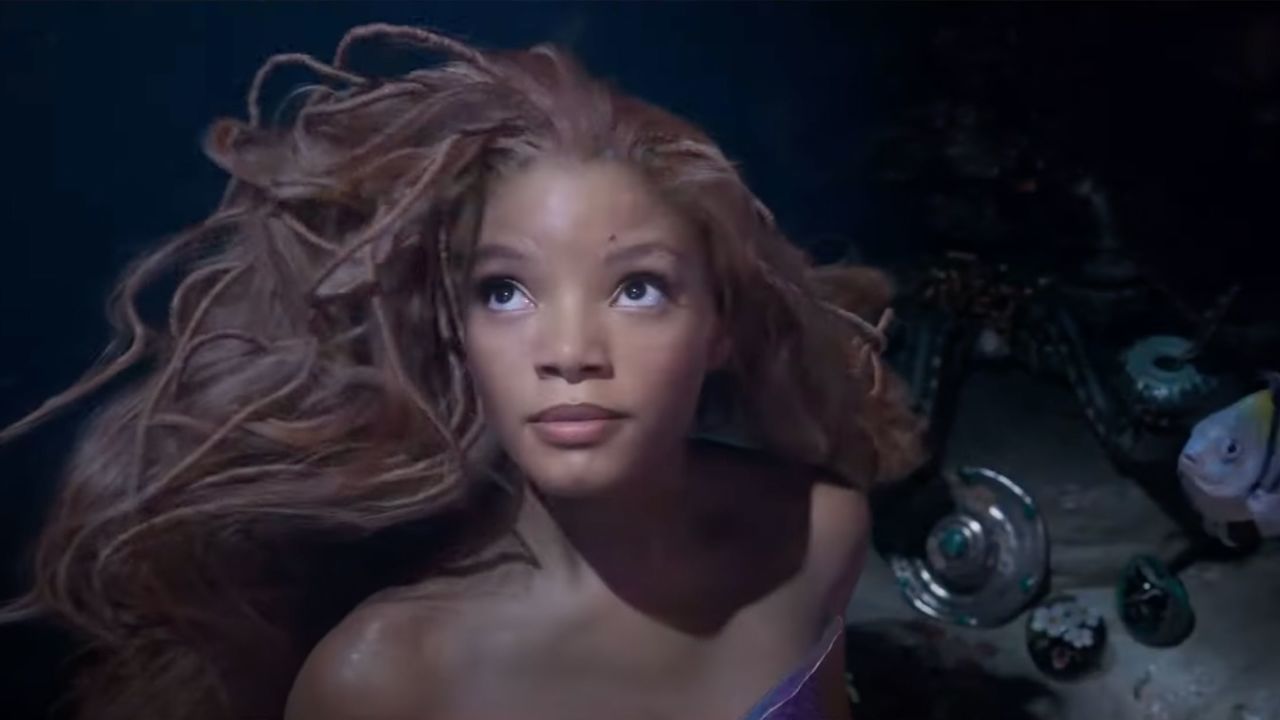
Ariel (Halle Bailey) under a seemingly waterless sea. DP: Dion Beebe. 

In Rob Marshall’s Disney adaptation (the same director of Chicago and Memoirs of a Geisha, shot by Oscar winning cinematographer Dion Beebe), Halle Bailey leads an otherwise poorly made ode to the 1989 animated film— which had the audacity to open with an Anderson quote. Bailey’s take on Ariel is the most convincing of the new cast, a young mermaid naturally curious about the entirety of the world, a collector of unique objects despite learning their meanings from the wrong sort of creature— and with a voice that carries resplendent notes through and through. Of course, anyone would want to capture that lilting sound and make it their own. Innocence, charm, and sweetness are very irresistible character traits and her gorgeous honey brown locs are a unique signifying force. Ariel is unfortunately bogged down by her main screen partners: the terribly designed Flounder and Sebastian (not a lobster, instead a googly eyed crab that must have escaped a parallel universe of Everything, Everywhere All At Once). Also, Scuttle is downright garbage. 

Flounder: sometimes you gotta smile to keep from crying and/or cringing. 

Sebastian: horrifying.

The sisters, however, were mere cameos— introduced by King Triton himself on high throne chairs in a lackluster scene that looks suspended in an outdated Windows backdrop. The animated version had the hyped girls singing “we are the daughters of Triton” during a lavish, heavily attended party. Here, the ladies representing each of the seven seas sit quietly, looking at their father as decorative objects more so than women with differing personalities. Where is the joy in the sea life? The thrills? The other merpeople? You would think that a two plus hour runtime would grant them a say, but then we wouldn’t have gotten Prince Eric or Scuttle’s awful songs. Also, King Triton shows obvious favoritism (and possessiveness) in regards to Ariel— this happens a lot in family structures, the youngest often being the apple of the parent’s eye. Yet, King Triton’s overbearing nature always seems a bit too… trifling? 

Ariel belts out an incredible Part of Your World reprise after saving Prince Eric from drowning. DP: Dion Beebe.

Apparently the sea is dull and the strict rules equals no fun. Anyone would want to escape. Plus, honestly, the above the surface shots are far more believable than the watery depths below. Ariel should be applauded for leaving such dreariness behind in order to obtain the feet that don’t hurt her. Her spellbound wonder for the majestic fireworks (probably most of the film budget) and even petting the shaggy Max are lovely touches of her affectionate nature. Despite mermaids being forbidden to interact with humans, Ariel’s longing to understand them (more importantly Prince Eric) is a universal belief akin to those of us who have a specific desire in life. Ariel’s private grotto mirrors an art collector’s trove later seen in Prince Eric’s library, even Ursula’s realm. Again, King Triton’s treasures are his daughters with one most preferred. 

We don’t talk enough about King Triton’s abuse— him destroying Ariel’s organized hoarding piece by piece would encourage even the kindest daughter to never return to someone that cruel. 

Ursula entices her niece (eye roll) with an offer she cannot refuse. DP: Dion Beebe.

As Melissa McCarthy’s Ursula did her best nod to the late Pat Carroll, Queen Latifah came to mind, especially Marshall having directed that splendid Mama’s Been Good To You number in Chicago (that should have gotten her the Oscar win). Awful choice to make Ursula and King Triton siblings. Why even? Worse, Ursula puts an amnesia spell on Ariel— so the poor girl doesn’t remember that Prince Eric must kiss her by the third day. 

Jude Akuwudike of the incredible Eyimofe (This Is My Desire) cameos as the fisherman who finds the newly limb-ed Ariel in his net and takes her to the palace at once. There, she sees Prince Eric again and they share an intense eye exchange, but he’s convinced that she is not his savior. Later, a downtrodden Ariel takes a bath— in more pretty scenes that demonstrate the look and feel of water. Sebastian arrives in her window, determined to help her fall in love, possibly feeling guilty for King Triton’s severe punishment, then again this isn’t conveyed quite clearly. A charmed Ariel wanders about the castle, well adjusted to walking and racing about on her new legs. For that, a viewer is easily swayed by her happiness and enthrallment, her captivation of human nature. The best moments are contained in Ariel’s delight— played beautifully by Bailey. 

Ariel looks around Prince Eric’s majestic library. DP: Dion Beebe.

While the other princesses have their men reflect them, for specifically Black and biracial women, Disney has a history of not finding them a Black Prince. This began in its 2009 animated adaption of Princess and the Frog. They’re still not ready to depict the soft Black boys/men that Barry Jenkins and Ryan Coogler bring to life.

Ever since reading a review calling Prince Eric a Himbro and looking up the meaning, it cannot be un-remembered. They tried to make Prince Eric a worldly, adventurous sort in a time of colonialism, but he really represents the same regurgitated formula as the other white Disney princes— blue eyed measure of attractiveness, desired rebelliousness from a privileged status, and little else. Well, Ariel if this is whom you want to flip your fins for, have at it. Interesting too, on this Caribbean influenced island that a Black Queen chooses to adopt a white child, seemingly the only baby ever to be put in this vulnerable position, the only to melt the queen’s heart. Okay. 

Ursula sees that Prince Eric is actually falling for the quiet, intelligent Ariel and ups the ante by disguising herself as the young slim Vanessa. They treat us to a godawful rap song as Scuttle’s dumb way of congratulating Ariel who sadly learns Maury Povich style that she is not the intended bride. Instead of a sunset wedding sailing away on a boat, Prince Eric has an engagement party overlooking the majestic sea. Scuttle again delivers news to Ariel sans that amazing line “she was singing with a set of stolen pipes.” Afterwards, fighting, shock, fighting, sacrifice, and finale fighting. The change to the victory may be a testament to Ariel not representing a damsel-in-distress, but man, Strong Black Woman trope came to sea us. 

Other notes: always found it an intriguing matter that in both the animated and live version, the mermaids understand and can speak English, but cannot write— which could have saved Ariel a lot of trouble. Anderson’s story is stronger because you do get the sense that the mermaid’s only language for the Prince is dancing. When King Triton returns to solid form after Ursula’s demise, the impact loses something because it is only him. None of the other poor unfortunate souls come back to fruition. Why did King Triton not give Ariel a new glittering outfit upon realization that the sea is no longer her heart’s desire? That blue dress was just overused. After Prince Eric threw it in the sea, never wanted to see it again. Definitely not Colleen Atwood’s best designs. The ending also really, really needed that Pride rainbow. Otherwise why quote Hans Christian Anderson if you’re not going to utilize the full scope of this metaphorical fairy tale masquerading his queer identity?

Prince Eric’s adopted mom the Queen is played by Noma Dumezweni aka the Black Hermoine in Broadway who is no stranger to the “Black girl taking the role of white girl” controversy. 

Furthermore, color blind casting cannot truly succeed if most of the speaking characters are white. The nonwhite people/merfolk exist as though they were props collected in Ariel’s burnt down grotto. Yes, The Little Mermaid broadcasts the star potential in Halle Bailey and a small testament to Laurence Olivier winner Noma Dumezweni’s steadily growing legacy. Yet, they feel secondary to an all-white realm even with its pockets of brown and Black figures sprinkled about. At the same time, the film gives us nothing memorable for Sienna King, Simone Ashley, and the other mermaid sisters. Those are who I showed up for— those who now have dolls in the stores— dolls that were not there in the 1990’s. It remains a lesson that just because women of color are featured in big budget vehicles doesn’t necessarily mean a promotional win regardless if minorities work behind-the-scenes. Blockbusters can mesh the explosive thrills with indie vibe storytelling— Everything Everywhere All At Once, Black Panther, Get Out. Disney, however, set in the past, remakes their old films and believes that making a Black women lead a farce excuses their years of ignoring us. So, she must endure a decent screenplay with low quality CGI and music from Lin Manuel Miranda’s EGOT thirsty pen. Bailey is an excellent singer and a brilliant songwriter (listen to Chloe X Halle) with no credits to what could be awards frontrunners, especially enjoyed her inner thoughts expressed as a mental song. Like Ursula, Miranda may be finally taking home the prize due to Bailey’s gifted voice. 

Although The Little Mermaid situates in the murky limbo between failure and triumph and is obviously not meant for someone like me, the children and Disney loving adults alike will cherish the film and truly enjoy Bailey’s multifaceted performance. Can’t wait to see her again— in an original film where she could write the music. 

Until then, I will probably reread Anderson’s story and write my own dark fairytale. Perhaps maybe centering why I cut my sister’s doll’s hair to a rather fetching shoulder length bob. 


Sunday, March 19, 2023

The Remarkable Journey of Darla Sutton-Bordelon


Darla definitely deserves to be included among Best Television Character Journeys of All Time lists. 

Almost seven years ago, Queen Sugar delivered Darla Sutton-Bordelon, one of the bravest character journeys ever depicted on television. The extremely attentive details come solely from the poignant written components of the former drug addict adapting to society and the incredibly gifted Bianca Lawson’s underappreciated efforts of rendering such a fragile turned resilient woman. 

This essay sheds light on Darla’s countless obstacles and how she faced them. 

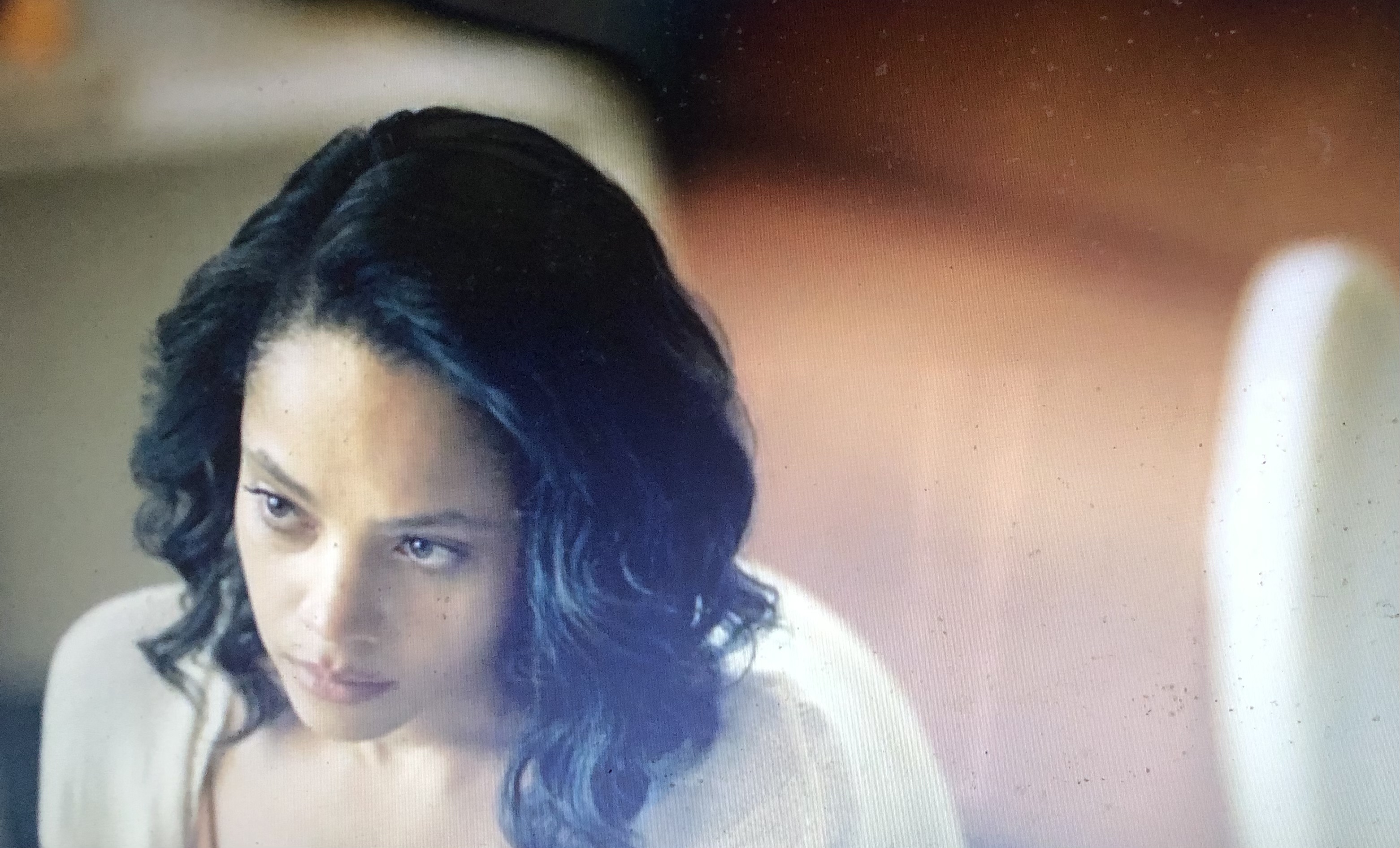
Darla (Bianca Lawson) recites a metaphorical “fairy tale” to Blue as Ralph Angel watches from the doorway in season one, episode eight’s Where With All, written by Tina Mabry and directed by Kat Candler.

Darla (Bianca Lawson) and Blue (Ethan Hutchinson) are always so beautiful together. 

In the first season, Darla has been clean and sober for almost two years. She has a steady job and is happy to be allowed to babysit her son, Blue during Ernest’s funeral. Darla’s past often overshadows her continued efforts to be in Blue’s life. That stain comes with addiction. Even when someone comes out the program, conducting the proper steps, to regain trust is difficult. 

“These past eighteen months, I have been clean… I want to thank you. I never got the chance to say ‘thank you, Mrs. Violet.’ You saw me at my lowest, you saw me in hell. I didn’t even want to exist anymore. Not breathe. Not see. Not hear. Love couldn’t even reach me. And you picked up my baby gently… you could have yelled at me and cursed me, but I remember you covering me up and saying, ‘God bless you, girl.’”— Darla to Vi (Tina Lifford) and Hollywood.

The Bordelon family has troubles fully accepting Darla. 

Violet’s grudge is Darla’s biggest hurdle, considering that she is the primary guardian of Blue. Vi’s mind remains haunted by Darla’s darkest, shameful moment. Out of the people she has hurt and harmed the most, Vi is the impenetrable, unforgivable barrier to cross. Vi’s detrimental behavior during the hurricane—wanting Ralph Angel to kick Darla out in the middle of terror— problematic at best. However, Vi says to Charley that the cheating, lying, monstrous Davis has a right to be in Micah’s life while loudly blasting Darla for trying to be a mother to Blue. Ralph Angel calls out her hypocrisy (which is quite patriarchal). Yet heavy foreshadowing comes into play here. In addition to the cheating, Charley ended her marriage to Davis due to him paying his friends to rape a sex worker. 

Darla and Ralph Angel tell Blue that they’re getting married in season two, episode nine’s Yet Do I Marvel, written by Jason Wilborn and directed by Julie Dash.

Darla confides in Charley about trying to reach her parents in season two, episode ten’s Drums At Dusk written by Valerie Chu and directed by Julie Dash. 

Unfortunately, a big problem for Ralph Angel and Darla lies in throwing each other’s past mistakes as missiles. Although they love each other deeply, some wounds are still not fully healed. 

Ralph Angel reluctantly agrees with Darla to undergo pre-marital counseling. They both selected communication as their biggest concern in season two, episode eleven’s Fruit of the Flower written by Dana Greenblatt and directed by Cheryl Dunye.

The second season, Darla becomes more radiant and healthy; her look partly due to rekindling love with Ralph Angel and strengthening her connection with Blue. The struggle to maintain this newfound habit presents the real, authentic portrayal of life post addiction, knowing that people still cannot forgive you for your past. Darla retains no hateful spirit, always conveying her thanks despite knowing that Vi carries an unchanged resentment. Darla finds a perfect balance between motherhood and becoming engaged to the man of her dreams, and finding a job with Charley— her future sister-in-law. Darla soon finds a friend in Charley, an intimate closeness that’s needed for a woman who grew up as an only child. Hotheaded Ralph Angel— who has already shared his late father Ernest’s secret will with her— isn’t too happy about the arrangement, believing that Darla is not on his side. He has already shared his late father Ernest’s will with her. The thing is Ralph Angel expects Darla to always sacrifice for him. She lost a previous job thanks to him. 

Suddenly, the presence of Darla’s parents brings a shocking detail to light. 

The wedding is off and Ralph Angel dumps Darla. 

Darla’s mother Darlene (Michael Michele) puts out the idea that Blue should live with his maternal grandparents for a while— that of which Darla does not agree in season two, episode fourteen’s On These I Stand; written by Jason Wilborn and directed by Christina Alexandra Voros. 

Even with everything crashing around her— losing the Bordelon support including being fired by Charley— Darla manifests painful rejections into a positive activity— swimming in season two, episode sixteen’s Dream Variations written by Davita Scarlett and directed by Kat Candler. 

The third season, after recuperating with her parents back home in Washington D. C., Darla eventually returns to St. Joe to exist beside her wrongs, maintaining the path towards being forgiven. She has changed her appearance (cutting off her signature locks) and hopes to spend more time with Blue by any means necessary. Ralph Angel— hanging onto the hurt—frequently lashes out at Darla. Moreover, Darla also deals with Vi’s scorn and that of Hollywood for the first time. Ralph Angel and Darla tell Blue about their abruptly ended relationship. Darlene then encourages Darla to get the courts involved for a custody arrangement. After all, Darla has earned the right to be in Blue’s life, her smart, inspiring son gives her the heart and energy to thrive, to be clean. She needs his sustainability. 

Darla returns and Ralph Angel isn’t too pleased— having only handed off her phone calls to Blue.

Darla and Ralph Angel peacefully mend fences in season three, episode twelve’s The Horizon Leans Forward, written by Mike Flynn and directed by Kat Candler. The parents train Blue to ride a bicycle. As they watch him from the porch, Darla believes that they should split time fifty/fifty. 

“I’m more than okay. I’m healthy. I’m sober. I have my struggles, but I think of Blue, I think of his joy and I walk through it.”— Darla in season three, episode thirteen’s From on the Pulse of Morning, written by Kat Candler and Anthony Sparks and directed by Candler. 

Season four features an evolved Darla embodying a woman willingly undergoing significant life changes, even sharing similarities with new boyfriend Leo— also a former addict while also continuing a positive co-parenting arrangement with Ralph Angel. She shows no animosity towards Ralph Angel dating the beautiful Deesha, a fellow parent in Blue’s class, demonstrating a release on her earlier attachment issues. In prior seasons, Darla and Ralph Angel were definitely not ready to be married, especially with Darla’s secret looming over them and Ralph Angel’s constant mood swings— very unhealthy and dangerous for Darla. So, Darla appears invincible as she moves forward in making a clean, worthwhile break, putting Blue’s needs and her own at the top of her hierarchy.

“You’re lower than I ever was!”— Darla to Nova on Nova’s book, Blessing & Blood of season four, episode four’s Skin Transparent, written by Valerie Woods and directed by Numa Perrier. 

Darla sinks into deep depression in season four, episode five’s Face Speckled, written by Lisa Morales and directed by Heidi Saman.

Darla takes a hefty sniff of temptation, but manages to not take a single drink.

Ralph Angel explains to Blue that though he’s not his biological father, his soul is in Blue. 

Then Nova’s book Blessing & Blood comes out. Darla’s co-workers quickly figure out she is the mysterious “Star” character. It also affects Blue at school. Darla never intended Blue to find out the truth about his paternity— certainly not this soon. Nova forces Ralph Angel and Darla to have that difficult conversation with Blue, Darla beyond hurt and humiliated that her very wishes are not respected. 

Jordan Montague (Amanda Tavarez) visits St. Joe spilling awful tea whilst drinking like a sailor in season four, episode ten’s Oh Mamere, written by Felicia Pride and Chloe Hung and directed by Cheryl Dunye.

Darla is in stunned disbelief as Jordan laughs about what happened to Darla.

The combined factors push Darla’s carefully constructed world asunder like a row of falling dominos. Leo— who has read Nova’s book— hasn’t returned Darla’s calls or texts. So, she shows up to his band practice. He reacts coldly to her, convinced that she’s teetering. Sure, it would be wise to take Leo’s advice and call her sponsor, but his whole attitude towards Darla plummets her already dwindling self-esteem. The final shove across the cliff comes from Jordan Montague— the worst kind of person. Jordan still believes herself to be Darla’s friend. Heck, Darlene believes this woman is Darla’s friend. At brunch, Jordan gleefully chugs drinks away, not showcasing any empathy towards Darla’s sobriety (perhaps she doesn’t know, but still...). Yet, Jordan reminisces about their glory days of turning tricks, unknowingly filling in the missing pieces of Darla’s fateful night. The vicious savageness to this story paints Jordan in a horrific light— she witnessed Darla being taken advantage of by two men and thought it humorous; not even realizing that Darla could not possibly consent. Even remotely close to sober, a grownup Jordan should realize what her words insinuated. What kind of friend would laugh and openly mock about their friend’s violation? 

Of course, it is very heartbreaking once Darla goes to a bar and engulfs one shot after another. Damn. 

Out of all the people who could have witnessed Darla’s public display of intoxication, a sweet fate intervenes, letting Vi find her.

Vi sits at Darla’s side as Darla tells Ralph Angel about the tragic night of Blue’s conception.

Vi gifts Darla an absolute blessing— the genuine care and sympathy that the young woman needs to process a terrible crime. For a long time, Vi made it perfectly clear where she stood with the former addict, her cruel retorts often heard by Darla. Still, a patient Darla knew that the road to forgiveness was not bound to be simple, let alone quick and painless. Thus, when Darla found herself in grave danger, Vi would be the one to rescue her from herself and disclose a surprising vulnerability. Perhaps, Vi finally sees that she and Darla share common ground— surviving cruel abuse by men. 

Ralph Angel and Darla finally marry in a COVID precaution ceremony in episode May 19, 2020 written by Norman Vance Jr. and directed by Lauren Wolkstein.

By season five and six, Darla and Ralph Angel have grown individuality— so much so that they can fully be committed together without inflicting unnecessary hurt on each other. After a hard, tumultuous year, Darla deserves happiness, she deserves the fairy tale ending— which she acquires through one of the most poignant, most loving weddings ever shown on television. Although Darla’s parents cannot attend mainly due to the COVID pandemic restrictions (brilliantly integrated into the series), a prior virtual bridal shower offers Darla a humbling surprise from Darlene. 

When Darla becomes pregnant in season six, this gorgeous family embarks on this healthy journey together as a married couple, no longer their past— the hustler and the addict struggling to make ends meet. Love has always been their backbone, but wisdom and growth unites them, prepares them for a refreshing future with their son Blue along for the glorious ride. Unfortunately, Ralph Angel has some instinctual reflexes that potentially places his own maturity on the line. 

Happy endings are bumpy ways away for Darla, Ralph Angel, and their newborn daughter in season seven, episode three’s Slowly and Always Irregularly written by Francesca Butler and directed by Stacey Muhammad.

Darla is deadset against Nova’s book being turned into a film in season seven, episode five’s With A Kind Of written by Eddie Serrano and directed by Shaz Bennett. 

By the seventh season, Darla settles into marital bliss— a beacon of pure happiness. Again, fate tests her sobriety. Nova has the opportunity to turn her book into a film. Everyone is all excited about the prospect, having changed their earlier scorn into excitement— except Darla. She suffers through their uncontainable glee, her eyes watering, the tension in her body rising. First, her “no” is soft, then she repeats it louder and louder, and races out of the room. As part of the Bordelon family, her consent matters and it’s only right for Nova to go to Darla, to hear her— not exactly for the why, but for her to truly understand what Nova’s book cost Darla. 
“Don’t you dare make this about you! You ruined my life. And now you want forgiveness. I relapsed because of you and that book. Did you really think I would be okay with a movie? Are you really that selfish? Ralph Angel and I... we keep trying to let the past go. But you keep bringing it back. You think that I wanna watch my assault with actors in costumes? Do you think that I want that out there for Blue and Tru to see? More than you’ve already exposed it? All the s*** you stirred, do you think I want that rewound and streamed on people’s TVs for years?.... ARE YOU CRAZY? ARE YOU OUT OF YOUR MIND?”— Darla to Nova. 
After listening to Darla’s passionate monologue, Nova promises to decline the offer of turning Blessings & Blood into a film. To further enhance a pivotally emotional moment, the two sisters by marriage embrace, Darla sobbing on Nova’s shoulder, a newfound bond between them deepening. 

Once that chapter closes, Darla’s remaining hurdles include Ralph Angel’s troubles and the worthless Chase (who doesn’t deserve to be considered Blue’s biological father). Of the latter, Darla boldly confronts her attacker (with her strong, supportive family in tow) and tells him off in a way season one Darla never would. How can you not applaud her for her courage, her unflinching eye? She was a chess player mastermind beating Chase at his own pathetic game. As for Ralph Angel, Darla was right to take the kids with her to Washington D. C. He needed to put his family first: stop returning to his old shady behavior, punishing Darla, and talking to an ex about his marital problems. 

Darla closes the nail on the coffin— having the monster Chase (Eric C. Lynch) sign many documents including a contract worth three million dollars. Talk about a more positive spin on paying out a rape survivor (sorry Charley).
 

Thankfully, by the final episode, one of the best TV couples Darla and Ralph Angel repair their relationship and buy a house together in order for Vi and Hollywood to foster a child. Talk about a rewarding full circle moment for everyone, especially Darla. She fought against constant denial, constant doubt, and stole/melted hearts. 

Insert the sobs. 

Queen Sugar may not be the easiest series to binge. Almost every episode should come with a “sensitive subject matter” warning. Furthermore, an inward pause must be taken to let the heavy images, resonating stories, powerful acting settle in spirit, and tissues to wipe away endless tears. For seven heartrending seasons, viewers have watched the soft-spoken, guilt-ridden Darla transform into a remarkably resilient woman— someone growing into her own strength and agency. Bianca Lawson’s incredible performance of grace, tenderness, and grit makes you see Darla’s multifaceted humanness. She has immense regrets, battles to stay sober, desires to be a better mother and partner, and forge her own destiny. Between her defeats and losses, the blessed Darla still receives wins, joys, and pleasures. Lawson believably embodies a character she was meant to play. After roles in Buffy the Vampire Slayer and Pretty Little Liars, Queen Sugar gave the opportunity of a lifetime— a layered, complex role requiring an emotional weight that Lawson carries well. 

Darla Sutton-Bordelon’s character arc demonstrates a significant part of why Queen Sugar will stand the test of time as one of the most unforgettable series ever rendered.