Saturday, February 25, 2023

A Tale of Two Teen Pregnancies


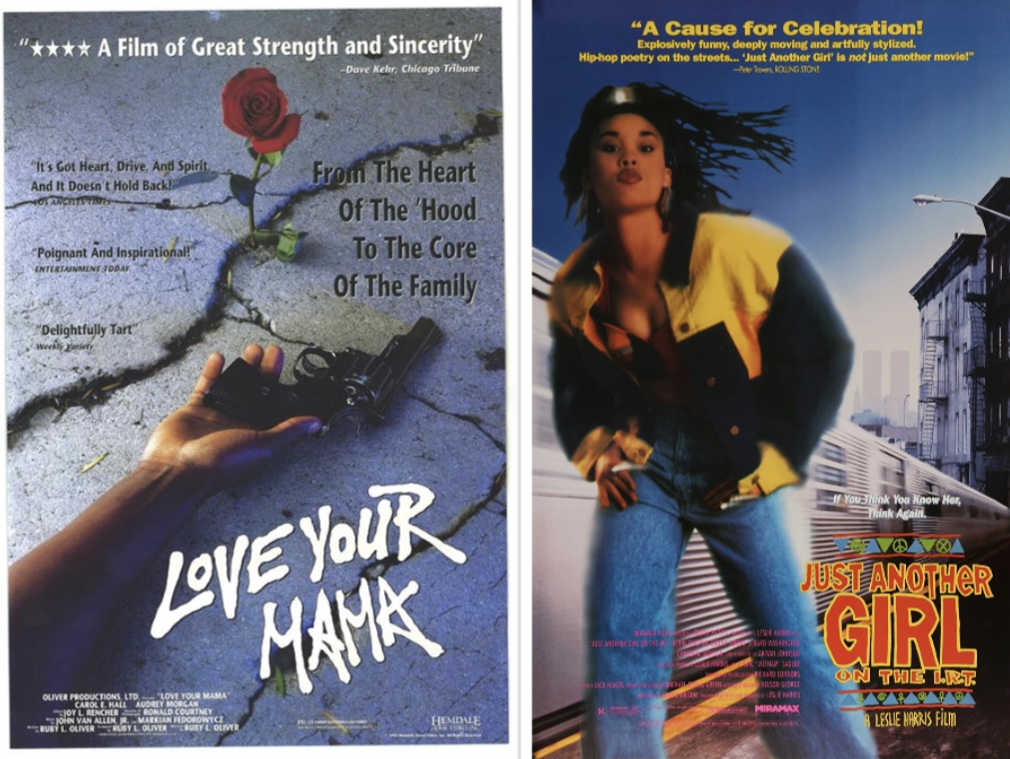
Love Your Mama and Just Another Girl on the I. R. T. film posters.

Duality may have been a major theme of A Tale of Two Cities by Charles Dickens. Yet, a specific duality runs a deliberate course through Ruby Oliver’s Love Your Mama (1989) and Leslie Harris’s Just Another Girl on the I. R. T. (1992)— two parallel Black teenagers facing pregnancy. This occurrence existed around prior in my own life— my grandmother giving birth to children since she was thirteen, two girls my senior year of high school balancing school and motherhood (one of them married her high school sweetheart). The stigma is unlike any other. At a vulnerable age where the slightest mar can harm an image, the frowned upon teenage pregnancy could make a girl’s life extra traumatic and beyond complicated. Not the boy/man, just her life seemed altered, in jeopardy. She believes the biggest danger is her parents’ finding out when the reality of attempting to hide a pregnancy can present the most dangerous affect on their still very young bodies and unprepared state of mind. 

Leola (Carol Hall) and her friend Barbara (Jacqueline Williams)—a single mother who repeats senior year in Love Your Mama. Barbara manages to get Zeke and the Boys to play for the senior dance. Leola has a massive crush on Zeek which leads to consequences. DP: Ronald Courtney.

Chantal (Ariyan Johnson) and Natete (Ebony Jerido) run into Denisha (Monet Dunham), a high school dropout at the subway in Just Another Girl on the I. R. T. DP: Richard Connors. 

On the yearbook staff and desperately praying for a loan to attend college, Leola is a smart, adept high schooler living in Southside Chicago’s projects hoping to open up a daycare. Often, she hangs out with Barbara—a girl repeating her senior year due to having a child of her own. 

On the other hand, fourth-wall-breaking Chantal is a bright, sassy teen with a potty mouth and fabulous fashion sense living in the Brooklyn projects, raising her siblings as her parents work most of the time. She aims to complete high school early and attend college to become a future doctor. Chantal and Natete are super close friends that also hang out with Denisha— a former classmate who dropped out due to pregnancy. 

Thus, Leola and Chantal bear witness to the difficult struggle of balancing educational pursuits and other personal betterment goals with early motherhood, limited support. There are no parties, no socializing, no late nights for Barbara and Denisha unless baby related. 

Some typical teenage sexual scenarios convince girls to make a boy feel better. Zeek (Norman Hoosier) suggests Leola (Carol Hall) temporarily remedy his grief. DP: Ronald Courtney.

Tye (Kevin Thigpen) demands sex from Chantal (Ariyan Johnson) because her behavior at the party implied promiscuity to him. DP: Richard Connors.

Leola’s mother struggles to make ends meet with four children and an alcoholic cheating husband that the whole neighborhood knows about. After the husband decides to quit his job, it affects the family and causes Leola’s mother to take drastic (illegal) action. Leola sees firsthand that certain men waste women’s youth, resilience, and courage, even squander a woman’s good nature just because he can. Her mother will never leave her husband, using religion as a key to staying in a detrimental situation. Thus, Leola remains focused on her goals to open a daycare even as her younger brothers decide to take on a criminal route to life, disappointing their mother in the process. 

Meanwhile, Chantal works at a corner store after school and returns home to babysit her younger brothers as her dad sleeps before his shift. Her mom and dad have alternating schedules— one works while the other rests. Yet, when is Chantal allowed to get true rest between school, employment, and babysitting her own siblings? Chantal and Natete sneak off to a party where Denisha has also joined them, getting her mother to babysit. Chantal ditches her date to dance with other people, gaining the attention of Tyrone nicknamed Tye. 

Leola’s mother (Audrey Morgan) instills constant wisdom in Leola (Carol Hall). She believes boys will not make it out, but girls can. DP: Ronald Courtney. 

Chantal’s mother barely has five minutes to look in Chantal’s direction, much less give her any sound advice. DP: Richard Connors.

Leola and Chantal’s introduction to sex almost mirrors each other in that they are both unromantic experiences sorely made by the urgent request of a male. Leola’s first time is a stolen moment caused by a vulnerable situation— being alone in a teenage boy’s room. As soon as the door is closed, Zeek puts down the telephone book (perhaps that had been his goal all along) and immediately situates himself into Leola’s personal space, reasserting his sadness over his grandmother’s passing. He doesn’t deliver any poetic sentiments or flowery gestures (despite being a musician) that suggest any genuine desire for Leola. He has centered only his own need. And Leola (maybe feeling her crush reciprocated) does not deny him, let alone recognizes the manipulative ploy. 

Tye seemed very kind at first— taking Chantal to nice restaurants, picking her up in his jeep. Yet, also alone in his bedroom, Tye turns completely enraged when Chantal refuses to sleep with him sans a condom. He exhibits toxic masculinity— an ignorant disbelief that somehow it is belittling to be asked (much similar behavior to those who do not like request for STD tests prior to). He deliberately brings up her behavior at the party, that of which drew him to her. Chantal then complies and the couple have numerous encounters afterward. 

Despite their riff, Barbara (who knows firsthand what it’s like as a single teen mother) offers to pay the balance for Leola’s abortion. DP: Ronald Courtney.

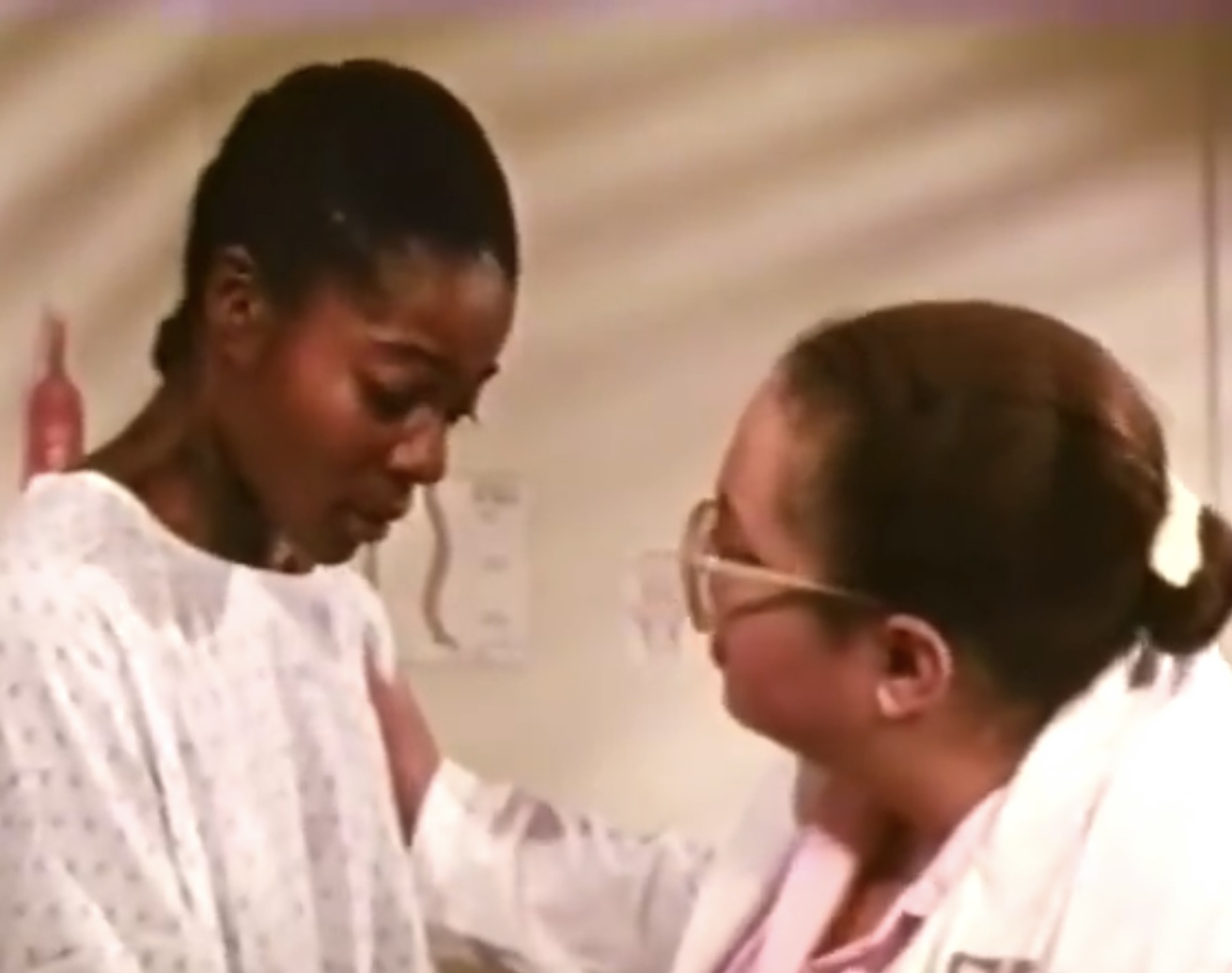
However, Leola cannot go through with the procedure. DP: Ronald Courtney.

Chantal takes several pregnancy tests— they all come to the same conclusion. Weeks later, Chantal lies to Natete about receiving her period, trying to buy herself time for the things she’s mentally unprepared for. DP: Richard Connors.

Chantal likely knows that her friendship with Natete cannot survive because pregnancy means the end of certain pasttimes. DP: Richard Connors.

Other than Tye, a counselor is the only one who knows about Chantal’s pregnancy. She would be their savior during the labor. DP: Richard Connors.

The male reaction to the pregnancies are not surprising. Zeek asks Leola to marry him even though he clearly does not love her. While Leola does not exactly love Zeek either, she did harbor an earlier crush on him. He never knew she existed— according to Barbara. Whereas when Chantal tells Tye, Tye blows up and claims that the baby must not be his fully knowing well that he was Chantal’s first lover. In Tye’s incomprehensible mind, it still goes back to Chantal’s behavior at the party, eluding her old boyfriend to dance with every guy. Tye equates dancing to being a tease, a maneater. In a follow up scene, he softens (only a tad) to convince Chantal to have an abortion. 

A calm Zeek softly tells Leola that they will get through it together. DP: Ronald Courtney.

An outraged Tye berates Chantal in various public places— the girl’s bathroom, the library, and the great outdoors— to make a decision. DP: Richard Connors. 

Fortunately, Leola does not have to face her pregnancy alone. Barbara financially supports her abortion, but in the fifth hour Leola changes her mind, the nurse comforting her about the hard choice. Her mother then takes it further, being quite kind despite the pregnancy not being what she had in mind for her daughter’s future. Leola ultimately drops out, fearing what others will say about her. Teen pregnancy shame exists and no one wants to walk that walk, especially Chantal. She refuses to tell Natete, keeping the pregnancy a secret. Tye has his uncle give him money for an abortion in New Jersey. Chantal blows it all alongside Natete at the mall, but ultimately steps away from the friendship, withholding her inner distraught about pregnancy. Isolated and melancholic, Chantal puts effort in maintaining a facade— buying the same clothes yet larger, buying pads, hiding her increasing weight in a girdle. So alone in this choice, time passes and passes, she doesn’t even know how far advanced the pregnancy is until going into labor.  

Leola and her daughter on the playground. DP: Ronald Courtney.

Leola and her mama after the opening of Leola’s daycare. DP: Ronald Courtney.

Chantal also gives birth to a girl— and at Tye’s apartment where conveniently his mom is not home. DP: Richard Connors. 

Chantal and Tye choose to co-parent in the end. She attends community college. DP: Richard Connors. 

Love Your Mama and Just Another Girl On the I. R. T. are low budget cinema rich in very intelligent narrative highlighting the cons of teenage pregnancy, especially the impact on Black girls— and its essential pros. The films could have served well as educational resources versus what was actually given: outdated videos on sexual how to and heavy promotion of abstinence. Those learning devices did little to protect girls and women from sexual situations, from escaping coercion and peer pressure. Ruby Oliver and Leslie Harris shed light on the options granted if Leola and Chantal did not want their children. Outreach facilities/clinics and counselors are always available to help. They know that becoming a mother means leaving behind your freedom, the last of your girlhood tendencies as your body significantly changes. A baby alters life plans, but that doesn’t mean your dreams die completely. Although Chantal almost goes the terrible route, she undergoes an extreme change of heart at the right moment. Whereas Leola’s labor is unseen, Chantal goes right into it, including an afterbirth (which is almost never depicted onscreen). Leola and Chantal eventually take a positive outlook on their situations, facing challenges head on, and have managing a strong support system in a society determined to leave girls like them in problematic governmental programming.

They may read like Public Service Announcements, mainly the unpolished Love Your Mama, but the heartfelt stories about Leola and Chantal handle their weight in sensitive material with precious care. 


Tuesday, February 21, 2023

‘Cette Maison,’ A Poignant Testament to Grief


Cette Maison film poster.

It was a pleasure to view Miryam Charles’s thought-provoking short films before Cette Maison (2022), her feature-length debut. The shorts: Towards the Colonies (2016), A Fortress (2018), Drei Atlas (2018), Second Generation (2019), and Song for the New World (2021) prepare the viewer for no physical human presence beyond haunting voices superimposed atop breathtaking, statically grained cinematography, images shedding a rare spotlight on Haiti. A vulnerable yet historically rich country where more films deserve to be made as previously told by native women filmmakers Guetty Felin and Gessica Généus. Charles brings a distinctive elegance to the table, a pensive sophistication coming to further bloom in Cette Maison (This House).

Tessa (Schelby Jean-Baptiste) rises from her mother’s flowers more like a full-bodied figure than a visiting apparition. DP: Miryam Charles and Isabelle Stachtchenko. 

Tragedy softly echoes in the life of a Haitian mother Valeska mourning the untimely loss of her fourteen-year-old daughter Tessa, channeling through quiet, jarring moments that strike the heart’s most fragile chords. Scenes shift between floral filled rooms to eerie exterior shots of a mysterious two-story house and makeshift stages that have seemingly escaped an abandoned theater. It is an otherwise intriguing take on the overall design appearance of where Valeska and Tessa find themselves situated, often alone together, almost speaking to each other in poetry. 

In this magical, startling colored realm of what-if, an inventive framing of a lost life returned, Tessa has survived, scar-free, bringing Valeska the peace she seeks.  

Valeska (Florence Blain Mbaye) sniffing flowers. DP: Miryam Charles and Isabelle Stachtchenko.

However, the horrendous unsolved crime happened in Bridgeport, Connecticut— number five on the safest U. S. states list— a crime so shockingly violent that the only context given are the words. First disclosed as suicide—a rapidly shut case demonstrating cold hard dismissal— new evidence exposes this medical negligence phenomenon of often wrongfully diagnosing Black bodies. Years later, during a pivotal scene at the morgue, the family including grandmother, Valeska, the ghost of Tessa, and the examiner speak around the body shroud beneath a sheet. As the full injuries are listed resulting in the reality that Tessa’s death is not self-inflicted, the sheet embodies a stark, brilliantly lit symbolism— the covering of a bruised, unadulterated violation. A sorrowful Tessa whispers to Valeska not to reveal it, to perhaps keep in mind a vision of joy, not the final cruelty placed upon her. Valeska has a choice to make, reminding that of Mamie Till-Mobley’s defiant decision in Till— to see or not to see the harm conducted on an innocent Black child the same age as Tessa. The sound then cuts out on Valeska’s sob— mid scream. Yet in the stilled silence, you can imagine her mouth in that piercing holler, your ears filling in the void that this tender direction evokes. 

The family learns the true extent of Tessa’s injuries. Tessa has her back facing them. DP: Miryam Charles and Isabelle Stachtchenko.

Valeska is overcome with emotion. DP: Miryam Charles and Isabelle Stachtchenko.

By prioritizing the mother/daughter relationship over the circumstances regarding Black death grants the audience a reprieve from witnessing abuse secondhand, shielding us from Tessa’s last moments in that house, in that unspoken room. This thoughtful, caring approach focuses on Valeska’s despair, her intimacy with Tessa— who is not a ghost, but an older, wiser entity comforting her bereaved mother in ways the family cannot. These tender exchanges move away from societal belief that harmful acts build stronger character arcs, especially for girls and women depicted in cinema and television. Instead of a manifested physical villain, Bridgeport operates as that particular vehicle— the phantom that spooks a family regretting the coming to America from Canada. Towards the end, a drive through the rainy city becomes a blurry haze and the house cannot be located. 

Propped against childhood photos that tell a piece of her upbringing and staring out to the viewers with her face partly shadowed, Tessa wears the same black and white dress in the morgue scene. DP: Miryam Charles and Isabelle Stachtchenko. 

Flowers and plants also metaphorically adds immense weight to this harrowing narrative that discusses the impact of migration. Valeska and Tessa are either surrounded by their glorious colors and forms or holding bouquets, framing beautifully in nature’s abundance. They are lush and watered, forever blossomed, never withering, never near death. It is the expression “giving one their flowers,” honoring their contributions with the gift of earth. Mystical of dilapidated structures near collapse in the middle of great, overwhelming trees and green grass also reveal that after fiery storms and harsh winters, nature can revive itself in ways that unfortunately almost human life cannot. 

Homes can be remade/repurposed and nature regrows after winter. Once a treasured human life is gone, the mourners must find healthy ways of coping and keeping their loved ones’ memory alive. DP: Miryam Charles and Isabelle Stachtchenko. 

By the end, you feel a nurtured peace between Valeska and Tessa despite the ugliness of their real-life circumstances. Tessa urgently conveys to Valeska that she can still find grace and dignity, not to allow grief to manifest into dangerous territory, that they will be together again someday. 

Hope remains present in the living as long as we keep the memories of our perished loved ones alive. DP: Miryam Charles and Isabelle Stachtchenko.

With its stunning cinematography, unique attention to sound, and a gorgeous cast styled exquisitely well, Cette Maison— easily one of the most powerful modern films ever rendered— reads as both a love letter to Charles’s cousin and that of a Caribbean country riddling in countless tragic aftermaths; bravely stripping grief bare and leaving behind raw hope. It received numerous accolades and honors including a place on the prestigious Sight & Sound’s Top 50 Films of 2022 alongside other brilliant works whilst traveling across the globe, premiering at various film festivals with Charles hoping to show this touching tribute in her native Haiti. And may that dream come true. 

Cette Maison is a feast for the eyes and balm to the soul. 


Sunday, February 19, 2023

‘Brown Sugar,’ Full of Potential, Bittersweet And Sour


Brown Sugar film poster.

Recently rewatched Rick Fumiymao’s Brown Sugar and must note that several featured hip hop artists talking about falling in love with the genre are problematic towards women— Russell Simmons, Talib Kweli. Also, no real-life women pioneers spoke— MC Lyte, Roxanne Shante, Da Brat (seeing as this seemed mostly Def Jam affiliated), etc. Perhaps they thought having Queen Latifah co-star as divorcee Francine in the film was enough. 

Probably would have made for an excellent story if Francine (Queen Latifah) was an underground MC that Syd (Sanaa Lathan) interviewed for a future Vibe story. DP: Jeff Barnett and Enrique Chediak. 

They reserved the hip hop love for Syd Shaw—Francine’s cousin.  

Unlike Love & Basketball which also features the “childhood friends to lovers” trope (also starring Sanaa Lathan), Brown Sugar does not have the violent scene between Black boys and Black girls. Little Syd bonds with Dre Ellis over watching Slick Rick rap battle on the playground, their heads bobbing together in a rhythm. Years later, Syd has become a hip hop journalist sensation, a Columbia University grad; pitching for L. A. Times and obtaining a sweet gig at Vibe Magazine. Whereas Dre has sold his soul as an A&R executive at a corny record label more interested in manufacturing gold and platinum hits than finding artists with the pure authentic sound Dre searches for. The best thing about Dre is that he reads and saves Syd’s writings. He respects her talent and shows pride in her success; harboring no ill will, no jealousy— on that particular front. 

Dre (Taye Diggs) proposes to Reese— a woman he has known for only a few months. DP: Jeff Barnett and Enrique Chediak.

Optically, Brown Sugar is no Love Jones either. There are no sistahs proudly wearing locs and afros, no vibe that correlates with the chords of D’Angelo’s 1995 track and album sharing the film title. At a Simmons party, the man himself enters with the statuesque Kimora Lee Simmons surrounded by lighter complexion women. The Black men, however, are the ones allowed to arrive in all shades including Dre who introduces Reese— his thin, bright eyed lawyer-girlfriend to Syd. Scientifically, brown sugar is processed by adding molasses to sugar— not to compare Black people to food, but towards Dre’s philosophy that a brown sugar woman is someone respectable with the whole complete package and other type (the women called derogatory names in the hip hop lyrics) are still good for one thing only. 

Brown Sugar’s other downside unfortunately rests on Dre’s shoulders. Before his big wedding day to an almost complete stranger, he visits Syd (who ironically opens her door wearing a towel and neglects to don a robe) and unleashes his nervous uncertainty. Syd comforts him with a hug and a passionate kiss. Thus, this set up trying to say that men and women can be friends even when one friend is barely dressed fails. Dre married anyway, but would later reference this scene as the moment he realizes that he loved Syd more than a platonic buddy. 

Reese was just a woman invested in the wrong man at the wrong time. DP: Jeff Barnett and Enrique Chediak.

Reese would eventually become the woman we feel most sorry for. She married a man who cheated on her before her wedding day— a man who likely thought about Syd the entire time he feigned loving Reese. Dre cannot tell Reese that he quit his job first, let alone other secrets that he tells to Syd, especially regarding their marriage. Dre’s emotional connection to Syd would always be coming between Dre and Reese, something that should have been better established. Then again, Dre and Reese knew little about each other despite Reese kindly inviting Syd to her wedding shower as a way of getting closer to her man’s BFF. That backfired quickly once Syd witnessed all the flirtatious men surrounding a flattered Reese— and Syd was quick to expose that to Dre. This showcases that Syd can lift a man up when he’s down, but when times get tough Reese is weighing her next options. 

The slightly narcissistic Kelby promises to read all of Syd’s past and current articles. DP: Jeff Barnett and Enrique Chediak.

Syd, a smart, educated writer working on her first book, finds a date outside of her “face massager,” kicking it off well with basketball player Kelby Dawson. He finesses her quite lavishly with prepared dinners and flowers galore, using his wealth to woo her like a Queen. Perhaps no man has ever treated Syd in such a way including the subjects of her articles, let alone Dre. Yet, Syd always finds the time to save Dre— a man who did not save money to start his record label before abruptly quitting his job. You cannot fault a man for leading his life with dignity and purpose, but he must bear responsibility for being a weak life planner— in career and marriage— both of which affects Syd. She lends Dre money, listens to his growing jealousy of Kelby, and scouts alongside Dre to hear the rapper named Cav— a cab driver by day, a performer at night. In the meantime, Syd and Dre are becoming closer once more, leading to life-altering late night confessions that cause them both to put their desires above everything else. 

Sadly, Syd cheats on Kelby with a six-minute Dre (who is not even divorced from Reese yet). DP: Jeff Barnett and Enrique Chediak.

Before Love Actually, Dre wrote on a cue card asking Syd to date him at the radio station via elementary school style. Is it a creative nod to their childhood together or a symbolism of future struggle love? DP: Jeff Barnett and Enrique Chediak. 

So while Syd and Dre’s romance is bonafide messy, Francine is wasted for sexual innuendo and soundboard— that typical sidekick stereotype. The underdeveloped relationship between Francine and Cav deserved more attention and care— these two characters were the real scene stealers too. At a runtime of an hour and forty-nine minutes, five-to ten minutes of extra dialogue, a date, a dance, a unique moment for them would have sufficed. 

Francine asks the awkward stumbling Cav out. DP: Jeff Barnett and Enrique Chediak.  

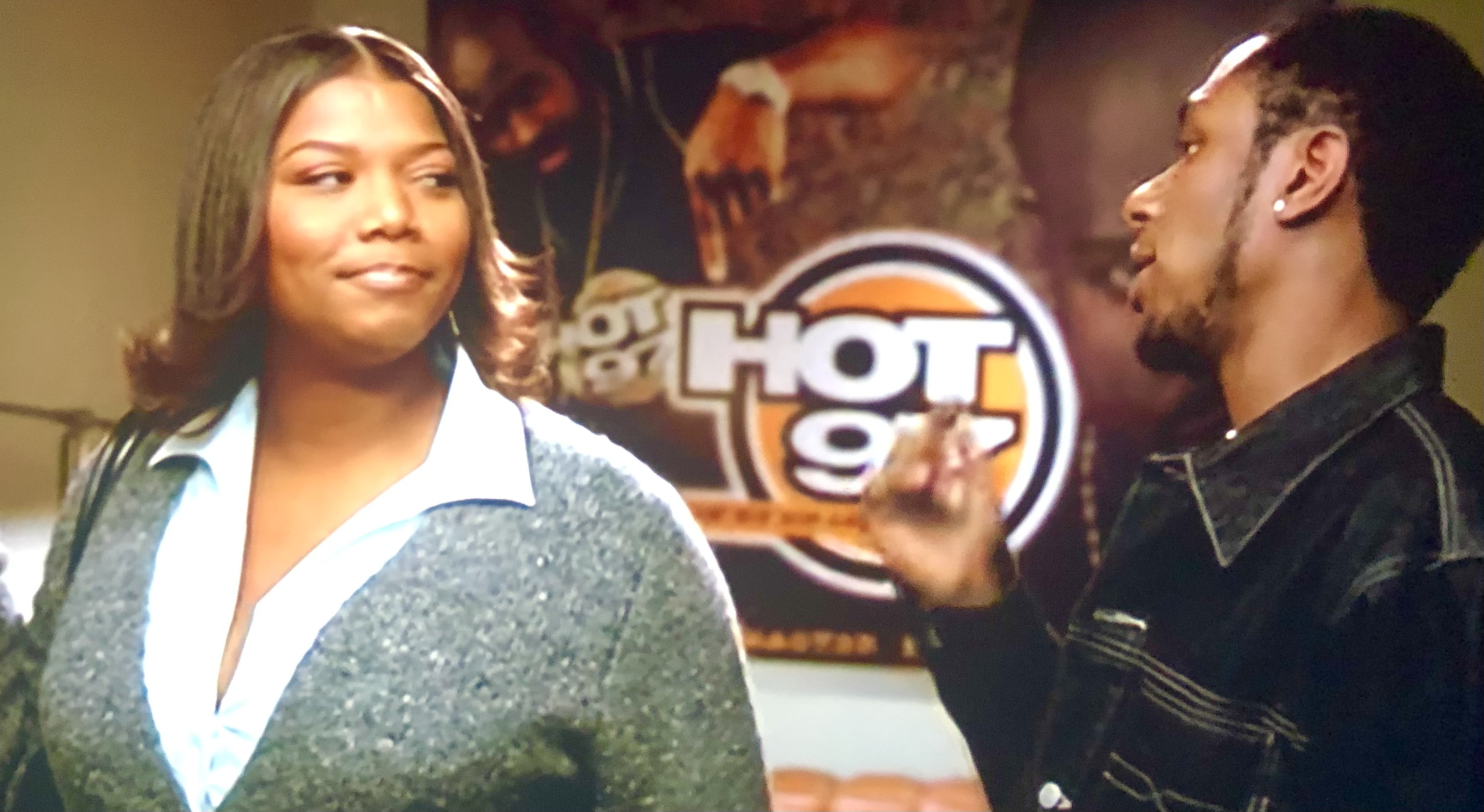
Dre and Syd may be kissing away in Angie Martinez’s Hot 97 radio station, but it’s what’s blossoming in the background leaving room to be desired. DP: Jeff Barnett and Enrique Chediak. 

Overall, the Brown Sugar soundtrack is the film’s real treat— of course, skip the problematic musicians though. 


Saturday, February 18, 2023

Film Release Wishlist


In the Morning film poster.

While waiting for Criterion to announce the blu ray/DVD release of Alice Diop’s incredible Saint Omer (two of the five titles have their intended dates already), I could not resist compiling together this small list of films that are currently inaccessible via streaming or physical channels. 

Some rarer films are on YouTube channels (aka Black film activism) such as reelblack. Maya Cade’s Black Film Archive aides in ensuring that Black films do not slip beneath the cracks. The gatekeepers certainly do not want us celebrating ourselves for good reason— for they set up the goalposts to what is considered worthy cinema and what deserves to be celebrated and preserved. A newer resource called Just Watch lets you know where film/TV are currently streaming, but some do not show up (already demonstrating our erasure). IMDb has limited information including photographs, stills, and cast/crew involvement. Thus, financial pitfalls too cause these films not to see the light, let alone a streaming platform— short films having an even trickier slope, especially since sometimes these are a director’s student works. 

Black women stories are as essential and significantly valuable as the stories white filmmakers create. Yet the filmmaking cannon begs to differ. 

Loretta Devine and Obaka Adedunyo in Will. DP: possibly Jessie Maple, IMDb has limited information on this film besides the questionable 5.5/10 score. 

Jessie Maple, the first Black woman admitted into the New York camera union, has several seemingly vaulted films. Will (1981) a Harlem based drama about a former basketball star turned heroin addict was the first independent drama film shot by a Black woman (and film debut of Loretta Devine) and Twice As Nice (1989) about twin students at Columbia University competing to be the first woman to join the MBA basketball team— Maple’s second achievement/feat. These are impossible to find yet very important for film buffs. In 2013, Will was restored by the New York Women In Film and Television’s Women’s Film Preservation Fund— may be a positive sign in our direction for a future release. 

A humorous still from Ayoka Chenzira’s Hair Piece: A Film For Nappy Headed People about “Turn Back” weather. Straight/relaxed Black hair has a timeliness to it (a Cinderella element as the film suggests) and the consequences can be dire in precipitation, mainly rain. DP: Ann Chapman. 

Once the hair reverts to its natural state, the girl’s smile has turn upside down and her posture is slouched, depressed. DP: Ann Chapman.

The first Black woman animator Ayoka Chenzira (director of Alma’s Rainbow (1993) currently streaming on Criterion and Kanopy) helmed a piece on Black hair inspired by her living in Brooklyn— a short experimental animation called Hair Piece: A Film For Nappy Headed People (1984); included in the National Film Registry in 2018. On Becoming A Woman (1986) is another animation short unavailable. 

The UCLA Film & Television Archive works diligently to share materials on their YouTube channel. Other alumni works longed to see are Alile Sharon Larkin’s Your Children Come Back to You (1979) and Dreadlocks and the Three Bears (1991), Jacqueline Shearer’s A Minor Education, and Stormé Bright Sweet’s The Single Parent Family: Images In Black (1977)— the latter available on the campus premises like Melvonna Ballenger’s unfinished Nappy Headed Lady. Although Your Children Come Back to You and A Minor Education are two films previously viewed at a program, other generations need access to these beautiful works that show the testament to our collective strengths and phenomenal progress in the face of existing in an unjust society. 
 
A still from Jacqueline Shearer’s A Minor Altercation. Other information unknown. 

Leal (C. J. Lindsay) and Zuri (De’Adre Aziza) in Nefertite Nguvu’s In The Morning. DP: Arthur Jafa of Daughters of the Dust and Crooklyn.

A few years ago, back at a Blackstar Film Festival panel, filmmaker Nefertite Nguvu talked about the pros and cons of making In The Morning (2014)— a film shot on low budget and in eight days. The gorgeously  lit film centers nine Black friends in Brooklyn navigating through love and relationships, people breaking up, another moving abroad. With stars like the brilliant Emayatzy Corinealdi (of my favorite film Middle of Nowhere) and Numa Perrier (writer/director of Jezebel) and positive word of mouth buzz, In the Morning deserves to be in conversations about Black romance in cinema beyond the usual fare (primarily directed by men). How can it be in any such dialogue if not present for audiences to indulge in? 

Jet, an ambitious Black law student, is torn between chasing her dreams or staying in the traditionalist women role. 

Maya Angelou, screenwriter of the TV film adaptation of her own autobiography I Know Why The Caged Bird Sings and director of Down on the Delta, has several works unavailable including two pieces from an anthology series called Visions (1976-1980). Angelou directed Tapestry / Circles (both aired on December 30, 1976), two hard-to-find mid-length episodic films about Black girls and women that would instill necessary wisdom to the generations coming up today. Tapestry is about a young woman torn between her lover and best friend who want her to stick to the ideal female role versus her own career dreams. Circles focuses on a very religious grandmother’s hope for her granddaughter to stay away from outside provocation.   

José (Garry Cadenat) with his grandmother (Darling Légitimus) look for a promising future in Euzhan Palcy’s Sugar Cane Alley. DP: Dominique Chapuis. 

Sugar Cane Alley (1983), a history making feature by Martinique filmmaker Euzhan Palcy, explores the relationship between a precocious young boy living with his tired grandmother, a sugar plantation worker. It seems to suggest the exhausting previous generation wanting better for the family tree’s future by investing all the time and energy in not just physical labor past a certain age. Educating the youth— using the skill of learning withheld against the oppressed—perhaps propels the grandmother into action. She may be a poor, broken and beaten body, but her clever, sharp mind acknowledges her grandson’s intelligence and will be damned if a cruel history repeats for him. 

This small list hints at probably dozens of films directed by Black women across a global cinematic history; not even brushing the surface of what’s lost or stored away from our hungry eyes. At the theaters nowadays, when viewing their films (far and few in between) my logic remains similar to the refrain of the migrating lover in Toni Morrison’s Sula— to cherish the person fully knowing you intend to never see them again. Within the minutes of a short film or a feature, each frame of the moving picture must be pressed into memory; bearing the saddened notion that this momentous experience will likely not be repeated.  


Sunday, February 5, 2023

‘Emma Mae,’ A Cautionary Warning To Stop Caping For the Wrong Ones


Emma Mae film poster.

Jamaa Fanaka (1942-2012)—a filmmaker part of the celebrated L. A. Rebellion pioneers at UCLA and one of the few Black members of the Directors Guild of America— made an interesting piece theatrically released as Emma Mae, retitled Black Sister’s Revenge; starring Jerri Hayes, a theater student at UCLA around the same time as film student Fanaka. 

A smiling Emma Mae (dressed in Sunday church fashion) beside her aunt straight off the bus. DP: Stephen J. Posey.

The sisters are not too pleased by the looks of their country cousin. DP: Stephen J. Posey. 

The revolutionary, commendable Emma Mae has all the makings of a great leader and civil rights activist. She knows how to organize a group and garner attention via her passionate speeches and combative fighting skills (a great foreshadowing). Unfortunately, she performs her mightiest acts in the name of a lover who just does not feel her same ardor. This telltale narrative also sheds light on the real life ways that Black women (especially dark skinned Black women) protest for the men who do not love us, who degrade our skin, hair, and features that mirror their own, and will foolishly embarrass us for the sake of knowing our weaknesses, our gullibility. 

Emma Mae struggles to walk in heels with her overstuffed suitcase as her mother’s family moves ahead of her. DP: Stephen J. Posey.

We meet Jesse in the credits kissing up on his true preference in the beginning. DP: Stephen J. Posey.

When Mississippi hailed Emma Mae gets off the bus in California with her light skinned, reddish-brown Afro haired aunt, her waiting family is initially shocked— perhaps more by Emma Mae’s complexion and mannerisms than anything else. Her cousins reluctantly take Emma Mae out with them and their respective boyfriends. At a party, most of the young crowd (the problematic men who are obviously blind) believe Emma Mae is ugly despite her smooth, flawless skin and straightened hair. Colorism is so high here, giving indication that Wallace Thurman’s Blacker the Berry may have played a significant role in these people’s psyches. After all, Emma Lou Morgan was too a dark skinned girl born from a light skinned mother and a fairer toned family much like Emma Mae’s— except Emma Mae’s kin grow to love her in a way that Emma Lou’s refused to.

Her cousins laugh at Emma Mae every chance they get. DP: Stephen J. Posey. 

Initially, Emma Mae comes across as a dumb country bumpkin, not knowing anything from tacos to dancing. She cannot tell that Jesse holds no genuine affection for her because he plays the cards most men utilize in order to retrieve the things needed most from their victims— sex and money. Emma Mae has fallen prey to the conditions of heartfelt vulnerability. She is expected to fall hard for the first man who pays her a shallow compliment. She beats up other women and cops, runs away with Jesse (a relative stranger), raises money for his bail, and takes his public chastising. This behavior is similar to Thurman’s Emma Lou who’s taken by her handsome lover who recklessly cheats and uses her as a cash cow; a mindset placing Black women at the very bottom of the “true love” barrel. In modern society, Black women are upholding Black men, protesting in their name and honor, caping for those who wouldn’t consider them a beautiful, incredible prize, much less protect them in the face of generational disdain. 

Sarah Nugdalla’s article on Burning the Cape addresses this “Black” first, other labels second struggle:

“Highlighting the issues facing marginalised Black lives is often seen as “divisive” to Black solidarity and cause for the delegitimisation of the movement. However, in order to progress in a movement that represents an all-embracing Black liberation, the gender struggles existing at the heart of Black solidarity are in need of interrogation and call for intra-movement critique.”

Under the manipulative spell of a toxic love and naive to an extreme fault, Emma Mae leaves her family in order to fight against injustice— injustice for Jesse who has repeatedly demonstrated unlawful disrespect. Emma Mae sacrifices her time, energy, and money to the cause (sadly Jesse), speaking the right words with intense conviction. She mirrors that protestor urging for her Black man’s life to matter whilst ignoring the other shady wrongdoings in her community, encouraging the group to join her in raising money for Jesse’s bail— from washing cars to breaking the law— actions that Jesse himself would never reciprocate for her. Even those following Emma Mae know that Jesse is no good, but allow Emma Mae her deluded fantasies, egging on her every effort despite actions becoming increasingly desperate and flagrant, including risking her very freedom. 

Sometimes Black women like Emma Mae are shoved too far in the wrong direction. Also renaming the film Black Sister’s Revenge makes little sense considering that Emma Mae discovers Jesse’s treachery in the last few minutes. She was played a fool a majority of the runtime— doing the most with no real benefit to herself— only a cruel, selfish man. She did not craft a sinister plan to get even, let alone conceive a juicier scheme to have Jesse suffer. Yes, some immense satisfaction happens at her rightful humiliation of Jesse, beating him in the public eye. It’s not enough to warrant that title change. A naive country girl can rob a bank, but she cannot avenge her reputation.  

Emma Mae falls asleep waiting in vain for a released Jesse— who is not thinking about his hero at all. DP: Stephen J. Posey.

Moreover, Emma Mae’s breasts definitely prescribes to Pam Grier’s countless nudity in Jack Hill’s blaxploitation films— this male gaze-y fascination with the Black woman’s fuller shape, almost showcasing exhibitionistic Sarah Baartman vibes. In a particularly strange Emma Mae scene, the three men see Emma Mae’s anatomy as she runs downstairs, pulling down her blouse over her bra-less form— as opposed to fully dressing upstairs without eyes upon her. While those men are not ogling Emma Mae, it seems unnecessary to show her in this way, drawing mind to Black Girl playwright J. E. Elizabeth Franklin’s rightful critique of the male producers desiring to see Billie Jean’s “young girl” breasts and getting their wish in the form of her changing into a bra. Thus, an earlier scene has Emma Mae sharing a bedroom with her youngest cousin and stripping her clothes in front of her. The girl, of course, comments, “you got some big ones.” Insert eye roll. The conversation eventually becomes an imperative woman to girl recourse on the female body, suggesting that society still prefers smaller bust women— duly noted in too many films. Yet is Emma Mae’s exploitation necessary to get that specific point across? 

Very symbolic to place Emma Mae by an etching of Angela Davis— the comfortable representation of Black woman’s beauty prevalent at this time. DP: Stephen J. Posey.

Emma Mae is Jerri Hayes’s only feature film credit. Coincidentally, she played Black Girl’s Billie Jean at the Neighborhood Theatre in San Francisco, California. Hayes makes everyone root for Emma Mae’s deserved respect and admiration. Essentially, it is not difficult to imagine her portraying the more commendable womanist journey of Billie Jean either— a girl committed to her dancing abilities than jumping ridiculous (almost caricaturist) hoops for a man. Both parts require certain facets of a Black women’s strengths and weaknesses— her compassion, dedication, and voice to address the wrongs in society and her dangerous inclination to fight first, ask questions later. If only other filmmakers saw the promising Hayes and put her in works that demonstrated her tremendous skill set like Fanaka who wrote the script specifically with Hayes in mind. 

During a Q&A at BAM Cinema in 2017, Hayes spilled insightful behind-the-scenes tea: 

“I was born in Alabama... Jamaa allowed us to use our creativity. I really directed myself most of the time— that’s the way he wanted it. There was improv. I even wrote dialogue— the monologue when Emma Mae was leaving home... that was my real mother on the wall. Since I lost her at a very early age and she was always a big part of my life, I asked Jamaa if I could put it in the film and he said ‘yes.’ Jamaa took a chance on me. I’m not a film actress. I’m stage... it was a student film. Very low budget. He could not always go back and shoot again. He took the best of what he had and went with it.”
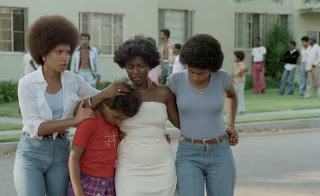
Emma Mae leaves the mess behind. DP: Stephen J. Posey.

While red flags aplenty abundantly wave throughout a film funded by the American Film Institute and the National Endowment of the Arts and featured hundreds of extras appearing for no pay, Emma Mae serves as a message to women everywhere not to fall for the BS, kick butt if need be, and put your good, loving family first. No man is ever worth your dignity.