Wednesday, April 26, 2023

‘A Thousand and One,’ Breaking Down Its Essential Relationships


A Thousand and One film poster.

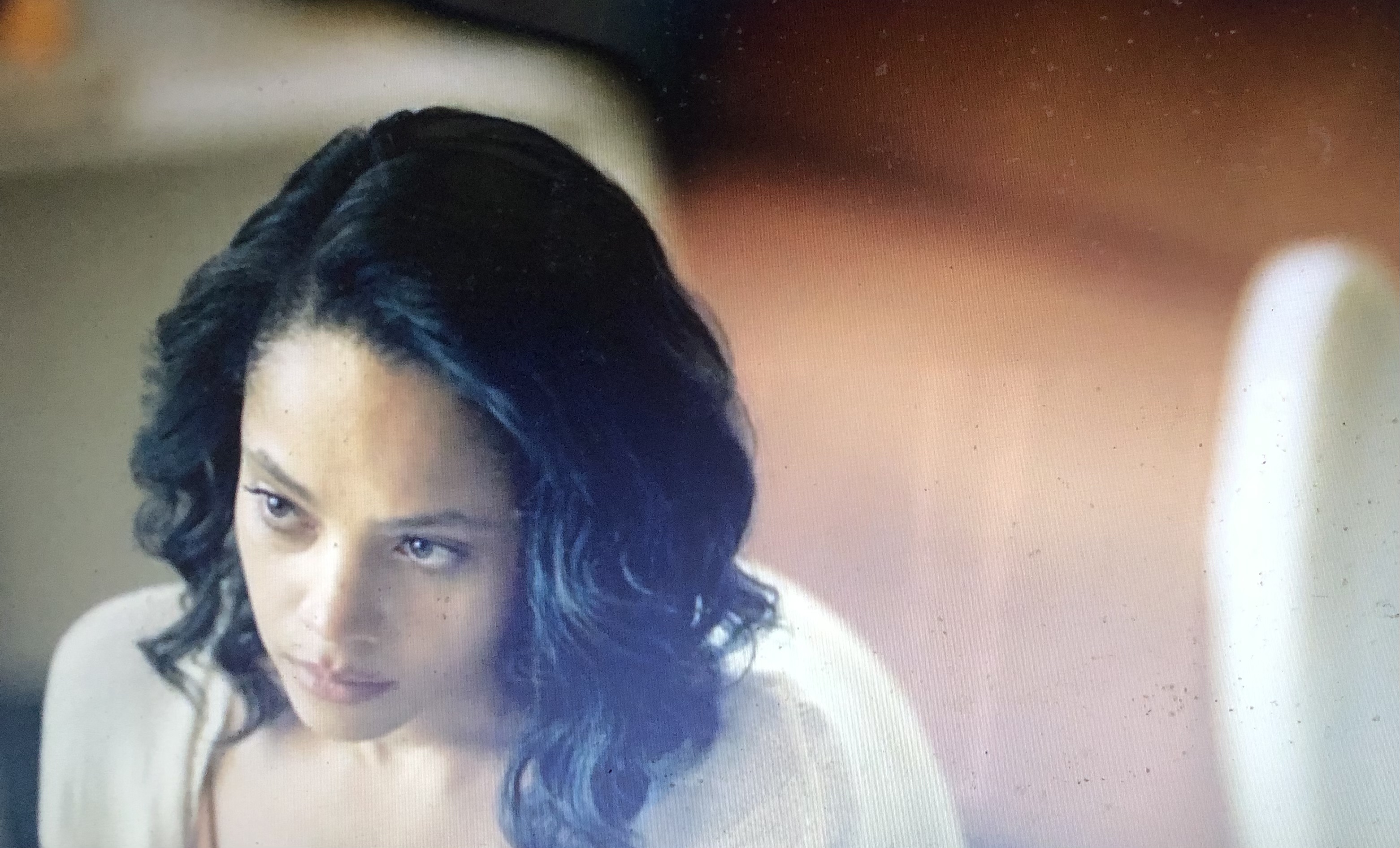
A Thousand and One— the Sundance Grand Jury Prize winner— proves to be a commendable contemporary film about America’s neglectful foster care system. Set against the gritty Brooklyn backdrop and beginning with the problematic mayor Rudy Giuliani’s reign on New York City, a woman strives to make a better life for herself and her son despite many stacked odds set in place. Moreover, several key character relationships tie everything together in unexpected ways. 

Inez (Teyana Taylor) vows to always put Terry (Aaron Kingsley Adetola) first. DP: Eric Yua.

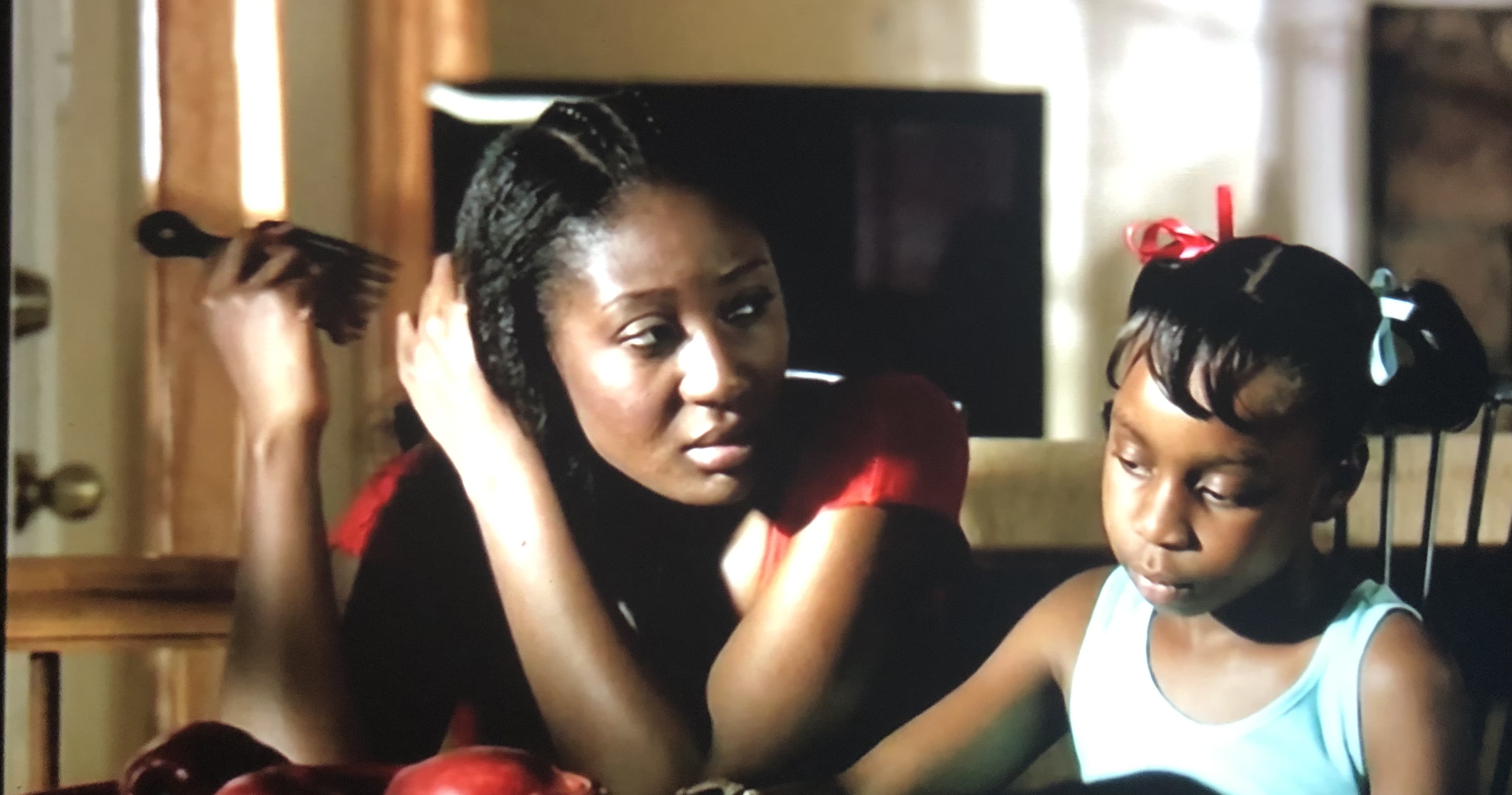
The first relationship grounds and builds solid foundation: Inez and Terry. 

Young, gorgeous Inez is a tough, outspoken woman shaped by her past. Recently released from prison, Inez dreams of opening her own hair salon. Unfortunately, her overreactive mouth and eager fists jump to fight people and systems, even if they are trying to help. Little Terry—Inez’s son tucked away in the foster care system, seemingly isolated and abandoned— compels Inez to kidnap him. Under aliases and frequent moves across the city, facing great poverty including homelessness, Inez and Terry are inexplicably committed to keeping the secret— a secret that would years later threaten their livelihood. Through all the ugliness and horror, Inez tries her damnedest to be the best possible parent to Terry. She wants what good mothers want to provide for their children: a safe, loving home, respectable manners to display out in the world, street intuition (mainly when dealing with cops), and a fulfilling education. As the sweet, intelligent Terry grows up, defined by Inez’s valid learning-as-she-goes attempt of nurturing, he becomes a healthy product of his environment. 

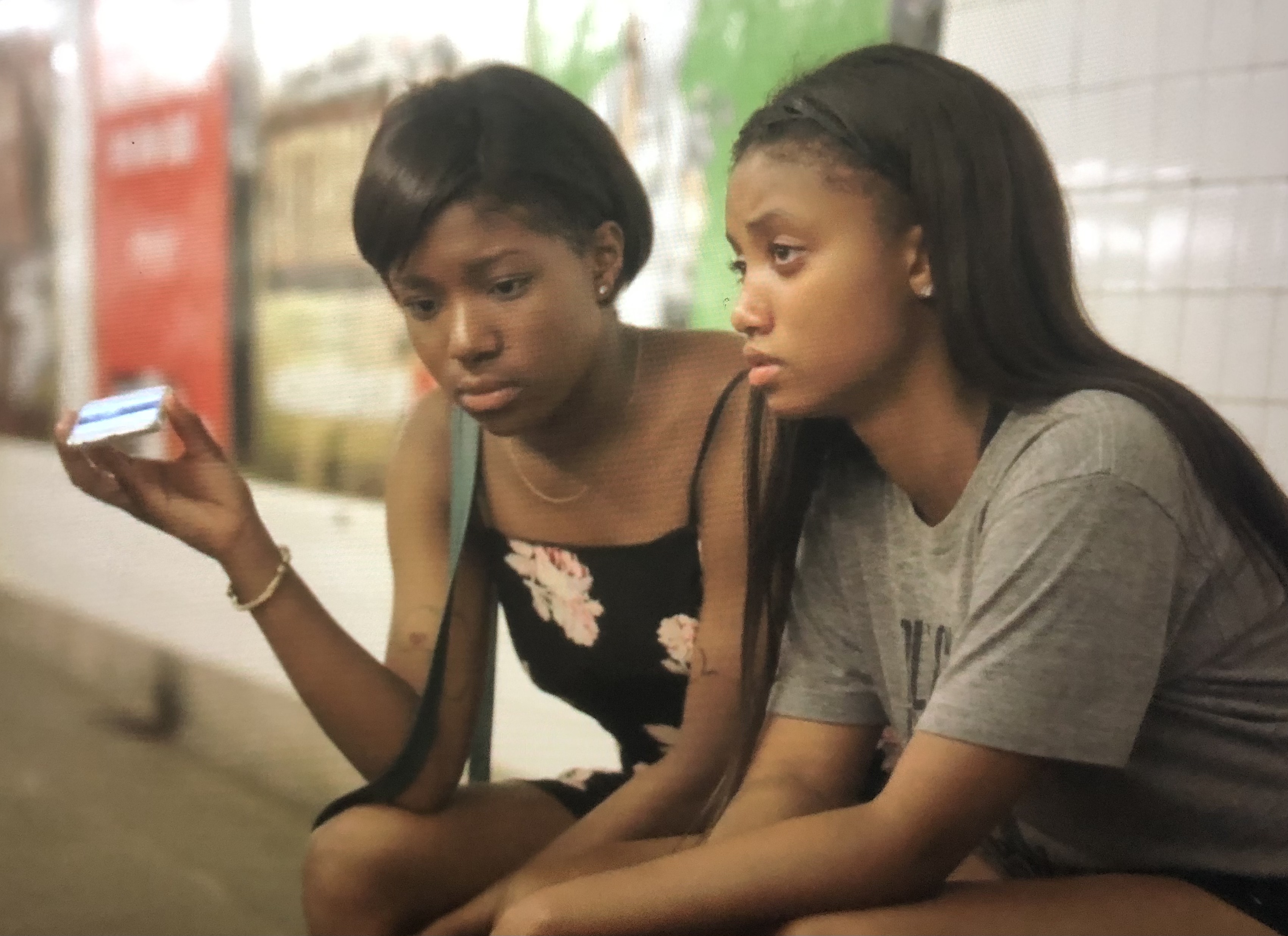
Kim (Terri Abney) instills some wisdom into Inez about picking fights. DP: Eric Yua.

The second relationship establishes a good BFF: Inez and Kim. 

It may be a difficult choice to make, deciding whether or not to risk your promising future for your best friend. Kim, however, is the reliable confidante the fugitive Inez needs. Inez has a hard time trusting people and her attitude causes a thorny ruckus in Kim’s household. Yet, soft and patient Kim stands by Inez, vowing to keep Inez’s secrets and in turn play a vital role in Terry’s life. Also, Kim genuinely wants what’s best for Inez— something that the woman deserves whilst trying to survive in a city that does not always demonstrate kindness, let alone love and support, especially to former felons. 

Lucky (Will Catlett) and Inez (Teyana Taylor) on their unconventional wedding day. DP: Eric Yua.

The third relationship showcases the pros and cons of turbulent history repeating itself: Inez and Lucky.

Lucky, a former lover, returns to Inez’s life, fresh out the penitentiary. Their love story presents two damaged individuals from the corrupt system gambling on creating a legacy together— to put up a united front for Terry.

“What do two crooks know about raising a family?” —Lucky 

More often than not, people like Inez and Lucky did not grow up seeing the structured family model; that televised cookie cutter dynamic of a loving mama, papa, and children having set meals and celebrating holidays and birthdays together. Thus, mirroring other folks trapped in endlessly traumatic generational cycles, Inez and Lucky do the best they can with their circumstances. Sure, they fight. Oftentimes, violently (verbal insults and destroyed furniture). No one is physically hurt. Feelings are bruised, yes. 

However, Inez and Lucky have one major factor in common: putting Terry at the top of their hierarchy. 

Lucky puts his heart, soul, and music into winning Terry’s heart. DP: Eric Yua.

The fourth relationship places high value on the father/son dynamic: Terry and Lucky. 

Lucky emerges into this new role as though he was destined to carry Terry on his shoulders. Lucky instills profound wisdom, pushes himself as a father figure even though he is far from perfect. No one is truly perfect anyway. Terry begins looking up to this man, opening up from his quiet shell, allowing the trusting bond to naturally form. The heavy, unbearable dramas depicting Black life can turn moviegoers away; this “why must we always showcase our pain and struggle” question that arises at every new picture that comes along, asking us to think and feel. Yet, in light of this excruciating weight, the powerful tie between Lucky and Terry gives the film its effervescent rainbow, its shining glory. There is never an uncomfortable moment, no desire to turn away from their important, must-watch scenes. Although no biological blood exists in these two individuals, Lucky and Terry prove that instinctive hearts choose families.  

As witnessed in her beautiful short film Feathers (on the Criterion Channel), A Thousand and One writer/director A. V. Rockwell places an eloquent emphasis on championing impressionable Black boys. By giving them inspiring figures that believe in and vouch hard for them in a country aggressively holding onto its historically brutal nature, Rockwell allows Black boys to be seen as children worthy of love and compassion. They are not depicted as future criminals— not in the eyes of those who care about them. Following behind previous Sundance winners: Ava DuVernay, Chinonye Chukwu, Ryan Coogler, and Nikyatu Jusu, Rockwell’s future shines brightly. She is one to watch as more and more filmmakers (especially Black women filmmakers) continue highlighting our stories with phenomenal originality, often times giving fresh actors/actresses a chance to shine in an industry valuing the same ole, same ole. 

Celebrate her choices or disagree with her, Inez only did what she thought was best. Illegal. Still, who else would have guaranteed Terry receive what he needed most out of life? DP: Eric Yua.

In addition to A Thousand and One’s Black woman writer/director, other behind-the scenes diverse inclusivity include the incredible Gary Gunn, a gifted Black composer, Eric Yua, an Asian American cinematographer, and women on editing, production design, art, and costuming roles. The acting too is top notch. Teyana Taylor (personally first seen in a certain must-not-be-named music video) convincingly portrays Inez’s varied complexities, giving her a compelling range of vulnerability— happiness, ferocity, regret, and love. Will Catlett (First and Black Lightning) has enormous screen presence as the tender, adoptive father figure Lucky— a man of flaws, but with a very sincere heart and spirit. The three Terry’s (Aaron Kingsley Adetola, Aven Courtney, and Josiah Ross) were exceptionally good— although Courtney’s part was shorter than the other two. 

The stunning, well-crafted A Thousand and One will leave anyone speechless by its depth and emotionally stirring surprises. 


Saturday, April 1, 2023

March 2023 Film Watches

A still from Cauleen Smith’s Drylongso (1998).

March was a month mainly comprised of short films— which may be the simplest approach for women filmmakers. Feature-length seems a harder task (more expensive), especially for Black women. 
Last month, Gina Prince-Blythewood said, “Black centered films are the hardest to get made” at the 16th Annual Essence Black Women in Hollywood event and that’s reflected through available choices. 
Recently acquired The World of Wong Kar Wai Collection from the Criterion flash sale and look forward to the release of Barry Jenkins’ Medicine For Melancholy (2008) and Alice Diop’s Saint Omer (2022, still no release date). 

1.) “Emily” (2023) Frances O’Connor #* 7/10

2.) “Pariah” (2012) dee rees *+ 10/10

3.) “Thirst” (2009) Park Chan-wook ^ 8.5/10

4.) “The Stunt Woman” (1996) Ann Hiu #^* 7/10

5.) “The Heroic Trio” (1993) Johnnie To #^ 9/10

6.) “Night Fishing” (2011) Park Chan-wook & Park Chan-kyong #^ 7.7/10

7.) “Judgment” (1999) Park Chan-wook ^ 9/10

8.) “Far North” (2007) Asif Kapadia #^ 3/10

9.) “Yes, Madam” (1985) Corey Heum #^ 6.5/10

10.) “Maya & Her Lover” (2021) Nicole Sylvester #*+ 6/10

11.) “Feathers” (2018) A. V. Rockwell #*+ 8.5/10

12.) “Pillars” (2020) Haley Elizabeth Anderson #^ 9/10

13.) “Amulet” (2020) Romola Garai #* 6/10

14.) “Flowers” (2015) Nikyatu Jusu and Yvonne Michele Shirley *+ 9.5/10

15.) “Black Swan Theory” (2011) Nikyatu Jusu #*+ 7.5/10

16.) “20 Weeks” (2017) Leena Pendharkar #*^ 2/10

17.) “Say Grace Before Drowning” (2010) Nikyatu Jusu *+ 8/10

18.) “African Booty Scratcher” (2007) Nikyatu Jusu *+ 9.5/10

19.) “Suicide By Midnight” (2019) Nikyatu Jusu *+ 10/10

20.) “To Be Free” (2017) Adepero Oduye *+ 9/10

21.) “The Disappearance of Mrs. Wu” (2021) Anna Chi #^* 5/10

22.) “Drylongso” (1998) Cauleen Smith #*+ 9/10

23.) “Fallen Angels” (1995) Wong Kar Wai #^ 7/10

24.) “Chungking Express” (1994) Wong Kar Wai #^ 10/10

25.) “Executioners” (1995) Johnnie To #^ 7.5/10

26.) “Thunder on the Hill” (1951) Douglas Sirk # 9.5/10

27.) “Tortilla Soup” (2001) María Ripoll #*^ 8/10

28.) “Yellow Fever” (2012) Ng’endo Mukii *+ 10/10

29.) “Mtindo”(2018)  Ng’endo Mukii #*+ 7/10

30.) “Rye Lane” (2023) Raine Allen-Miller #*^ 10/10

31.) “My Friend From the Park” (2015) Ana Katz #*^ 4.5/10


# first time watch

*woman filmmaker

*+Black woman filmmaker

^nonwhite filmmaker

Other notes: 22 first time watches, 30 films directed/written by nonwhite filmmakers, and 21 films made by women. April is National Poetry Month and some of my intended film selection will reflect that.


Thursday, March 23, 2023

The Short Films of Nikyatu Jusu


The short films of Nikyatu Jusu.

As another Women’s History Month comes to a close, a tremendous blessing has been revisiting Nikyatu Jusu’s phenomenal work. She has four short films available to stream on the Criterion Channel: Flowers, Say Grace Before Drowning, African Booty Scratcher, and Suicide By Sunlight. Meanwhile, Black Swan Theory is available on Vimeo. 

Mya (Amee Apedo) and Erin (Belle Legrand) survive a very dangerous situation in Flowers. DP: Jamal Solomon. 

In Flowers (2015)— co-directed and co-written with Yvonne Michelle Shirley— Mya and Erin set out to avenge Mya’s honor nearly tarnished by her white male tutor, Mr. Ryan. After all, Black girls are not often believed when assaulted. It would be her word against his and hers would bear less weight. Even the ease Mya enters his secure home raises questions. He trusts her like that? Clues reveal Mr. Ryan before he even arrives— mainly the brown baby on his refrigerator. So, he has a taste for Black women, eh? 

When the tension surmounts near the end, an unhinged Mr. Ryan becomes a greater villain, having no problem inflicting sexual or physical assault on Black girls. Has he done this before? Put his hands on the defenseless? His own unseen partner, pregnant with his second child? Through a red haze, he’s only thinking that Erin may destroy his reputation. Heart-pounding fear intensifies for Erin as the adult and teen fall on the floor battling over her phone. How far will both go for control? Mya returns, standing in complete shock at this escalated violence. Gratefully, Mya does not film this— her own tutor taking away her best friend’s agency; stripping away Erin’s earlier candor. The girls have played a hot gamble and they must leave before the flames burn any brighter. 

Mya and Erin both experienced abuse by the hands of Mr. Ryan—  traumatic in different ways and would impact their friendship forever. 

Grace (Ellie Foumbi, director/writer of the buzzy Our Father, the Devil) is impressed that her daughter Hawa (Dennise Gregory) can read well in Say Grace Before Drowning. DP: Daniel Patterson.

Say Grace Before Drowning (2010) sheds light on Grace, a sexual assault survivor— narrated from the point of view of Hawi, her daughter. Hawi was the first to leave their country, sheltered by Grace’s sister Aisha and her husband Chris. Upon Grace’s arrival, everyone treats her with special care, including Chris who’s touchy-feely actions trigger Grace’s assault. Her reactionary behavior stems from untreated memory dissociation, a mental disorder that stems from heavy, undisclosed trauma. Often, a withdrawn Grace disappears within herself and brightly returns to being Hawi’s mother, braiding her daughter’s hair, complimenting her reading, and sleeping beside her at night. 

By mistaking Chris’s kindness, Grace may be reminded of the soldiers’ mistreatment. After the family pool trip in which Chris teaches Grace to swim, she sets out to seduce her brother-in-law. During a spaghetti meal that Chris is preparing, Grace grinds on him during a song— right in front of Hawi. Grace transforms into her aggressive attackers launching herself at Chris, refusing to take “no” for an answer. In an assault as detrimental as sexual harm, power and domination over the body is essentially the key. Grace wants to repeat that history, but with herself as the wielder of power and domination over Chris, blind to consequences, to Aisha and Hawa’s feelings. Did the soldiers consider Grace’s family or their own wives, girlfriends, daughters as they violated Grace? 

Hawi hears the screaming match between Grace and Chris and abandons the spaghetti to see what the fuss is about. Spaghetti, when not watched and stirred frequently, gets clumped together, uneasy to eat. 

Toby (Angela Burnett) longs for her ancestral foundation. DP: Charles Burnett.

Hawa almost shadows Toby in Alile Sharon Larkin’s Your Children Come Back To You (1979)— story about a child wishing for a Black world whose mother too frequently dissolves into deep depression, neglecting Toby in the process. Whereas Hawi has her aunt Aisha, Toby has a compassionate grandmother. 

Abbie (Ebbe Bassey) and her teenage daughter Isatu (DeWanda Wise) reach an important solution to the prom in African Booty Scratcher. DP: Daniel Patterson.

African Booty Scratcher (2007), an earlier Jusu work, gets its title from an offensive, known and well-traveled taunt. The short stars DeWanda Wise as Isatu, a teenager looking forward to prom. Her hard-working immigrant mother Abbie wants Isatu to wear a traditionalist gown broadcasting her heritage. Isatu’s peers negatively blast anything associated with Africa. Thus, a tradition as American as apple pie, the prom is the biggest event in a young girl’s life— the fashion statement made here can either elevate your status or bring you down. Of course, Isatu believes that wearing  a typical name brand designer would have all eyes on her.

Terence Nance cameos as the mean teen who dumps Isatu via note. What a class act. DP: Daniel Patterson.

At Abbie’s restaurant (serving jollof rice and stews), Isatu works cleaning tables and waitressing in order to obtain money for her dream dress. Isatu sees firsthand that the teasing from schoolmates is nothing compared to how some Black adults look down on African immigrants, a seething hatred that manifests into verbal malice. A potential customer disrespects Abbie and their food in the process— further claiming that the Asians know what Black Americans desire more than the Africans. This avenue plays into Isatu’s own Americanized thought process— her laughing at the girl with the “African Booty Scratcher” card on her back, her preference for pasta over jollof rice, her reaction to the gown Abbie made for her. Perhaps Isatu too will become as bitter as the stranger, turning her back on her ancestral background for the comfort of fried food. Unfortunately, her mental institution has already begun.

Isatu realizes that she too has participated in Abbie’s humiliation. 

Mind-enhancing cocaine allows Sonya (DeWanda Wise) to blur her world in order to cope with her past life as a sniper. DP: Hans Charles.

The dark, disturbing Black Swan Theory (2011)— also starring Wise— focuses on as Sonya, a murder for hire dressed in black sporting a killer braided faux hawk hairstyle. This avant-grade experimental piece has an Afro futuristic meets parental advisory video game aesthetic. Sonya high on drugs and strapped for cash, takes on a murder-for-hire job. Already, she’s imagining killing someone— in a crueler affliction that implies personal vendetta versus a flying bullet. 

The men (played by Erik Clancy, Jeevan D’Souza, Stephen Hill) receive code names straight out of college textbooks—Italian renaissance artist/theorist/engineer Leonardo Da Vinci, French playwright/political activist/critic/existentialist philosopher Jean-Paul Sartre, and German poet/philosopher/composer Friedrich Nietzsche. DP: Hans Charles.

Meanwhile, Sonya’s code name Black Swan lacks that same consideration. DP: Hans Charles.

If there are therapeutic outlets for abuse survivors, do those who killed in the name of their country also have support? What therapist could possibly empathize with cold-blooded murder— even under the semblance of justice? How does a society expect veterans to navigate with normal mental/psychological capacity? Furthermore, Sonya has photographic memory. Even if she shot one person, that image rests in her mind forever. 

Seemingly without support beyond Jordan— her ex and former military comrade coping with the past in his own way— Sonya takes an assignment reminding her of the only skill she acquired whilst overseas. 

Valentina (Natalie Paul) in the subway in Suicide by Sunlight. DP: Daisy Zhou.

Suicide by Sunlight (2019) currently sits at number one on a list of short films that could be excellent full-length features. Seriously. An amazing film about Black vampires— without the Marvel comic book associations or Eddie Murphy antics. In this incredible world, vampires with melanin have the unique gift of walking through sunlight unscathed and those lacking die by the sun rays if they choose to be brave (or stupid). The shots on Black vampires glowing in the day are stunning; as though the still images bring the style of Gordon Parks to a vivid, creature-feature technicolor. 

Valentina tries to see her daughters, but their father  refuses to relent. DP: Chloe Zhou.

Gorgeous, stylish nurse Valentina juggles her career, bloodlust, and motherhood. She cares deeply for cancer patient Micah, a little boy on the cusp of death. Micah is around the same age as Valentina’s two daughters Hope and Faith and ex Langston makes it impossible for Valentina to see them. He’s part of those in town deadset against the vampires, not realizing that their precious daughters are not excluded— a whole new perspective on the one drop rule. 

Valentina balances her nursing duties; withholding a ferocious hunger that her co-workers and patients know nothing about. At night, however, her lust is insatiable— deadly seductions turn into passionate clenches of her razor sharp fangs piercing flesh. Shockingly, though, Valentina pukes it all up, looking as guilty as Buffy’s ex-boyfriend Angel— the redemptive vampire with a soul. 

When Valentina discovers that Langston has introduced a new woman to Hope and Faith— perhaps as some misguided attempt to replace Valentina and give the girls a makeshift nurturing he himself cannot provide— Valentina decides to give him a lesson. In the process, Valentina shares who they truly are to both Hope and Faith. 

Don’t ever cross Valentina. A beloved mother would do anything to see her children. DP: Daisy Zhou.

The girls Hope (Juniah Williams-West) and Faith (Madison Spicer) trust in their mother. DP: Chloe Zhou.

Jusu’s five short films are well-crafted, sophisticatedly put together and beautiful as a whole oeuvre. All four cinematographers—Jamal Solomon, Daniel Patterson, Hans Charles, Chloe Zhou— captured the rich, multifaceted variations of Black skin in exceptional styles that would make Bradford Young proud. In addition to the experience, it is lovely to see that the same names continue popping up in the credits— Yvonne Shirley (sound mixer on African Booty Scratcher and Say Grace Before Drowning), Terrance Nance (guest actor, producer/title card maker, renaissance Da Vinci, etc), and quadruple threat Jusu editing and production designing. 

Hawa playing in her mother’s makeup as young girls love to do. DP: Jamal Solomon.

“The Oscars are not my center,” Nikyatu Jusu recently said on the Independent Spirit Awards carpet—a valid statement to speak against an industry placing the Academy Awards above all others— the symbolism of “making it” in the filmmaking art. 

Yet, that problematic space relies heavily on its white cinematic history repeating over and over; an institution excluding Black women for years, continuing to nominate the same folks filling the Guinness Book with their record victories. So, even if they fail every year to recognize Black women’s talents onscreen and behind-the-scenes, the audience desires to see themselves reflected, most importantly by women who mirror them, who know their pains and joys, not stories from the anthropologist lens dominating our cinematic experience for far too long. 

“I’ve done a lot of spiritual, intellectual, physical labor, being in predominantly white spaces for my entire life. So now allow me to just focus on the work. But everything comes with a price. Money’s never free; success is never free.... the more breaks I have for myself, the more I’m like, Do I want to be part of that machine and do everything that comes with that? Or do I want to make something I truly believe in every few years and still teach and have my little quiet house and live below my means? The more you see of the figurative monster that is the industry, the more you assess what you’re willing to do to get what other people have gotten.”— Nikyatu Jusu to film critic Angelica Jade Bastién in Vulture

Jusu’s works matter. Every last one. Her brilliant feature-length debut Nanny included. Brown and dark-skinned women star across genres that usually exclude them. Horror rarely ensures their survival. Jusu sets the wrongs to rights, presenting Black women and girls in either unaddressed community topics or imaginative scenarios that broaden the modular spectrum. She utilizes key elements to a solid cinematic experience: breathtaking stories, compelling cinematography, and fresh talented actors/actresses, ensures that the audience will be wholly invested. Plus, the casting stays excellent— friends having believable chemistry, mothers/daughters looking alike. 

Whether Nikyatu Jusu makes another short film between her booked schedule of two feature-length films, whatever comes next will be well worth the wait. The representation of Black girls and women are safe in her capable hands. 


Sunday, March 19, 2023

The Remarkable Journey of Darla Sutton-Bordelon


Darla definitely deserves to be included among Best Television Character Journeys of All Time lists. 

Almost seven years ago, Queen Sugar delivered Darla Sutton-Bordelon, one of the bravest character journeys ever depicted on television. The extremely attentive details come solely from the poignant written components of the former drug addict adapting to society and the incredibly gifted Bianca Lawson’s underappreciated efforts of rendering such a fragile turned resilient woman. 

This essay sheds light on Darla’s countless obstacles and how she faced them. 

Darla (Bianca Lawson) recites a metaphorical “fairy tale” to Blue as Ralph Angel watches from the doorway in season one, episode eight’s Where With All, written by Tina Mabry and directed by Kat Candler.

Darla (Bianca Lawson) and Blue (Ethan Hutchinson) are always so beautiful together. 

In the first season, Darla has been clean and sober for almost two years. She has a steady job and is happy to be allowed to babysit her son, Blue during Ernest’s funeral. Darla’s past often overshadows her continued efforts to be in Blue’s life. That stain comes with addiction. Even when someone comes out the program, conducting the proper steps, to regain trust is difficult. 

“These past eighteen months, I have been clean… I want to thank you. I never got the chance to say ‘thank you, Mrs. Violet.’ You saw me at my lowest, you saw me in hell. I didn’t even want to exist anymore. Not breathe. Not see. Not hear. Love couldn’t even reach me. And you picked up my baby gently… you could have yelled at me and cursed me, but I remember you covering me up and saying, ‘God bless you, girl.’”— Darla to Vi (Tina Lifford) and Hollywood.

The Bordelon family has troubles fully accepting Darla. 

Violet’s grudge is Darla’s biggest hurdle, considering that she is the primary guardian of Blue. Vi’s mind remains haunted by Darla’s darkest, shameful moment. Out of the people she has hurt and harmed the most, Vi is the impenetrable, unforgivable barrier to cross. Vi’s detrimental behavior during the hurricane—wanting Ralph Angel to kick Darla out in the middle of terror— problematic at best. However, Vi says to Charley that the cheating, lying, monstrous Davis has a right to be in Micah’s life while loudly blasting Darla for trying to be a mother to Blue. Ralph Angel calls out her hypocrisy (which is quite patriarchal). Yet heavy foreshadowing comes into play here. In addition to the cheating, Charley ended her marriage to Davis due to him paying his friends to rape a sex worker. 

Darla and Ralph Angel tell Blue that they’re getting married in season two, episode nine’s Yet Do I Marvel, written by Jason Wilborn and directed by Julie Dash.

Darla confides in Charley about trying to reach her parents in season two, episode ten’s Drums At Dusk written by Valerie Chu and directed by Julie Dash. 

Unfortunately, a big problem for Ralph Angel and Darla lies in throwing each other’s past mistakes as missiles. Although they love each other deeply, some wounds are still not fully healed. 

Ralph Angel reluctantly agrees with Darla to undergo pre-marital counseling. They both selected communication as their biggest concern in season two, episode eleven’s Fruit of the Flower written by Dana Greenblatt and directed by Cheryl Dunye.

The second season, Darla becomes more radiant and healthy; her look partly due to rekindling love with Ralph Angel and strengthening her connection with Blue. The struggle to maintain this newfound habit presents the real, authentic portrayal of life post addiction, knowing that people still cannot forgive you for your past. Darla retains no hateful spirit, always conveying her thanks despite knowing that Vi carries an unchanged resentment. Darla finds a perfect balance between motherhood and becoming engaged to the man of her dreams, and finding a job with Charley— her future sister-in-law. Darla soon finds a friend in Charley, an intimate closeness that’s needed for a woman who grew up as an only child. Hotheaded Ralph Angel— who has already shared his late father Ernest’s secret will with her— isn’t too happy about the arrangement, believing that Darla is not on his side. He has already shared his late father Ernest’s will with her. The thing is Ralph Angel expects Darla to always sacrifice for him. She lost a previous job thanks to him. 

Suddenly, the presence of Darla’s parents brings a shocking detail to light. 

The wedding is off and Ralph Angel dumps Darla. 

Darla’s mother Darlene (Michael Michele) puts out the idea that Blue should live with his maternal grandparents for a while— that of which Darla does not agree in season two, episode fourteen’s On These I Stand; written by Jason Wilborn and directed by Christina Alexandra Voros. 

Even with everything crashing around her— losing the Bordelon support including being fired by Charley— Darla manifests painful rejections into a positive activity— swimming in season two, episode sixteen’s Dream Variations written by Davita Scarlett and directed by Kat Candler. 

The third season, after recuperating with her parents back home in Washington D. C., Darla eventually returns to St. Joe to exist beside her wrongs, maintaining the path towards being forgiven. She has changed her appearance (cutting off her signature locks) and hopes to spend more time with Blue by any means necessary. Ralph Angel— hanging onto the hurt—frequently lashes out at Darla. Moreover, Darla also deals with Vi’s scorn and that of Hollywood for the first time. Ralph Angel and Darla tell Blue about their abruptly ended relationship. Darlene then encourages Darla to get the courts involved for a custody arrangement. After all, Darla has earned the right to be in Blue’s life, her smart, inspiring son gives her the heart and energy to thrive, to be clean. She needs his sustainability. 

Darla returns and Ralph Angel isn’t too pleased— having only handed off her phone calls to Blue.

Darla and Ralph Angel peacefully mend fences in season three, episode twelve’s The Horizon Leans Forward, written by Mike Flynn and directed by Kat Candler. The parents train Blue to ride a bicycle. As they watch him from the porch, Darla believes that they should split time fifty/fifty. 

“I’m more than okay. I’m healthy. I’m sober. I have my struggles, but I think of Blue, I think of his joy and I walk through it.”— Darla in season three, episode thirteen’s From on the Pulse of Morning, written by Kat Candler and Anthony Sparks and directed by Candler. 

Season four features an evolved Darla embodying a woman willingly undergoing significant life changes, even sharing similarities with new boyfriend Leo— also a former addict while also continuing a positive co-parenting arrangement with Ralph Angel. She shows no animosity towards Ralph Angel dating the beautiful Deesha, a fellow parent in Blue’s class, demonstrating a release on her earlier attachment issues. In prior seasons, Darla and Ralph Angel were definitely not ready to be married, especially with Darla’s secret looming over them and Ralph Angel’s constant mood swings— very unhealthy and dangerous for Darla. So, Darla appears invincible as she moves forward in making a clean, worthwhile break, putting Blue’s needs and her own at the top of her hierarchy.

“You’re lower than I ever was!”— Darla to Nova on Nova’s book, Blessing & Blood of season four, episode four’s Skin Transparent, written by Valerie Woods and directed by Numa Perrier. 

Darla sinks into deep depression in season four, episode five’s Face Speckled, written by Lisa Morales and directed by Heidi Saman.

Darla takes a hefty sniff of temptation, but manages to not take a single drink.

Ralph Angel explains to Blue that though he’s not his biological father, his soul is in Blue. 

Then Nova’s book Blessing & Blood comes out. Darla’s co-workers quickly figure out she is the mysterious “Star” character. It also affects Blue at school. Darla never intended Blue to find out the truth about his paternity— certainly not this soon. Nova forces Ralph Angel and Darla to have that difficult conversation with Blue, Darla beyond hurt and humiliated that her very wishes are not respected. 

Jordan Montague (Amanda Tavarez) visits St. Joe spilling awful tea whilst drinking like a sailor in season four, episode ten’s Oh Mamere, written by Felicia Pride and Chloe Hung and directed by Cheryl Dunye.

Darla is in stunned disbelief as Jordan laughs about what happened to Darla.

The combined factors push Darla’s carefully constructed world asunder like a row of falling dominos. Leo— who has read Nova’s book— hasn’t returned Darla’s calls or texts. So, she shows up to his band practice. He reacts coldly to her, convinced that she’s teetering. Sure, it would be wise to take Leo’s advice and call her sponsor, but his whole attitude towards Darla plummets her already dwindling self-esteem. The final shove across the cliff comes from Jordan Montague— the worst kind of person. Jordan still believes herself to be Darla’s friend. Heck, Darlene believes this woman is Darla’s friend. At brunch, Jordan gleefully chugs drinks away, not showcasing any empathy towards Darla’s sobriety (perhaps she doesn’t know, but still...). Yet, Jordan reminisces about their glory days of turning tricks, unknowingly filling in the missing pieces of Darla’s fateful night. The vicious savageness to this story paints Jordan in a horrific light— she witnessed Darla being taken advantage of by two men and thought it humorous; not even realizing that Darla could not possibly consent. Even remotely close to sober, a grownup Jordan should realize what her words insinuated. What kind of friend would laugh and openly mock about their friend’s violation? 

Of course, it is very heartbreaking once Darla goes to a bar and engulfs one shot after another. Damn. 

Out of all the people who could have witnessed Darla’s public display of intoxication, a sweet fate intervenes, letting Vi find her.

Vi sits at Darla’s side as Darla tells Ralph Angel about the tragic night of Blue’s conception.

Vi gifts Darla an absolute blessing— the genuine care and sympathy that the young woman needs to process a terrible crime. For a long time, Vi made it perfectly clear where she stood with the former addict, her cruel retorts often heard by Darla. Still, a patient Darla knew that the road to forgiveness was not bound to be simple, let alone quick and painless. Thus, when Darla found herself in grave danger, Vi would be the one to rescue her from herself and disclose a surprising vulnerability. Perhaps, Vi finally sees that she and Darla share common ground— surviving cruel abuse by men. 

Ralph Angel and Darla finally marry in a COVID precaution ceremony in episode May 19, 2020 written by Norman Vance Jr. and directed by Lauren Wolkstein.

By season five and six, Darla and Ralph Angel have grown individuality— so much so that they can fully be committed together without inflicting unnecessary hurt on each other. After a hard, tumultuous year, Darla deserves happiness, she deserves the fairy tale ending— which she acquires through one of the most poignant, most loving weddings ever shown on television. Although Darla’s parents cannot attend mainly due to the COVID pandemic restrictions (brilliantly integrated into the series), a prior virtual bridal shower offers Darla a humbling surprise from Darlene. 

When Darla becomes pregnant in season six, this gorgeous family embarks on this healthy journey together as a married couple, no longer their past— the hustler and the addict struggling to make ends meet. Love has always been their backbone, but wisdom and growth unites them, prepares them for a refreshing future with their son Blue along for the glorious ride. Unfortunately, Ralph Angel has some instinctual reflexes that potentially places his own maturity on the line. 

Happy endings are bumpy ways away for Darla, Ralph Angel, and their newborn daughter in season seven, episode three’s Slowly and Always Irregularly written by Francesca Butler and directed by Stacey Muhammad.

Darla is deadset against Nova’s book being turned into a film in season seven, episode five’s With A Kind Of written by Eddie Serrano and directed by Shaz Bennett. 

By the seventh season, Darla settles into marital bliss— a beacon of pure happiness. Again, fate tests her sobriety. Nova has the opportunity to turn her book into a film. Everyone is all excited about the prospect, having changed their earlier scorn into excitement— except Darla. She suffers through their uncontainable glee, her eyes watering, the tension in her body rising. First, her “no” is soft, then she repeats it louder and louder, and races out of the room. As part of the Bordelon family, her consent matters and it’s only right for Nova to go to Darla, to hear her— not exactly for the why, but for her to truly understand what Nova’s book cost Darla. 
“Don’t you dare make this about you! You ruined my life. And now you want forgiveness. I relapsed because of you and that book. Did you really think I would be okay with a movie? Are you really that selfish? Ralph Angel and I... we keep trying to let the past go. But you keep bringing it back. You think that I wanna watch my assault with actors in costumes? Do you think that I want that out there for Blue and Tru to see? More than you’ve already exposed it? All the s*** you stirred, do you think I want that rewound and streamed on people’s TVs for years?.... ARE YOU CRAZY? ARE YOU OUT OF YOUR MIND?”— Darla to Nova. 
After listening to Darla’s passionate monologue, Nova promises to decline the offer of turning Blessings & Blood into a film. To further enhance a pivotally emotional moment, the two sisters by marriage embrace, Darla sobbing on Nova’s shoulder, a newfound bond between them deepening. 

Once that chapter closes, Darla’s remaining hurdles include Ralph Angel’s troubles and the worthless Chase (who doesn’t deserve to be considered Blue’s biological father). Of the latter, Darla boldly confronts her attacker (with her strong, supportive family in tow) and tells him off in a way season one Darla never would. How can you not applaud her for her courage, her unflinching eye? She was a chess player mastermind beating Chase at his own pathetic game. As for Ralph Angel, Darla was right to take the kids with her to Washington D. C. He needed to put his family first: stop returning to his old shady behavior, punishing Darla, and talking to an ex about his marital problems. 

Darla closes the nail on the coffin— having the monster Chase (Eric C. Lynch) sign many documents including a contract worth three million dollars. Talk about a more positive spin on paying out a rape survivor (sorry Charley).
 

Thankfully, by the final episode, one of the best TV couples Darla and Ralph Angel repair their relationship and buy a house together in order for Vi and Hollywood to foster a child. Talk about a rewarding full circle moment for everyone, especially Darla. She fought against constant denial, constant doubt, and stole/melted hearts. 

Insert the sobs. 

Queen Sugar may not be the easiest series to binge. Almost every episode should come with a “sensitive subject matter” warning. Furthermore, an inward pause must be taken to let the heavy images, resonating stories, powerful acting settle in spirit, and tissues to wipe away endless tears. For seven heartrending seasons, viewers have watched the soft-spoken, guilt-ridden Darla transform into a remarkably resilient woman— someone growing into her own strength and agency. Bianca Lawson’s incredible performance of grace, tenderness, and grit makes you see Darla’s multifaceted humanness. She has immense regrets, battles to stay sober, desires to be a better mother and partner, and forge her own destiny. Between her defeats and losses, the blessed Darla still receives wins, joys, and pleasures. Lawson believably embodies a character she was meant to play. After roles in Buffy the Vampire Slayer and Pretty Little Liars, Queen Sugar gave the opportunity of a lifetime— a layered, complex role requiring an emotional weight that Lawson carries well. 

Darla Sutton-Bordelon’s character arc demonstrates a significant part of why Queen Sugar will stand the test of time as one of the most unforgettable series ever rendered. 


Friday, March 17, 2023

‘Saint Omer’ Is a Certified Masterpiece


Saint Omer film poster.

Alice Diop’s exceedingly honest feature-length debut Saint Omer explores a modern day tale of mothers killing daughters— physically, spiritually, and emotionally— and colonialism’s role in its manifestation. 

Successful author and professor Rama’s alive and passionate in the classroom; her active energy differing from the restrained behavior she displays around her family. After abandoning her usual couple travel with her husband Adrian for a solo mission, Rama becomes wholly invested in the court case proceedings of the eccentric Laurence Coly. Rama plans to use the Medea myth to tie into her next novel— Medea being Jason’s scorned ex who kills their children in revenge. 

At this modern-day witch-hunt trial, only three Black women are present— a mysterious woman seated in the front, Rama, and Laurence. 

The defendant Laurence’s brown attire purposefully disappears against the mahogany wall. This color choice seems a clever move on her part, to don a natural and neutral earth tone despite being in a setting where many biased eyes would see a villain. Brown is beyond the skin complexion, it is embedded deep in history as not someone in which to align. Thus, the prejudiced remarks from the prosecutor to Laurence’s former professor further stain her character. 

Laurence Coly (Guslagie Malanda) blends into the walls. DP: Claire Mathon. 

Since childhood, Laurence has been trained to sink into the background, to almost dissolve until completely invisible. Her ancestral foundation, her hopes and dreams, and even her own body— are tucked away to appease others. This fault lies in her parents. Her father— though also a lover of literature and philosophy like her— still envisioned greatness. He may have paid her way, but his capitalistic mindset expected a return on his investment. Odile, Laurence’s mother and primary guardian, also expects her to advance as a French Black girl, not as a Senegalese Black girl. Odile ensured that Laurence never learn Wolof and perfect French— the official language of Senegal and consequential proof of colonialist rule over other dialects still in use. Instead of embracing her heritage, Laurence is sternly advised to articulate well and become a lawyer. 

However, Laurence shares similarities to Rama— a love for literature and philosophy. Yet, Laurence remarks on the ease in which she places her baby daughter near the sea, unsure and enigmatically hoping that the court will tell her. However, the daughter’s secret birth and dreary circumstances makes the pity for Laurence begin. All alone in an unfamiliar European city, Laurence falls victim to Luc Dumontet, an old married man— fifty-seven to her twenty-something age— grooming perhaps. With a daughter near Laurence’s age, that doesn’t stop him from keeping Laurence in his artist studio and having an affair with her. Therefore, Laurence once again is sentenced to hiding, an instinct that she has forcibly been accustomed to. Her physical imprisonment ensures that no one ever sees her except the one in control. So many tragic situations befall women like Laurence, financial, sexual, and emotional abuse, the weight of depression, feeling lost, ashamed, having no therapeutic outlet. She was a silent, internalized bomb ready to explode. 

Luc, the author of Laurence’s greatest misery, always refused to understand her humanness because he (an artist) was not seeing her the way she deserved to be seen. From the time he met and dominated her vulnerability, he was selfishly attending to his own desires while ignoring hers. He plays the heartbroken, mourning father on the stand, his false narrative ringing no bit of truth. 

Rama (Kayije Kagame) blends in the crowd. DP: Claire Mathon. 

In between jury placements and scathing testimonies, Rama’s own life comes to light, her upbringing with a passive mother whose perpetual silence cuts an open wound to young Rama. The mother’s internalized emotion naturally begins killing the spirit of the girl, slowly like a poison— the medieval woman’s method for death. Their moments sequester in a dark eeriness— a fragile mother/daughter relationship retaining shadowed interactions in the present. This trial is the reason Rama cannot participate in the shared care of her mother, but she also does not disclose to her family except Adrian. Yet, this secret journey certainly takes an unexpected ride towards her past as Laurence’s testimony unleash memories trapped within Rama, memories of being uncared for, feeling unloved and un-nurtured. 

Rama’s impending pregnancy casts constant doubt, fears that her mother’s behavioral patterns may become a generational inheritance, an ingrained possibility. It is definitely a valid concern, considering that studies indicate mental health issues can be passed down. Rama already few outlets to address her internalized pain and struggle. Work comforts and eases her inherent stress, the words of popularized whiteness, cultures that exclude hers. In Laurence— a softer, resilient version of the Medea type destined to harm— Rama sees elements of herself and possibly her mother. The sabotage includes drinking beer— and history shows that alcohol can be harmful to a fetus. An educated and astute Rama must know that. As a stoic Laurence keeps composure each passing trial day, Rama continues breaking and breaking until she realizes that her pain cannot remain quiet any longer. Rama represents what Laurence could have had if her desires were appreciated and supported whereas Laurence is where Rama’s future could be if not given proper postpartum treatment. 

Saint Omer showcases the psychological war on Black women that often starts at home, a war of which so many would rather turn a blind eye to than try to rescue them from a certain annihilation. Whether Rama decides to write the metaphorical Medea novel or not, she appears to be another person capitalizing on the lonely, friendless Laurence. Laurence’s parents hoped to. She failed her father. Meanwhile Odile proudly buys newspapers covering the trial, disillusioned to Laurence facing real consequences including the death penalty for a capital offense. Luc used Laurence terribly, even failing to properly acknowledge her depression and denying their poor daughter. Perhaps Rama intends to break the cycle, depict Laurence in a light far removed from martyrdom. 

Kayije Kagame, Alice Diop, and Guslagie Malanda at the 79th Annual Venice Film Festival. The triumphant Saint Omer won the Golden Musa, the Edipo Re Award, the Luigi de Laurentiis Award for a Debut Feature, and the Grand Jury Prize.  

Saint Omer hits the right keys of cinematic masterpiece beginning with Alice Diop’s incredible direction and a remarkable screenplay co-written by Diop, Amrita David (who also does the film’s editing), French novelist Marie N’Diaye (author of the exceptional novel Self Portrait in Green), and script coordinator Zoé Galeron. Clare Mathon (cinematographer of Marti Diop’s incredible Atlantics and Céline Sciamma’s exceptional Petite Maman and Portrait of a Lady on Fire) sets a rich, evocative tone with her sharp, pointed lens that challenges viewers to pay attention to every last visceral detail. Guslagie Malanda and Kayije Kagame’s dynamic performances as Laurence and Rama believably portray the complex nuances of Black women’s specific experiences in contemporary France. You simply cannot survive on the brain food of intelligence alone, not as a Black woman existing in any part of the world. Both display a deep understanding and knowledge in their characters’ dispositions, their differences and similarities despite never physically interacting. There’s a promising kinship that is almost forbidden, a mental/emotional pull, as though if these two were to touch or speak to the other, a certain trespass would form— and these actresses brilliantly evoke that tension. At the end of awards season, Malanda and Kagame were just as invisible— extremely deserving of awards nominations— as onscreen Laurence and Rama. 

A highly crafted and authentically made feature, Saint Omer’s compelling commentary on Black women’s carrying the burdensome weight of motherhood, grief, and colonialism will be remembered for years to come.